
7 Best Budget Golf Launch Monitors for 2026, Ranked by Value
We compared seven real budget golf launch monitors on price, metrics and space to find the best budget launch monitor for every golfer and goal.

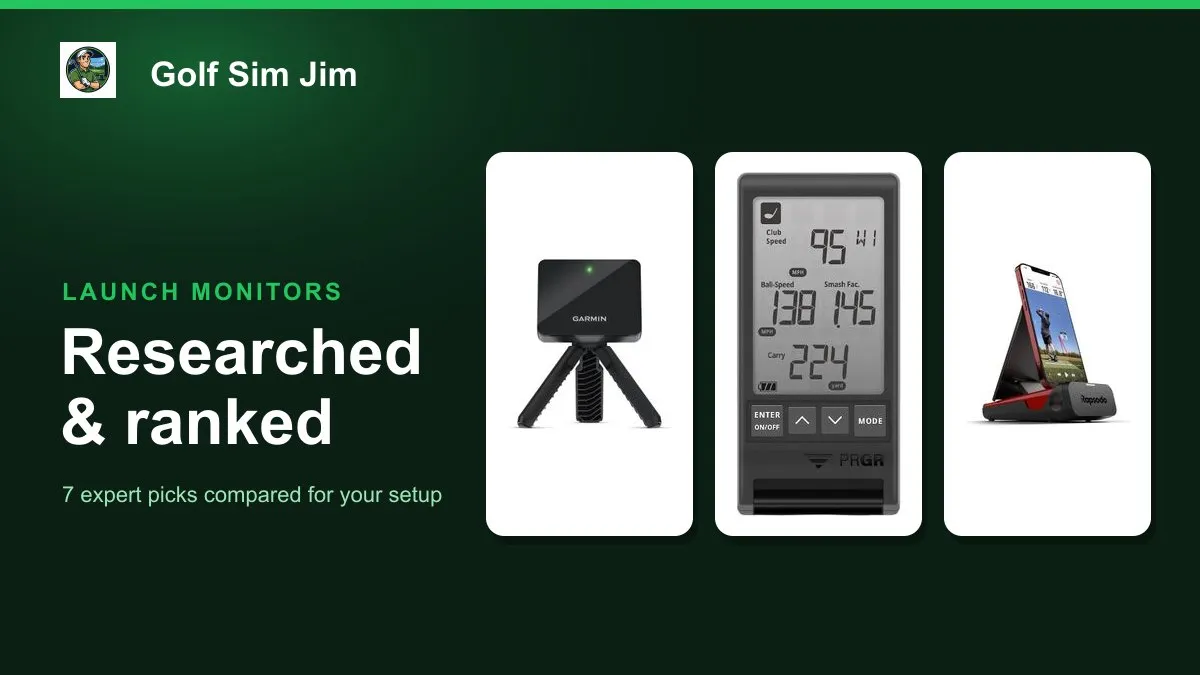
You do not need to spend four figures to put real numbers on your swing. The budget launch monitor market runs from a $99 speed radar to a $599 dual-camera unit that plays virtual courses, and the right pick depends far more on your space, your phone and your goal than on price alone. This guide compares seven real, currently sold launch monitors that budget shoppers actually cross-shop, from Garmin, Rapsodo, PRGR, Voice Caddie and RYP Golf. We weighed each one on the numbers that change a buying decision: measurement accuracy and the technology behind it, how many useful metrics it reports, how much room it needs to read shots, phone and subscription requirements, and value at the price. Whether you want cheap speed numbers, a phone-free trainer, an all-in-one GPS handheld, or a home simulator on a budget, one of these fits. You will find the Garmin R10 as the best overall value plus category winners for budget, iPhone owners, battery life, simulator play, all-in-one use and speed training, followed by a plain-language buying guide.
Table of contents
- Quick picks
- Price compared
- Comparison table
- Best Overall: Garmin Approach R10
- Best Budget: PRGR HS 130-A
- Best for iPhone Users: Rapsodo Mobile Launch Monitor
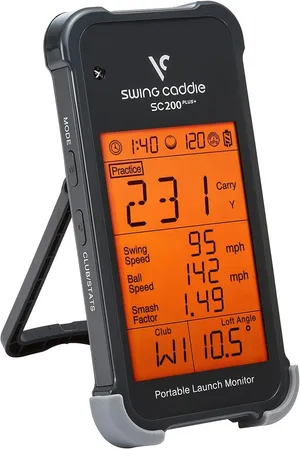
- Best for Battery Life: Voice Caddie Swing Caddie
- Best for Simulator Use: Rapsodo MLM2PRO
- Best All-in-One: Garmin Approach G80
- Best for Speed Training: RYP Golf Swing Speed Radar
- How we researched these picks
- How to choose a budget launch monitor (buying guide)
- FAQ
Quick picks
Every pick wins a specific use case. Jump to the full review before you buy.
-
Best Overall
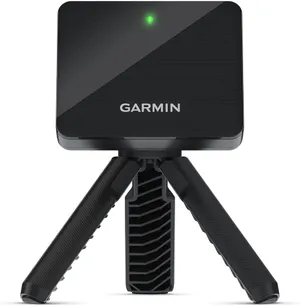
Garmin Approach R10
The Garmin Approach R10 packs 14 metrics, a free app with tens of thousands of courses and true portability into a $499 radar, making it the budget launch monitor that leaves the fewest gaps for the most golfers.
-
Best Budget
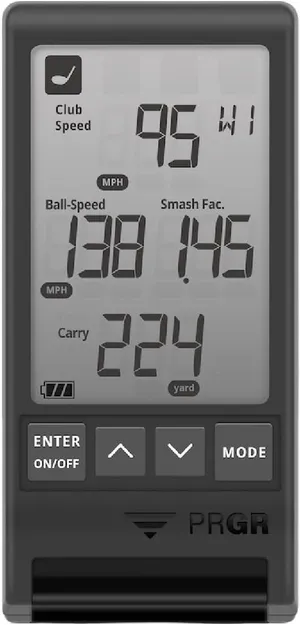
PRGR HS 130-A
At $199 the PRGR HS 130-A is a pocket Doppler radar that nails the core numbers, ball speed, club speed, smash factor and distance, with no phone or subscription required, making it the cheapest trustworthy way to measure a swing.
-
Best for iPhone Users
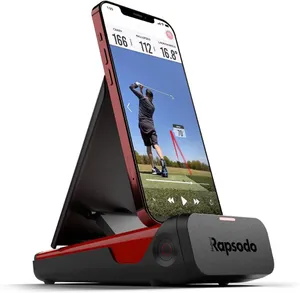
Rapsodo Mobile Launch Monitor
The Rapsodo Mobile Launch Monitor turns an iPhone or iPad into a camera-based tracker with automatic shot video and GPS range views for $199, the best value if you already live in Apple's ecosystem.
-
Best for Battery Life
Voice Caddie Swing Caddie
The Voice Caddie Swing Caddie is a standalone radar with up to 20 hours of battery and voice distance output, so you can practice all day indoors or out without a phone or a charger.
-
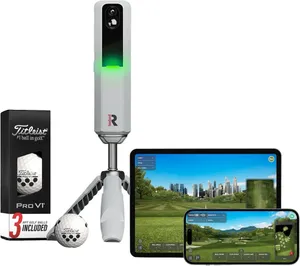
Best for Simulator Use
Rapsodo MLM2PRO
The Rapsodo MLM2PRO pairs dual cameras with radar to deliver 15 metrics and full virtual course play, making it the budget pick for golfers who want to play, not just practice, indoors.
-
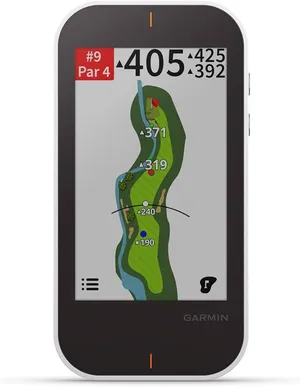
Best All-in-One
Garmin Approach G80
The Garmin Approach G80 folds a full GPS rangefinder and a swing launch monitor into one 3.5-inch handheld, so a single device covers both on-course yardages and practice-day swing data.
-
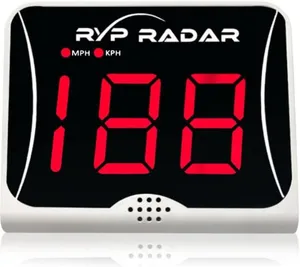
Best for Speed Training
RYP Golf Swing Speed Radar
At around $99 the RYP Golf Swing Speed Radar is the cheapest way to get repeatable swing and ball speed numbers, purpose-built for speed training rather than full shot analysis.
Compare every pick
| Product | Award | Type | Key metrics | Price | Warranty | Best for | Where to buy |
|---|---|---|---|---|---|---|---|
| Garmin Approach R10 | Best Overall | Radar (Doppler) | 14 metrics | $499 | 1 year | Most golfers who want one do-everything unit for home and range | Check price on Amazon for Garmin Approach R10 at Amazon (affiliate link) |
| PRGR HS 130-A | Best Budget | Radar (Doppler) | 5 metrics | $199 | 1 year | Golfers building swing speed or dialing in wedges on a tight budget | Check price on Amazon for PRGR HS 130-A at Amazon (affiliate link) |
| Rapsodo Mobile Launch Monitor | Best for iPhone Users | Camera (photometric) | 5 metrics | $199 | 1 year | iPhone and iPad owners who want shot video and range mapping cheaply | Check price on Amazon for Rapsodo Mobile Launch Monitor at Amazon (affiliate link) |
| Voice Caddie Swing Caddie | Best for Battery Life | Radar (Doppler) | 4 metrics | $199 | 1 year | Golfers who want all-day phone-free practice with spoken feedback | Check price on Amazon for Voice Caddie Swing Caddie at Amazon (affiliate link) |
| Rapsodo MLM2PRO | Best for Simulator Use | Camera and radar | 15 metrics | $599 | 1 year | Golfers who want to play virtual rounds at home on a budget | Check price on Amazon for Rapsodo MLM2PRO at Amazon (affiliate link) |
| Garmin Approach G80 | Best All-in-One | Radar (Doppler) | 4 metrics | $389 | 1 year | Golfers who want course GPS and practice data from one pocket device | Check price on Amazon for Garmin Approach G80 at Amazon (affiliate link) |
| RYP Golf Swing Speed Radar | Best for Speed Training | Radar (Doppler) | 3 metrics | $99 | 1 year | Golfers running a speed training program on the smallest budget | Check price on Amazon for RYP Golf Swing Speed Radar at Amazon (affiliate link) |
Swipe sideways to compare every column.
Best Overall
Garmin Approach R10
by Garmin
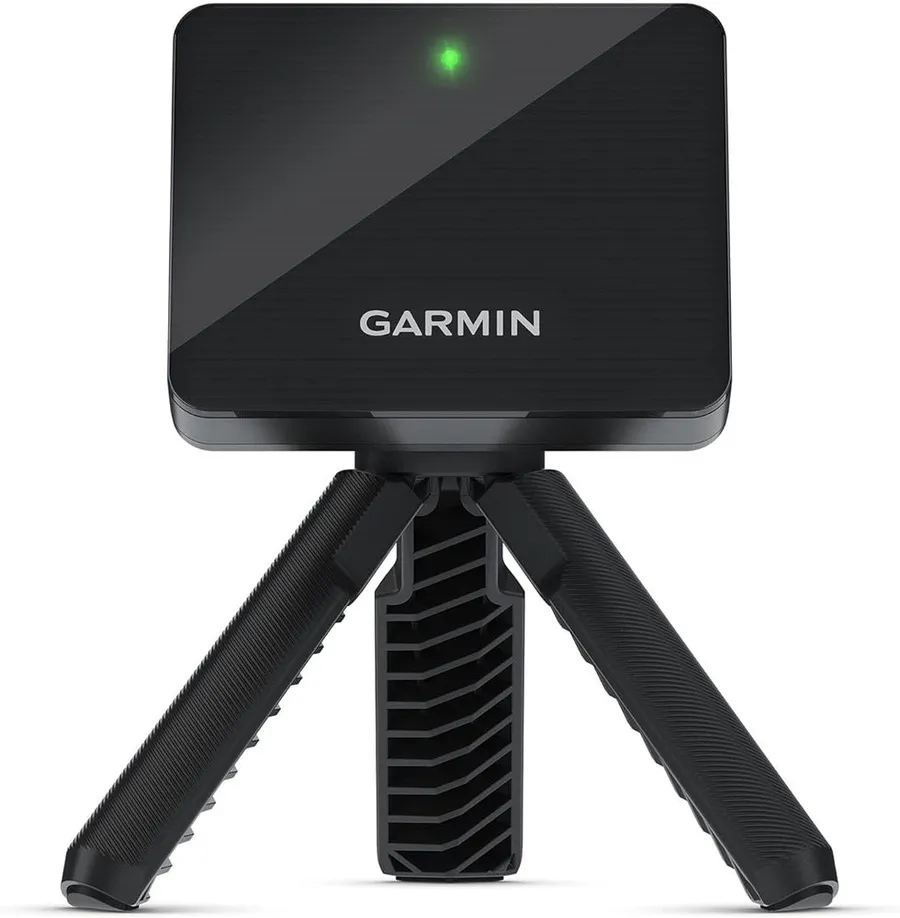
The Garmin Approach R10 packs 14 metrics, a free app with tens of thousands of courses and true portability into a $499 radar, making it the budget launch monitor that leaves the fewest gaps for the most golfers.
What we like
- Reports 14 metrics from a single pocket-sized radar, far more than cheaper rivals
- Runs on the free Garmin Golf app with more than 43,000 courses and no subscription
- Works with both Android and iPhone, and comes with a tripod, phone mount and case
What we don't
- As a radar it wants roughly 7 to 8 feet of ball flight, so it struggles in a very short indoor room
| Type | Radar (Doppler) |
|---|---|
| Key metrics | 14 metrics |
| Best for | All-round home and range use |
| Price | $499 |
| Warranty | 1 year |
| Install difficulty | Easy |
| Price bracket | $$ |
The Garmin Approach R10 is the unit that most budget shoppers end up back at, and for good reason. It is a Doppler radar the size of a small speaker that reads 14 metrics, from ball and club speed to launch angle, spin and smash factor, then feeds them to the free Garmin Golf app on your phone. Nothing else near $499 combines this much data with this little friction.
It wins best overall because it refuses to specialize. Cheaper radars give you speed and distance but stop there. Camera units read impact well but often lock you into one phone platform or a paid plan. The R10 covers Android and iPhone, charges no subscription, plays more than 43,000 virtual courses, and still folds into a bag with its included tripod and mount. That breadth is exactly what a first serious launch monitor should offer.
Day to day it is genuinely easy: set the tripod behind the ball, pair the app, and start hitting. The honest limitation is space. Like every radar here it wants to watch the ball travel, so it prefers a deep garage bay, a net with run-up room or the open range. Cram it into a short spare room and the numbers get less reliable.
Buy the R10 if you want one unit that does nearly everything without a monthly fee. If your only space is a tight indoor net, a camera-based unit that reads at impact will serve you better, but for the widest set of golfers this is the smartest budget spend.
Research-based pick: this recommendation is based on product data, owner feedback and comparison with products we have tested, not on direct hands-on testing.
Buy it if: Most golfers who want one do-everything unit for home and range
Skip it if: Your only hitting space is a short garage or spare room
Best Budget
PRGR HS 130-A
by PRGR
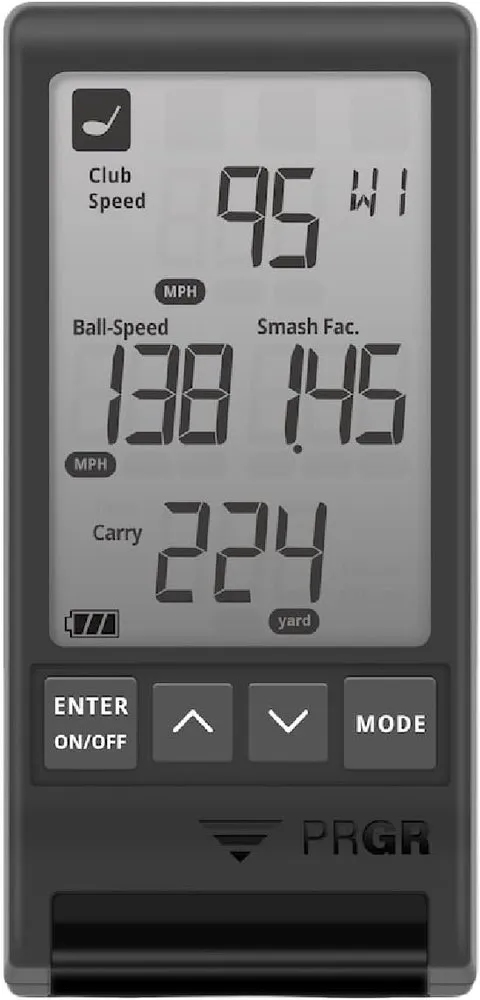
At $199 the PRGR HS 130-A is a pocket Doppler radar that nails the core numbers, ball speed, club speed, smash factor and distance, with no phone or subscription required, making it the cheapest trustworthy way to measure a swing.
What we like
- Around $199 with no app, subscription or phone needed to see your data
- Trusted ball speed, club speed and smash factor from a genuinely pocket-sized unit
- Huge base of verified owner reviews, the largest on this list, backing its reliability
What we don't
- Reports only about five speed and distance metrics, with no spin or shot-shape data
| Type | Radar (Doppler) |
|---|---|
| Key metrics | 5 metrics |
| Best for | Speed and distance on a tight budget |
| Price | $199 |
| Warranty | 1 year |
| Install difficulty | Easy |
| Price bracket | $ |
The PRGR HS 130-A proves you do not need to spend four figures to measure a golf swing. It is a Doppler radar barely bigger than a phone that stands on the ground behind you, reads each shot, and shows the numbers on its own screen. There is no app to install, no account to make and no ongoing fee, which is a large part of why it wins best budget.
What it measures is deliberately narrow but genuinely useful: ball speed, club head speed, smash factor and carry, plus total distance. For a golfer working on swing speed or trying to lock in consistent wedge numbers, that is the exact data that matters, and owners consistently report it tracks well against pricier units for those metrics. With roughly 1,700 ratings behind it, this is a well-proven device rather than a spec-sheet gamble.
Using it is about as simple as launch monitors get. Turn it on, set it down, hit balls, glance at the screen. There is no phone balancing on a tripod and nothing to pair.
The trade-off is depth. The HS 130-A does not report spin, launch angle or shot shape, and it cannot drive a virtual course. If you want those, step up to the Garmin R10 or a camera unit. But if your goal is honest speed and distance numbers for the least money, nothing here beats it.
Research-based pick: this recommendation is based on product data, owner feedback and comparison with products we have tested, not on direct hands-on testing.
Buy it if: Golfers building swing speed or dialing in wedges on a tight budget
Skip it if: You want spin, launch angle or virtual course play
Best for iPhone Users
Rapsodo Mobile Launch Monitor
by Rapsodo
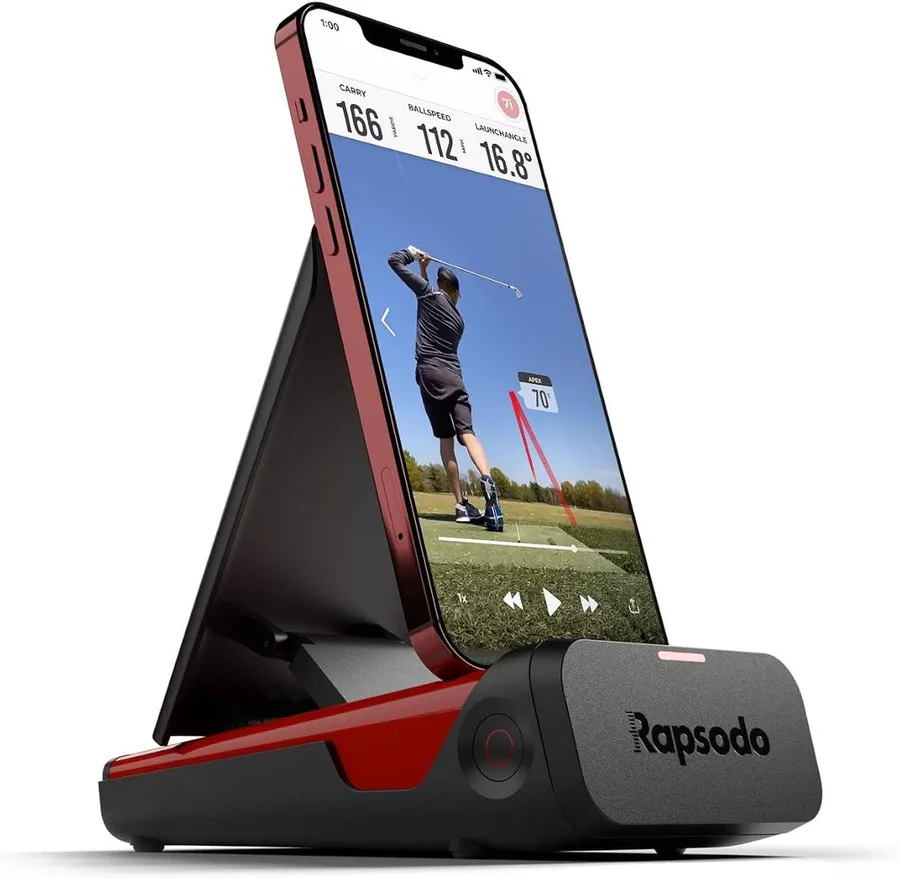
The Rapsodo Mobile Launch Monitor turns an iPhone or iPad into a camera-based tracker with automatic shot video and GPS range views for $199, the best value if you already live in Apple's ecosystem.
What we like
- Camera-based tracking with automatic shot replay video for every swing
- GPS satellite range view maps your carry to real landing zones outdoors
- Around $199 and huge owner base with more than 3,000 ratings
What we don't
- Works with iPhone and iPad only, so Android owners are locked out entirely
| Type | Camera (photometric) |
|---|---|
| Key metrics | 5 metrics |
| Best for | iPhone and iPad owners |
| Price | $199 |
| Warranty | 1 year |
| Install difficulty | Easy |
| Price bracket | $ |
The Rapsodo Mobile Launch Monitor takes a different route to the same budget target. Instead of radar, it uses your iPhone or iPad camera together with its own optical sensor to read the shot, then hands back not just numbers but an automatic video replay of every swing. For $199 that video feedback alone sets it apart from the speed-only radars near this price.
It wins best for iPhone users because the whole experience is built around Apple hardware and it shows. Pairing is quick, the GPS satellite range view maps your real carry onto the range you are standing on, and with more than 3,000 owner ratings it is one of the most proven units on this list. If you already carry an iPhone, you get a camera tracker and a shot-video coach for the price of a mid-range radar.
In practice you prop your phone in the unit, line up on the target, and swing. The replay and data appear together, which makes it easy to connect a number to what your swing actually looked like.
The catch is right in the name of its limitation: iPhone and iPad only. Android owners cannot use it at all, and like most optical units it prefers outdoor light and room over a cramped indoor net. If you are on Apple and mostly hit outside, it is a lot of tool for the money. If you are on Android, look at the Garmin R10 or PRGR instead.
Research-based pick: this recommendation is based on product data, owner feedback and comparison with products we have tested, not on direct hands-on testing.
Buy it if: iPhone and iPad owners who want shot video and range mapping cheaply
Skip it if: You use an Android phone or need indoor accuracy in a short room
Best for Battery Life
Voice Caddie Swing Caddie
by Voice Caddie
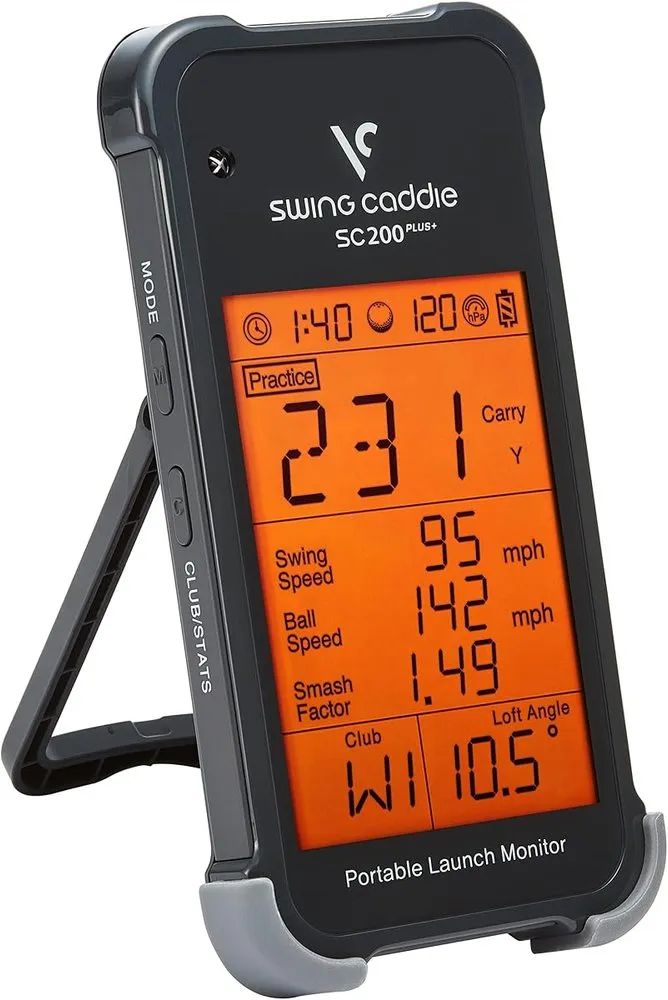
The Voice Caddie Swing Caddie is a standalone radar with up to 20 hours of battery and voice distance output, so you can practice all day indoors or out without a phone or a charger.
What we like
- Up to 20 hours of battery life, the longest runtime on this list
- Fully standalone with voice output, so no phone or app is required
- Works indoors and outdoors as a grab-and-go swing analyzer
What we don't
- Reports a limited set of about four metrics with no spin or shot-shape data
| Type | Radar (Doppler) |
|---|---|
| Key metrics | 4 metrics |
| Best for | Phone-free practice on long battery |
| Price | $199 |
| Warranty | 1 year |
| Install difficulty | Easy |
| Price bracket | $ |
The Voice Caddie Swing Caddie is built for the golfer who just wants to hit balls and hear the number, all day, without fuss. It is a Doppler radar with its own display and, crucially, up to 20 hours of battery life, the longest runtime of anything on this list. There is no phone to mount, no app to open and no cable to worry about between sessions.
It earns best for battery life because that endurance changes how you practice. A phone-tethered unit ties you to a screen and a charge cycle; the Swing Caddie sits on the mat, calls out your carry distance by voice after each shot, and keeps going through an entire range bucket or a long garage session. For roughly $199 it is the most self-sufficient tool here, and around 700 owner ratings back up its consistency.
Living with it is simple by design. Power on, set it behind or beside the ball depending on mode, swing, and listen. The spoken feedback means you can keep your eyes on your target line instead of a display.
The compromise is data depth. Like the PRGR it focuses on speed and distance and does not report spin, launch angle or shot shape, and it will not drive a simulator. If you want those, the Garmin R10 or Rapsodo MLM2PRO is the better fit. But for phone-free, all-day practice with voice feedback, the Swing Caddie is the standout.
Research-based pick: this recommendation is based on product data, owner feedback and comparison with products we have tested, not on direct hands-on testing.
Buy it if: Golfers who want all-day phone-free practice with spoken feedback
Skip it if: You need deep spin data or virtual course play
Best for Simulator Use
Rapsodo MLM2PRO
by Rapsodo
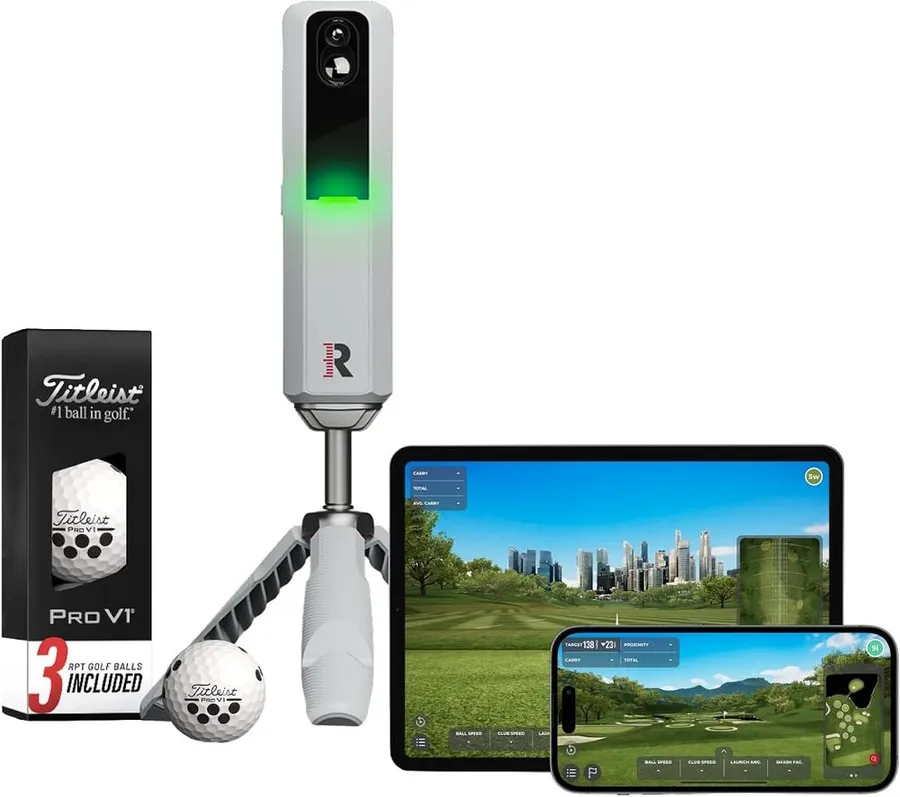
The Rapsodo MLM2PRO pairs dual cameras with radar to deliver 15 metrics and full virtual course play, making it the budget pick for golfers who want to play, not just practice, indoors.
What we like
- Dual camera plus radar design reads 15 metrics including reliable spin and shot shape
- Plays virtual courses and drives a home simulator setup out of the box
- Includes premium balls and works indoors and outdoors on iPhone or Android
What we don't
- Full metrics and course library sit behind a paid annual membership after the first year
| Type | Camera and radar |
|---|---|
| Key metrics | 15 metrics |
| Best for | Virtual course play at home |
| Price | $599 |
| Warranty | 1 year |
| Install difficulty | Moderate |
| Price bracket | $$$ |
The Rapsodo MLM2PRO is where this budget list stretches toward a real home simulator. It combines two cameras with a radar so it can report 15 metrics, including the spin and shot-shape data that pure budget radars leave out, and it is designed from the start to play virtual courses on a screen or net at home. At around $599 it is the priciest pick here, but it does the most.
It wins best for simulator use because playing, not just measuring, is its whole point. The dual-camera and radar combination reads shots accurately enough for virtual rounds, it works both indoors and outdoors, and it ships with premium balls to get you started. For a golfer who wants rainy-day rounds against real course layouts without spending thousands, it is the natural budget entry point.
Setup asks a little more than the plug-and-play radars: you position the unit, pair the app on iPhone or Android, and give it room to see the ball and club. Once dialed in, the payoff is a genuine at-home game rather than a practice readout.
The real limitation is recurring cost. The richest metrics and the course library move behind a paid annual membership after the first year, so the sticker price is not the full story. Add that fee before comparing it to a one-time-purchase unit. If you want to play indoors on a budget it is the clear choice; if you only want fast speed numbers, a cheaper radar is smarter.
Research-based pick: this recommendation is based on product data, owner feedback and comparison with products we have tested, not on direct hands-on testing.
Buy it if: Golfers who want to play virtual rounds at home on a budget
Skip it if: You only want quick speed numbers or refuse any subscription
Best All-in-One
Garmin Approach G80
by Garmin
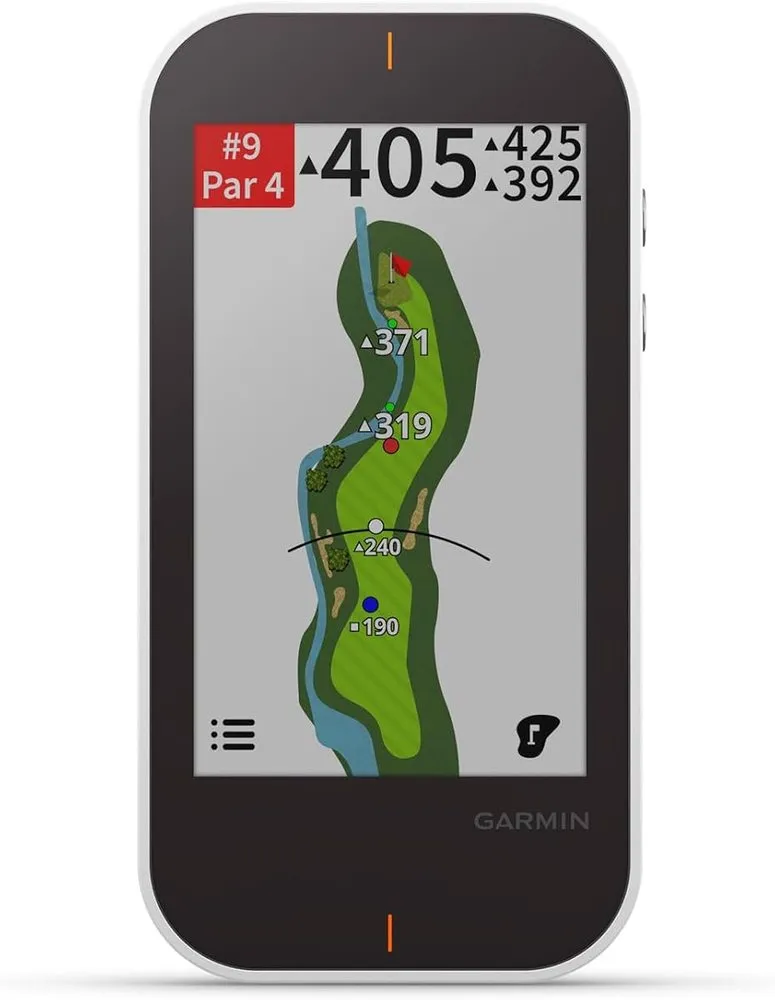
The Garmin Approach G80 folds a full GPS rangefinder and a swing launch monitor into one 3.5-inch handheld, so a single device covers both on-course yardages and practice-day swing data.
What we like
- Combines a GPS rangefinder with more than 41,000 courses and an integrated launch monitor
- Standalone 3.5-inch touchscreen handheld with up to 15 hours of GPS battery
- Reports smash factor, club head speed, ball speed and estimated distance on the range
What we don't
- Its swing metrics are shallower than a dedicated radar like the R10, with no spin data
| Type | Radar (Doppler) |
|---|---|
| Key metrics | 4 metrics |
| Best for | GPS rangefinder plus swing data in one |
| Price | $389 |
| Warranty | 1 year |
| Install difficulty | Easy |
| Price bracket | $$ |
The Garmin Approach G80 answers a question the other picks do not: what if one pocket device could handle both your on-course yardages and your practice-day swing numbers? It is primarily a premium GPS handheld with a 3.5-inch touchscreen and more than 41,000 preloaded courses, but it also carries an integrated radar launch monitor, so it doubles as a range tool between rounds.
It wins best all-in-one because of that dual role. On the course it gives you distances to the front, middle and back of the green like any good GPS unit. On the range it flips into monitor mode and reads smash factor, club head speed, ball speed and estimated carry, letting you leave a separate device at home. With up to 15 hours of GPS battery it comfortably lasts a full day of play.
Day to day it is a grab-and-go handheld: no phone, no tripod, just a touchscreen in your pocket. That convenience is the point.
The compromise is depth on the practice side. Its launch data is useful but shallower than a dedicated unit like the Garmin R10, with fewer metrics and no spin, and it will not drive a home simulator. If your priority is the richest swing data or virtual rounds, choose the R10 or MLM2PRO. If you want yardages and a swing check from one device, the G80 is uniquely convenient.
Research-based pick: this recommendation is based on product data, owner feedback and comparison with products we have tested, not on direct hands-on testing.
Buy it if: Golfers who want course GPS and practice data from one pocket device
Skip it if: You want the deepest swing metrics or a home simulator
Best for Speed Training
RYP Golf Swing Speed Radar
by RYP Golf
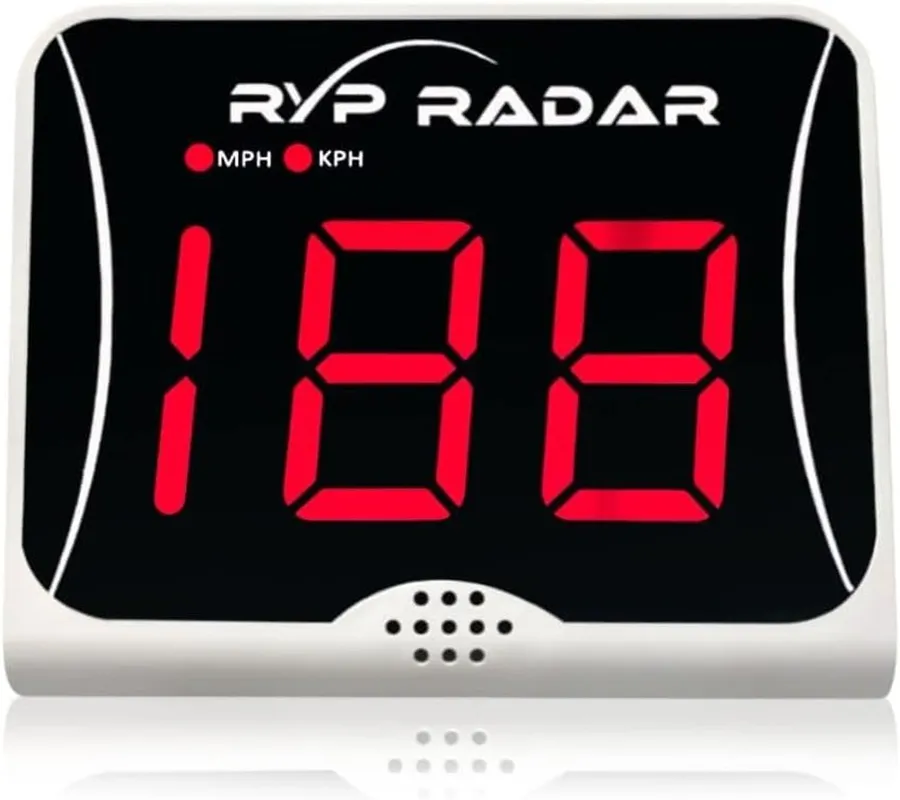
At around $99 the RYP Golf Swing Speed Radar is the cheapest way to get repeatable swing and ball speed numbers, purpose-built for speed training rather than full shot analysis.
What we like
- Around $99, the lowest price of any unit on this list
- Doppler radar delivers repeatable club and ball speed and smash factor for speed work
- Compact and simple, pairs naturally with a speed trainer routine
What we don't
- Focused on speed metrics only, with no launch angle, spin or distance mapping
| Type | Radar (Doppler) |
|---|---|
| Key metrics | 3 metrics |
| Best for | Swing speed training on the cheapest budget |
| Price | $99 |
| Warranty | 1 year |
| Install difficulty | Easy |
| Price bracket | $ |
The RYP Golf Swing Speed Radar is the most focused tool on this list, and the cheapest. For around $99 it is a small Doppler radar designed to do one job well: measure how fast you swing and how fast the ball comes off the face. Built to pair with speed-training routines like the Rypstick, it is less a general launch monitor than a dedicated speed coach.
It wins best for speed training because that narrow focus is exactly right for the job. Overspeed training lives or dies on repeatable, trustworthy speed numbers you can chase session to session, and that is precisely what this radar delivers, without the cost or complexity of a full monitor. If your goal for the next few months is adding clubhead speed, you do not need 15 metrics, you need this one done reliably.
Using it is as simple as it gets: set it down, swing, read the speed. There is no course to load and little to configure.
The obvious limitation is scope. It reports speed and smash factor but not launch angle, spin, or mapped distance, and it will not drive a simulator or a virtual round. That is by design. If you want fuller shot data, the PRGR HS 130-A or Garmin R10 are the budget steps up. But if you only want to get faster for the least money, nothing here is cheaper or more fit for purpose.
Research-based pick: this recommendation is based on product data, owner feedback and comparison with products we have tested, not on direct hands-on testing.
Buy it if: Golfers running a speed training program on the smallest budget
Skip it if: You want distance, spin or virtual course play
How we researched these picks#
We started from the budget launch monitors golfers genuinely cross-shop today, then narrowed to seven real, currently sold units that span the affordable end of the market, from a $99 speed radar to a $599 dual-camera simulator unit. Every product here has published manufacturer specifications and, in most cases, a large base of verified owner reviews, which keeps the list grounded in devices you can order right now rather than spec-sheet promises.
For each candidate we pulled the manufacturer specifications, read across aggregated verified owner feedback, and compared units head to head on the factors that change a buying decision at this price: measurement accuracy and the technology behind it, the number and usefulness of the metrics reported, how much space the unit needs to read shots, phone and subscription requirements, and value for the money. We deliberately spread the final seven across radar and camera designs and across use cases, so there is a sensible pick for different budgets, rooms, phones and goals.
These recommendations are research-based, not hands-on tested. We have not swung in front of each unit ourselves, so we lean on published specs and the consistent themes in owner feedback rather than our own range data. Where a device has a real weakness, such as a subscription requirement, a platform lock, a narrow metric set or a space constraint, we call it out plainly.
How to choose a budget launch monitor (buying guide)#
Match the technology to your space. Doppler radar units like the Garmin R10, PRGR HS 130-A, Voice Caddie Swing Caddie and RYP radar read the ball in flight, so they need room, ideally 7 to 8 feet of travel, and they shine outdoors or in a deep bay. Camera-based units such as the Rapsodo MLM and MLM2PRO measure closer to impact and cope better in shorter rooms, though even they prefer decent light and some space. Buy the design that fits the room you actually have.
Decide how many metrics you actually need. A speed trainer only needs ball speed, club speed and smash factor, which the $99 RYP radar and $199 PRGR HS 130-A deliver. If you want to study shot shape, launch angle and spin, you need the R10’s 14 metrics or a camera system reading around 15 like the MLM2PRO. Paying for metrics you will never read is wasted money, and skipping metrics you need is a false economy.
Check for subscriptions before you buy. Sticker price is not always the full cost. The Garmin R10 runs on the free Garmin Golf app, and the PRGR HS 130-A, Voice Caddie Swing Caddie and RYP radar show data on the device with no fee. The Rapsodo MLM2PRO gates its richest data and course play behind a paid annual plan after year one, so add that recurring fee before you judge two units at the same price.
Confirm phone and platform compatibility. Some units are tied to one ecosystem. The original Rapsodo MLM works with iPhone and iPad only, so Android owners should look elsewhere, while the Garmin R10 and MLM2PRO support both Android and iPhone. If you want zero phone dependence, the Voice Caddie Swing Caddie, PRGR HS 130-A, RYP radar and Garmin G80 all run standalone with their own screens.
Decide whether you want to play, not just practice. If you only want feedback on the range, a portable radar like the R10, PRGR or Swing Caddie is enough and easier to carry. If you want to play virtual courses indoors on a rainy day, you need simulator-ready hardware such as the Rapsodo MLM2PRO plus a net and mat. Do not pay for simulator features you will never switch on.
Weigh warranty and value at your budget. Every unit here carries a one-year warranty, so lean on price bracket and metric depth to decide. Spend the least that still covers the metrics and space you have: a $99 to $199 radar for pure speed and distance work, the mid-priced Garmin R10 for all-round flexibility, and the Rapsodo MLM2PRO only if playing virtual rounds at home justifies the higher price and the annual fee.
Frequently asked questions
What is the best budget launch monitor for most golfers?
For most golfers the Garmin Approach R10 is the best budget choice. At around $499 it reads 14 metrics from a single portable radar, runs on the free Garmin Golf app with more than 43,000 courses, and works on both Android and iPhone with no subscription. If your budget is tighter, the $199 PRGR HS 130-A covers speed and distance, and the $99 RYP Golf radar handles pure speed training.
How cheap can a launch monitor get and still be accurate?
Very cheap, as long as you match the price to the data. A $99 unit like the RYP Golf radar and the $199 PRGR HS 130-A give trustworthy ball speed, club speed and smash factor, which is plenty for building swing speed or dialing in wedges. The accuracy gap shows up in spin, launch angle and shot shape, where camera units like the Rapsodo MLM2PRO are far more precise. Pay for the metrics you will actually use.
Do budget launch monitors need a subscription?
Most do not, but check before you buy. The Garmin R10 uses the free Garmin Golf app, and the PRGR HS 130-A, Voice Caddie Swing Caddie and RYP radar show data on the device with no fee. The Rapsodo MLM2PRO gates its full metrics and course library behind a paid annual membership after the first year, so add that recurring cost before comparing two units at the same sticker price.
How much space do I need for a budget launch monitor indoors?
It depends on the technology. Radar units like the Garmin R10, PRGR HS 130-A and Voice Caddie Swing Caddie watch the ball fly, so they want roughly 7 to 8 feet of travel and suit a deep garage or the range. Camera-based units like the Rapsodo MLM2PRO measure closer to impact and cope better in shorter rooms, though most budget optical units still prefer good light and some space.
About the author

Jim Bennett Founder & lead reviewer
Jim is the guy behind Golf Sim Jim. He builds home golf simulators and compares launch monitors by the numbers that actually decide a setup, room fit, accuracy and software.
Home setup: Garage bay: SkyTrak+, 10 ft ceiling, BenQ LK936ST short-throw
- Launch monitor accuracy
- Home simulator builds
- Impact screens & enclosures
- Sim software (GSPro, E6, TGC)