
7 Best Golf Sim Launch Monitors for 2026, Ranked by Room Size
We compared 7 real golf sim launch monitors on accuracy, room needs and price to find the best pick for garages, spare rooms and dedicated sim bays.

The launch monitor that anchors your home simulator only works if it fits your space, and the single biggest reason a good unit gives bad numbers is the wrong match between its technology and your room. This guide compares seven real, widely owned launch monitors and sorts them by the room they suit, from a pocket radar you can use anywhere to a $5,000 camera system built for a dedicated bay. We weighed each unit on measurement accuracy and the technology behind it, how much ball flight it needs to read shots, the metrics it reports, software and subscription costs, and value for the money. Radar units want space and shine in a deep garage or backyard, while camera units read accurately just feet from a net in a tight spare room. Below you will find the best overall pick plus category winners for small spaces, budgets, portability, standalone use, premium sim rooms and pure accuracy, followed by a plain buying guide to match a monitor to the room you actually have.
Table of contents
- Quick picks
- Price compared
- Comparison table
- Best Overall: Garmin Approach R10
- Best for Small Spaces: Rapsodo MLM2PRO
- Best Budget: Rapsodo Mobile Launch Monitor (MLM)
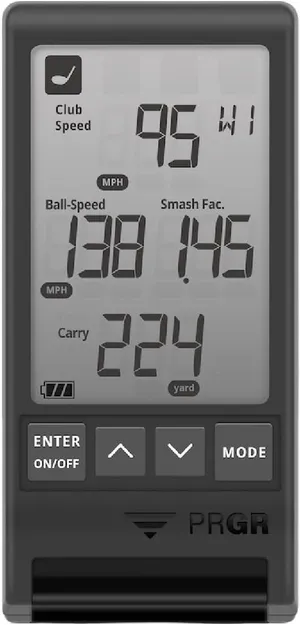
- Best Portable: PRGR HS 130-A
- Best for Standalone Use: Voice Caddie SC300i
- Best for Accuracy: FlightScope Mevo Gen2
- Best Premium: Garmin Approach R50
- How we researched these picks
- How to choose a golf sim launch monitor (buying guide)
- FAQ
Quick picks
Every pick wins a specific use case. Jump to the full review before you buy.
-
Best Overall
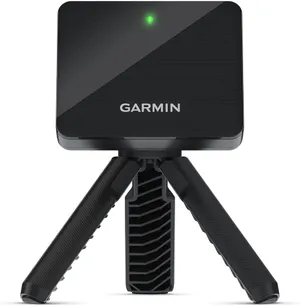
Garmin Approach R10
The Approach R10 packs 14 metrics, a huge free course library and true cross-platform support into a $499 portable radar, which makes it the best sim launch monitor for the widest range of rooms.
-
Best for Small Spaces
Rapsodo MLM2PRO
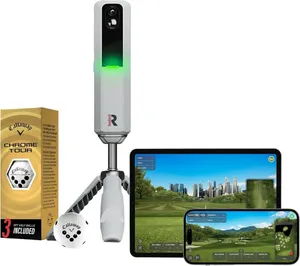
The MLM2PRO pairs dual cameras with radar so it reads accurate shot data just a few feet from a net, which makes it the sim monitor to buy when your room is tight.
-
Best Budget
Rapsodo Mobile Launch Monitor (MLM)
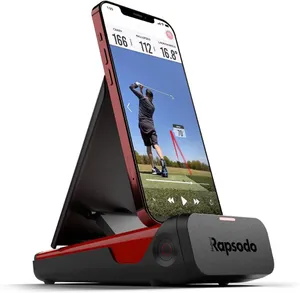
At around $200 the original Rapsodo MLM delivers the core speed and distance numbers plus basic sim play for less than half the price of a mid-range unit, so it is the smart entry point.
-
Best Portable
PRGR HS 130-A
The PRGR HS 130-A is a pocket-sized Doppler radar that shows ball speed, club speed, smash factor and distance on its own screen with no phone, which makes it the easiest unit to grab and go.
-
Best for Standalone Use
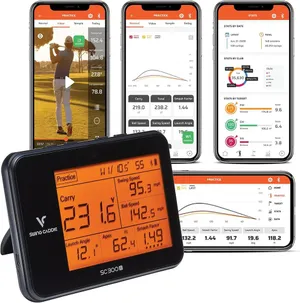
Voice Caddie SC300i
The Voice Caddie SC300i reads and speaks your key numbers from a self-contained unit with no phone required, which makes it ideal for golfers who want data without fiddling with an app.
-
Best for Accuracy
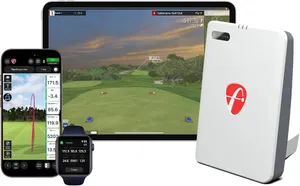
FlightScope Mevo Gen2
The FlightScope Mevo Gen2 blends radar and a front camera to report 18 data parameters, giving a large room lab-grade shot data at well under premium-camera money.
-
Best Premium
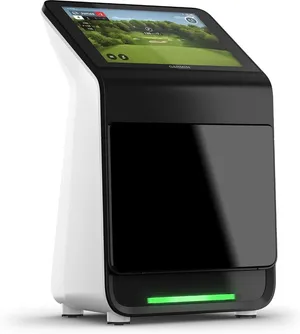
Garmin Approach R50
The Approach R50 stacks three high-speed cameras, 15-plus metrics and a built-in 10-inch touchscreen into one unit that reads close to a net, making it the pick for a dedicated home simulator room.
Compare every pick
| Product | Award | Type | Key metrics | Room needed | Price | Warranty | Best for | Where to buy |
|---|---|---|---|---|---|---|---|---|
| Garmin Approach R10 | Best Overall | Radar (Doppler) | 14 metrics | Medium bay, 8 ft of ball flight | $499 | 1 year | Golfers with a medium garage bay who want one flexible sim monitor | Check price on Amazon for Garmin Approach R10 at Amazon (affiliate link) |
| Rapsodo MLM2PRO | Best for Small Spaces | Camera plus radar (hybrid) | 15 metrics | Small room, reads close to a net | $600 | 1 year | Spare-room and short-net setups that cannot fit a radar unit | Check price on Amazon for Rapsodo MLM2PRO at Amazon (affiliate link) |
| Rapsodo Mobile Launch Monitor (MLM) | Best Budget | Camera plus radar (iPhone) | 6 core metrics | Medium bay, outdoor or deep garage | $200 | 1 year | Budget buyers on iPhone who want core numbers and light sim play | Check price on Amazon for Rapsodo Mobile Launch Monitor (MLM) at Amazon (affiliate link) |
| PRGR HS 130-A | Best Portable | Radar (Doppler) | 5 core metrics | Compact, no phone needed | $200 | 1 year | Golfers who want instant speed feedback they can carry anywhere | Check price on Amazon for PRGR HS 130-A at Amazon (affiliate link) |
| Voice Caddie SC300i | Best for Standalone Use | Radar (Doppler) | 5 core metrics | Compact, standalone screen | $250 | 1 year | Golfers who want quick spoken numbers without a phone or app | Check price on Amazon for Voice Caddie SC300i at Amazon (affiliate link) |
| FlightScope Mevo Gen2 | Best for Accuracy | Radar plus camera (hybrid) | 18 parameters | Large bay, 8 ft of ball flight | $1,299 | 1 year | Data-driven golfers with a large bay who want depth and accuracy | Check price on Amazon for FlightScope Mevo Gen2 at Amazon (affiliate link) |
| Garmin Approach R50 | Best Premium | Camera (photometric, 3 cameras) | 15 plus metrics | Dedicated sim room, reads close to a net | $4,999 | 1 year | Serious golfers building a permanent, high-accuracy sim room | Check price on Amazon for Garmin Approach R50 at Amazon (affiliate link) |
Swipe sideways to compare every column.
Best Overall
Garmin Approach R10
by Garmin
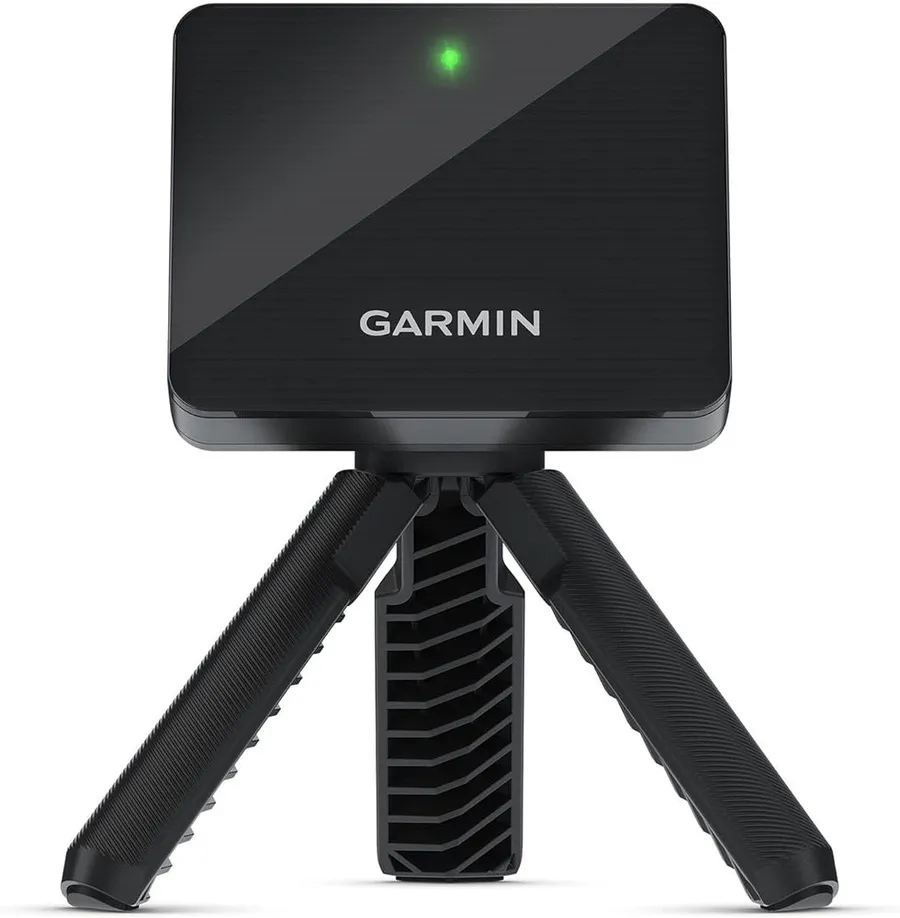
The Approach R10 packs 14 metrics, a huge free course library and true cross-platform support into a $499 portable radar, which makes it the best sim launch monitor for the widest range of rooms.
What we like
- Reads 14 metrics including ball speed, club speed, launch angle and spin
- Free Garmin Golf app runs on Android and iPhone with 43,000-plus courses
- Packs down small with tripod, phone mount and case for range or garage use
What we don't
- Doppler radar needs roughly 8 feet of ball flight, so it struggles in a short net setup
| Type | Radar (Doppler) |
|---|---|
| Key metrics | 14 metrics |
| Room needed | Medium bay, 8 ft of ball flight |
| Price | $499 |
| Warranty | 1 year |
| Install difficulty | Easy |
| Price bracket | $$ |
The Garmin Approach R10 is the unit almost every shopper cross-shops first, and for a home simulator it earns that status. It is a single Doppler radar box that sets up on its own tripod in under a minute, pairs with your phone and starts reading 14 metrics, from ball and club speed to launch angle, spin and shot shape. Very few sub-$500 monitors report that much genuinely useful sim data.
What sets it apart is the ecosystem around it. The free Garmin Golf app carries more than 43,000 courses for virtual play, records swing video against your data, and drives home simulator software on both Android and iPhone. That depth with zero recurring software cost is why it wins best overall rather than any single headline number.
Room size is the catch. Because it is radar, the R10 wants to watch the ball travel roughly 8 feet to stay accurate, so it is happiest in a deep garage bay, a wide basement or a backyard. Crammed right up against a short net in a spare bedroom, its numbers drift, and that is its one real limitation as a sim unit.
Buy the R10 if you have a medium to large room and want one do-everything monitor that travels to the range and plays courses at home without subscription fees. Choose a camera unit like the MLM2PRO or R50 only if your space is too short for radar.
Research-based pick: this recommendation is based on product data, owner feedback and comparison with products we have tested, not on direct hands-on testing.
Buy it if: Golfers with a medium garage bay who want one flexible sim monitor
Skip it if: You only have a few feet in front of an indoor net
Best for Small Spaces
Rapsodo MLM2PRO
by Rapsodo
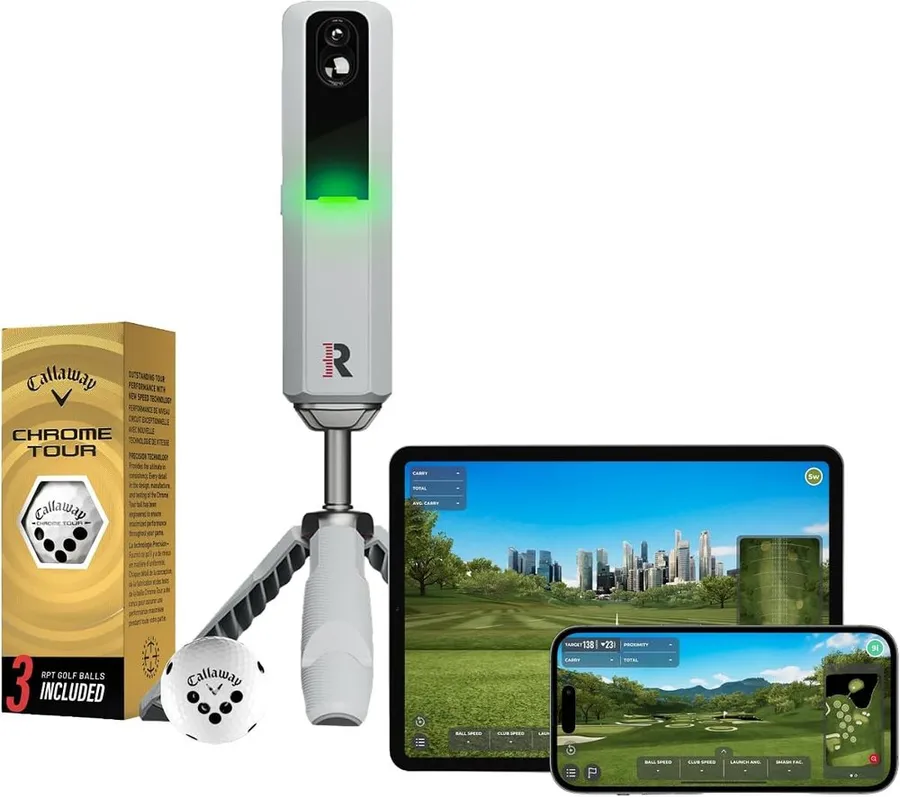
The MLM2PRO pairs dual cameras with radar so it reads accurate shot data just a few feet from a net, which makes it the sim monitor to buy when your room is tight.
What we like
- Dual-camera plus radar system reads shots close to a net in small rooms
- Reports 15 metrics with impact video and shot tracer for simulator play
- Comes with three premium balls and works on Android and iPhone
What we don't
- Full metrics, course play and simulator features sit behind a paid annual membership after year one
| Type | Camera plus radar (hybrid) |
|---|---|
| Key metrics | 15 metrics |
| Room needed | Small room, reads close to a net |
| Price | $600 |
| Warranty | 1 year |
| Install difficulty | Easy |
| Price bracket | $$$ |
The Rapsodo MLM2PRO solves the problem that trips up radar monitors indoors: it does not need the ball to fly far to read it. By combining two high-speed cameras with radar, it captures ball and club data at impact, so it stays accurate just a few feet in front of a net. For a spare bedroom, a short garage or any room where you cannot give a ball 8 feet of runway, that is the difference between usable numbers and guesswork.
On data it holds its own, reporting 15 metrics along with impact video and a shot tracer you can review shot by shot. It drives simulator play on both Android and iPhone and ships with three premium balls that carry the markings the cameras read best, so you are ready to hit on day one.
The honest drawback is money over time. The richest metrics, the course library and the full simulator experience are gated behind a paid annual membership once the first-year trial ends. If you plan to lean on it for indoor course play, budget that recurring fee before you buy.
Choose the MLM2PRO if your room is too short for radar and you value indoor accuracy over avoiding subscriptions. If you have space to spare and want no fees, the R10 is the better value.
Research-based pick: this recommendation is based on product data, owner feedback and comparison with products we have tested, not on direct hands-on testing.
Buy it if: Spare-room and short-net setups that cannot fit a radar unit
Skip it if: You want zero recurring software fees
Best Budget
Rapsodo Mobile Launch Monitor (MLM)
by Rapsodo
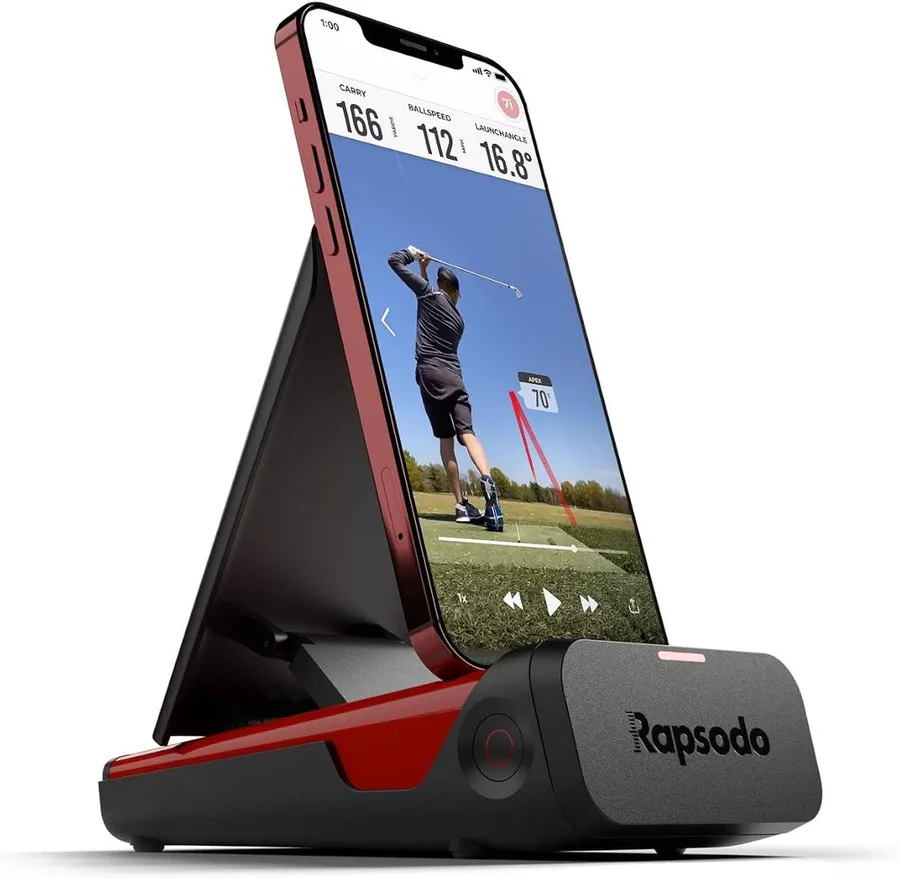
At around $200 the original Rapsodo MLM delivers the core speed and distance numbers plus basic sim play for less than half the price of a mid-range unit, so it is the smart entry point.
What we like
- Covers the core numbers, ball speed, club speed and distance, for about $200
- Huge base of verified owner reviews makes it a proven, low-risk buy
- GPS satellite view and shot tracer add range-session context on a budget
What we don't
- Works with iPhone and iPad only, so Android owners are locked out
| Type | Camera plus radar (iPhone) |
|---|---|
| Key metrics | 6 core metrics |
| Room needed | Medium bay, outdoor or deep garage |
| Price | $200 |
| Warranty | 1 year |
| Install difficulty | Easy |
| Price bracket | $ |
The original Rapsodo Mobile Launch Monitor is the value pick that got a whole generation of golfers into home practice. For roughly $200 it reads the numbers that matter most for improvement, ball speed, club speed and carry distance, and layers on a GPS satellite view and shot tracer that make range sessions feel purposeful rather than abstract.
It is also the most proven unit here. With one of the largest verified owner review bases in the category, you are buying a device thousands of golfers have already stress-tested, which lowers the risk that always comes with cheaper gear.
The catch is platform lock. The MLM runs on iPhone and iPad only, so Android owners simply cannot use it, and its metric set is shallower than a $500 radar, so it will not feed deep spin analysis or club fitting. Like other radar-based units it also prefers a bit of ball flight, so it fits a medium bay or outdoor use better than a cramped net.
Buy the MLM if you are on iOS, want a low-risk first launch monitor and mostly care about speed and distance. Step up to the R10 for Android support and 14 metrics, or the MLM2PRO for tight-space accuracy.
Research-based pick: this recommendation is based on product data, owner feedback and comparison with products we have tested, not on direct hands-on testing.
Buy it if: Budget buyers on iPhone who want core numbers and light sim play
Skip it if: You carry an Android phone or need deep spin data
Best Portable
PRGR HS 130-A
by PRGR
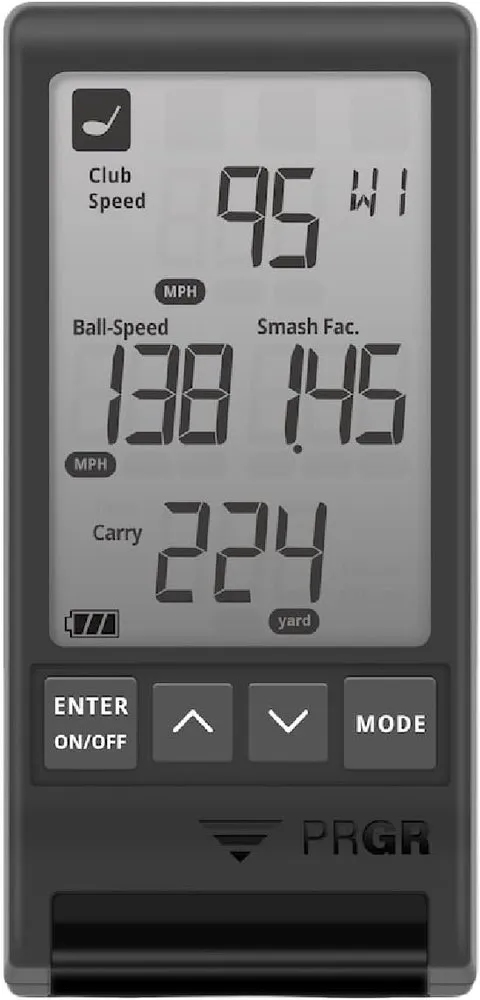
The PRGR HS 130-A is a pocket-sized Doppler radar that shows ball speed, club speed, smash factor and distance on its own screen with no phone, which makes it the easiest unit to grab and go.
What we like
- Fits in a pocket and runs on its own display with no phone or app
- Reads ball speed, club speed, smash factor and distance instantly
- Around $200 with a strong base of verified owner reviews
What we don't
- Speed-and-distance focus means no launch angle, spin or sim course play
| Type | Radar (Doppler) |
|---|---|
| Key metrics | 5 core metrics |
| Room needed | Compact, no phone needed |
| Price | $200 |
| Warranty | 1 year |
| Install difficulty | Easy |
| Price bracket | $ |
The PRGR HS 130-A strips a launch monitor down to the essentials and wins on convenience. It is barely larger than a smartphone, needs no app or pairing, and shows ball speed, club speed, smash factor and carry distance on its own built-in screen the instant you hit a shot. Set it on the ground, aim it down the line and you are working.
That simplicity makes it the most portable unit here. There is no phone to prop up, no software to load and no battery-hungry display driving a simulator, so it slips into a bag for range trips, lessons or a quick speed session in the yard. For golfers chasing more clubhead speed, the immediate feedback loop is exactly what you want.
The trade-off is depth. The HS 130-A is a speed-and-distance tool, so it does not report launch angle, spin or shot shape, and it will not run virtual courses or feed simulator software. If you want to study your flight or play indoors, this is not the unit.
Buy the HS 130-A if you value grab-and-go speed feedback over data depth, or as a cheap second unit to pair with a fuller monitor at home. If you want sim play, look at the R10 or MLM2PRO instead.
Research-based pick: this recommendation is based on product data, owner feedback and comparison with products we have tested, not on direct hands-on testing.
Buy it if: Golfers who want instant speed feedback they can carry anywhere
Skip it if: You want spin, shot shape or virtual course play
Best for Standalone Use
Voice Caddie SC300i
by Voice Caddie
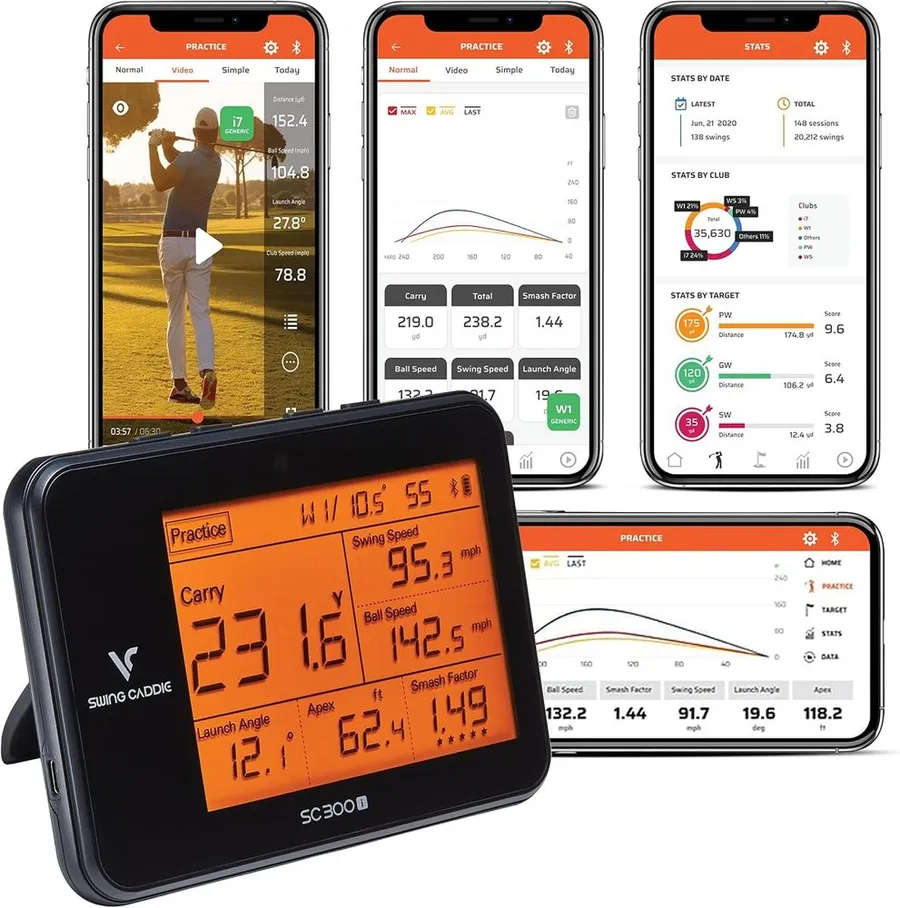
The Voice Caddie SC300i reads and speaks your key numbers from a self-contained unit with no phone required, which makes it ideal for golfers who want data without fiddling with an app.
What we like
- Fully standalone with on-device data and spoken voice output, no phone needed
- Up to 20 hours of battery for long range sessions
- Optional app sync adds tracking when you want it
What we don't
- Radar focus means a shallow metric set and no built-in virtual courses
| Type | Radar (Doppler) |
|---|---|
| Key metrics | 5 core metrics |
| Room needed | Compact, standalone screen |
| Price | $250 |
| Warranty | 1 year |
| Install difficulty | Easy |
| Price bracket | $ |
The Voice Caddie SC300i is built for golfers who just want the numbers and none of the setup. It is a self-contained Doppler radar that shows carry distance, ball speed, club speed and smash factor on its own screen and even reads them aloud, so you can keep your eyes downrange and your phone in your bag. Drop it down, hit and listen.
Standalone operation is its real strength. There is no app to pair, no phone to mount and, with up to 20 hours of battery, no anxiety about running out mid-session. When you do want history and trends, an optional app sync is there, but the device is fully useful on its own, which is rare in this category.
The limitation is depth. As a compact radar unit it reports a core set of speed and distance numbers rather than launch angle, spin or shot shape, and it does not run virtual courses, so it is a practice and speed tool rather than a home simulator brain.
Buy the SC300i if you want fast, spoken feedback with zero phone dependence for range and backyard work. If you want spin analysis or indoor course play, step up to the R10 or a camera unit like the MLM2PRO.
Research-based pick: this recommendation is based on product data, owner feedback and comparison with products we have tested, not on direct hands-on testing.
Buy it if: Golfers who want quick spoken numbers without a phone or app
Skip it if: You want deep spin data or indoor course play
Best for Accuracy
FlightScope Mevo Gen2
by FlightScope
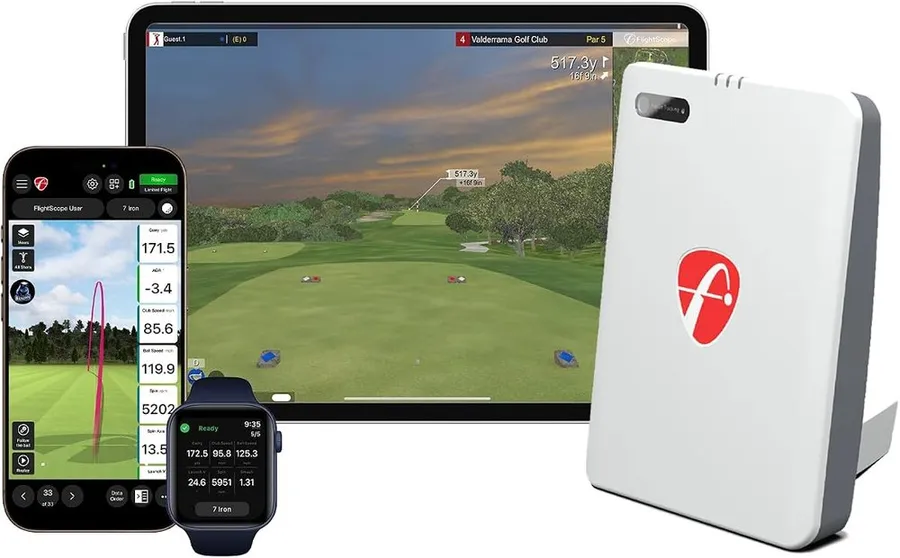
The FlightScope Mevo Gen2 blends radar and a front camera to report 18 data parameters, giving a large room lab-grade shot data at well under premium-camera money.
What we like
- Combines radar with a front-facing camera for 18 swing and ball parameters
- Includes eight E6 simulation courses with shot tracer and GPS overview
- FlightScope tracking pedigree brings trusted accuracy to a portable unit
What we don't
- Radar core needs a large bay with real ball flight to hit rated accuracy
| Type | Radar plus camera (hybrid) |
|---|---|
| Key metrics | 18 parameters |
| Room needed | Large bay, 8 ft of ball flight |
| Price | $1,299 |
| Warranty | 1 year |
| Install difficulty | Moderate |
| Price bracket | $$$ |
The FlightScope Mevo Gen2 is the pick for golfers who want to study their game in detail. It pairs FlightScope’s radar tracking with a front-facing camera to report 18 data parameters, from ball and club speed to spin, launch and shot shape, which is deeper than anything else in its price range. FlightScope’s pedigree in professional tracking is the reason those numbers earn trust.
For sim use it comes ready to play, bundling eight E6 simulation courses with a shot tracer and GPS overview, so a large bay turns into a genuine practice-and-play setup. Sitting between the sub-$600 units and a $5,000 camera system, it is the accuracy step-up that does not jump straight to premium pricing.
The condition attached is space. Because its core is radar, the Mevo Gen2 needs a large bay with real ball flight, roughly 8 feet, to reach its rated accuracy. In a short room the very precision you paid for slips, so it rewards a deep garage or dedicated space rather than a spare bedroom.
Buy the Mevo Gen2 if you have the room and want serious data depth without premium-camera money. If your space is tight, a camera unit like the MLM2PRO reads better, and if you only need speed numbers, a budget radar is enough.
Research-based pick: this recommendation is based on product data, owner feedback and comparison with products we have tested, not on direct hands-on testing.
Buy it if: Data-driven golfers with a large bay who want depth and accuracy
Skip it if: Your room is short or you only need basic numbers
Best Premium
Garmin Approach R50
by Garmin
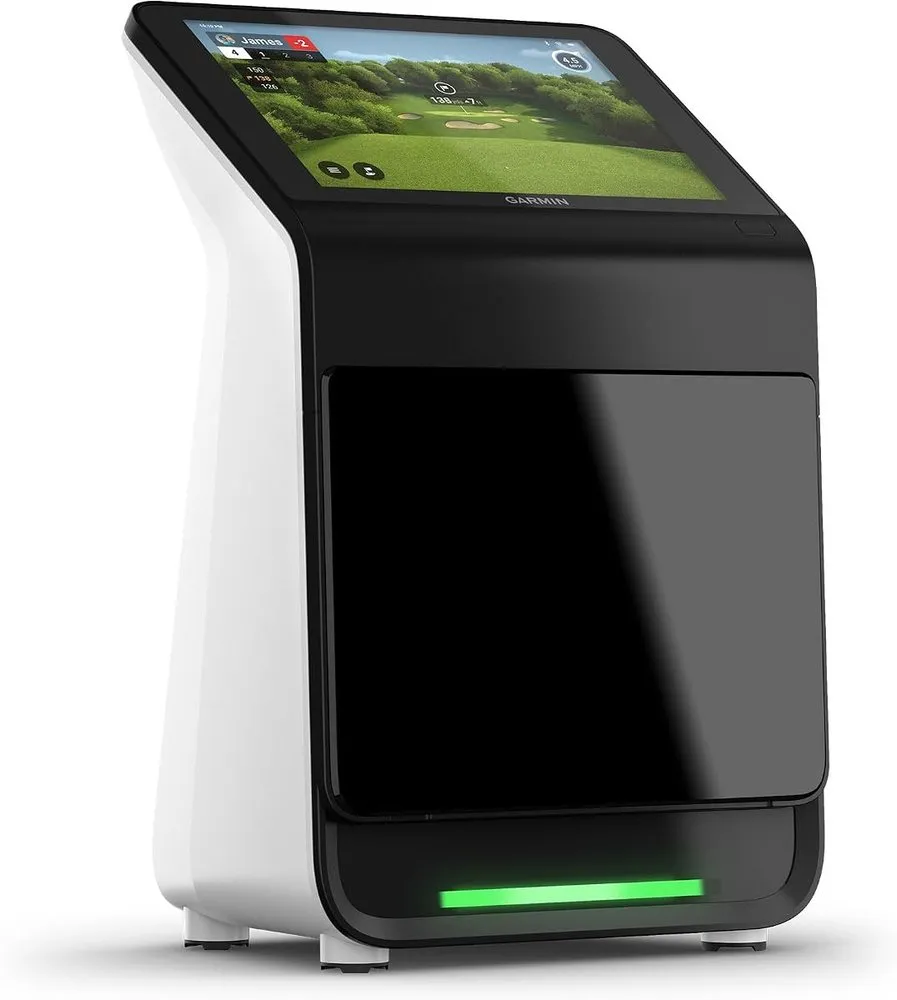
The Approach R50 stacks three high-speed cameras, 15-plus metrics and a built-in 10-inch touchscreen into one unit that reads close to a net, making it the pick for a dedicated home simulator room.
What we like
- Three high-speed cameras deliver 15-plus metrics with spin and club-path data
- Built-in 10-inch touchscreen runs sim play with no separate laptop needed
- Photometric design reads accurately just feet from a net in a fixed room
What we don't
- At around $5,000 it costs roughly ten times a budget radar unit
| Type | Camera (photometric, 3 cameras) |
|---|---|
| Key metrics | 15 plus metrics |
| Room needed | Dedicated sim room, reads close to a net |
| Price | $4,999 |
| Warranty | 1 year |
| Install difficulty | Moderate |
| Price bracket | $$$ |
The Garmin Approach R50 is the unit you buy when a home simulator is the point, not a side project. It uses three high-speed cameras to measure the ball and club photometrically, which means it captures data at impact rather than watching a long ball flight. The payoff is accuracy inside a fixed room, reading cleanly just a few feet from the screen or net where a radar unit would falter.
It is also the most self-contained pick here. A built-in 10-inch color touchscreen runs the experience, reports 15-plus metrics including spin and club path, and taps Garmin’s 43,000-plus course library, so you are not tethered to a separate laptop to play or practice. For a dedicated bay, that integration keeps the setup clean.
The obvious limitation is price. At around $5,000 it costs roughly ten times a budget radar trainer, so it only makes sense if you are committing to a permanent, high-accuracy simulator and will use it often enough to justify the outlay.
Buy the R50 if you are building a serious sim room and want camera-grade accuracy with everything on board. If you want portability or value, the R10 covers most golfers for a fraction of the cost.
Research-based pick: this recommendation is based on product data, owner feedback and comparison with products we have tested, not on direct hands-on testing.
Buy it if: Serious golfers building a permanent, high-accuracy sim room
Skip it if: You want something portable or budget-friendly
How we researched these picks#
We built this comparison around the question that decides whether a home simulator works: does the launch monitor fit the room you have. Starting from the units golfers actually cross-shop, we lined up seven real, currently sold monitors with a meaningful base of verified owner reviews, which keeps the list grounded in devices you can order today rather than spec-sheet vaporware.
For each candidate we pulled the manufacturer specifications, read across aggregated verified owner feedback, and compared units head to head on the factors that change a buying decision: measurement accuracy and the technology behind it, how much ball flight the unit needs to read shots, the number and usefulness of the metrics reported, software and subscription costs, and overall value at the price. We deliberately spread the final seven across price brackets and room types, from a $200 pocket radar to a near-$5,000 camera simulator, so there is a sensible pick for different budgets and spaces. If value is your top priority, our roundup of the best budget launch monitors ranked by value digs deeper into the cheaper end.
These recommendations are research-based, not hands-on tested. We have not swung in front of each unit ourselves, so we lean on published specs and the consistent themes in owner feedback rather than our own range data. Where a device has a real weakness, such as a subscription requirement, a platform lock or a space constraint, we call it out plainly.
How to choose a golf sim launch monitor (buying guide)#
Start with your room, not the spec sheet. The most common reason a good monitor disappoints is a mismatch between its technology and your space. Measure how much clear ball flight you have between your hitting spot and the net or screen, because that single number rules out or unlocks whole categories of unit before price ever enters the conversation.
Match the technology to the space you measured. Doppler radar units like the Garmin R10, PRGR HS 130-A and Voice Caddie SC300i read the ball in flight, so they want roughly 8 feet of travel and shine in a deep garage bay, basement or backyard. Photometric camera units such as the Garmin R50 measure at impact and stay accurate right in front of a net, which makes them the fit for a cramped spare room. Hybrid camera-and-radar units like the Rapsodo MLM2PRO and FlightScope Mevo Gen2 sit in between.
Decide how many metrics you actually need. A speed session only needs ball speed, club speed and smash factor, which the PRGR HS 130-A and Voice Caddie SC300i deliver on their own screens. If you want to study shot shape, launch and spin or play full virtual courses, you need the R10’s 14 metrics or a camera system reading 15 or more. Paying for metrics you will never open is wasted money.
Check for subscriptions before you buy. Sticker price is not always the full cost. The Garmin units run on the free Garmin Golf app, and the PRGR and Voice Caddie units charge nothing beyond the hardware. The Rapsodo MLM2PRO and its rivals gate the richest data and course play behind a paid annual plan, so fold that recurring fee into your comparison so two units at the same price are judged fairly.
Confirm platform and standalone options. Some units are tied to one ecosystem. The original Rapsodo MLM works with iPhone and iPad only, so Android owners should look elsewhere, while the Garmin R10 supports both. If you want zero phone dependence, the standalone PRGR HS 130-A and Voice Caddie SC300i run fully standalone on their own displays.
Weigh warranty and value against your budget and room. Every unit here carries a one-year warranty, so lean on price bracket, metric depth and space to decide. Spend the least that covers the metrics you will use and the room you have: a budget radar for pure speed work, the mid-priced R10 for all-round flexibility, a hybrid like the Mevo Gen2 for accuracy in a large bay, and a premium camera unit like the R50 only if a permanent, high-accuracy sim room justifies the outlay.
Frequently asked questions
How much room do I need for a golf sim launch monitor?
It depends on the technology. Radar units like the Garmin R10, PRGR HS 130-A and FlightScope Mevo Gen2 watch the ball in flight, so they want roughly 8 feet of travel and suit a deep garage, basement or backyard. Camera units such as the Rapsodo MLM2PRO and Garmin R50 measure at impact and stay accurate just a few feet from a net, which makes them the better fit for a spare bedroom or short room. Match the type to your space before you compare anything else.
Do golf sim launch monitors need a subscription?
Some do and some do not. The Garmin R10 and R50 use the free Garmin Golf app for core features, and the PRGR HS 130-A and Voice Caddie SC300i show data on the device with no fee at all. The Rapsodo MLM2PRO, by contrast, gates its full metrics, course library and simulator play behind a paid annual membership after the first year, so add that recurring cost to your comparison before you buy.
Can a cheap launch monitor really run a home simulator?
Up to a point. A $200 unit like the Rapsodo MLM or PRGR HS 130-A gives you accurate speed and distance and light virtual practice, which is enough for many golfers. To play full virtual courses with spin and shot shape you want a mid-range unit like the R10 or a camera system such as the MLM2PRO or R50. Buy the least that covers the metrics and room you have rather than paying for data you will never read.
Which launch monitor is most accurate for a home sim?
For a fixed room, camera and hybrid units lead. The FlightScope Mevo Gen2 reports 18 parameters with trusted tracking pedigree, and the camera-based Garmin R50 reads cleanly close to a net in a dedicated bay. Radar units like the R10 are very accurate too, but only when you give them the 8 feet of ball flight they need, so accuracy is as much about matching the unit to your space as the hardware itself.
About the author

Jim Bennett Founder & lead reviewer
Jim is the guy behind Golf Sim Jim. He builds home golf simulators and compares launch monitors by the numbers that actually decide a setup, room fit, accuracy and software.
Home setup: Garage bay: SkyTrak+, 10 ft ceiling, BenQ LK936ST short-throw
- Launch monitor accuracy
- Home simulator builds
- Impact screens & enclosures
- Sim software (GSPro, E6, TGC)