
7 Best Projectors for Golf Simulators in 2026, Ranked by Setup
We compared 7 real short throw and laser projectors on brightness, throw and price to find the best projector for any golf simulator room.

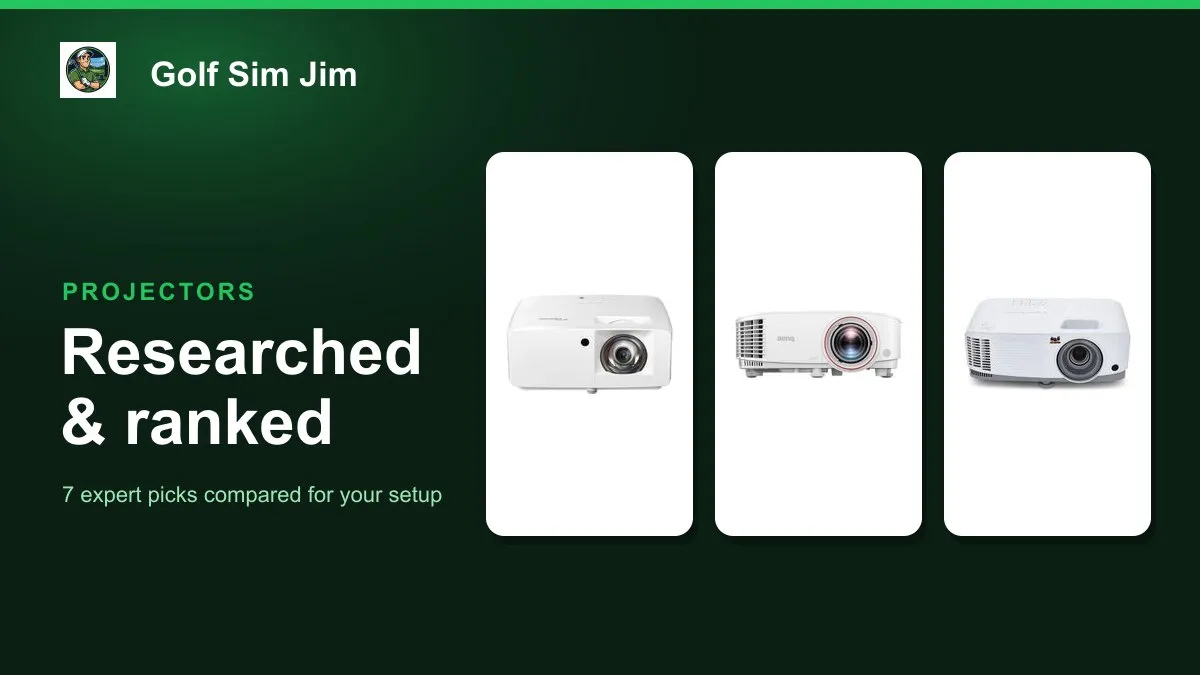
The projector is the part of a golf simulator most people get wrong, because the specs that matter for movies are not the ones that matter for golf. Throw distance decides whether your body casts a shadow on every shot, and brightness decides whether the image survives in a room you cannot fully darken. This guide compares seven real, currently sold projectors that simulator owners actually cross-shop, from Optoma, BenQ and ViewSonic. We weighed each on throw ratio and how it fits a real room, brightness against ambient light, resolution, input lag for tight launch monitor sync, light-source lifespan, and value at the price. Whether you want a set-and-forget laser, the cheapest bright short throw, an ultra short throw for a cramped bay, or one projector that also runs movie night, one of these fits. Below you will find the Optoma GT2000HDR as the best overall pick plus category winners for budget, bright rooms, small spaces, premium builds, simulator use and home theater crossover, followed by a plain-language buying guide.
Table of contents
- Quick picks
- Price compared
- Comparison table
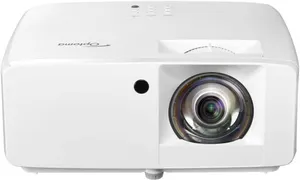
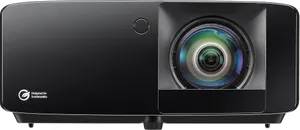
- Best Overall: Optoma GT2000HDR
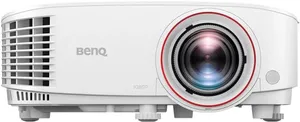
- Best for Simulator Use: BenQ TH671ST
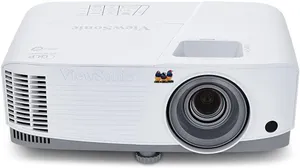
- Best Budget: ViewSonic PS502X
- Best for Bright Rooms: Optoma GT2400HDR
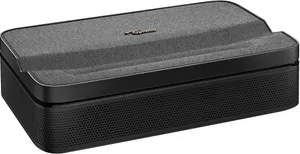
- Best for Small Spaces: Optoma ML1080UST
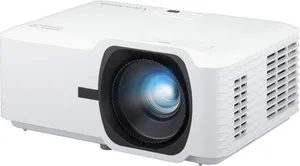
- Best Premium: ViewSonic LS740HD
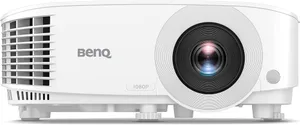
- Best for Home Theater Crossover: BenQ TH575
- How we researched these picks
- How to choose a golf simulator projector (buying guide)
- FAQ
Quick picks
Every pick wins a specific use case. Jump to the full review before you buy.
-
Best Overall
Optoma GT2000HDR
The Optoma GT2000HDR pairs a genuinely short 0.5:1 throw with a maintenance-free laser light source, so it fills a full impact screen from close range and lasts for years without a lamp swap. That combination is exactly what most home golf simulators need.
-
Best for Simulator Use
BenQ TH671ST
The BenQ TH671ST is the most-reviewed short throw projector on this list, and its low input lag plus a three-year warranty make it a proven, low-risk choice built for gaming and simulator play.
-
Best Budget
ViewSonic PS502X
The ViewSonic PS502X delivers a bright 4,000 lumens and a short throw for the lowest price on this list, making it the easiest way to get a simulator on the screen without overspending.
-
Best for Bright Rooms
Optoma GT2400HDR
The Optoma GT2400HDR combines 4,200 laser lumens with a short 0.5:1 throw, so it stays vivid in a garage with daylight leaking in where dimmer projectors wash out.
-
Best for Small Spaces
Optoma ML1080UST
The Optoma ML1080UST uses an ultra short throw 0.23:1 lens to fill a screen from barely two feet away, solving the shadow and space problems that plague tight simulator rooms.
-
Best Premium
ViewSonic LS740HD
The ViewSonic LS740HD throws a blazing 5,500 laser lumens at 1080p, so it drives large screens and bright rooms with room to spare when you want the biggest, boldest image.
-
Best for Home Theater Crossover
BenQ TH575
The BenQ TH575 gives you sharp 1080p, 3,800 lumens and true low latency at a low price, making it the pick if the same projector has to handle movies, gaming and golf.
Compare every pick
| Product | Award | Type | Brightness | Throw | Resolution | Price | Best for | Where to buy |
|---|---|---|---|---|---|---|---|---|
| Optoma GT2000HDR | Best Overall | Laser DLP | 2,000 lumens | Short throw (0.5:1) | 1080p Full HD | $899 | Home golfers wanting one projector that just works in a normal room | Check price on Amazon for Optoma GT2000HDR at Amazon (affiliate link) |
| BenQ TH671ST | Best for Simulator Use | Lamp DLP | 3,000 lumens | Short throw (0.69:1) | 1080p Full HD | $949 | Golfers who want a track record and a long warranty over the newest tech | Check price on Amazon for BenQ TH671ST at Amazon (affiliate link) |
| ViewSonic PS502X | Best Budget | Lamp DLP | 4,000 lumens | Short throw (0.61:1) | XGA (1024x768) | $529 | First-time simulator builders on a tight budget | Check price on Amazon for ViewSonic PS502X at Amazon (affiliate link) |
| Optoma GT2400HDR | Best for Bright Rooms | Laser DLP | 4,200 lumens | Short throw (0.5:1) | 1080p Full HD | $1199 | Garage and multi-use rooms with windows or ambient light | Check price on Amazon for Optoma GT2400HDR at Amazon (affiliate link) |
| Optoma ML1080UST | Best for Small Spaces | Triple Laser LED | 1,200 lumens | Ultra short throw (0.23:1) | 1080p Full HD | $849 | Cramped rooms where a ceiling mount and long throw are impossible | Check price on Amazon for Optoma ML1080UST at Amazon (affiliate link) |
| ViewSonic LS740HD | Best Premium | Laser DLP | 5,500 lumens | Standard throw (1.3x zoom) | 1080p Full HD | $1099 | Large or bright bays that want the brightest possible picture | Check price on Amazon for ViewSonic LS740HD at Amazon (affiliate link) |
| BenQ TH575 | Best for Home Theater Crossover | Lamp DLP | 3,800 lumens | Standard throw (1.1x zoom) | 1080p Full HD | $549 | Multi-use rooms where the projector doubles as a home theater | Check price on Amazon for BenQ TH575 at Amazon (affiliate link) |
Swipe sideways to compare every column.
Best Overall
Optoma GT2000HDR
by Optoma
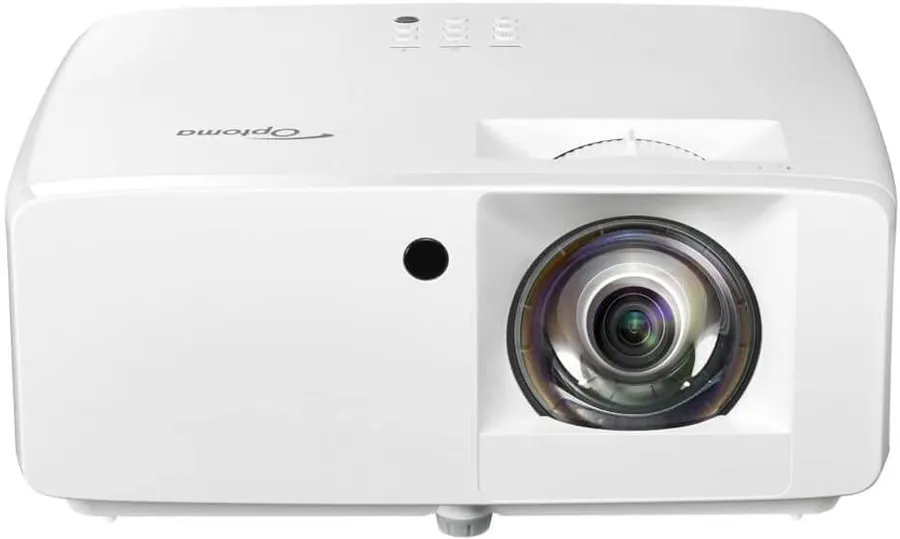
The Optoma GT2000HDR pairs a genuinely short 0.5:1 throw with a maintenance-free laser light source, so it fills a full impact screen from close range and lasts for years without a lamp swap. That combination is exactly what most home golf simulators need.
What we like
- Short 0.5:1 throw fills a big screen from a ceiling mount just a few feet back
- Laser light engine rated for about 30,000 hours with no lamp to replace
- Low input lag keeps the ball flight in sync with your launch monitor
What we don't
- At around 2,000 lumens it can wash out in a bright garage you cannot darken
| Type | Laser DLP |
|---|---|
| Brightness | 2,000 lumens |
| Throw | Short throw (0.5:1) |
| Resolution | 1080p Full HD |
| Price | $899 |
| Install difficulty | Easy |
| Price bracket | $$ |
The Optoma GT2000HDR is the pick I would put in most simulator bays first, because it solves the two problems that trip people up: throw distance and upkeep. Its 0.5:1 short throw means it can hang on a ceiling mount only a few feet behind the hitting area and still cover a full impact screen, so your body and club never cast a shadow on the image.
It wins best overall because it balances every factor rather than maxing out one. The laser light source removes the biggest long-term annoyance of projectors, the dying lamp, and holds color better over time. Around 2,000 lumens is plenty for a room you can darken, and low input lag keeps the projected ball flight tight to your launch monitor data, which is what makes a session feel real.
Living with it is simple. Mount it, square the image with keystone, and forget about it. The honest limit is brightness in a bright space. If your simulator lives in a sunlit garage with no blackout, a 4,000 to 5,500 lumen unit will punch through washout better.
Buy the GT2000HDR if you have a normal room you can dim and want a set-and-forget projector that fits tight spaces. If daylight is your enemy, step up to the brighter Optoma GT2400HDR or ViewSonic LS740HD instead.
Research-based pick: this recommendation is based on product data, owner feedback and comparison with products we have tested, not on direct hands-on testing.
Buy it if: Home golfers wanting one projector that just works in a normal room
Skip it if: You play in a bright garage with lots of daylight and no blackout
Best for Simulator Use
BenQ TH671ST
by BenQ
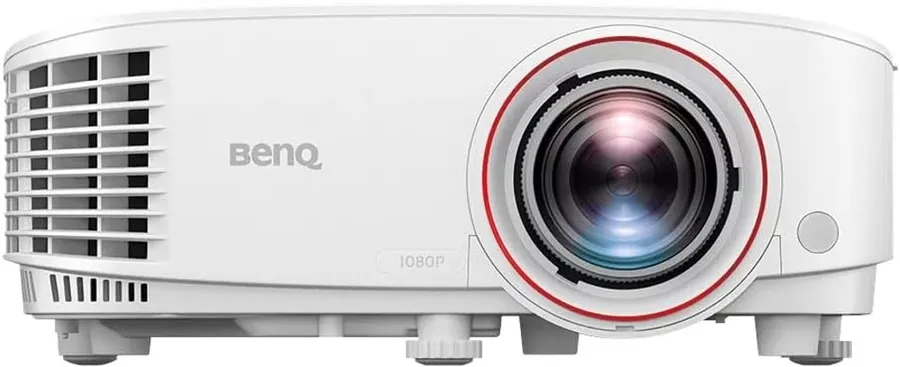
The BenQ TH671ST is the most-reviewed short throw projector on this list, and its low input lag plus a three-year warranty make it a proven, low-risk choice built for gaming and simulator play.
What we like
- Short 0.69:1 throw suits typical garage and spare-room simulator depths
- Low input lag keeps swing to screen response tight for gaming and sim work
- Three-year warranty and a huge base of verified owner reviews
What we don't
- The lamp dims over time and eventually needs a paid replacement, unlike the laser Optomas
| Type | Lamp DLP |
|---|---|
| Brightness | 3,000 lumens |
| Throw | Short throw (0.69:1) |
| Resolution | 1080p Full HD |
| Price | $949 |
| Install difficulty | Easy |
| Price bracket | $$ |
The BenQ TH671ST is the safe, popular answer, and with hundreds of verified reviews it has the longest track record of any projector here. It was built for low-lag gaming, and that same responsiveness is exactly what a simulator wants, so the projected shot reacts the instant your launch monitor sends the ball flight.
It earns best for simulator use on reliability and fit. The 0.69:1 short throw works in the garage and spare-room depths most people actually have, 3,000 lumens handles a dimmed room comfortably, and the three-year warranty is longer than almost anything else on the list. For a buyer who does not want to gamble, that combination is reassuring.
Day to day it is a plug-in-and-play lamp projector. The trade-off sits right there in the word lamp: unlike the laser Optoma units, its bulb will eventually dim and need replacing, which adds a future cost the laser models avoid.
Choose the TH671ST if you value a proven design and a long warranty. If you would rather never service a light source, spend similar money on the laser Optoma GT2000HDR.
Research-based pick: this recommendation is based on product data, owner feedback and comparison with products we have tested, not on direct hands-on testing.
Buy it if: Golfers who want a track record and a long warranty over the newest tech
Skip it if: You want a laser light source you never have to service
Best Budget
ViewSonic PS502X
by ViewSonic
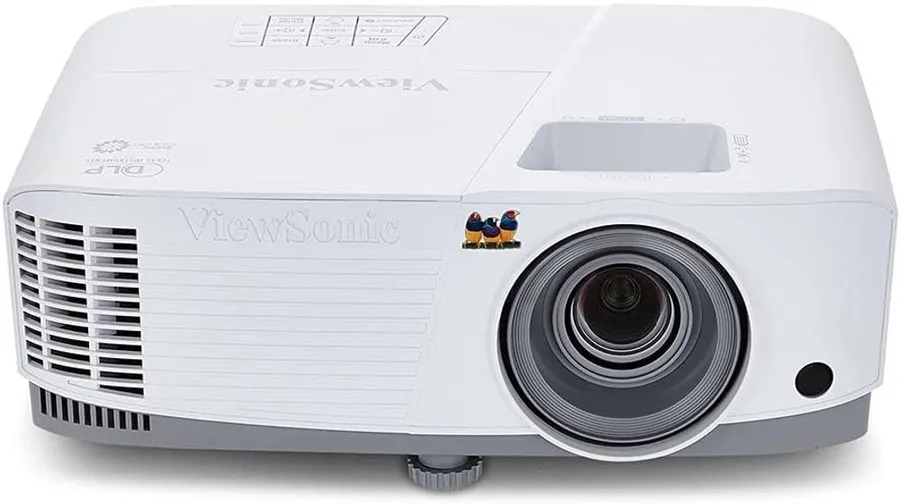
The ViewSonic PS502X delivers a bright 4,000 lumens and a short throw for the lowest price on this list, making it the easiest way to get a simulator on the screen without overspending.
What we like
- 4,000 lumens cuts through more ambient light than pricier dim units
- Short 0.61:1 throw fills a screen from close range in a small room
- Lowest sticker price here by a clear margin
What we don't
- XGA (1024x768) resolution looks noticeably softer than the 1080p projectors here
| Type | Lamp DLP |
|---|---|
| Brightness | 4,000 lumens |
| Throw | Short throw (0.61:1) |
| Resolution | XGA (1024x768) |
| Price | $529 |
| Install difficulty | Easy |
| Price bracket | $ |
The ViewSonic PS502X is the value entry point, and it gets the priorities right for a simulator on a budget. It is bright, at 4,000 lumens, and it is short throw, so it lights up a screen from close range without shadows. Those two traits matter far more for golf than they do for a home theater, which is why this projector punches above its price in a bay.
It takes best budget because it spends the money where a simulator benefits. Rather than chase resolution, ViewSonic put the budget into brightness and a usable throw ratio, and for tracking a ball against a course backdrop that is the smart trade. In a partially lit room it stays watchable where a dim 2,000 lumen unit would gray out.
The compromise is resolution. It is an XGA (1024x768) panel, so the image is noticeably softer than the 1080p projectors here. On a golf course render you rarely notice, but for movie nights or fine on-screen text it looks dated.
Pick the PS502X if you want the cheapest honest way to get bright, short throw projection for golf. If you also want sharp 1080p for films, stretch to the BenQ TH575 or Optoma GT2000HDR.
Research-based pick: this recommendation is based on product data, owner feedback and comparison with products we have tested, not on direct hands-on testing.
Buy it if: First-time simulator builders on a tight budget
Skip it if: You want a crisp 1080p image for movies as well as golf
Best for Bright Rooms
Optoma GT2400HDR
by Optoma
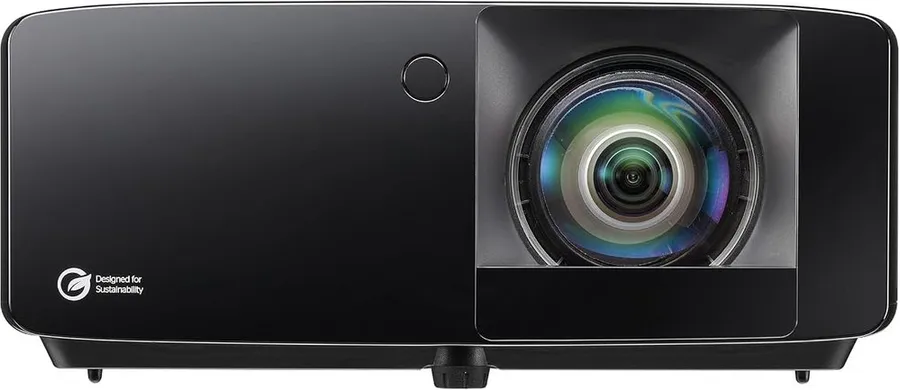
The Optoma GT2400HDR combines 4,200 laser lumens with a short 0.5:1 throw, so it stays vivid in a garage with daylight leaking in where dimmer projectors wash out.
What we like
- 4,200 laser lumens hold up in rooms you cannot fully black out
- Short 0.5:1 throw still fits a ceiling mount close to the screen
- Laser engine means high brightness with no lamp to replace
What we don't
- At around $1,199 it is one of the priciest picks and its extra brightness is wasted in a fully dark room
| Type | Laser DLP |
|---|---|
| Brightness | 4,200 lumens |
| Throw | Short throw (0.5:1) |
| Resolution | 1080p Full HD |
| Price | $1199 |
| Install difficulty | Easy |
| Price bracket | $$$ |
The Optoma GT2400HDR is the answer when your simulator does not live in a dark room. At 4,200 laser lumens it is more than twice as bright as the GT2000HDR, and that headroom is what keeps the image punchy when sunlight sneaks through a garage door or a window you cannot fully cover.
It wins best for bright rooms because it stacks brightness onto the same strengths that make Optoma easy to recommend. You still get a short 0.5:1 throw for a tight ceiling mount and a laser light source with no lamp to service, but now with the lumen count to fight washout. For a shared space that doubles as a workshop or playroom, that flexibility is worth the premium.
In use it behaves like its cheaper sibling, just brighter, so setup and upkeep stay simple. The catch is cost and overkill. At around $1,199 it is one of the priciest picks here, and in a properly blacked-out room those extra lumens are wasted spend.
Buy the GT2400HDR if ambient light is your real problem. If you can darken the room, the GT2000HDR gives you the same laser short throw experience for less.
Research-based pick: this recommendation is based on product data, owner feedback and comparison with products we have tested, not on direct hands-on testing.
Buy it if: Garage and multi-use rooms with windows or ambient light
Skip it if: You have a fully darkened room and want to save a few hundred dollars
Best for Small Spaces
Optoma ML1080UST
by Optoma
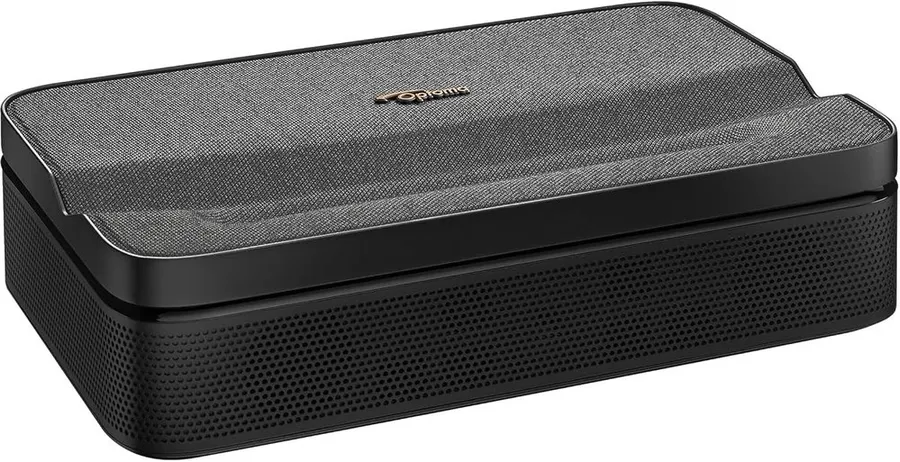
The Optoma ML1080UST uses an ultra short throw 0.23:1 lens to fill a screen from barely two feet away, solving the shadow and space problems that plague tight simulator rooms.
What we like
- Ultra short 0.23:1 throw fills a screen from right against the wall
- Sits low and close, so your body and club never block the beam
- Compact triple laser LED unit that is easy to place on a shelf or floor
What we don't
- At about 1,200 lumens it needs a dark room, and the ultra short throw optics are fussy to align
| Type | Triple Laser LED |
|---|---|
| Brightness | 1,200 lumens |
| Throw | Ultra short throw (0.23:1) |
| Resolution | 1080p Full HD |
| Price | $849 |
| Install difficulty | Moderate |
| Price bracket | $$ |
The Optoma ML1080UST exists for the room that cannot take a normal projector. Its ultra short throw 0.23:1 lens throws a full image from roughly two feet in front of the screen, so it can sit low and close instead of hanging from a ceiling several feet back. In a converted closet or a low-ceiling basement, that geometry is the difference between a working simulator and a permanent shadow across the picture.
It takes best for small spaces because no ceiling-mounted short throw can match that placement. Because the light comes from below and just ahead of the screen, your body and swing stay out of the beam entirely, which is the single most annoying problem in a tight bay. The compact triple laser LED body is also easy to tuck onto a shelf.
The honest trade-offs are brightness and finicky alignment. At around 1,200 lumens it needs a genuinely dark room to look its best, and ultra short throw optics are unforgiving, so a small bump can distort the image and mean re-squaring it. Owner ratings run a touch lower than the ceiling-mount units here for that reason.
Choose the ML1080UST when space, not budget, is your hard limit and you can keep the room dark. If you have room for a ceiling mount, the brighter Optoma GT2000HDR is the more forgiving pick.
Research-based pick: this recommendation is based on product data, owner feedback and comparison with products we have tested, not on direct hands-on testing.
Buy it if: Cramped rooms where a ceiling mount and long throw are impossible
Skip it if: You need maximum brightness or a fussy, alignment-tolerant setup
Best Premium
ViewSonic LS740HD
by ViewSonic
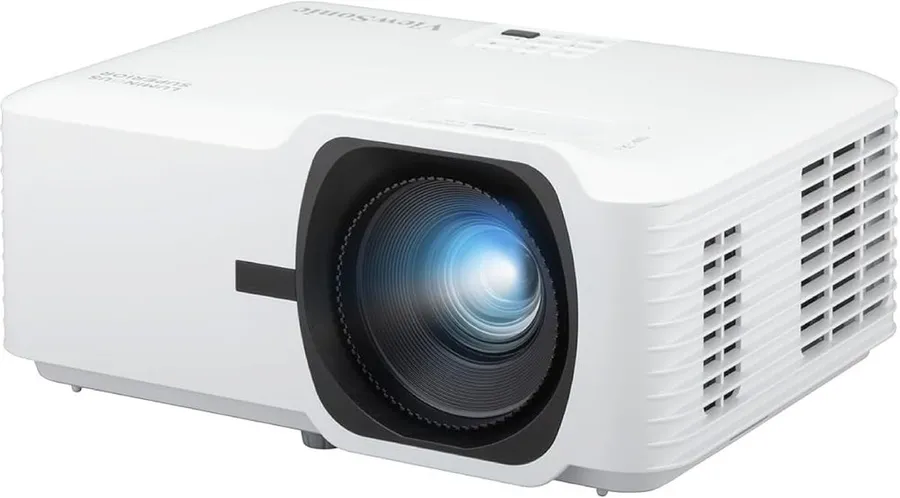
The ViewSonic LS740HD throws a blazing 5,500 laser lumens at 1080p, so it drives large screens and bright rooms with room to spare when you want the biggest, boldest image.
What we like
- 5,500 laser lumens overpower ambient light and fill oversized screens
- Laser light source lasts for years with no lamp changes
- Optical zoom and flexible placement help it fit deeper rooms
What we don't
- Standard throw needs 12 feet or more of room depth, so it does not fit shallow bays
| Type | Laser DLP |
|---|---|
| Brightness | 5,500 lumens |
| Throw | Standard throw (1.3x zoom) |
| Resolution | 1080p Full HD |
| Price | $1099 |
| Install difficulty | Moderate |
| Price bracket | $$ |
The ViewSonic LS740HD is the projector for people who want the image to dominate the room. At 5,500 laser lumens it is the brightest pick here by a wide margin, so it drives large impact screens and shrugs off ambient light that would gray out a 2,000 lumen unit. When the goal is a huge, punchy picture, this is the one.
It earns best premium on sheer output and longevity. The laser light source keeps that brightness stable for years without a lamp swap, and optical zoom plus flexible placement let you dial in the image rather than fight the room. For a dedicated, larger bay it is a projector you can grow into.
The catch is its throw. This is a standard-throw projector with about a 1.3x zoom, not a short throw, so it needs meaningful distance behind the hitting area to fill a big screen. In a shallow garage you would be forced into a smaller image or an awkward mount, which undercuts the whole point.
Buy the LS740HD if you have a deep, large room and want the brightest screen possible. If your room is short, a short throw laser like the Optoma GT2400HDR is the smarter high-brightness choice.
Research-based pick: this recommendation is based on product data, owner feedback and comparison with products we have tested, not on direct hands-on testing.
Buy it if: Large or bright bays that want the brightest possible picture
Skip it if: Your room is shallow and needs a short throw lens
Best for Home Theater Crossover
BenQ TH575
by BenQ
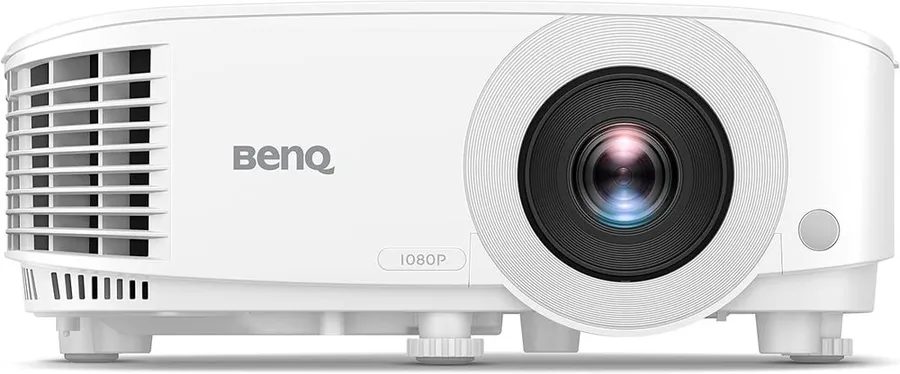
The BenQ TH575 gives you sharp 1080p, 3,800 lumens and true low latency at a low price, making it the pick if the same projector has to handle movies, gaming and golf.
What we like
- Crisp 1080p image that looks great for films and games, not just golf
- 3,800 lumens stay bright in a partially lit living room
- 16ms low latency keeps fast gaming and simulator response tight
What we don't
- Standard throw needs more room depth, so it can shadow or shrink the image in a shallow bay
| Type | Lamp DLP |
|---|---|
| Brightness | 3,800 lumens |
| Throw | Standard throw (1.1x zoom) |
| Resolution | 1080p Full HD |
| Price | $549 |
| Install difficulty | Easy |
| Price bracket | $ |
The BenQ TH575 is the crossover pick, the projector to buy when the simulator shares a room with movie night and the game console. It delivers a sharp 1080p image, 3,800 lumens and genuinely low 16ms latency, so it looks great on film, feels responsive in games, and keeps the projected ball flight tight to your launch monitor.
It wins best for home theater crossover on versatility and value. Most short throw simulator projectors are compromised for general viewing, but the TH575 is a proper home entertainment unit first, so it does everything well while still being fast enough for sim play. At around $549 it is one of the cheapest 1080p picks here.
The important caveat is throw. This is a standard-throw projector with a 1.1x zoom, not a short throw, so it needs to sit farther back and works best ceiling-mounted deeper in the room. In a shallow bay you risk shadows or a smaller image than a short throw would give.
Choose the TH575 if one projector has to serve golf, gaming and movies in a room with some depth. If the space is dedicated and tight, a short throw like the Optoma GT2000HDR fits better.
Research-based pick: this recommendation is based on product data, owner feedback and comparison with products we have tested, not on direct hands-on testing.
Buy it if: Multi-use rooms where the projector doubles as a home theater
Skip it if: Your simulator room is shallow and needs a short throw lens
How we researched these picks#
We started from the projectors golf simulator owners genuinely cross-shop today, then narrowed to seven real, currently sold units that span every price bracket, from a $529 bright short throw to a roughly $1,199 laser. Every product here has published manufacturer specifications and, in most cases, a solid base of verified owner reviews, which keeps the list grounded in projectors you can order right now.
Because golf is a specific job, we weighed the specs that actually matter in a bay rather than the ones that sell home theaters. Throw ratio came first, since it decides whether the projector can sit close enough to keep your body and club out of the beam. Brightness came second, measured against how much ambient light the room has to fight. After that we looked at resolution, input lag for keeping the projected ball flight synced to a launch monitor, light-source type and lifespan, warranty, and value at the price. These picks are research-based and not hands-on tested, so we lean on manufacturer data, aggregated verified owner feedback and head-to-head spec comparison rather than personal lab results.
How to choose a golf simulator projector (buying guide)#
Start with throw ratio, not brightness. Throw ratio is the number that decides whether a projector even works in your room. A short throw lens near 0.5:1 to 0.7:1, like the Optoma GT2000HDR or BenQ TH671ST, fills a screen from a few feet back so you never shadow the image. If your room is very shallow, an ultra short throw such as the Optoma ML1080UST projects from about two feet. Standard throw units need 12 feet or more and only suit deep rooms.
Match brightness to your ambient light. Lumens decide whether the picture survives the room. A space you can fully black out looks great at around 2,000 lumens. A garage or shared room with windows wants 4,000 lumens or more, which is why the ViewSonic LS740HD and Optoma GT2400HDR exist. Buying more brightness than your room needs is wasted money, and buying too little means a washed-out, gray image.
Do not overpay for resolution. Simulator course graphics are built for smooth motion, not fine text, so 1080p looks sharp on a large impact screen and even XGA is usable on a tight budget. Spend on throw and brightness first. Resolution is where you save money, not where you splurge, for a golf-first setup.
Check input lag for launch monitor sync. When your launch monitor sends a shot, the screen should react instantly. Projectors marketed for gaming, like the BenQ TH575 and TH671ST, publish low input lag figures, and that same responsiveness keeps the projected ball flight tight to your data so the session feels real rather than laggy.
Weigh laser against lamp for upkeep. A laser light source, as in the Optoma and ViewSonic laser models, runs for roughly 30,000 hours with no bulb to replace, holds brightness longer, and turns on fast. Lamp projectors like the BenQ units usually cost less up front but the bulb dims over time and eventually needs a paid replacement, so factor that future cost into the sticker price.
Confirm mounting and warranty before you buy. Decide whether you will ceiling-mount deeper in the room or place an ultra short throw unit low and close, and measure the distance before ordering. Then check the warranty, since coverage ranges from one year to the three-year term BenQ offers. A longer warranty and a laser light source together lower the long-term risk of a projector that runs for hours every week.
Frequently asked questions
What projector specs actually matter for a golf simulator?
Throw ratio and brightness matter most. A short throw lens, roughly 0.5:1 to 0.7:1, lets the projector sit close so your body does not shadow the screen, which is why the Optoma GT2000HDR leads this list. Brightness in lumens decides whether the image holds up in ambient light, so a dim room can use 2,000 lumens while a garage with daylight wants 4,000 or more. Resolution matters less than golfers expect, since course graphics look fine at 1080p.
How far should a golf simulator projector sit from the screen?
It depends on the throw ratio. A short throw projector like the Optoma GT2000HDR or BenQ TH671ST fills a 10-foot-wide screen from roughly 5 to 7 feet back, which fits most garages and spare rooms. An ultra short throw like the Optoma ML1080UST does it from about 2 feet. A standard throw unit like the ViewSonic LS740HD needs 12 feet or more, so it only suits deep rooms. Always match the throw ratio to how much depth you actually have.
Do I need a 4K projector for a golf simulator?
No. Simulator course graphics are rendered for smooth motion, not fine detail, so 1080p looks sharp on a big impact screen and even XGA is usable on a budget. Your money is far better spent on the right throw ratio and enough brightness than on 4K resolution. Every 1080p pick here will look great in a sim, and the budget ViewSonic PS502X proves brightness beats pixels for golf.
Can I use one projector for both golf and movies?
Yes, and the BenQ TH575 is built for exactly that. You want sharp 1080p, low input lag so the ball flight stays in sync, and enough brightness for a partly lit room. The trade-off is throw: many great home theater projectors are standard throw and need more room depth than a dedicated short throw simulator projector, so check your distance before buying a crossover unit.
About the author

Jim Bennett Founder & lead reviewer
Jim is the guy behind Golf Sim Jim. He builds home golf simulators and compares launch monitors by the numbers that actually decide a setup, room fit, accuracy and software.
Home setup: Garage bay: SkyTrak+, 10 ft ceiling, BenQ LK936ST short-throw
- Launch monitor accuracy
- Home simulator builds
- Impact screens & enclosures
- Sim software (GSPro, E6, TGC)