
7 Best Golf Simulator Projectors for 2026, Ranked by Brightness
We compared seven real golf simulator projectors on brightness, throw, resolution and price to find the best pick for every room and budget.

The projector is what makes a home golf simulator feel real, and picking the wrong one leads to shadows across every shot, a washed-out picture, or a lens that will not fit your room. The market runs from $270 budget LEDs to $1,899 4K laser units, and the most expensive projector is rarely the right one for your space. This guide compares seven real, currently sold projectors that sim builders actually cross-shop, from Optoma, BenQ, ViewSonic and GooDee. We weighed each one on brightness, throw ratio and how close it can mount, resolution, light-source type, and value at the price. Whether you have a short garage bay, a bright room with windows, a dedicated sim studio, or a tight budget, one of these fits. Below you will find the Optoma GT2000HDR as the best overall pick plus category winners for budget, small spaces, value, dedicated rooms, premium 4K and bright rooms, followed by a plain-language buying guide.
Table of contents
- Quick picks
- Price compared
- Comparison table
- Best Overall: Optoma GT2000HDR
- Best Budget: GooDee 4K Smart Projector
- Best for Small Spaces: BenQ TH671ST
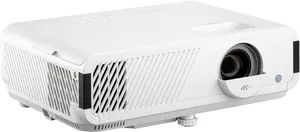
- Best Value: ViewSonic PX700HDH
- Best for Dedicated Sim Rooms: Optoma GT2400HDR
- Best Premium: BenQ TK710STi
- Best for Bright Rooms: ViewSonic LS740W
- How we researched these picks
- How to choose a golf simulator projector (buying guide)
- FAQ
Quick picks
Every pick wins a specific use case. Jump to the full review before you buy.
-
Best Overall
Optoma GT2000HDR
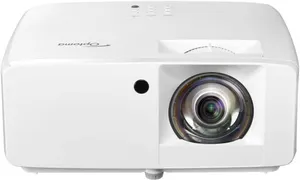
The GT2000HDR pairs a very short 0.5:1 throw with a bright 3,500-lumen laser engine, so it fills a full simulator screen from just a couple of feet away without shadows or lamp changes, which makes it the projector most home sim builders should buy first.
-
Best Budget
GooDee 4K Smart Projector
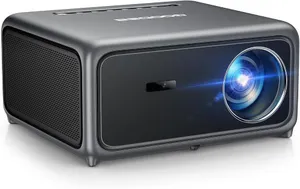
At around $270 the GooDee 4K Smart is the cheapest way to get a large, playable simulator image on a screen, and its built-in apps and auto focus make it easy to live with as a first projector.
-
Best for Small Spaces
BenQ TH671ST
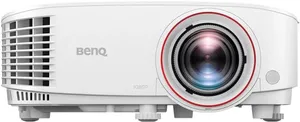
The TH671ST throws a 100-inch 1080p image from under five feet with low input lag and a three-year warranty, which makes it the easiest projector to fit into a short garage or spare-room sim bay.
-
Best Value
ViewSonic PX700HDH
At around $549 the PX700HDH delivers a genuine 3,500 ANSI lumens and native 1080p, so it brings near-premium brightness to a mid-budget sim without the laser price tag.
-
Best for Dedicated Sim Rooms
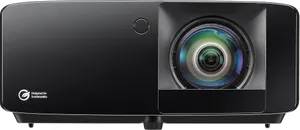
Optoma GT2400HDR
The GT2400HDR is marketed as golf-simulation ready, pairing a very short throw with a bright 4,200-lumen laser, so it is built for a purpose-designed sim room where you want maximum brightness on a big impact screen.
-
Best Premium
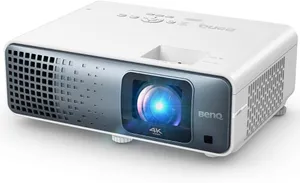
BenQ TK710STi
The TK710STi is a true 4K short-throw laser with a 4ms input lag and Android TV built in, so it is the pick for a high-end sim that doubles as a serious 4K home theater and gaming screen.
-
Best for Bright Rooms
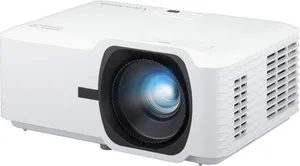
ViewSonic LS740W
With 6,000 laser lumens the LS740W is by far the brightest projector here, so it is the answer when your sim shares a room with windows or open garage light that would wash out anything dimmer.
Compare every pick
| Product | Award | Type | Brightness | Throw | Resolution | Price | Best for | Where to buy |
|---|---|---|---|---|---|---|---|---|
| Optoma GT2000HDR | Best Overall | Laser DLP | 3,500 lumens | Short throw (0.5:1) | 1080p, 4K HDR input | $899 | Home sim builders who want a bright, close-mounted laser that just works | Check price on Amazon for Optoma GT2000HDR at Amazon (affiliate link) |
| GooDee 4K Smart Projector | Best Budget | LED (smart) | ~600 ANSI lumens | Standard (1.2:1) | Native 1080p, 4K support | $270 | First-time builders testing a sim setup on a tight budget in a dark room | Check price on Amazon for GooDee 4K Smart Projector at Amazon (affiliate link) |
| BenQ TH671ST | Best for Small Spaces | Lamp DLP | 3,000 lumens | Short throw (0.69:1) | Native 1080p | $949 | Compact garage or spare-room bays that need a big image from a short distance | Check price on Amazon for BenQ TH671ST at Amazon (affiliate link) |
| ViewSonic PX700HDH | Best Value | Lamp DLP | 3,500 ANSI lumens | Standard (1.5:1) | Native 1080p | $549 | Value hunters with a deeper room who want honest brightness at a mid price | Check price on Amazon for ViewSonic PX700HDH at Amazon (affiliate link) |
| Optoma GT2400HDR | Best for Dedicated Sim Rooms | Laser DLP | 4,200 lumens | Short throw (0.5:1) | 1080p, 4K HDR input | $1,199 | A purpose-built sim room where maximum brightness on a big screen matters | Check price on Amazon for Optoma GT2400HDR at Amazon (affiliate link) |
| BenQ TK710STi | Best Premium | Laser DLP | 3,200 lumens | Short throw (0.9:1) | 4K UHD (3840x2160) | $1,899 | High-end builds that want 4K sharpness plus real home theater and gaming duty | Check price on Amazon for BenQ TK710STi at Amazon (affiliate link) |
| ViewSonic LS740W | Best for Bright Rooms | Laser | 6,000 lumens | Standard (1.5:1) | WXGA (1280x800) | $980 | Sims in bright rooms, open garages or spaces with windows you cannot black out | Check price on Amazon for ViewSonic LS740W at Amazon (affiliate link) |
Swipe sideways to compare every column.
Best Overall
Optoma GT2000HDR
by Optoma
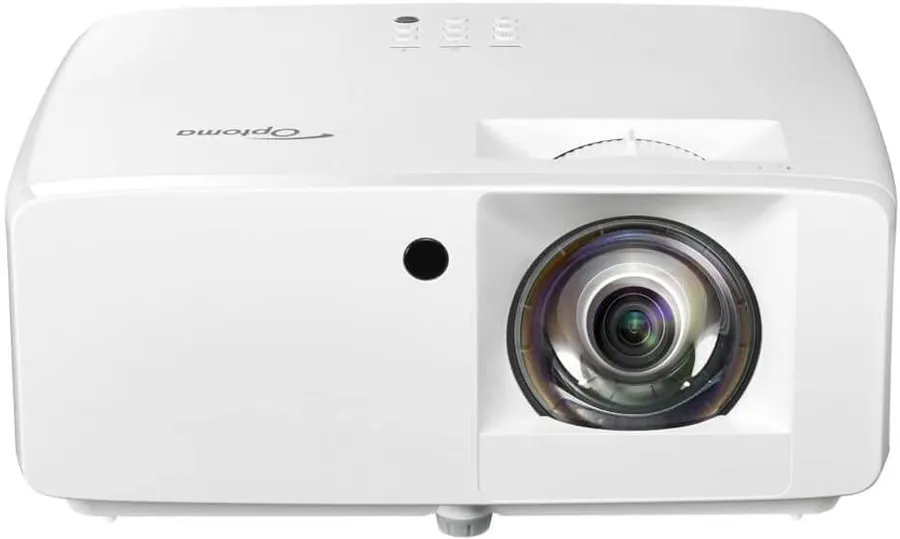
The GT2000HDR pairs a very short 0.5:1 throw with a bright 3,500-lumen laser engine, so it fills a full simulator screen from just a couple of feet away without shadows or lamp changes, which makes it the projector most home sim builders should buy first.
What we like
- Ultra-short 0.5:1 throw fills a big screen from close range, so the ceiling mount clears your swing
- 3,500-lumen laser stays bright and needs no lamp replacement for the life of the light source
- Accepts 4K HDR input and downscales to sharp 1080p that renders sim graphics cleanly
What we don't
- 1080p native resolution means it is not a true 4K panel if you also want cinema-grade movie nights
| Type | Laser DLP |
|---|---|
| Brightness | 3,500 lumens |
| Throw | Short throw (0.5:1) |
| Resolution | 1080p, 4K HDR input |
| Price | $899 |
| Install difficulty | Moderate |
| Price bracket | $$ |
The Optoma GT2000HDR is the projector most golf simulator builds are quietly designed around. Its 0.5:1 short throw ratio lets it throw a wall-filling image from roughly two to three feet in front of the screen, which is the single most important trait in a sim room. Mount it on the ceiling just behind your hitting position and the beam clears your backswing instead of casting your shadow across every shot.
The laser light engine is the other reason it wins. At 3,500 lumens it holds a punchy, evenly lit picture even with some ambient light in the garage, and because it is laser rather than lamp there is no bulb to dim or replace after a few hundred hours. It accepts a 4K HDR signal and renders it as clean 1080p, which is plenty of resolution for GSPro, E6 or the Optoma course graphics most sims run.
Day to day it is a set-and-forget unit: quick to power up, quiet, and stable in color over long sessions. Its one honest limitation is that the panel itself is 1080p, not native 4K, so if you also want this projector to anchor a serious movie room you may feel the pixels on a very large screen.
Buy the GT2000HDR if you want a bright, short-throw laser that mounts close and disappears into the ceiling. Step up to the 4K BenQ TK710STi only if resolution and dual-purpose home theater use matter more than the friendly price.
Research-based pick: this recommendation is based on product data, owner feedback and comparison with products we have tested, not on direct hands-on testing.
Buy it if: Home sim builders who want a bright, close-mounted laser that just works
Skip it if: You need native 4K resolution for double duty as a home theater centerpiece
Best Budget
GooDee 4K Smart Projector
by GooDee
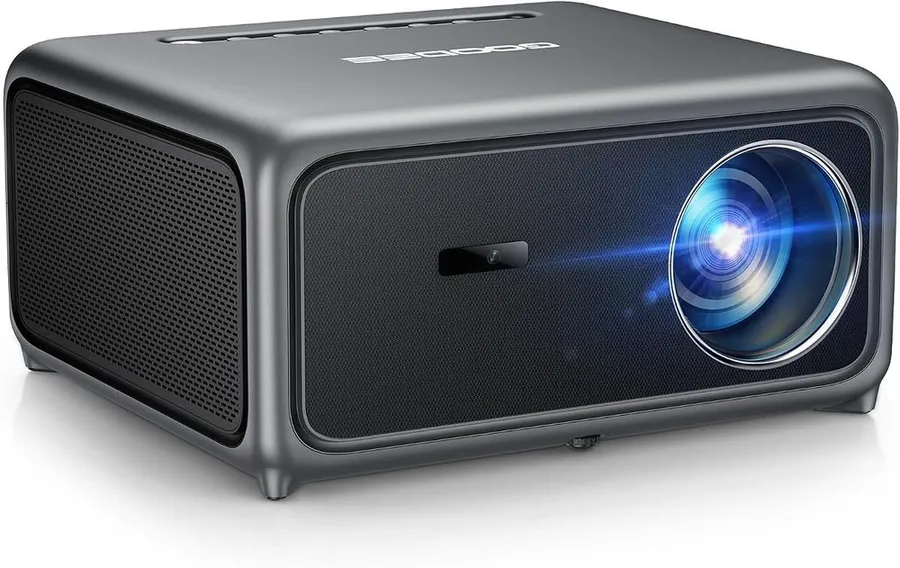
At around $270 the GooDee 4K Smart is the cheapest way to get a large, playable simulator image on a screen, and its built-in apps and auto focus make it easy to live with as a first projector.
What we like
- Costs a fraction of a dedicated sim projector while still filling a big screen
- Auto focus, keystone and built-in streaming apps make setup and casual use simple
- Large base of verified owner reviews with a strong 4.5-star average
What we don't
- LED brightness around 600 ANSI lumens washes out in any daylight, so it needs a dark room
| Type | LED (smart) |
|---|---|
| Brightness | ~600 ANSI lumens |
| Throw | Standard (1.2:1) |
| Resolution | Native 1080p, 4K support |
| Price | $270 |
| Install difficulty | Easy |
| Price bracket | $ |
The GooDee 4K Smart projector exists to answer one question: how cheaply can you get a big, playable image on a simulator screen? At roughly $270 it is a fraction of the price of the Optoma and BenQ units here, and for a beginner who wants to see whether a home sim is worth building, that low entry cost is the whole point.
It leans on convenience features to earn its keep. WiFi 6, Bluetooth, ToF auto focus, automatic keystone and built-in streaming apps mean you can hang it, let it square up the image, and be hitting balls or watching a movie in minutes. Its 4.5-star average across more than 800 owner reviews is reassuring for a budget brand.
The catch is brightness. As an LED unit it puts out roughly 600 ANSI lumens, a long way behind the 3,000-plus of the lamp and laser projectors here, so it only looks good in a fully darkened room. Bring in any daylight and the sim graphics go flat and gray.
Buy the GooDee if you are testing the waters on a strict budget and can black out the room. If you have windows, an open garage, or plan to practice seriously in the daytime, spend up to the ViewSonic PX700HDH or a laser unit that can actually punch through ambient light.
Research-based pick: this recommendation is based on product data, owner feedback and comparison with products we have tested, not on direct hands-on testing.
Buy it if: First-time builders testing a sim setup on a tight budget in a dark room
Skip it if: Your bay has windows or you want bright, crisp graphics for serious practice
Best for Small Spaces
BenQ TH671ST
by BenQ
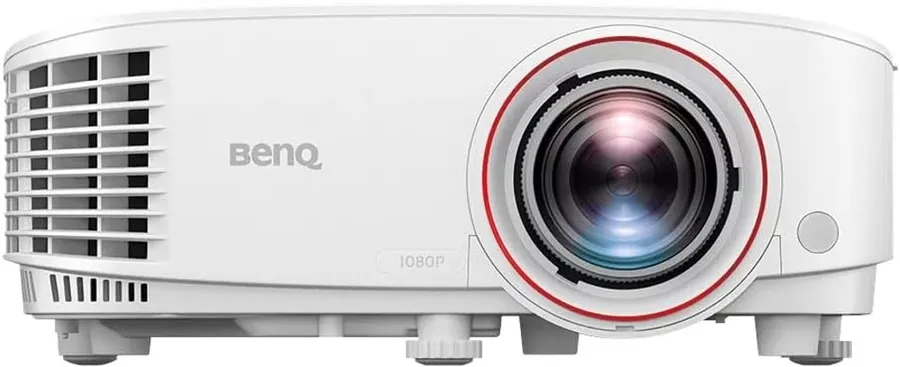
The TH671ST throws a 100-inch 1080p image from under five feet with low input lag and a three-year warranty, which makes it the easiest projector to fit into a short garage or spare-room sim bay.
What we like
- Short 0.69:1 throw fills a 100-inch screen from roughly 4.9 feet, ideal for tight rooms
- Low input lag keeps shot tracing and menus responsive during play
- Three-year warranty is longer than most rivals and backed by a big owner review base
What we don't
- Lamp light source dims over time and eventually needs a replacement bulb, unlike laser rivals
| Type | Lamp DLP |
|---|---|
| Brightness | 3,000 lumens |
| Throw | Short throw (0.69:1) |
| Resolution | Native 1080p |
| Price | $949 |
| Install difficulty | Easy |
| Price bracket | $$ |
The BenQ TH671ST is built for the reality of most home sims: not enough room. Its 0.69:1 short throw ratio fills a 100-inch screen from under five feet, so in a shallow garage or spare bedroom you can mount it close and still get a full-size image without your body blocking the beam. That geometry is exactly what a tight bay needs.
For simulator play it also gets the fundamentals right. At 3,000 lumens the native-1080p DLP image is bright and sharp in a controlled room, and BenQ’s low input lag keeps the on-screen ball flight and course menus feeling immediate rather than laggy. The three-year warranty is longer than almost anything else on this list and it sits on a base of nearly 700 verified reviews.
The trade-off is the light engine. This is a lamp projector, so brightness slowly fades over hundreds of hours and you will eventually buy a replacement bulb, something the laser Optoma and BenQ units here never ask of you.
Choose the TH671ST if your room is short and you want a proven, big-image projector without paying laser prices. If you would rather never touch a bulb again, step up to the Optoma GT2000HDR laser instead.
Research-based pick: this recommendation is based on product data, owner feedback and comparison with products we have tested, not on direct hands-on testing.
Buy it if: Compact garage or spare-room bays that need a big image from a short distance
Skip it if: You want a maintenance-free laser you never have to re-lamp
Best Value
ViewSonic PX700HDH
by ViewSonic
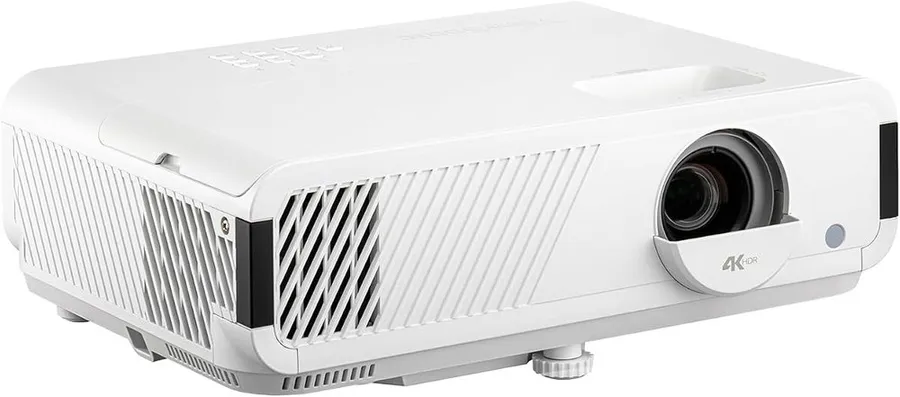
At around $549 the PX700HDH delivers a genuine 3,500 ANSI lumens and native 1080p, so it brings near-premium brightness to a mid-budget sim without the laser price tag.
What we like
- 3,500 ANSI lumens is a real, measured figure that holds up in rooms with some light
- Native 1080p keeps course graphics and shot data crisp
- Dual HDMI and vertical keystone make it flexible to mount and connect
What we don't
- Standard 1.5:1 throw needs more room behind the screen than the short throw picks
| Type | Lamp DLP |
|---|---|
| Brightness | 3,500 ANSI lumens |
| Throw | Standard (1.5:1) |
| Resolution | Native 1080p |
| Price | $549 |
| Install difficulty | Easy |
| Price bracket | $$ |
The ViewSonic PX700HDH is the sweet-spot pick for builders who want brightness without stepping up to laser money. Its headline number, 3,500 ANSI lumens, is a properly measured ANSI figure rather than an inflated marketing claim, so the picture stays punchy and readable even when the garage is not fully blacked out. That honesty is rare at around $549.
For a simulator it covers the essentials well. Native 1080p resolution renders GSPro and E6 course detail cleanly, dual HDMI inputs let you leave a PC and a media stick connected at once, and vertical keystone plus a 1.1x optical zoom give you some flexibility when lining up the image on your screen.
Its main limitation is throw distance. This is a standard 1.5:1 projector, not a short throw, so it needs a few more feet between the lens and the screen than the Optoma or BenQ short-throw units. In a deep room that is a non-issue; in a shallow one it forces a longer ceiling run or a rear shelf.
Buy the PX700HDH if you have the room depth and want the most usable brightness per dollar. If your bay is short and the projector has to sit close to the screen, choose the short-throw BenQ TH671ST or the Optoma GT2000HDR instead.
Research-based pick: this recommendation is based on product data, owner feedback and comparison with products we have tested, not on direct hands-on testing.
Buy it if: Value hunters with a deeper room who want honest brightness at a mid price
Skip it if: Your bay is shallow and needs a short-throw projector mounted close
Best for Dedicated Sim Rooms
Optoma GT2400HDR
by Optoma
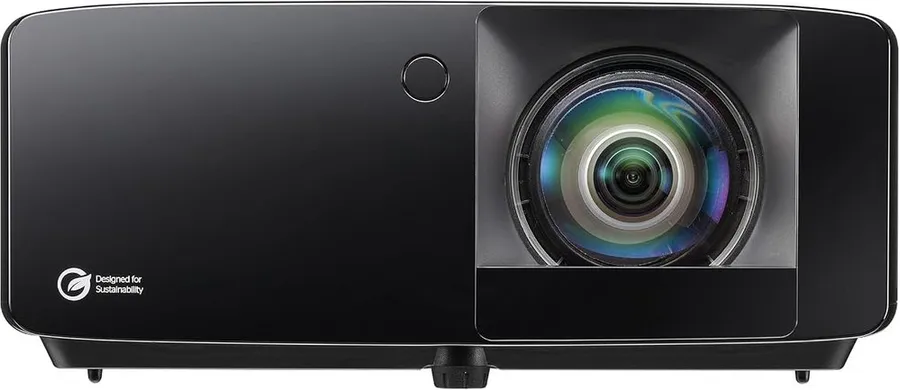
The GT2400HDR is marketed as golf-simulation ready, pairing a very short throw with a bright 4,200-lumen laser, so it is built for a purpose-designed sim room where you want maximum brightness on a big impact screen.
What we like
- 4,200 lumens is the brightest short-throw option here, so it holds color on a large screen
- Short throw plus laser engine mounts close and never needs a lamp change
- Explicitly tuned by Optoma for golf simulation with low input lag for gaming
What we don't
- At around $1,199 it costs noticeably more than the very similar GT2000HDR
| Type | Laser DLP |
|---|---|
| Brightness | 4,200 lumens |
| Throw | Short throw (0.5:1) |
| Resolution | 1080p, 4K HDR input |
| Price | $1,199 |
| Install difficulty | Moderate |
| Price bracket | $$$ |
The Optoma GT2400HDR is the projector Optoma itself points at golf. It is listed as golf-simulation ready and built around a short-throw lens and a 4,200-lumen laser engine, which is the most brightness of any short-throw unit on this list. On a large impact screen in a dedicated room, those extra lumens keep the image saturated and readable where a dimmer projector starts to look gray.
Everything about it suits a permanent build. The short throw lets it mount close to the screen so the beam clears your swing, the laser light source means no bulb to replace over years of play, and the low input lag keeps shot tracing and menus snappy. It accepts 4K HDR and renders sharp 1080p that sim software handles natively.
The honest question is value. It is very close in design to the cheaper GT2000HDR, and at around $1,199 you are paying a real premium mainly for the extra brightness. If your screen is smaller or your room darker, that step up may not pay for itself.
Choose the GT2400HDR when you are building a dedicated sim room around a big screen and want the brightest short-throw laser you can hang. If your space and budget are more modest, the GT2000HDR delivers most of the experience for less.
Research-based pick: this recommendation is based on product data, owner feedback and comparison with products we have tested, not on direct hands-on testing.
Buy it if: A purpose-built sim room where maximum brightness on a big screen matters
Skip it if: You are on a mid budget and can live with slightly less brightness
Best Premium
BenQ TK710STi
by BenQ
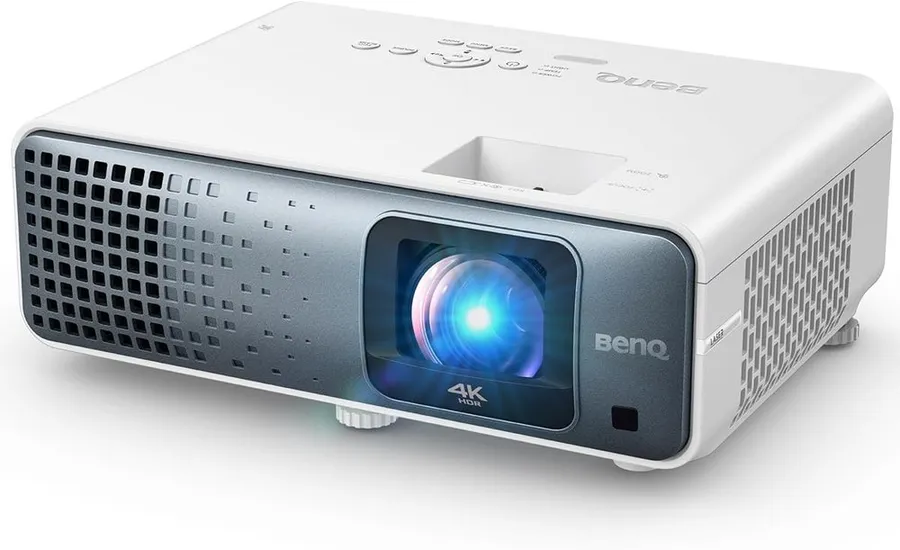
The TK710STi is a true 4K short-throw laser with a 4ms input lag and Android TV built in, so it is the pick for a high-end sim that doubles as a serious 4K home theater and gaming screen.
What we like
- Native 4K UHD resolution renders the sharpest course detail and doubles as a cinema projector
- 4ms input lag and 240Hz gaming mode keep both sim play and console gaming razor sharp
- Short throw laser with built-in Android TV, Netflix and AirPlay for all-in-one use
What we don't
- At around $1,899 it is the most expensive projector here by a wide margin
| Type | Laser DLP |
|---|---|
| Brightness | 3,200 lumens |
| Throw | Short throw (0.9:1) |
| Resolution | 4K UHD (3840x2160) |
| Price | $1,899 |
| Install difficulty | Moderate |
| Price bracket | $$$ |
The BenQ TK710STi is the projector for people who refuse to compromise. It is a native 4K UHD short-throw laser, so it renders course textures, grass and shot tracers with a sharpness the 1080p units here cannot match, and that same panel makes it a genuine 4K home theater centerpiece when the clubs are away.
For play it is exceptionally responsive. A 4ms input lag and a 240Hz gaming mode mean the sim reacts instantly and console gaming is flawless, while built-in Android TV with Netflix, AirPlay and Chromecast turns it into a self-contained media hub. At 3,200 lumens the laser holds a bright, stable image in a controlled room.
The obvious barrier is price. At roughly $1,899 it costs more than twice the Optoma GT2000HDR, and most sim software still outputs at 1080p, so the 4K advantage shows up more in movies and detail than in raw shot data.
Buy the TK710STi if you want one projector to do everything at the highest level: 4K sim graphics, home cinema and low-lag gaming. If your room is purely a golf bay running 1080p software, the Optoma GT2000HDR gets you most of the way for far less money.
Research-based pick: this recommendation is based on product data, owner feedback and comparison with products we have tested, not on direct hands-on testing.
Buy it if: High-end builds that want 4K sharpness plus real home theater and gaming duty
Skip it if: You only run 1080p sim software and cannot justify the premium
Best for Bright Rooms
ViewSonic LS740W
by ViewSonic
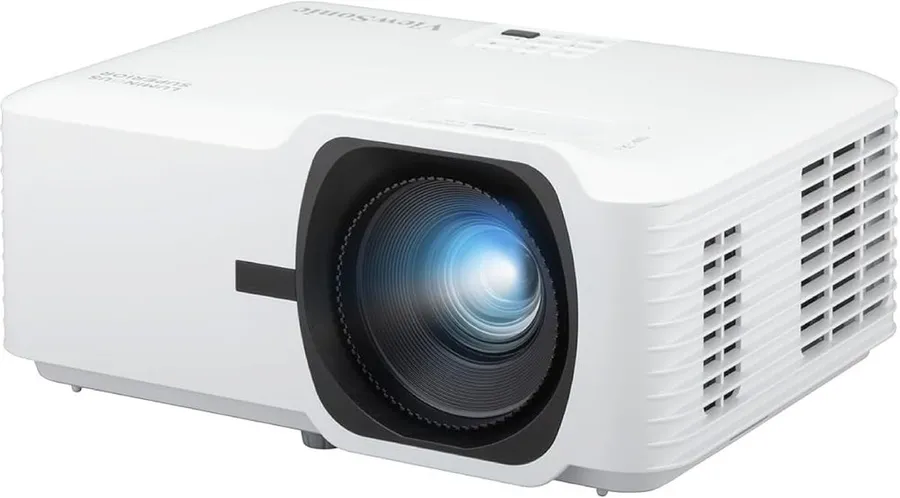
With 6,000 laser lumens the LS740W is by far the brightest projector here, so it is the answer when your sim shares a room with windows or open garage light that would wash out anything dimmer.
What we like
- 6,000 lumens overpowers ambient light that flattens every other projector on this list
- Laser light source means no lamp changes and stable brightness over years of use
- H/V keystone and 360-degree projection give total freedom in how you mount it
What we don't
- WXGA (1280x800) resolution is lower than 1080p, so fine course detail looks softer
| Type | Laser |
|---|---|
| Brightness | 6,000 lumens |
| Throw | Standard (1.5:1) |
| Resolution | WXGA (1280x800) |
| Price | $980 |
| Install difficulty | Easy |
| Price bracket | $$ |
The ViewSonic LS740W solves the one problem no amount of clever mounting can fix: too much light. At 6,000 lumens it is nearly double the brightness of anything else on this list, so in a room with windows, spill from an open garage door, or overhead lights you cannot switch off, it still lays down a bright, watchable image where a 3,000-lumen projector would go washed out and gray.
It backs that brightness with practicality. The laser light engine holds its output for years with no bulb to replace, and H/V keystone plus 360-degree projection give you enormous freedom to place it wherever the room allows, even at odd angles, and still square up the picture on your screen.
The compromise is resolution. This is a WXGA panel at 1280x800, lower than the native 1080p of most picks here, so course textures and shot tracers look a touch softer up close. In a bright room that trade is usually worth it, because a sharp image you cannot see is no use at all.
Choose the LS740W when brightness is your binding constraint and you cannot fully darken the space. If you can control the light and want crisper graphics, a 1080p unit like the Optoma GT2000HDR or ViewSonic PX700HDH will look sharper.
Research-based pick: this recommendation is based on product data, owner feedback and comparison with products we have tested, not on direct hands-on testing.
Buy it if: Sims in bright rooms, open garages or spaces with windows you cannot black out
Skip it if: You want maximum image sharpness and can fully control room lighting
How we researched these picks#
We started from the projectors home simulator builders genuinely cross-shop today, then narrowed to seven real, currently sold units spanning every price bracket, from a roughly $270 budget LED to a $1,899 4K laser. Every product here has published manufacturer specifications and, in most cases, a meaningful base of verified owner reviews, which keeps the list grounded in projectors you can order right now rather than spec-sheet promises.
For each candidate we pulled the manufacturer specifications, read across aggregated verified owner feedback, and compared units head to head on the factors that change a buying decision for a realistic home golf simulator: brightness in lumens, throw ratio and how close the projector can mount, native resolution, light-source type and its maintenance, and overall value at the price. We deliberately spread the final seven across LED, lamp and laser designs and across throw types, so there is a sensible pick for different rooms, lighting and budgets.
These recommendations are research-based, not hands-on tested. We have not mounted and calibrated each unit in a sim bay ourselves, so we lean on published specs and the consistent themes in owner feedback rather than our own screen measurements. Where a projector has a real weakness, such as low brightness, a lower resolution panel, a lamp that needs replacing, or a throw ratio that demands a deep room, we call it out plainly.
How to choose a golf simulator projector (buying guide)#
Match the throw ratio to your room depth. This is the factor that ends most builds. A short-throw projector like the Optoma GT2000HDR (0.5:1) or BenQ TH671ST (0.69:1) fills a full-size impact screen from just a few feet away, so you can mount it close on the ceiling and the beam clears your swing. A standard 1.5:1 unit like the ViewSonic PX700HDH needs several feet more between lens and screen, which only works in a deeper room.
Buy enough brightness for your lighting. In a fully dark room, 3,000 lumens is plenty and units like the BenQ TH671ST look great. Add any daylight and you need more: the 4,200-lumen Optoma GT2400HDR holds color on a big screen, and the 6,000-lumen ViewSonic LS740W is the pick when windows or an open garage flood the room. Budget LEDs near 600 lumens only work blacked out.
Choose laser over lamp if you can. Laser light engines like those in the Optoma and BenQ TK710STi units hold their brightness for years with no bulb to replace, which suits a permanent sim you will use for hundreds of hours. A lamp projector such as the BenQ TH671ST costs less up front but slowly dims and will eventually need a replacement bulb.
Do not overpay for resolution. Most simulator software still runs at 1080p, so a native-1080p projector like the Optoma GT2000HDR or ViewSonic PX700HDH renders course graphics and shot tracers cleanly. Step up to a native 4K unit like the BenQ TK710STi only if the projector will also serve as a serious home theater screen, where the extra sharpness earns its premium.
Check input lag if you also game. Sim play is forgiving, but if the projector doubles as a console screen, low input lag matters. The BenQ TK710STi (4ms, 240Hz mode) and the low-lag BenQ TH671ST keep both shot tracing and gaming responsive, while a slow budget projector can feel laggy in menus.
Weigh value at your budget. Spend the least that covers your room and lighting. A short-throw or budget LED pick like the GooDee 4K Smart is fine for a dark test build, the mid-priced Optoma GT2000HDR is the all-round sweet spot, and a premium 4K laser like the BenQ TK710STi only makes sense if you want cinema and gaming duty alongside golf. Bright rooms justify the high-lumen ViewSonic LS740W even at lower resolution.
Frequently asked questions
What is the best projector for a home golf simulator?
For most builds the Optoma GT2000HDR is the best all-round choice. Its 0.5:1 short throw fills a big screen from a couple of feet away so it clears your swing, and its 3,500-lumen laser stays bright without ever needing a lamp change. Drop to the roughly $270 GooDee 4K Smart if you are on a strict budget and can darken the room, or step up to the 4K BenQ TK710STi if you want cinema-grade sharpness too.
How many lumens do I need for a golf simulator projector?
Aim for at least 3,000 lumens for a controlled, mostly dark room, which covers picks like the Optoma GT2000HDR, BenQ TH671ST and ViewSonic PX700HDH. If your bay has windows, an open garage door, or lights you cannot switch off, go much higher: the 6,000-lumen ViewSonic LS740W is built to punch through that ambient light. Budget LED units near 600 lumens only look good in a fully blacked-out room.
Do I need a short throw projector for a golf simulator?
In most rooms, yes. A short-throw projector like the Optoma GT2000HDR or BenQ TH671ST fills a full-size screen from just a few feet away, which lets you mount it close on the ceiling so the beam clears your backswing instead of casting a shadow. A standard-throw unit like the ViewSonic PX700HDH works only if your room is deep enough to place the lens well back from the screen.
Does projector resolution matter for a golf simulator?
Less than you might think. Most simulator software still outputs at 1080p, so a native-1080p projector like the Optoma GT2000HDR renders course graphics and shot data cleanly. A 4K unit like the BenQ TK710STi mainly pays off if the projector doubles as a home theater. Brightness and throw ratio will affect your sim experience far more than jumping from 1080p to 4K.
About the author

Jim Bennett Founder & lead reviewer
Jim is the guy behind Golf Sim Jim. He builds home golf simulators and compares launch monitors by the numbers that actually decide a setup, room fit, accuracy and software.
Home setup: Garage bay: SkyTrak+, 10 ft ceiling, BenQ LK936ST short-throw
- Launch monitor accuracy
- Home simulator builds
- Impact screens & enclosures
- Sim software (GSPro, E6, TGC)