
7 Best Garmin Launch Monitors and Rivals Compared for 2026
We compared the Garmin R10 and R50 launch monitors against five real rivals on accuracy, space, metrics and price to find the best pick for every golfer.

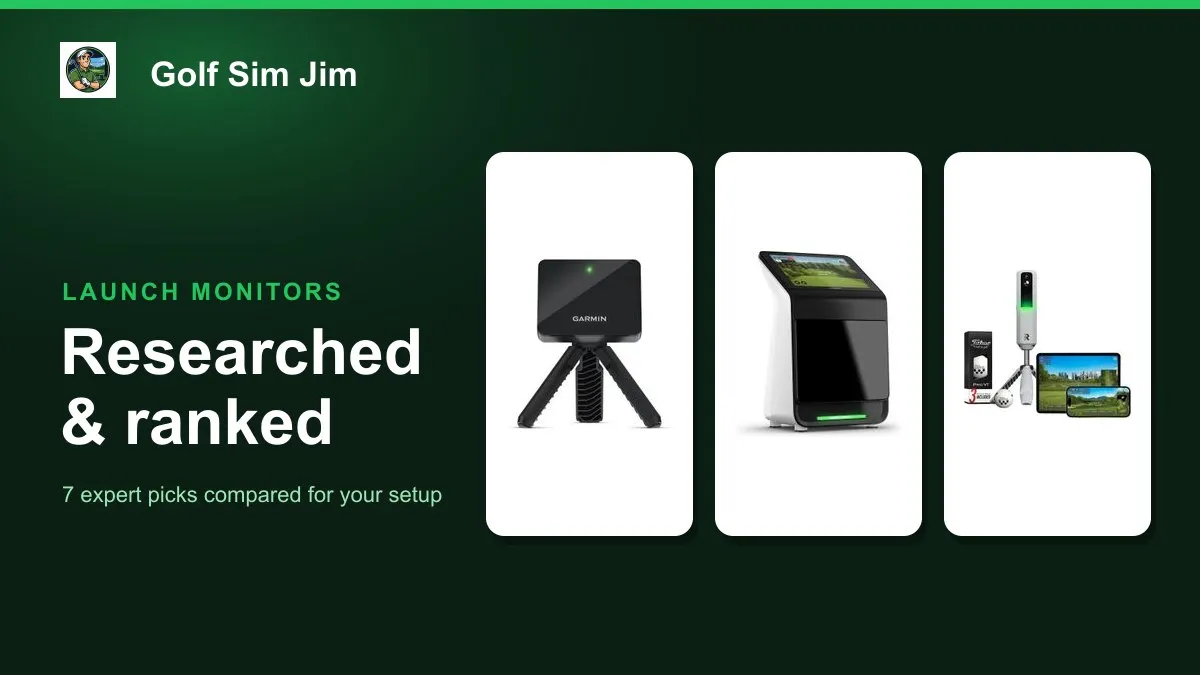
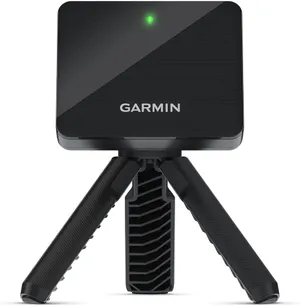
Garmin makes the launch monitor most golfers reach for first, but the lineup now runs from a $499 portable radar all the way to a near-$5,000 camera simulator, and the right Garmin is not automatically the right monitor for your space or budget. This guide compares the two Garmin units people cross-shop the most, the Approach R10 and the premium R50, then lines them up against five real, widely owned rivals from Rapsodo, PRGR and Voice Caddie. We weighed each unit on measurement accuracy and the technology behind it, how many useful metrics it reports, how much room it needs to read shots, software and subscription costs, and value for the money. Whether you want cheap speed numbers for the range, an accurate monitor for a tight indoor net, on-course GPS or a full home simulator, one of these picks fits. Below you will find the R10 as the best overall choice plus category winners for premium simulator play, small spaces, on-course use, standalone practice, budget and iPhone owners, followed by a plain buying guide.
Table of contents
- Quick picks
- Price compared
- Comparison table
- Best Overall: Garmin Approach R10
- Best Premium: Garmin Approach R50
- Best for Small Spaces: Rapsodo MLM2PRO
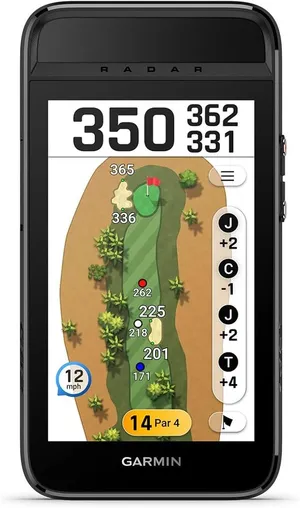
- Best for On-Course Use: Garmin Approach G82
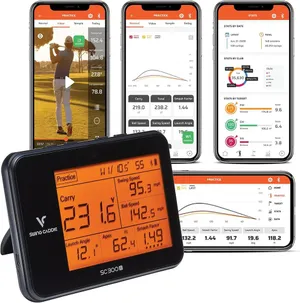
- Best Standalone: Voice Caddie SC300i
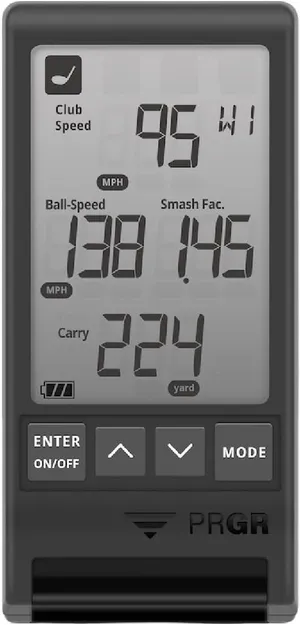
- Best Budget: PRGR HS-130A
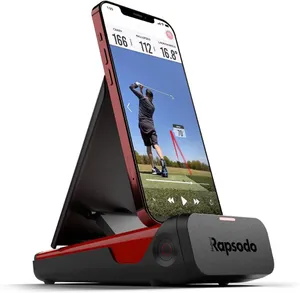
- Best for iPhone Users: Rapsodo MLM
- How we researched these picks
- How to choose a golf launch monitor (buying guide)
- FAQ
Quick picks
Every pick wins a specific use case. Jump to the full review before you buy.
-
Best Overall
Garmin Approach R10
The R10 packs 14 usable metrics, a free app and 43,000-plus virtual courses into a $499 radar unit, which makes it the launch monitor most golfers should buy first.
-
Best Premium
Garmin Approach R50
The R50 folds three high-speed cameras, 15-plus metrics and a built-in 10-inch touchscreen into one unit, giving you a near-complete home simulator without a laptop.
-
Best for Small Spaces
Rapsodo MLM2PRO
The MLM2PRO pairs dual cameras with radar to read shots at impact, so it stays accurate in a short indoor net where the radar-only R10 runs out of room.
-
Best for On-Course Use
Garmin Approach G82
The G82 is the only pick here that doubles as a full handheld GPS, folding course yardages and a built-in radar monitor into one 5-inch touchscreen you carry in the cart.
-
Best Standalone
Voice Caddie SC300i
The SC300i shows ball speed, distance and smash factor on its own screen and even calls them out by voice, so you can train at the range with no phone or app at all.
-
Best Budget
PRGR HS-130A
At around $200 the PRGR HS-130A is a pocket Doppler radar that nails the core speed numbers, making it the cheapest reliable way to track ball speed, club speed and smash factor.
-
Best for iPhone Users
Rapsodo MLM
The original Rapsodo MLM turns an iPhone or iPad into a launch monitor with GPS satellite views and video for about $200, a strong value if you are already in the Apple ecosystem.
Compare every pick
| Product | Award | Type | Key metrics | Price | Warranty | Best for | Where to buy |
|---|---|---|---|---|---|---|---|
| Garmin Approach R10 | Best Overall | Radar (Doppler) | 14 metrics | $499 | 1 year | Golfers who want one flexible monitor for range, backyard and garage | Check price on Amazon for Garmin Approach R10 at Amazon (affiliate link) |
| Garmin Approach R50 | Best Premium | Photometric (3 cameras) | 15+ metrics | $4,999 | 1 year | Serious golfers building a permanent indoor simulator | Check price on Amazon for Garmin Approach R50 at Amazon (affiliate link) |
| Rapsodo MLM2PRO | Best for Small Spaces | Camera plus radar (dual) | 15 metrics | $600 | 1 year | Indoor golfers with limited ball flight in front of a net | Check price on Amazon for Rapsodo MLM2PRO at Amazon (affiliate link) |
| Garmin Approach G82 | Best for On-Course Use | Handheld GPS with built-in radar | GPS yardages plus core swing data | $600 | 1 year | Golfers who want on-course yardages and light range data in one device | Check price on Amazon for Garmin Approach G82 at Amazon (affiliate link) |
| Voice Caddie SC300i | Best Standalone | Radar (Doppler) | 6 core metrics | $250 | 1 year | Golfers who want instant range feedback without a phone | Check price on Amazon for Voice Caddie SC300i at Amazon (affiliate link) |
| PRGR HS-130A | Best Budget | Radar (Doppler) | 5 core metrics | $200 | 1 year | Speed trainers and beginners who want core numbers cheaply | Check price on Amazon for PRGR HS-130A at Amazon (affiliate link) |
| Rapsodo MLM | Best for iPhone Users | Camera plus radar (iOS only) | 5 core metrics | $200 | 1 year | Apple users who want cheap, visual range feedback | Check price on Amazon for Rapsodo MLM at Amazon (affiliate link) |
Swipe sideways to compare every column.
Best Overall
Garmin Approach R10
by Garmin
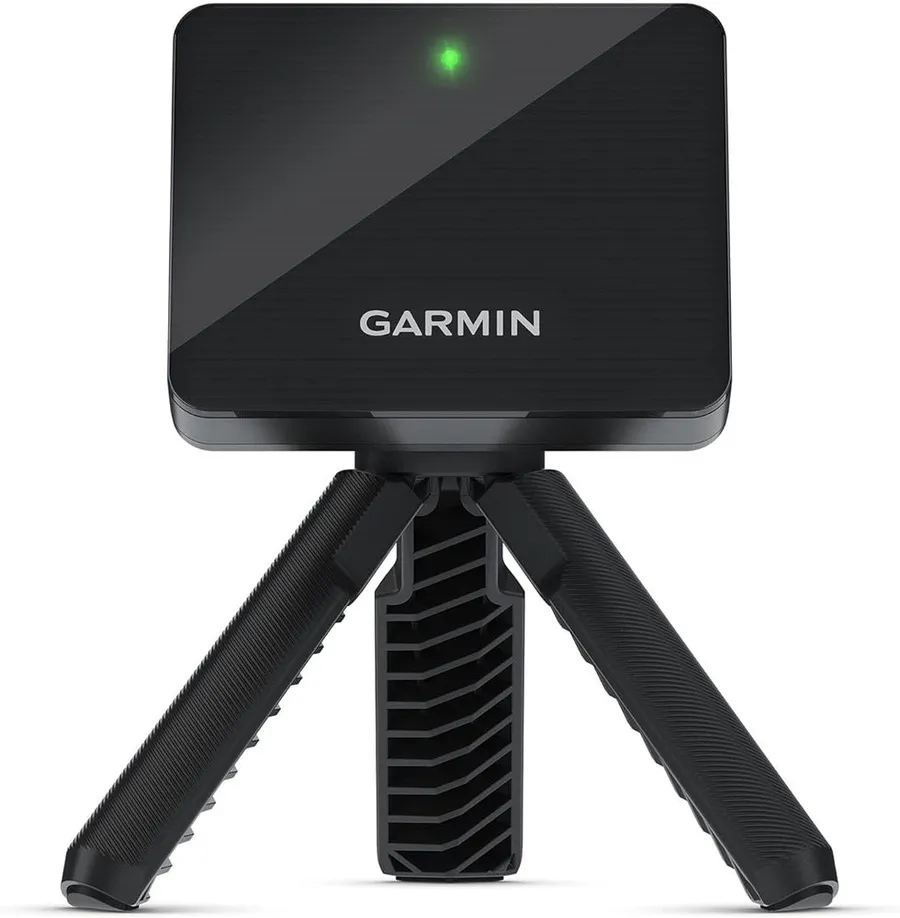
The R10 packs 14 usable metrics, a free app and 43,000-plus virtual courses into a $499 radar unit, which makes it the launch monitor most golfers should buy first.
What we like
- 14 ball and club metrics from a single portable radar
- Free Garmin Golf app with 43,000-plus playable courses
- Works on both Android and iPhone
What we don't
- Doppler radar needs 7 to 8 feet of ball flight, so it struggles in a short indoor net setup
| Type | Radar (Doppler) |
|---|---|
| Key metrics | 14 metrics |
| Best for | All-round home and range use |
| Price | $499 |
| Warranty | 1 year |
| Install difficulty | Easy |
| Price bracket | $$ |
The Garmin Approach R10 wins best overall because it does the most things well for the least money. A single palm-sized radar reads 14 metrics, from club head speed and ball speed to launch angle, spin and smash factor, and it feeds all of that into the free Garmin Golf app rather than a paywalled subscription. That combination of depth, price and no recurring fee is why it remains the default recommendation in 2026.
Day to day it is genuinely easy to live with. You set the tripod, mount your phone, and start hitting; the up-to-10-hour battery covers a full range session, and the app stores shot history so you can track progress. Play mode lets you take the same unit indoors and hit around virtual courses on a projector or TV, which turns a garage bay into a simple simulator without buying separate software.
Its one real limitation is space. Because it is Doppler radar, it needs to watch the ball travel roughly 7 to 8 feet to stay accurate, so a cramped indoor net with only a few feet of flight will hurt its numbers. If that describes your room, a camera unit like the Rapsodo MLM2PRO or the premium Garmin R50 reads better at impact.
Buy the R10 if you want one monitor that flexes across the range, the backyard and a deep garage. Choose something else only if your space is very tight, your budget is under $250, or you specifically want a standalone screen with no phone involved.
Research-based pick: this recommendation is based on product data, owner feedback and comparison with products we have tested, not on direct hands-on testing.
Buy it if: Golfers who want one flexible monitor for range, backyard and garage
Skip it if: You only have a few feet of space in front of an indoor net
Best Premium
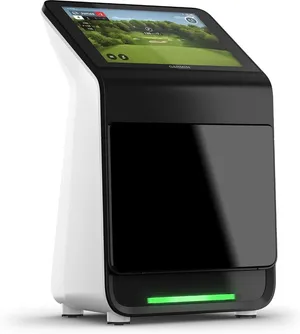
Garmin Approach R50
by Garmin
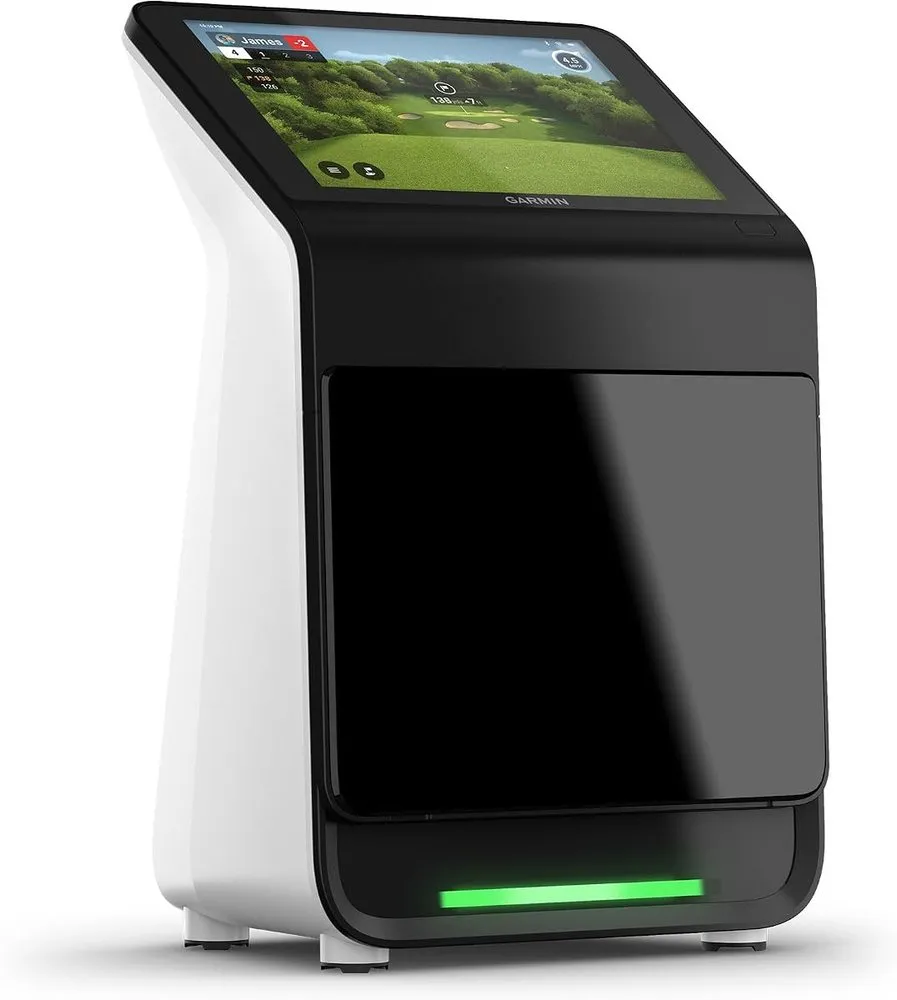
The R50 folds three high-speed cameras, 15-plus metrics and a built-in 10-inch touchscreen into one unit, giving you a near-complete home simulator without a laptop.
What we like
- Three high-speed cameras read 15-plus metrics including spin and axis
- Built-in 10-inch color touchscreen means no laptop or phone needed
- Accurate right in front of a net, so it suits tight indoor rooms
What we don't
- At around $5,000 it costs roughly ten times the R10
| Type | Photometric (3 cameras) |
|---|---|
| Key metrics | 15+ metrics |
| Best for | Premium indoor simulator |
| Price | $4,999 |
| Warranty | 1 year |
| Install difficulty | Moderate |
| Price bracket | $$$ |
The Garmin Approach R50 is the premium pick because it is the most complete single box here. Three high-speed cameras capture the ball and club at impact for 15 or more metrics, including the spin and spin axis numbers that matter for shot shaping and club fitting, and the whole system runs on a built-in 10-inch touchscreen. You do not need to tether a laptop or balance a phone on a tripod, which makes it feel more like an appliance than an accessory.
Because it measures photometrically at impact rather than tracking flight, it stays accurate in a short indoor space, which is exactly where the radar-based R10 gives up ground. Access to 43,000-plus courses turns it into a genuine home simulator, so a spare room, a mat and a screen become a place you can actually play golf year round.
The obvious drawback is price. At around $5,000 it costs roughly ten times the R10, and it is a fixed setup rather than something you toss in a bag for the range. Battery life is also short at about four hours, though most owners run it plugged in as a permanent installation.
Buy the R50 if you are committing to a dedicated indoor bay and want lab-style data with no computer in the loop. If you mostly practice outdoors, travel to the range, or simply want the best value, the R10 delivers most of what matters for a fraction of the outlay.
Research-based pick: this recommendation is based on product data, owner feedback and comparison with products we have tested, not on direct hands-on testing.
Buy it if: Serious golfers building a permanent indoor simulator
Skip it if: You want portable range practice or a tight budget
Best for Small Spaces
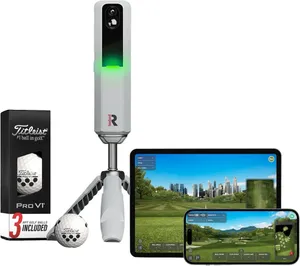
Rapsodo MLM2PRO
by Rapsodo
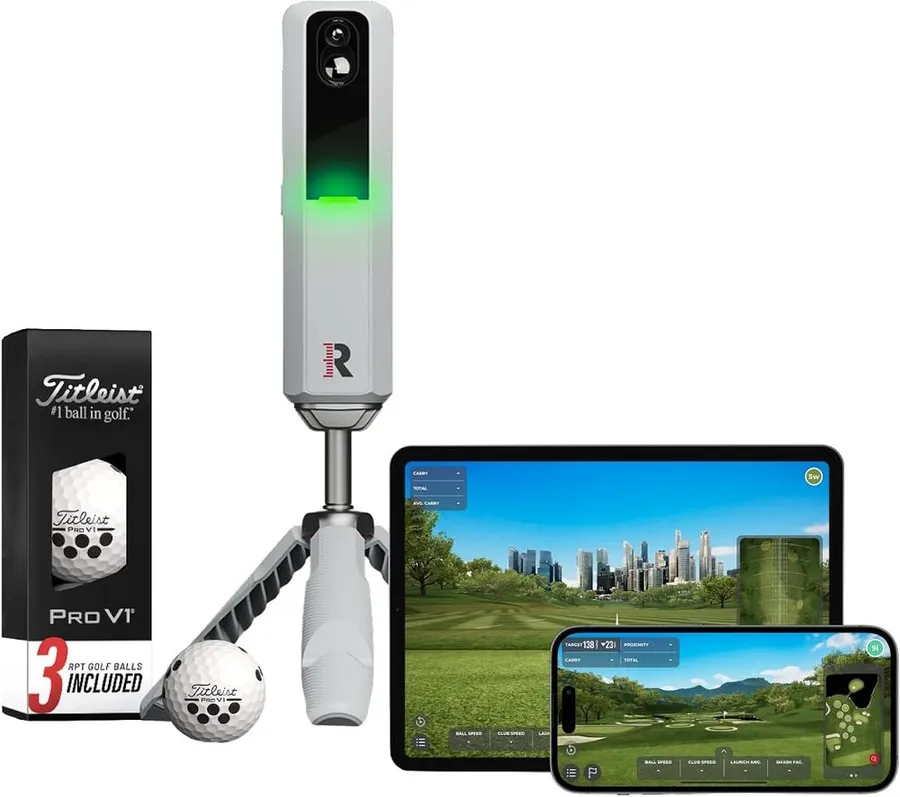
The MLM2PRO pairs dual cameras with radar to read shots at impact, so it stays accurate in a short indoor net where the radar-only R10 runs out of room.
What we like
- Dual camera and radar system reads 15 metrics accurately in tight spaces
- Includes RPT-marked balls for measured spin, plus impact video replay
- Works indoors and outdoors on both iPhone and Android
What we don't
- Full metrics and course play sit behind a paid annual membership after the first year
| Type | Camera plus radar (dual) |
|---|---|
| Key metrics | 15 metrics |
| Best for | Tight indoor spaces |
| Price | $600 |
| Warranty | 1 year |
| Install difficulty | Easy |
| Price bracket | $$ |
The Rapsodo MLM2PRO takes best for small spaces because it solves the exact problem that limits radar units indoors. It combines dual high-speed cameras with radar and reads the ball at impact, so it does not need several feet of flight to produce trustworthy numbers. In a garage or spare room with a net just a few feet away, that is the difference between usable data and guesswork.
In use it delivers 15 metrics, records impact video you can scrub through, and ships with RPT-marked balls so it can measure real spin rather than estimate it. It runs on iPhone and Android, works outdoors at the range as well, and doubles as a simulator with a library of courses, which makes it a flexible one-unit setup for someone short on room.
The catch is the business model. The richest metrics and the full course-play experience move behind a paid annual membership once the first year lapses, so the sticker price is not the whole story. Factor that recurring cost in when you compare it against the subscription-free R10 or a standalone unit.
Buy the MLM2PRO if your space is tight and impact-based accuracy matters more to you than avoiding fees. If you have a deep bay or an outdoor range and want to skip subscriptions, the R10 is the more economical long-term choice.
Research-based pick: this recommendation is based on product data, owner feedback and comparison with products we have tested, not on direct hands-on testing.
Buy it if: Indoor golfers with limited ball flight in front of a net
Skip it if: You dislike recurring subscription fees
Best for On-Course Use
Garmin Approach G82
by Garmin
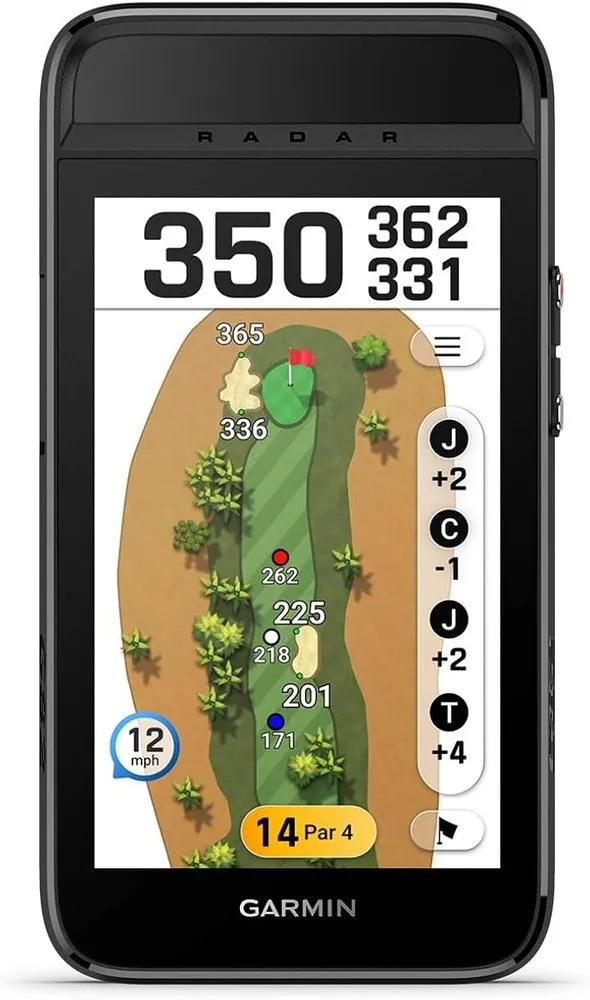
The G82 is the only pick here that doubles as a full handheld GPS, folding course yardages and a built-in radar monitor into one 5-inch touchscreen you carry in the cart.
What we like
- Combines a premium handheld golf GPS with a built-in radar launch monitor
- 5-inch color touchscreen with 43,000-plus preloaded courses
- Long 25-hour GPS battery and IPX7 water resistance
What we don't
- Radar metrics are lighter than the dedicated R10, so it is a practice aid rather than a full lab
| Type | Handheld GPS with built-in radar |
|---|---|
| Key metrics | GPS yardages plus core swing data |
| Best for | On-course distances plus practice |
| Price | $600 |
| Warranty | 1 year |
| Install difficulty | Easy |
| Price bracket | $$ |
The Garmin Approach G82 earns best for on-course use because it is really two products in one. It is a premium handheld GPS with a bright 5-inch touchscreen and more than 43,000 preloaded courses, and it also hides a built-in radar launch monitor so you can capture swing data at the range with the same device you carry in the cart. Nothing else in this comparison covers both jobs.
On the course it behaves like Garmin’s top GPS handhelds, with a virtual caddie, hazard and layup distances, and a long 25-hour battery that easily survives multiple rounds. IPX7 water resistance means a rain delay or a dropped unit in wet grass is not a crisis. At the range you can check ball speed, smash factor and estimated distances between holes.
The trade-off is depth. Its radar reports fewer metrics than the dedicated R10, so it is best seen as a practice companion rather than a full launch lab. If you want to study spin, launch angle and shot shape in detail, a focused monitor will tell you more.
Buy the G82 if you value one device that handles both on-course navigation and casual swing feedback. If your priority is rich practice data or building a simulator, the R10 or R50 are the better tools.
Research-based pick: this recommendation is based on product data, owner feedback and comparison with products we have tested, not on direct hands-on testing.
Buy it if: Golfers who want on-course yardages and light range data in one device
Skip it if: You want deep launch data for serious swing work or club fitting
Best Standalone
Voice Caddie SC300i
by Voice Caddie
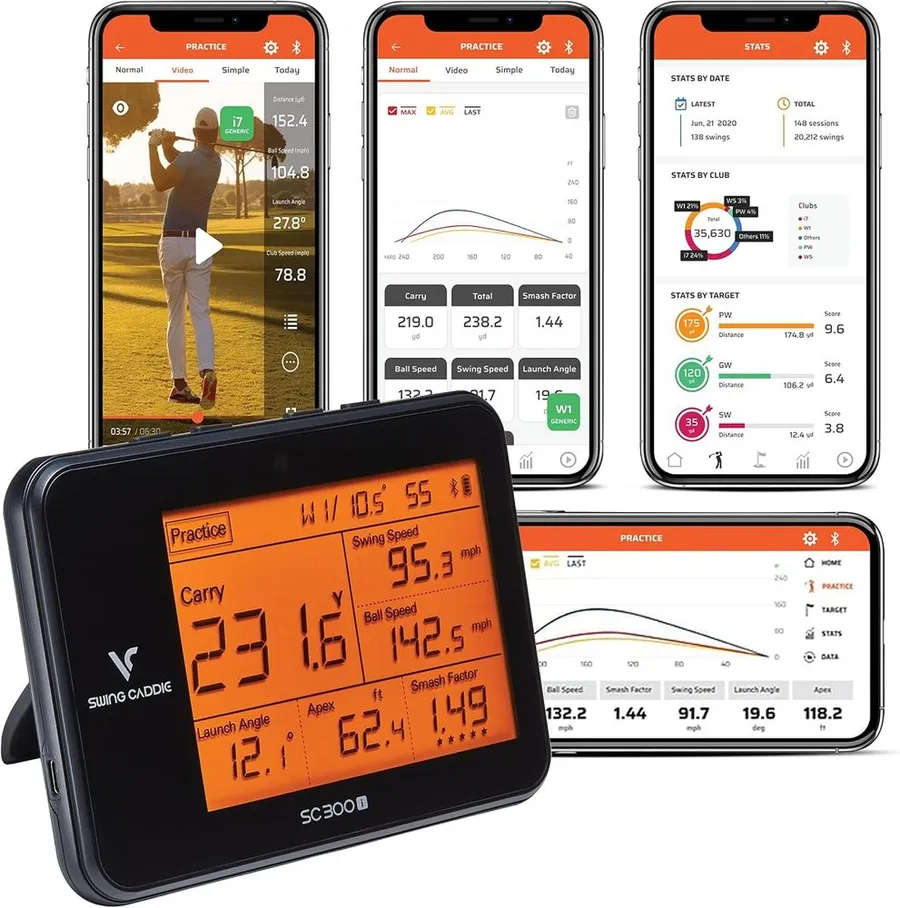
The SC300i shows ball speed, distance and smash factor on its own screen and even calls them out by voice, so you can train at the range with no phone or app at all.
What we like
- Fully standalone with a built-in display and spoken shot readouts
- No phone, app or subscription required to see your numbers
- Up to 20-hour battery and pocket-sized for easy carry
What we don't
- Reports only a handful of core metrics, so it lacks spin and detailed shot shape
| Type | Radar (Doppler) |
|---|---|
| Key metrics | 6 core metrics |
| Best for | Phone-free range practice |
| Price | $250 |
| Warranty | 1 year |
| Install difficulty | Easy |
| Price bracket | $ |
The Voice Caddie SC300i wins best standalone because it removes the phone from the equation entirely. It is a Doppler radar unit with its own display, and it reads out each shot by voice, so you set it behind the ball and simply hit. There is no app to launch, no pairing to fumble with, and no subscription to renew, which is a real advantage for anyone who finds the phone-on-a-tripod routine tedious.
For range practice it hits the essentials: ball speed, club speed, smash factor, carry and total distance, apex and launch angle. The up-to-20-hour battery and pocket size mean it lives in your bag and comes out whenever you want quick feedback. Owners consistently praise how fast it is to start a session compared with app-driven rivals.
Its limit is depth. It reports a handful of core numbers rather than the R10’s 14, and it does not measure spin or drive a simulator, so it is a focused practice tool rather than an all-in-one system. If you want to study shot shape or play virtual courses, look higher up the list.
Buy the SC300i if you want honest, instant range numbers with zero setup friction and no ongoing cost. If you want richer data or indoor simulator play, the R10 or a camera unit will serve you better.
Research-based pick: this recommendation is based on product data, owner feedback and comparison with products we have tested, not on direct hands-on testing.
Buy it if: Golfers who want instant range feedback without a phone
Skip it if: You want deep data, simulator play or club-fitting detail
Best Budget
PRGR HS-130A
by PRGR
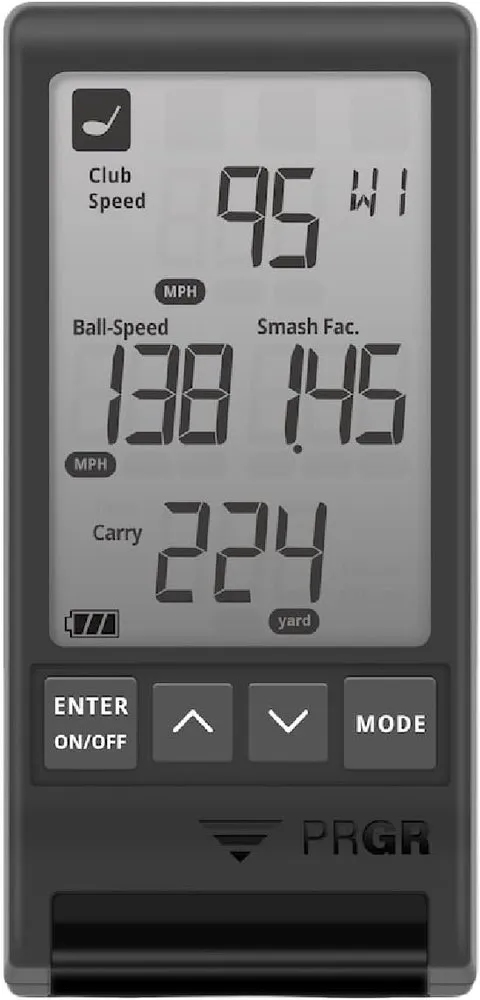
At around $200 the PRGR HS-130A is a pocket Doppler radar that nails the core speed numbers, making it the cheapest reliable way to track ball speed, club speed and smash factor.
What we like
- Reliable club speed, ball speed and smash factor for about $200
- Pocket-sized and standalone with a simple built-in display
- Huge base of positive owner reviews for its accuracy at the price
What we don't
- Measures only a few core metrics, with no spin, launch angle or app history
| Type | Radar (Doppler) |
|---|---|
| Key metrics | 5 core metrics |
| Best for | Swing speed training |
| Price | $200 |
| Warranty | 1 year |
| Install difficulty | Easy |
| Price bracket | $ |
The PRGR HS-130A is the budget champion because it delivers the numbers most golfers actually watch for a fraction of the price of everything above it. It is a pocket Doppler radar that reports club head speed, ball speed and smash factor, plus carry distance, and it does so with a level of accuracy that its very large base of owner reviews backs up. For speed work and simple feedback, it punches far above $200.
It is refreshingly simple to use. There is no phone, no app and no subscription; you stand it behind the ball, hit, and read the result off its small screen. That makes it a favorite for players grinding on swing speed, and for beginners who just want to confirm they are making solid contact without wading through a data dashboard.
The trade-off is scope. It measures only a handful of core metrics, so there is no spin, no launch angle, no shot-shape analysis and no stored history to review later. It is a training aid, not a launch lab, and it will not drive a simulator.
Buy the HS-130A if you want dependable speed and smash numbers on the cheap and nothing more. If you want to study spin and shot shape or play virtual courses, step up to the R10 or a camera unit.
Research-based pick: this recommendation is based on product data, owner feedback and comparison with products we have tested, not on direct hands-on testing.
Buy it if: Speed trainers and beginners who want core numbers cheaply
Skip it if: You want full launch data, spin or simulator play
Best for iPhone Users
Rapsodo MLM
by Rapsodo
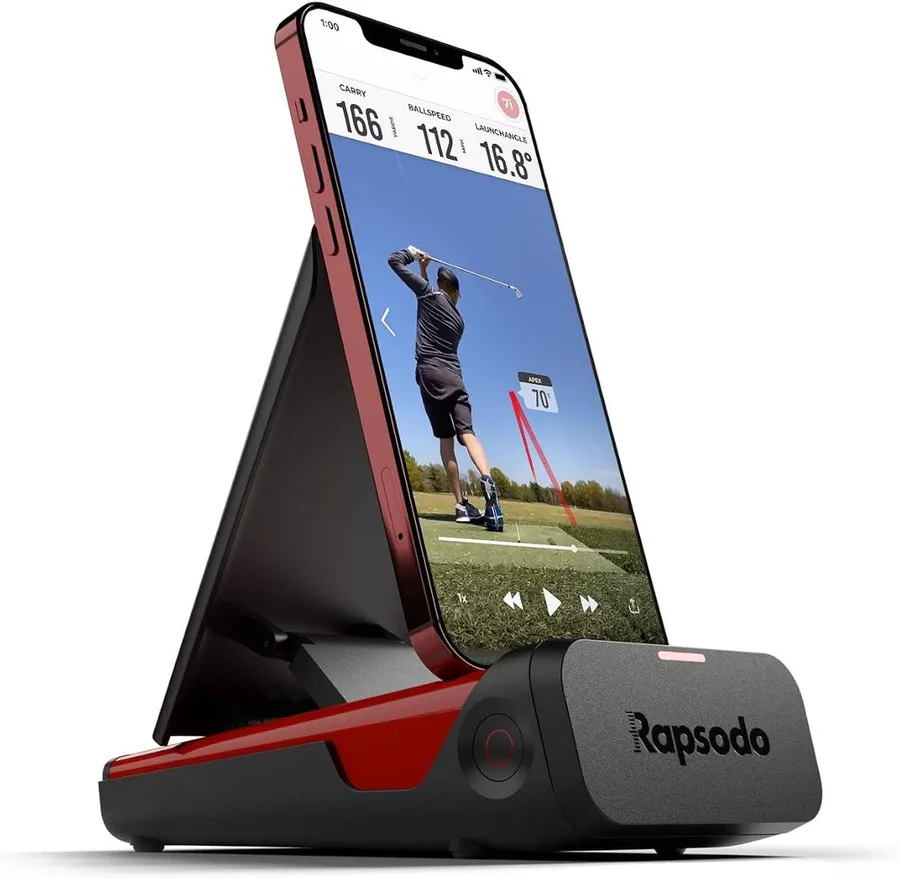
The original Rapsodo MLM turns an iPhone or iPad into a launch monitor with GPS satellite views and video for about $200, a strong value if you are already in the Apple ecosystem.
What we like
- Turns an iPhone or iPad into a capable launch monitor for around $200
- GPS satellite view and shot video make range sessions visual
- Massive base of verified owner reviews confirms its value
What we don't
- Works with iPhone and iPad only, so Android users are shut out entirely
| Type | Camera plus radar (iOS only) |
|---|---|
| Key metrics | 5 core metrics |
| Best for | Budget iPhone practice |
| Price | $200 |
| Warranty | 1 year |
| Install difficulty | Easy |
| Price bracket | $ |
The original Rapsodo MLM is the pick for iPhone users because it leans on hardware you already own. For about $200 it clips into the Rapsodo app on an iPhone or iPad and reads the core numbers, then layers on features that make practice feel modern: a GPS satellite view of your shot and automatic video capture of each swing. Its enormous review base, one of the largest in this category, speaks to how many golfers have found that worth the money.
In practice it is an easy, visual way to work at the range. Seeing your ball flight mapped over a satellite image and being able to replay the swing that produced it is more engaging than reading raw digits, and the price makes it a low-risk entry point for someone curious about launch data.
The hard limitation is platform. It works with iPhone and iPad only, so Android owners cannot use it at all, and it reports fewer metrics than the newer camera-based MLM2PRO. It is very much a budget entry rather than a full lab.
Buy the MLM if you are firmly in the Apple ecosystem and want cheap, visual range feedback. If you carry an Android phone, want spin data, or plan to play indoors, choose the R10, the MLM2PRO or a standalone unit instead.
Research-based pick: this recommendation is based on product data, owner feedback and comparison with products we have tested, not on direct hands-on testing.
Buy it if: Apple users who want cheap, visual range feedback
Skip it if: You use Android or want deep, spin-level data
How we researched these picks#
We started from the brand most golfers search first, Garmin, then built a comparison around the two units shoppers actually weigh against each other, the Approach R10 and the premium R50, before adding the rivals people cross-shop when they are deciding. Every product here is a real, currently sold unit with a meaningful base of verified owner reviews, which keeps the list grounded in devices you can order today rather than spec-sheet promises.
For each candidate we pulled the manufacturer specifications, read across aggregated verified owner feedback, and compared units head to head on the factors that change a buying decision: measurement accuracy and the technology behind it, the number and usefulness of the metrics reported, how much space the unit needs to read shots, software and subscription costs, and overall value at the price. We deliberately spread the final seven across price brackets and use cases, from a $200 pocket radar to a near-$5,000 camera simulator, so there is a sensible pick for different budgets and rooms.
These recommendations are research-based, not hands-on tested. We have not swung in front of each unit ourselves, so we lean on published specs and the consistent themes in owner feedback rather than our own range data. Where a device has a real weakness, such as a subscription requirement, a platform lock or a space constraint, we call it out plainly.
How to choose a golf launch monitor (buying guide)#
Match the technology to your space. Doppler radar units like the Garmin R10, Voice Caddie SC300i and PRGR HS-130A read the ball in flight, so they need room, ideally 7 to 8 feet of travel, and they shine outdoors or in a deep bay. Photometric camera units such as the Garmin R50 measure at impact and stay accurate right in front of a net, which makes them the better fit for a cramped garage or spare room. Hybrid camera-and-radar units like the Rapsodo MLM2PRO split the difference for indoor and outdoor use.
Decide how many metrics you actually need. A speed trainer only needs ball speed, club speed and smash factor, which the $200 PRGR HS-130A or the Voice Caddie SC300i deliver. If you want to study shot shape, launch angle and spin, or fit clubs, you need the R10’s 14 metrics or a camera system reading 15 or more like the R50 and MLM2PRO. Paying for metrics you will never read is wasted money.
Check for subscriptions before you buy. Sticker price is not always the full cost. The Garmin R10, R50 and G82 run on the free Garmin Golf app, and the SC300i and PRGR HS-130A show data on the device with no fee at all. The Rapsodo MLM2PRO, by contrast, gates its richest data and course play behind a paid annual plan, so add that recurring fee so two units at the same price are judged fairly.
Confirm platform and app compatibility. Some units are tied to one ecosystem. The original Rapsodo MLM mobile monitor works with iPhone and iPad only, so Android owners should look elsewhere, while the Garmin R10 supports both Android and iPhone. If you want zero phone dependence, the Voice Caddie SC300i and PRGR HS-130A run fully standalone, and the R50 has its own built-in screen.
Think about whether you want to play, not just practice. If you only want feedback on the range, a portable radar unit like the R10, SC300i or PRGR is enough and easier to carry. If you want to play virtual courses indoors on a rainy day, you need simulator software, such as the Garmin R50 or Rapsodo MLM2PRO, plus a screen and mat. If you also want on-course yardages, the handheld Garmin Approach G82 folds a GPS and a monitor into one device.
Weigh warranty and value at your budget. Every unit here carries a one-year warranty, so lean on price bracket and metric depth to decide. Spend the least that still covers the metrics and space you have: a budget radar trainer for pure speed work, the mid-priced Garmin R10 for all-round flexibility, and a premium camera unit like the R50 only if indoor accuracy or a permanent simulator justifies the outlay.
Frequently asked questions
Which Garmin launch monitor should most golfers buy?
For most golfers, the Garmin Approach R10 is the right choice. At around $499 it reads 14 metrics from a single portable radar, runs on the free Garmin Golf app with more than 43,000 courses, and works on both Android and iPhone. Step up to the R50 only if you are building a permanent indoor simulator and want camera-grade accuracy in a tight space, or drop to a rival like the PRGR HS-130A if you only need core speed numbers on a budget.
What is the difference between the Garmin R10 and R50?
The R10 is a $499 Doppler radar unit that needs 7 to 8 feet of ball flight and pairs with your phone. The R50 is a roughly $5,000 photometric unit with three cameras and a built-in 10-inch touchscreen that measures at impact, so it stays accurate right in front of a net and needs no laptop. The R10 is the better all-rounder and travel unit; the R50 is a premium fixed simulator for serious indoor use.
How much space does a Garmin R10 need indoors?
Because it uses Doppler radar, the R10 needs to watch the ball travel, so it wants roughly 7 to 8 feet of flight to stay accurate. That is fine in a deep garage bay or backyard, but in a short net setup the numbers suffer. If you only have a few feet in front of the net, a camera-based unit such as the Garmin R50 or the Rapsodo MLM2PRO is the better fit.
Do these launch monitors require a subscription?
It varies. The Garmin R10, R50 and G82 use the free Garmin Golf app for core features. The Rapsodo MLM2PRO gates its full metrics and course library behind a paid annual membership after the first year. The Voice Caddie SC300i and PRGR HS-130A show data on the device with no fee at all. Always add any recurring cost to your comparison before you buy.
About the author

Jim Bennett Founder & lead reviewer
Jim is the guy behind Golf Sim Jim. He builds home golf simulators and compares launch monitors by the numbers that actually decide a setup, room fit, accuracy and software.
Home setup: Garage bay: SkyTrak+, 10 ft ceiling, BenQ LK936ST short-throw
- Launch monitor accuracy
- Home simulator builds
- Impact screens & enclosures
- Sim software (GSPro, E6, TGC)