
7 Best Golf Simulators for Home Use in 2026 (Small Rooms Included)
We compared 7 real options for a golf simulator for home use on accuracy, space, software, subscriptions and price to find the best pick for your budget.

A golf simulator for home use can mean very different things, from a pocket launch monitor that plays virtual courses on a tablet to a self-contained unit with its own screen. This guide compares seven real, widely owned options from around $200 to $5,000, spanning radar monitors, camera hybrids, a swing-stick sim for tiny rooms and a screen-based standalone unit. We weighed each on measurement accuracy, how much space it needs, the software and courses it runs, whether it charges a subscription, and value for the money. Whether you want a cheap way to start, the most accurate data, a setup for a small room or a premium all-in-one, one of these fits your space and budget. Below you will find the best overall pick plus category winners for accuracy, budget, premium, small spaces, standalone use and portability, followed by a plain buying guide so you can match a simulator to your own room and goals.
Table of contents
- Quick picks
- Price compared
- Comparison table
- Best Overall: Garmin Approach R10
- Best for Accuracy: Rapsodo MLM2PRO
- Best Standalone: Voice Caddie SC4 PRO
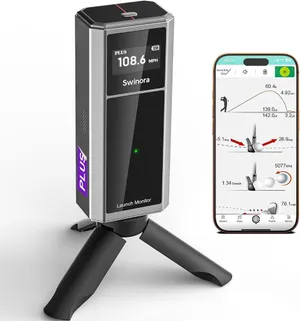
- Best Portable: Swinora Golf Launch Monitor
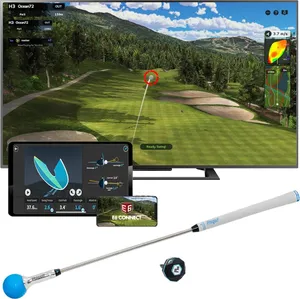
- Best for Small Spaces: PHIGOLF Home Golf Simulator
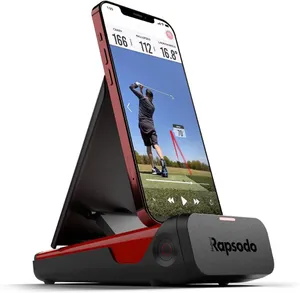
- Best Budget: Rapsodo Mobile Launch Monitor (MLM)
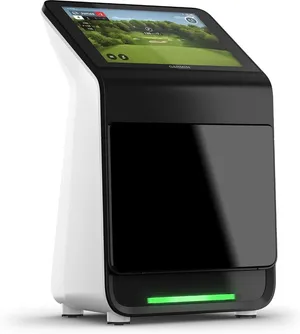
- Best Premium: Garmin Approach R50
- How we researched these picks
- How to choose a golf simulator for home use (buying guide)
- FAQ
Quick picks
Every pick wins a specific use case. Jump to the full review before you buy.
-
Best Overall
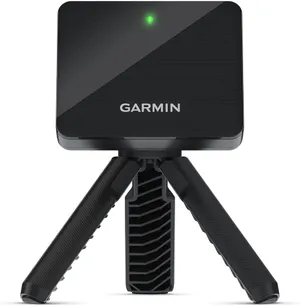
Garmin Approach R10
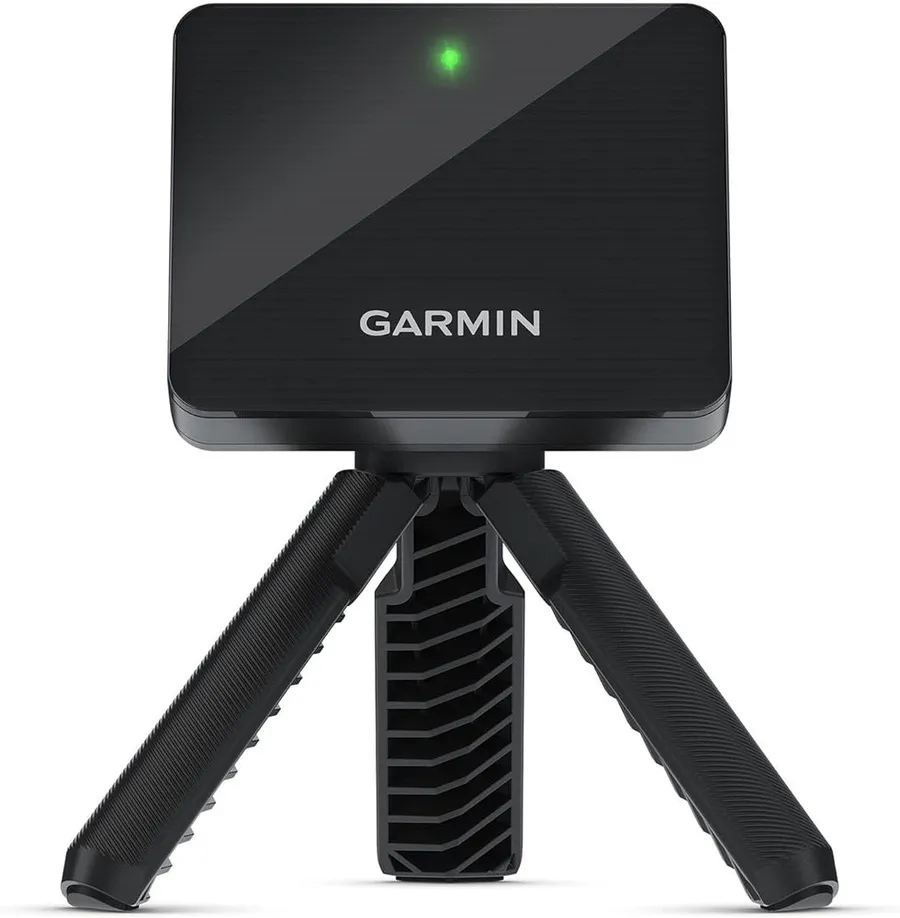
The Approach R10 gives the most complete home golf simulator experience for the money, pairing dependable radar data with virtual course play that works in a garage, spare room or backyard.
-
Best for Accuracy
Rapsodo MLM2PRO
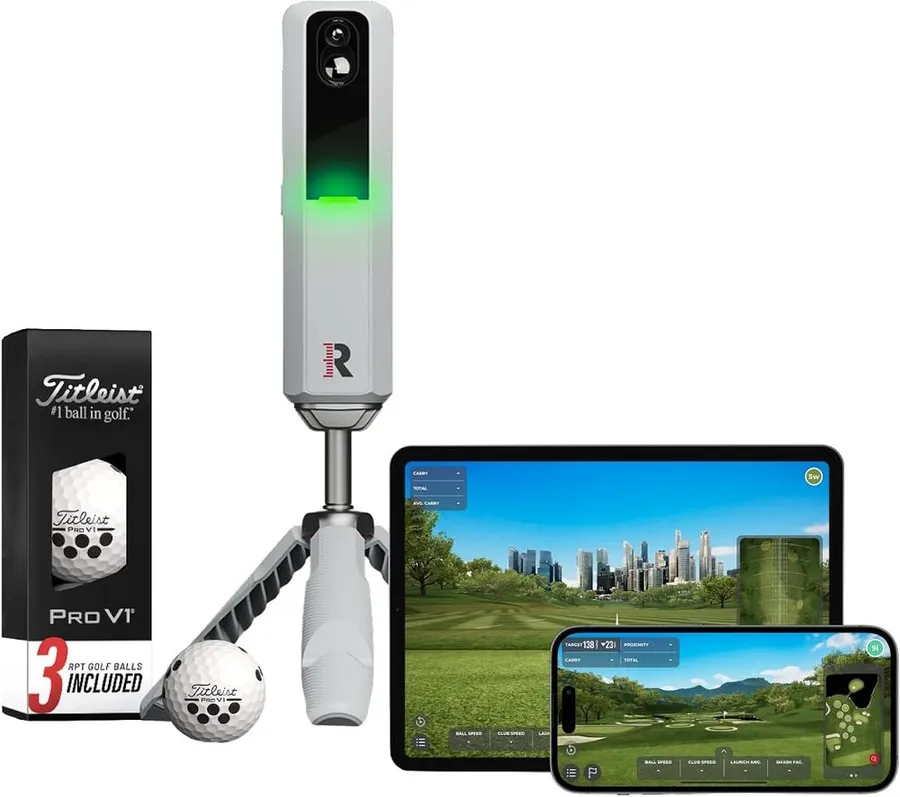
The MLM2PRO adds dual cameras to radar and reads spin from RFID-tagged balls, so it gives the most trustworthy shot data of any mid-priced pick here.
-
Best Standalone
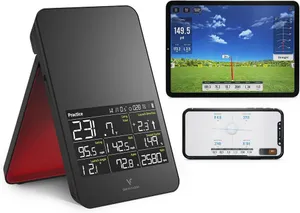
Voice Caddie SC4 PRO
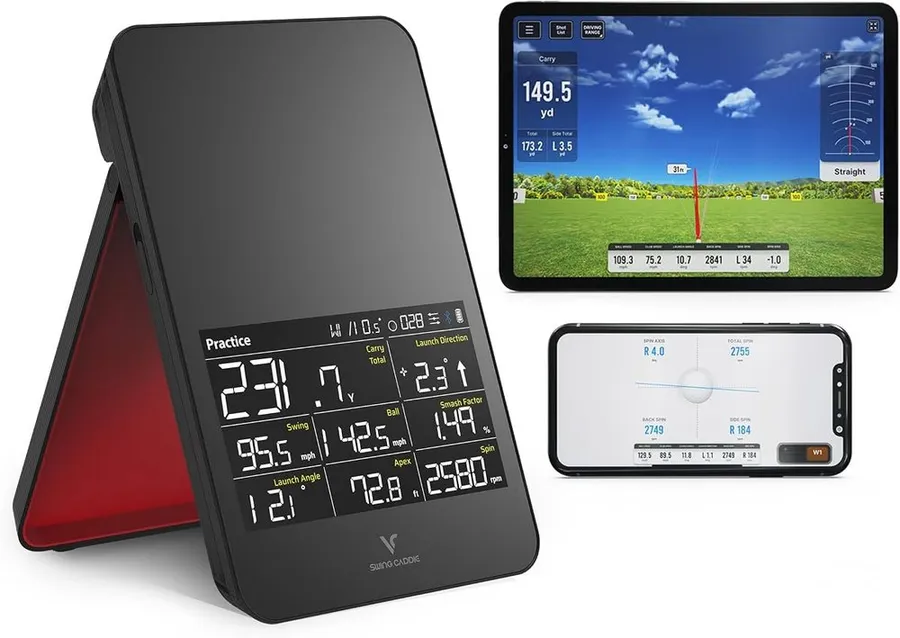
The SC4 PRO packs a built-in screen, voice output and included E3 courses with no monthly subscription, so it runs as a home simulator without a phone or recurring fees.
-
Best Portable
Swinora Golf Launch Monitor
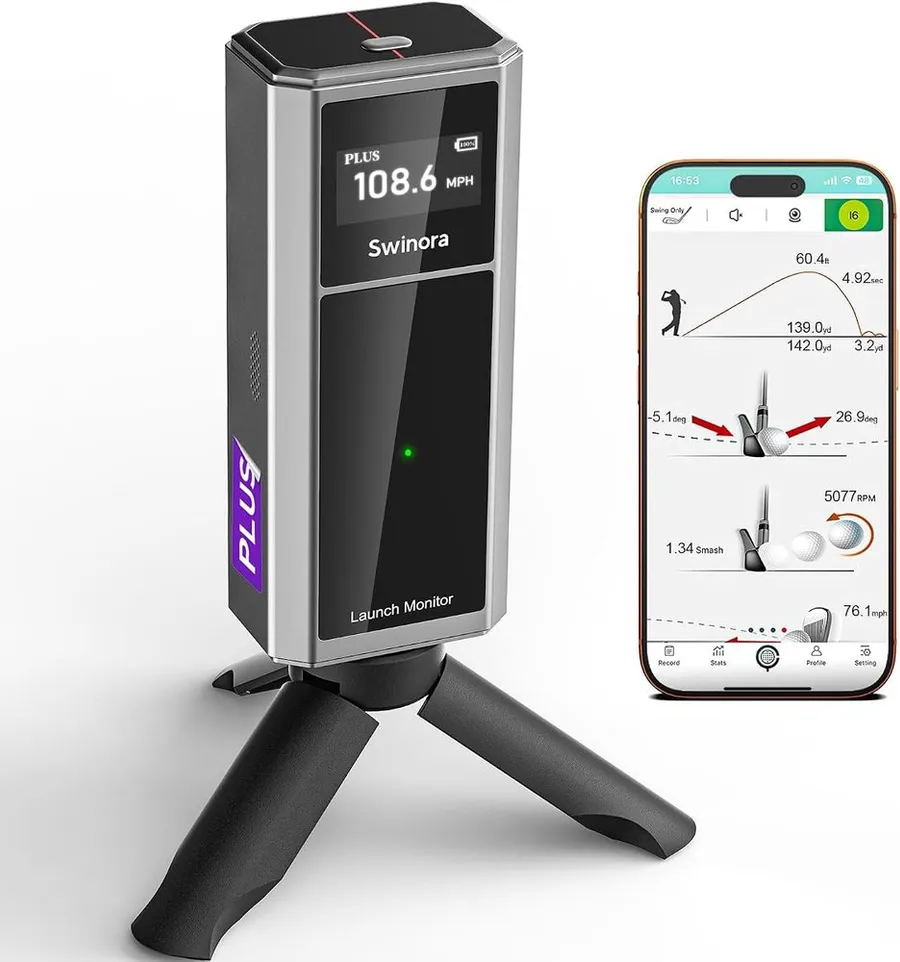
The Swinora is a pocket-sized camera monitor that reports 13 metrics with a 3D driving range and video record, giving cross-platform home and range practice for around $320.
-
Best for Small Spaces
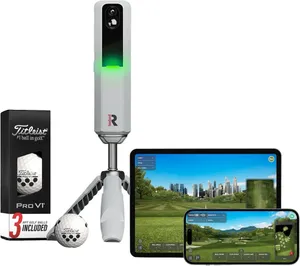
PHIGOLF Home Golf Simulator
PHIGOLF uses a motion-sensor swing stick instead of a full ball flight, so you can play thousands of virtual courses in a room far too small for a radar or camera setup.
-
Best Budget
Rapsodo Mobile Launch Monitor (MLM)
The original Rapsodo Mobile Launch Monitor delivers real, camera-based shot tracking and a GPS satellite view for around $200, making it the easiest low-cost way into home practice.
-
Best Premium
Garmin Approach R50
The Approach R50 is a near all-in-one home simulator, folding three high-speed cameras, radar and a built-in 10 inch touchscreen into one unit so you barely need a second device.
Compare every pick
| Product | Award | Type | Key metrics | Price | Warranty | Best for | Where to buy |
|---|---|---|---|---|---|---|---|
| Garmin Approach R10 | Best Overall | Doppler radar | 14 metrics | $500 | 1 year | Home golfers who want one flexible unit for data practice and virtual rounds | Check price on Amazon for Garmin Approach R10 at Amazon (affiliate link) |
| Rapsodo MLM2PRO | Best for Accuracy | Radar plus dual camera | 15 plus metrics | $600 | 1 year | Golfers who care most about accurate spin and shot-shape data at home | Check price on Amazon for Rapsodo MLM2PRO at Amazon (affiliate link) |
| Voice Caddie SC4 PRO | Best Standalone | Radar (built-in screen) | Full ball and club data | $500 | 1 year | Home golfers who want simulator play without a phone or subscription | Check price on Amazon for Voice Caddie SC4 PRO at Amazon (affiliate link) |
| Swinora Golf Launch Monitor | Best Portable | Camera (mobile) | 13 metrics | $320 | 1 year | Golfers who want a light, cross-platform monitor to move between home and range | Check price on Amazon for Swinora Golf Launch Monitor at Amazon (affiliate link) |
| PHIGOLF Home Golf Simulator | Best for Small Spaces | Swing stick sensor | Core swing metrics | $280 | 1 year | Apartment and small-room golfers who want course play without hitting real balls far | Check price on Amazon for PHIGOLF Home Golf Simulator at Amazon (affiliate link) |
| Rapsodo Mobile Launch Monitor (MLM) | Best Budget | Camera (mobile) | 5 metrics | $200 | 1 year | Budget-minded Apple users who want real shot data without a big outlay | Check price on Amazon for Rapsodo Mobile Launch Monitor (MLM) at Amazon (affiliate link) |
| Garmin Approach R50 | Best Premium | Triple camera plus radar | 15 plus metrics | $5000 | 1 year | Serious home golfers who want a self-contained, high-end simulator | Check price on Amazon for Garmin Approach R50 at Amazon (affiliate link) |
Swipe sideways to compare every column.
Best Overall
Garmin Approach R10
by Garmin
The Approach R10 gives the most complete home golf simulator experience for the money, pairing dependable radar data with virtual course play that works in a garage, spare room or backyard.
What we like
- Reads 14 metrics including club and ball speed, launch angle and spin
- Doubles as a home simulator with virtual courses in the Garmin Golf app
- Folding tripod and roughly 10 hour battery make it easy to move and set up
- Large, well-reviewed owner base with over a thousand ratings
What we don't
- As Doppler radar it wants about 7 to 8 feet of ball flight, so a very short room hurts accuracy
| Type | Doppler radar |
|---|---|
| Key metrics | 14 metrics |
| Best for | All-round home use |
| Price | $500 |
| Warranty | 1 year |
| Install difficulty | Easy |
| Price bracket | $$ |
The Garmin Approach R10 wins Best Overall because it does the most jobs well at a price most home golfers can justify. It is a Doppler radar unit that reads 14 metrics, from club and ball speed to launch angle and spin estimates, and it pairs with the Garmin Golf app to turn those numbers into virtual course play on a screen or tablet.
What sets it apart in this group is balance. Cheaper picks report fewer numbers or lean on your phone camera, and the premium options cost many times more. The R10 lands in the middle with a proven feature set, a folding tripod, roughly 10 hours of battery and one of the largest verified owner bases of any launch monitor sold today.
Day to day it is genuinely easy to live with. You set the tripod behind the ball, pair your phone, and start hitting into a net or at the range. The same unit that logs a practice session at home can travel to the range in a bag pocket, which is why so many owners keep it as their only monitor.
Its real limitation is radar physics. Like all Doppler units it wants roughly 7 to 8 feet of ball flight to read shots cleanly, so a very shallow garage bay can soften its accuracy. If your space is that tight, a camera or screen-based pick reads better close to a net. For everyone else, the R10 is the sensible default.
Research-based pick: this recommendation is based on product data, owner feedback and comparison with products we have tested, not on direct hands-on testing.
Buy it if: Home golfers who want one flexible unit for data practice and virtual rounds
Skip it if: Your only space is a shallow bay with under 7 feet of ball flight
Best for Accuracy
Rapsodo MLM2PRO
by Rapsodo
The MLM2PRO adds dual cameras to radar and reads spin from RFID-tagged balls, so it gives the most trustworthy shot data of any mid-priced pick here.
What we like
- Dual-camera plus radar design measures real spin, not just estimated numbers
- Reports 15 plus metrics with slow-motion impact video
- Included RFID ProV1 balls improve spin and shot-shape accuracy
- Plays virtual courses and range modes for simulator use at home
What we don't
- Full metrics and course play sit behind a paid annual subscription
| Type | Radar plus dual camera |
|---|---|
| Key metrics | 15 plus metrics |
| Best for | Data accuracy |
| Price | $600 |
| Warranty | 1 year |
| Install difficulty | Easy |
| Price bracket | $$ |
The Rapsodo MLM2PRO wins Best for Accuracy because it measures more of the shot rather than estimating it. It combines radar with dual cameras and reads genuine spin from RFID-tagged ProV1 balls, which is the data point most cheaper monitors approximate. For players chasing repeatable numbers, that difference matters.
The payoff shows up in the detail. It reports 15 plus metrics, captures slow-motion impact video and shows shot shape you can trust, so practice sessions become diagnostic rather than guesswork. It also plays virtual courses and range modes, so the same unit that dials in your spin can run a simulator round.
In use it is straightforward: set it behind the ball, hit an included tagged ball, and review the shot on your phone or tablet. Owners consistently praise the accuracy relative to the price, which is why it is a favorite for home sim builders who want data they can act on.
The catch is the subscription. Its richest metrics and course play require a paid annual plan, so the sticker price is not the full cost of ownership. If recurring fees bother you, the Voice Caddie SC4 PRO plays courses without them. If accuracy is your priority and a subscription is acceptable, this is the pick.
Research-based pick: this recommendation is based on product data, owner feedback and comparison with products we have tested, not on direct hands-on testing.
Buy it if: Golfers who care most about accurate spin and shot-shape data at home
Skip it if: You want every feature with no recurring fees
Best Standalone
Voice Caddie SC4 PRO
by Voice Caddie
The SC4 PRO packs a built-in screen, voice output and included E3 courses with no monthly subscription, so it runs as a home simulator without a phone or recurring fees.
What we like
- Built-in screen and voice output work without a paired phone
- Five included E3 courses with no monthly subscription
- Reads full ball and club data plus a 3D driving range
- Usable indoors or outdoors thanks to the self-contained design
What we don't
- Data depth trails camera-hybrid units like the Rapsodo MLM2PRO
| Type | Radar (built-in screen) |
|---|---|
| Key metrics | Full ball and club data |
| Best for | Standalone use |
| Price | $500 |
| Warranty | 1 year |
| Install difficulty | Easy |
| Price bracket | $$ |
The Voice Caddie SC4 PRO wins Best Standalone because it does not lean on anything else. It has its own screen and voice output, comes with five E3 courses and, crucially, charges no monthly subscription, so it works as a home simulator straight out of the box without a phone, tablet or ongoing plan.
That self-contained design is what sets it apart from the Rapsodo units. You are not opening an app, mounting a handset or budgeting for annual fees. It reads full ball and club data, offers a 3D driving range and shows everything on the built-in display, which keeps a home session simple.
In practice it suits a permanent corner setup. You leave it in place behind your mat, power it on and play, indoors or outdoors, with spoken feedback and on-device visuals. For golfers who dislike the phone-plus-subscription pattern of rival monitors, that independence is the main draw.
Its limitation is data depth. It does not match the measured spin and slow-motion detail of a camera-hybrid like the MLM2PRO, so serious data hounds will want more. But if you value simple, subscription-free simulator play, the SC4 PRO is the standout. For maximum accuracy, step up to the Rapsodo instead.
Research-based pick: this recommendation is based on product data, owner feedback and comparison with products we have tested, not on direct hands-on testing.
Buy it if: Home golfers who want simulator play without a phone or subscription
Skip it if: You want the deepest spin and shot-shape accuracy
Best Portable
Swinora Golf Launch Monitor
by Swinora
The Swinora is a pocket-sized camera monitor that reports 13 metrics with a 3D driving range and video record, giving cross-platform home and range practice for around $320.
What we like
- Compact, truly portable unit for home, range or travel
- Reports 13 metrics with a 3D driving range and trajectory view
- Records shot video for swing review on iOS and Android
- Around $320 with a coupon that often drops it lower
What we don't
- Smaller owner base than the Garmin and Rapsodo picks, so less long-term feedback
| Type | Camera (mobile) |
|---|---|
| Key metrics | 13 metrics |
| Best for | Portability |
| Price | $320 |
| Warranty | 1 year |
| Install difficulty | Easy |
| Price bracket | $$ |
The Swinora Golf Launch Monitor wins Best Portable because it is built to move. It is a small, light camera unit that slips into a bag and works across iOS and Android, so the same monitor covers a spare room at home, the driving range or a trip without any bulky hardware.
For the size it reports a useful spread of data. You get 13 metrics, a 3D driving range and trajectory view, plus shot video recording for swing review, which is more than the entry-level Rapsodo offers at a similar price point. That makes it a capable practice tool rather than a speed-only trainer.
Using it is quick: set it behind the ball, pair your phone and start hitting into a net or at the range, then review the recorded swing afterward. The cross-platform support is a real plus for Android owners locked out of the original Rapsodo.
Its main caveat is track record. Its verified owner base is smaller than the Garmin and Rapsodo picks, so there is less long-term feedback to lean on, and it has no built-in simulator courses. If portability and a modern metric set matter most, it is a strong value. If you want a long proven history, the R10 is safer.
Research-based pick: this recommendation is based on product data, owner feedback and comparison with products we have tested, not on direct hands-on testing.
Buy it if: Golfers who want a light, cross-platform monitor to move between home and range
Skip it if: You want a long, proven track record or built-in simulator courses
Best for Small Spaces
PHIGOLF Home Golf Simulator
by PHIGOLF
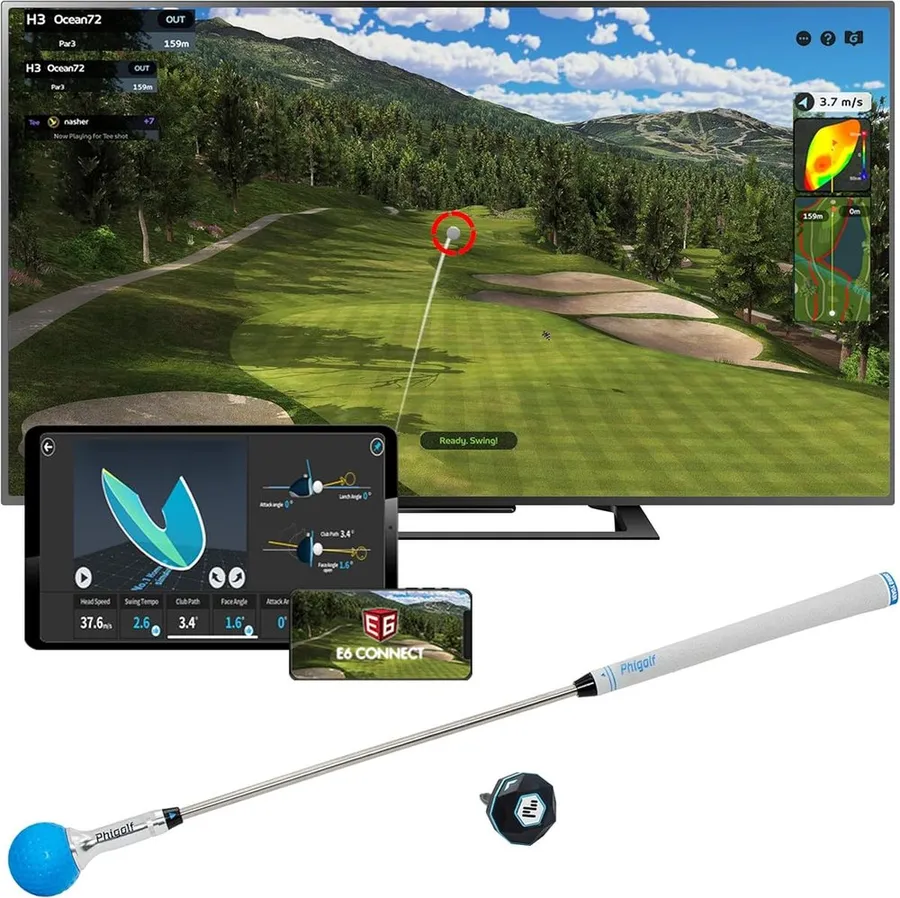
PHIGOLF uses a motion-sensor swing stick instead of a full ball flight, so you can play thousands of virtual courses in a room far too small for a radar or camera setup.
What we like
- Swing stick and motion sensor need no ball flight, so it fits tiny rooms
- Access to 38,000 plus courses and E6 Connect compatibility
- Around $280, far cheaper than a full launch monitor sim rig
- Works with Android and iOS plus the companion app
What we don't
- Sensor-on-a-stick data is less accurate than radar or camera monitors
| Type | Swing stick sensor |
|---|---|
| Key metrics | Core swing metrics |
| Best for | Tight spaces |
| Price | $280 |
| Warranty | 1 year |
| Install difficulty | Easy |
| Price bracket | $ |
PHIGOLF wins Best for Small Spaces because it removes the one thing tight rooms cannot give you: ball flight. Instead of tracking a struck ball, it reads your swing through a motion sensor on a weighted practice stick, so you can play virtual golf in a bedroom, office or apartment with no net and no room to hit a real shot.
That approach unlocks a lot for the price. For around $280 you get access to more than 38,000 courses and E6 Connect compatibility, so the software experience feels close to a far pricier rig even though the hardware is a sensor and a stick. It works across Android and iOS through the companion app.
In daily use it is the least demanding pick here. There is no tripod placement, no impact screen and no worry about ceiling height, so you swing the stick and watch your shot on screen. For players whose barrier is space rather than budget, that convenience is the whole appeal.
The trade-off is accuracy. A sensor on a stick cannot match radar or camera measurement, and its owner rating reflects that some golfers expect more precision than it offers. Treat it as a space-saving way to play and practice tempo, not as a data tool. If you need trustworthy numbers, choose the R10 or Rapsodo instead.
Research-based pick: this recommendation is based on product data, owner feedback and comparison with products we have tested, not on direct hands-on testing.
Buy it if: Apartment and small-room golfers who want course play without hitting real balls far
Skip it if: You want precise, trustworthy launch and spin data
Best Budget
Rapsodo Mobile Launch Monitor (MLM)
by Rapsodo
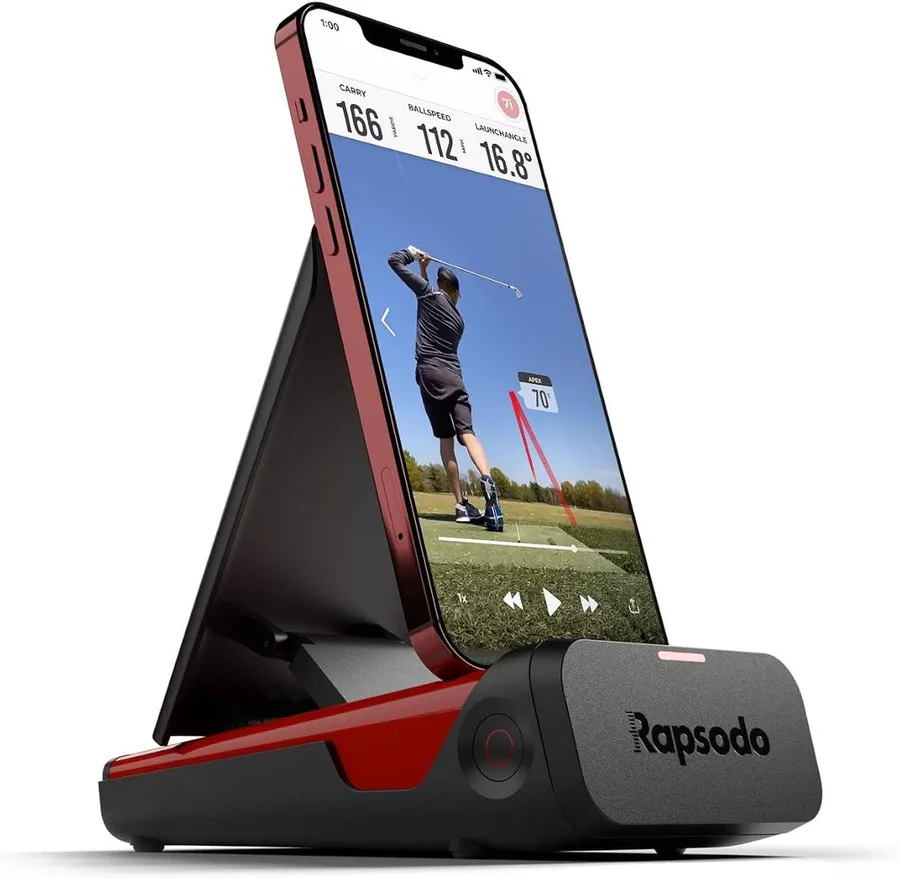
The original Rapsodo Mobile Launch Monitor delivers real, camera-based shot tracking and a GPS satellite view for around $200, making it the easiest low-cost way into home practice.
What we like
- Around $200, the lowest entry price of any monitor in this guide
- Camera tracking gives ball speed, club speed and launch angle
- GPS satellite range view makes practice sessions feel like real shots
- Very large verified owner base with thousands of ratings
What we don't
- Works with iPhone and iPad only, so Android owners cannot use it
| Type | Camera (mobile) |
|---|---|
| Key metrics | 5 metrics |
| Best for | Budget starters |
| Price | $200 |
| Warranty | 1 year |
| Install difficulty | Easy |
| Price bracket | $ |
The original Rapsodo Mobile Launch Monitor wins Best Budget because it puts real shot tracking in reach for around $200. It uses your device camera to capture ball speed, club speed, launch angle and distance, then overlays them on a GPS satellite view so a backyard session feels like hitting a real range.
What makes it stand out at this price is that you are not paying less for worse core accuracy, you are paying less for fewer metrics. The speed and distance numbers are genuinely useful for tracking progress, and the huge base of verified owner reviews shows it holds up as a first monitor.
In practice you mount your phone, line the unit up behind the ball and start hitting into a net or at the range. The satellite view and shot history make it easy to see improvement over time without any extra hardware.
Its clear limitation is the platform lock: it works with iPhone and iPad only, so Android golfers are out. It also skips measured spin and full simulator course play. If you own an Apple device and want the cheapest honest way to start, it is the obvious pick. Android owners should look at the Garmin R10 or Swinora instead.
Research-based pick: this recommendation is based on product data, owner feedback and comparison with products we have tested, not on direct hands-on testing.
Buy it if: Budget-minded Apple users who want real shot data without a big outlay
Skip it if: You use an Android phone or want deep spin and simulator metrics
Best Premium
Garmin Approach R50
by Garmin
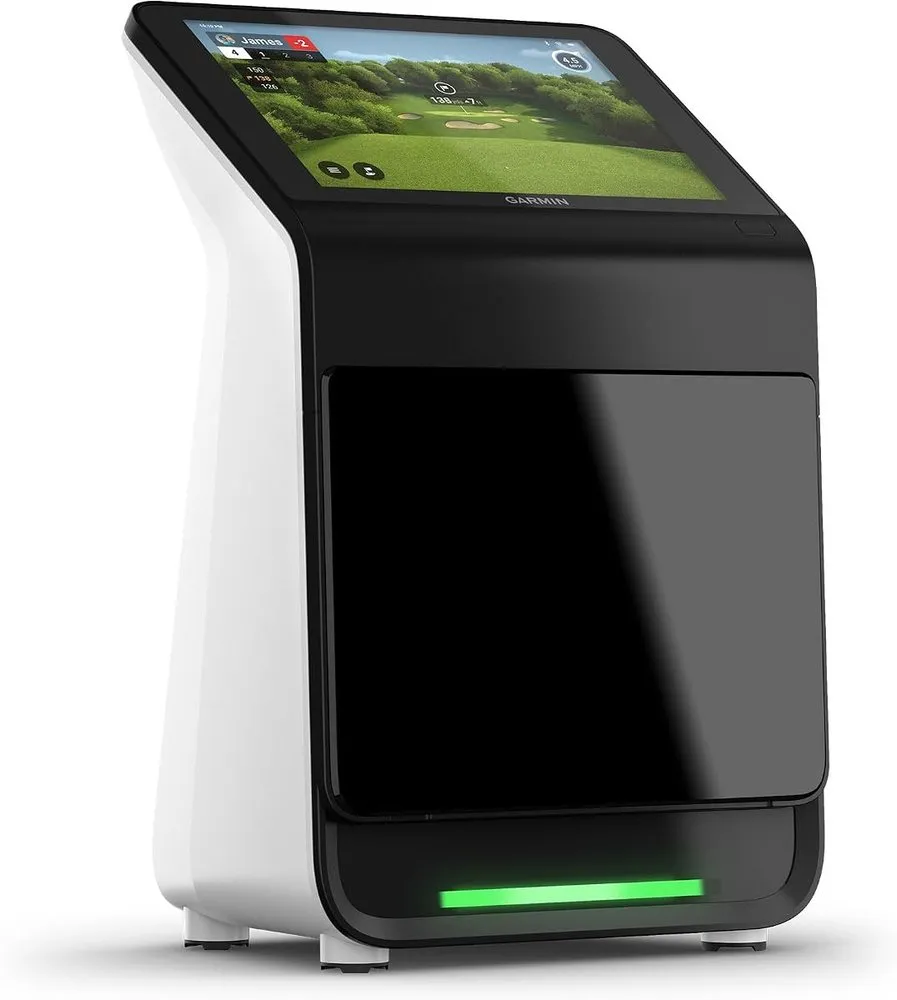
The Approach R50 is a near all-in-one home simulator, folding three high-speed cameras, radar and a built-in 10 inch touchscreen into one unit so you barely need a second device.
What we like
- Three high-speed cameras plus radar for detailed, reliable data
- Built-in 10 inch color touchscreen runs the experience without a phone
- Reports 15 plus metrics including spin and axis with 43,000 plus courses
- Up to 4 hour battery makes it portable despite its capability
What we don't
- At around $5,000 it costs roughly ten times the best all-round pick
| Type | Triple camera plus radar |
|---|---|
| Key metrics | 15 plus metrics |
| Best for | Premium all-in-one |
| Price | $5000 |
| Warranty | 1 year |
| Install difficulty | Easy |
| Price bracket | $$$ |
The Garmin Approach R50 wins Best Premium because it collapses a whole simulator setup into one device. It combines three high-speed cameras with radar and adds a built-in 10 inch color touchscreen, so you can see full data and play virtual courses without tethering a phone or tablet.
That integration is the point. Where cheaper picks lean on your handset and a separate screen, the R50 handles capture, display and course play itself, reporting 15 plus metrics including spin and axis across a library of more than 43,000 courses. It even keeps a useful 4 hour battery, so it is portable despite its capability.
Living with it feels closer to a commercial bay than a gadget. You set it up, tap the screen and start hitting, with detailed feedback and slow-motion review on the built-in display. For a dedicated home studio, it removes most of the fiddliness of a multi-part rig.
The obvious limitation is price. At around $5,000 it costs roughly ten times the R10, which delivers most of what a typical home golfer needs. Only buy the R50 if a self-contained, high-end experience is worth the premium. Everyone chasing value should start with the R10.
Research-based pick: this recommendation is based on product data, owner feedback and comparison with products we have tested, not on direct hands-on testing.
Buy it if: Serious home golfers who want a self-contained, high-end simulator
Skip it if: You are on any normal home budget or want the best value
How we researched these picks#
We built this list by starting from the golf simulators people actually buy for home use, then filtering hard on evidence and relevance. Every product here is a real, currently sold unit, and most carry a meaningful base of verified owner reviews, which keeps the list grounded in devices you can order today rather than spec-sheet vaporware.
For each candidate we pulled the manufacturer specifications, read across aggregated verified owner feedback and then compared units head to head on the factors that change a buying decision: measurement accuracy and the technology behind it, how much space the unit needs, the software and courses it runs, whether it carries a subscription, and overall value at the price. We deliberately spread the final seven across price brackets and use cases, from a $200 camera monitor to a $5,000 all-in-one, so there is a sensible pick for different budgets and rooms.
These recommendations are research-based, not hands-on tested. We have not swung in front of each unit ourselves, so we lean on published specs and the consistent themes in owner feedback rather than our own range data. Where a device has a real weakness, such as a subscription requirement, a platform lock, a space constraint or thinner accuracy, we call it out plainly.
How to choose a golf simulator for home use (buying guide)#
Match the technology to your space. Doppler radar units read the ball in flight, so they need room, ideally 7 to 8 feet of travel, and they shine in a deep garage bay or backyard. Camera hybrids like the Rapsodo units measure closer to impact and cope better in front of a net, screen-based units such as the Voice Caddie SC4 PRO are built to run in a room, and a swing-stick sim like PHIGOLF needs no ball flight at all. If your only space is a short bay, do not buy on radar alone.
Decide how much accuracy you actually need. For casual practice and virtual rounds, the estimated numbers from a radar or camera unit are plenty. If you want measured spin and shot shape you can trust, you need a camera hybrid like the Rapsodo MLM2PRO or the premium Garmin R50. Paying for lab-grade accuracy you will never study is wasted money.
Check the software and courses. A simulator is only as fun as what it runs. The Garmin R10 plays virtual courses through the Garmin Golf app, PHIGOLF advertises 38,000 plus courses and E6 Connect, and the Voice Caddie SC4 PRO includes E3 courses on its own screen. Confirm the unit plays the way you want, whether that is data practice, range modes or full rounds.
Watch for subscriptions. Sticker price is not always the full cost. Basic monitors show numbers for free, but the Rapsodo MLM2PRO gates its richest data and course play behind a paid annual plan. The Voice Caddie SC4 PRO avoids this with included courses and no monthly fee. Add any recurring cost to your comparison so two units at the same price are judged fairly.
Confirm platform compatibility. Some units are tied to one ecosystem. The original Rapsodo MLM works with iPhone and iPad only, so Android owners should look at the Garmin R10, Swinora or a self-contained unit like the Voice Caddie SC4 PRO. Check that any companion app supports your phone, or choose a unit that shows numbers on its own screen.
Set your budget against the room, not the dream. Prices here run from about $200 to $5,000. A budget camera monitor or swing-stick sim is enough for a small room and casual play, the Garmin R10 is the value sweet spot for flexible all-round use, and the premium Garmin R50 only makes sense for a dedicated studio where a self-contained, high-end experience justifies the outlay. Most units carry a one-year warranty, so lean on space, software and running costs to decide.
Frequently asked questions
How much room do I need for a home golf simulator?
It depends on the technology. Doppler radar units like the Garmin R10 want roughly 7 to 8 feet of ball flight to read shots accurately, so a shallow garage bay can hurt their numbers. Camera and screen-based units measure closer to impact and cope better a few feet from a net. If your space is very tight, a swing-stick sim like PHIGOLF needs no ball flight at all.
Do home golf simulators need a subscription?
Some do for their best features. Simple radar and camera monitors show core numbers for free, but the Rapsodo MLM2PRO gates full metrics and course play behind a paid annual plan. The Voice Caddie SC4 PRO deliberately avoids this with included courses and no monthly fee, and PHIGOLF bundles thousands of courses with its app. Add any recurring fee to your comparison before you buy.
Can you build a home simulator on a budget?
Yes. The original Rapsodo Mobile Launch Monitor starts around $200 and gives real camera-based shot data with a GPS range view, while PHIGOLF plays virtual courses for around $280. Pair either with a net and mat and you have a workable home setup for a fraction of a premium rig. You trade some accuracy and metrics for the lower price, not core reliability.
Which home simulator is most accurate?
Among the mid-priced picks, the Rapsodo MLM2PRO is the accuracy leader because its dual cameras measure real spin from RFID-tagged balls rather than estimating it. The premium Garmin R50 goes further with three high-speed cameras and radar, but at roughly ten times the price of the best all-round pick, its accuracy is only worth it for a dedicated home studio.
About the author

Jim Bennett Founder & lead reviewer
Jim is the guy behind Golf Sim Jim. He builds home golf simulators and compares launch monitors by the numbers that actually decide a setup, room fit, accuracy and software.
Home setup: Garage bay: SkyTrak+, 10 ft ceiling, BenQ LK936ST short-throw
- Launch monitor accuracy
- Home simulator builds
- Impact screens & enclosures
- Sim software (GSPro, E6, TGC)