
The 7 Best Golf Simulators for 2026 (Every Budget Covered)
We compared 7 real golf simulators from $200 to $4,999 on accuracy, space, software and price to find the best home, garage and backyard picks.

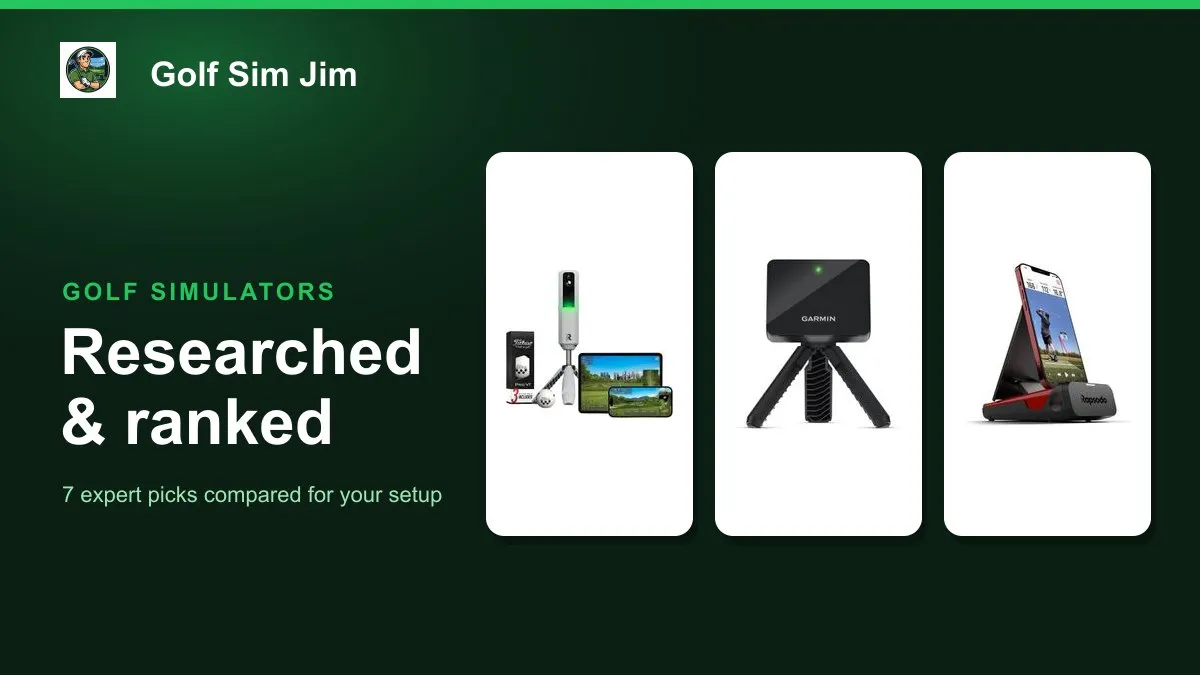
A golf simulator turns a spare room, garage or backyard into a year-round practice bay, but the right one depends entirely on your space, your budget and whether you want hard data or just fun virtual rounds. This guide compares seven real, widely owned golf simulators from around $200 to nearly $5,000, spanning pocket launch monitors, sensor-based swing sticks and full room-ready packages. We weighed each on tracking accuracy and technology, the metrics it reports, how much room it needs, software and subscription costs, and value for the money. Whether you want a cheap way into the game, one flexible device for range and living room, or a permanent studio, one of these picks fits. Below you will find the best overall choice plus category winners for value, budget, beginners, premium, complete packages and pure accuracy, followed by a plain buying guide so you can match a simulator to your own room and goals.
Table of contents
- Quick picks
- Price compared
- Comparison table
- Best Overall: Rapsodo MLM2PRO
- Best Value: Garmin Approach R10
- Best Budget: Rapsodo Mobile Launch Monitor (MLM)
- Best for Beginners: PHIGOLF Home Golf Simulator
- Best for Accuracy: SkyTrak ST MAX
- Best Complete Package: SkyTrak Studio Pro Package
- Best Premium: Garmin Approach R50
- How we researched these picks
- How to choose a golf simulator (buying guide)
- FAQ
Quick picks
Every pick wins a specific use case. Jump to the full review before you buy.
-
Best Overall
Rapsodo MLM2PRO
The MLM2PRO bundles dual-camera and radar tracking, 15 metrics and its own course-play software into a $599 unit, giving most home golfers the fullest simulator experience for the money.
-
Best Value
Garmin Approach R10
The R10 delivers 14 metrics, a large home-simulator course library and near plug-and-play setup for around $499, making it the smartest all-round value in golf simulators.
-
Best Budget
Rapsodo Mobile Launch Monitor (MLM)
At around $200 the original Rapsodo MLM gives dependable ball speed, club speed and distance numbers with a GPS range view, making it the cheapest way into real launch data.
-
Best for Beginners
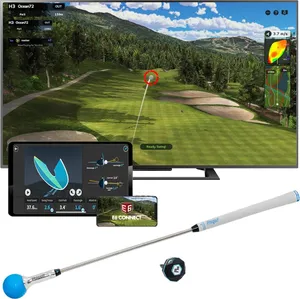
PHIGOLF Home Golf Simulator
PHIGOLF swaps launch-monitor hardware for a motion-sensor swing stick and 38,000-plus courses, giving newcomers and families a low-cost, low-space way to play virtual golf indoors.
-
Best for Accuracy
SkyTrak ST MAX
The ST MAX layers dual Doppler radar over photometric cameras, so it holds tour-grade precision both in a tight indoor room and out on the range, all for well under the premium all-in-ones.
-
Best Complete Package
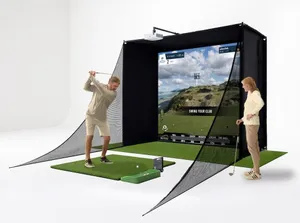
SkyTrak Studio Pro Package
This SkyTrak bundle pairs the launch monitor with an enclosure, mat, projector and case, so you get a full, ready-to-play simulator in one purchase instead of sourcing every part yourself.
-
Best Premium
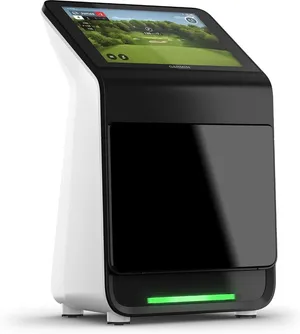
Garmin Approach R50
The R50 folds three high-speed cameras, 15-plus metrics and a 10-inch built-in touchscreen into one standalone unit, delivering a near-commercial simulator experience without a separate computer.
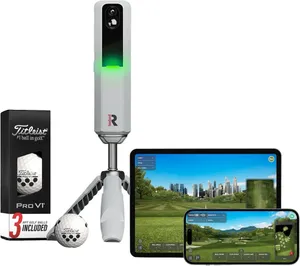
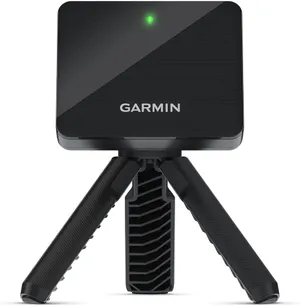
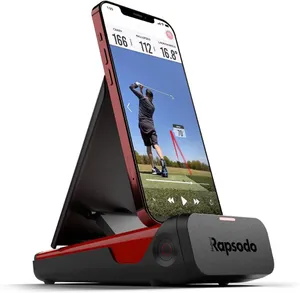
Compare every pick
| Product | Award | Type | Key metrics | Software | Price | Warranty | Best for | Where to buy |
|---|---|---|---|---|---|---|---|---|
| Rapsodo MLM2PRO | Best Overall | Dual camera plus radar | 15 metrics | Rapsodo app plus E6 Connect | $599 | 1 year | Home golfers who want one affordable device that both measures and simulates | Check price on Amazon for Rapsodo MLM2PRO at Amazon (affiliate link) |
| Garmin Approach R10 | Best Value | Radar (Doppler) | 14 metrics | Garmin Golf app | $499 | 1 year | Golfers who want one flexible device for the range, the backyard and a home sim | Check price on Amazon for Garmin Approach R10 at Amazon (affiliate link) |
| Rapsodo Mobile Launch Monitor (MLM) | Best Budget | Single camera (iOS only) | 5 metrics | Rapsodo app (iOS) | $200 | 1 year | Budget-minded golfers on iOS who mainly want distance and speed feedback | Check price on Amazon for Rapsodo Mobile Launch Monitor (MLM) at Amazon (affiliate link) |
| PHIGOLF Home Golf Simulator | Best for Beginners | Motion sensor swing stick | Basic swing data | E6 Connect plus WGT (38,000 plus courses) | $280 | 1 year | Beginners, kids and casual players who want fun indoor golf over precise data | Check price on Amazon for PHIGOLF Home Golf Simulator at Amazon (affiliate link) |
| SkyTrak ST MAX | Best for Accuracy | Dual radar plus photometric cameras | Full ball plus club data | SkyTrak plus app | $1,995 | 1 year | Improving golfers who want the most accurate data without paying flagship prices | Check price on Amazon for SkyTrak ST MAX at Amazon (affiliate link) |
| SkyTrak Studio Pro Package | Best Complete Package | Photometric package (monitor plus enclosure) | Full ball plus club data | SkyTrak plus and E6 Connect | $2,995 | 1 year | Buyers who want a complete room-ready simulator without assembling parts piecemeal | Check price on Amazon for SkyTrak Studio Pro Package at Amazon (affiliate link) |
| Garmin Approach R50 | Best Premium | Photometric (3 cameras) | 15 plus metrics | Built-in plus E6 Connect (43,000 plus courses) | $4,999 | 1 year | Serious golfers building a permanent, high-accuracy home simulator studio | Check price on Amazon for Garmin Approach R50 at Amazon (affiliate link) |
Swipe sideways to compare every column.
Best Overall
Rapsodo MLM2PRO
by Rapsodo
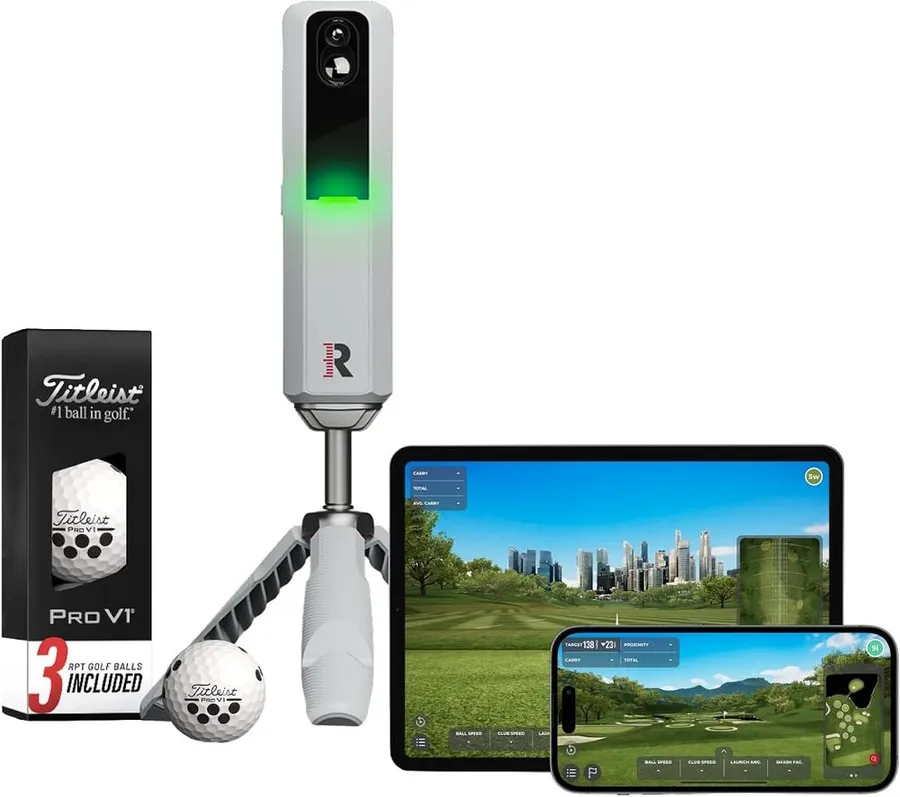
The MLM2PRO bundles dual-camera and radar tracking, 15 metrics and its own course-play software into a $599 unit, giving most home golfers the fullest simulator experience for the money.
What we like
- Combines a camera and radar so it reads shots accurately indoors and out
- Fifteen metrics including club speed, spin and shot shape
- Ships with its own simulator software plus E6 Connect course play
- Records impact video so you can review each swing
What we don't
- Full metrics and unlimited course play sit behind a paid annual membership
| Type | Dual camera plus radar |
|---|---|
| Key metrics | 15 metrics |
| Software | Rapsodo app plus E6 Connect |
| Price | $599 |
| Warranty | 1 year |
| Install difficulty | Easy |
| Price bracket | $$ |
The Rapsodo MLM2PRO wins Best Overall because it is the most complete golf simulator you can buy for under $600. Where cheaper units lean on a single sensor, the MLM2PRO pairs a dual-camera system with radar, so it captures 15 metrics and holds accuracy whether you hit into a net indoors or send the ball flying on the range. That dual approach is the reason it reads spin and club data more reliably than single-camera rivals at the price.
What tips it over the line is the software. The unit comes with Rapsodo’s own practice and course-play environment plus access to E6 Connect, so you can play virtual holes rather than just stare at numbers. It also records impact video, which turns a data session into a genuine coaching tool.
Its real limitation is the subscription. The hardware works out of the box, but the richest metrics and unlimited course play live behind a paid annual membership, so factor that recurring cost into your budget before you buy. If you only want raw numbers with no fees, a simpler radar trainer will suit you better.
For most buyers building a first home simulator, though, the MLM2PRO is the sensible anchor. It does more than anything near its price, travels easily and grows with you from backyard practice to full indoor course play.
Research-based pick: this recommendation is based on product data, owner feedback and comparison with products we have tested, not on direct hands-on testing.
Buy it if: Home golfers who want one affordable device that both measures and simulates
Skip it if: You refuse to pay a recurring subscription for the software features
Best Value
Garmin Approach R10
by Garmin
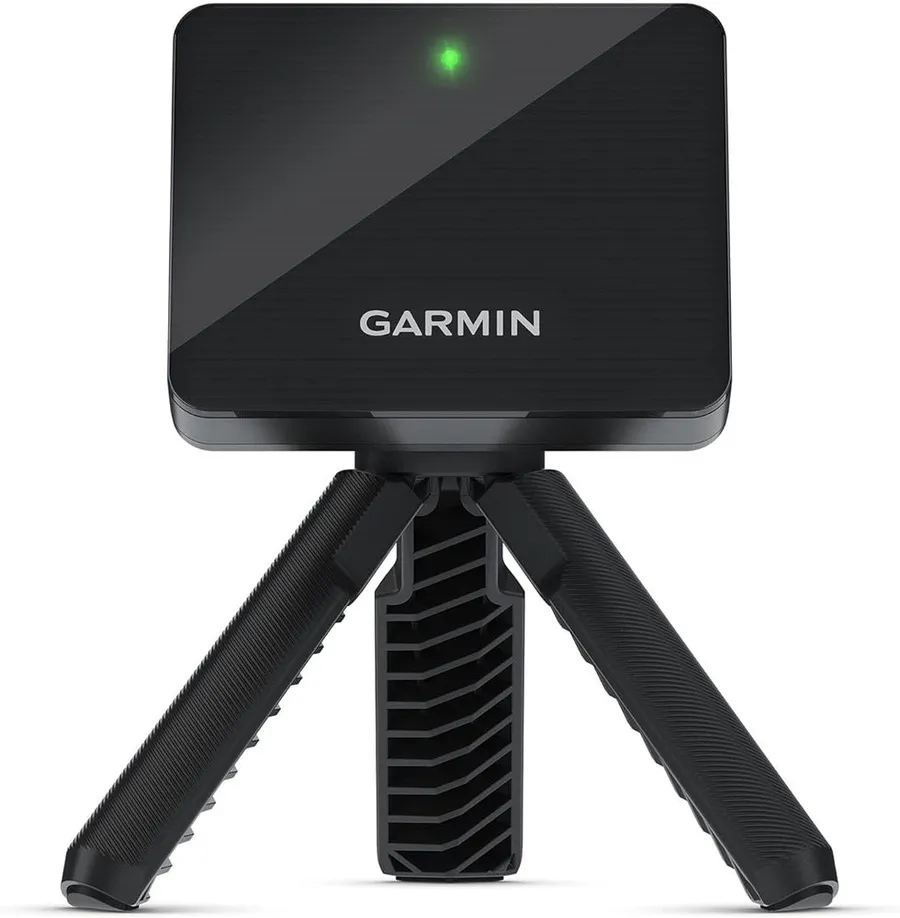
The R10 delivers 14 metrics, a large home-simulator course library and near plug-and-play setup for around $499, making it the smartest all-round value in golf simulators.
What we like
- Fourteen metrics including club path and face angle from one radar unit
- Free Garmin Golf app adds practice ranges and a big course library
- Bundled tripod, phone mount and case mean nothing else to buy
- Up to 10 hours of battery for full range sessions
What we don't
- Doppler radar wants roughly 8 feet of ball flight, so a tight garage bay limits indoor accuracy
| Type | Radar (Doppler) |
|---|---|
| Key metrics | 14 metrics |
| Software | Garmin Golf app |
| Price | $499 |
| Warranty | 1 year |
| Install difficulty | Easy |
| Price bracket | $$ |
The Garmin Approach R10 takes Best Value because it does the most things well for the least money and fuss. A single pocket-sized radar reads 14 metrics, from ball speed and launch angle to club path and face angle, and feeds them straight into the free Garmin Golf app. That app is the quiet advantage over cheaper rivals: you get practice ranges, video capture and a large library of virtual courses without paying a separate software fee up front.
Setup is genuinely easy. The box includes a tripod, a phone mount and a carry case, so you unfold it, place it a set distance behind the ball and start hitting. On the range or in the backyard it is close to plug and play, and the 10-hour battery outlasts most sessions.
Its one real limitation is shared by every Doppler unit: radar needs to watch the ball fly. Give it around 8 feet of flight and the numbers hold up well, but cram it into a short garage bay against a net a few feet away and accuracy drops. If your space is that tight, a camera-based pick reads better indoors.
For everyone else, the R10 is the safe money. It is accurate enough for real practice, cheap enough to justify and flexible enough to travel from range to living room, which is exactly what most first-time simulator buyers actually want.
Research-based pick: this recommendation is based on product data, owner feedback and comparison with products we have tested, not on direct hands-on testing.
Buy it if: Golfers who want one flexible device for the range, the backyard and a home sim
Skip it if: You only have a short indoor net and cannot give the radar room to read flight
Best Budget
Rapsodo Mobile Launch Monitor (MLM)
by Rapsodo
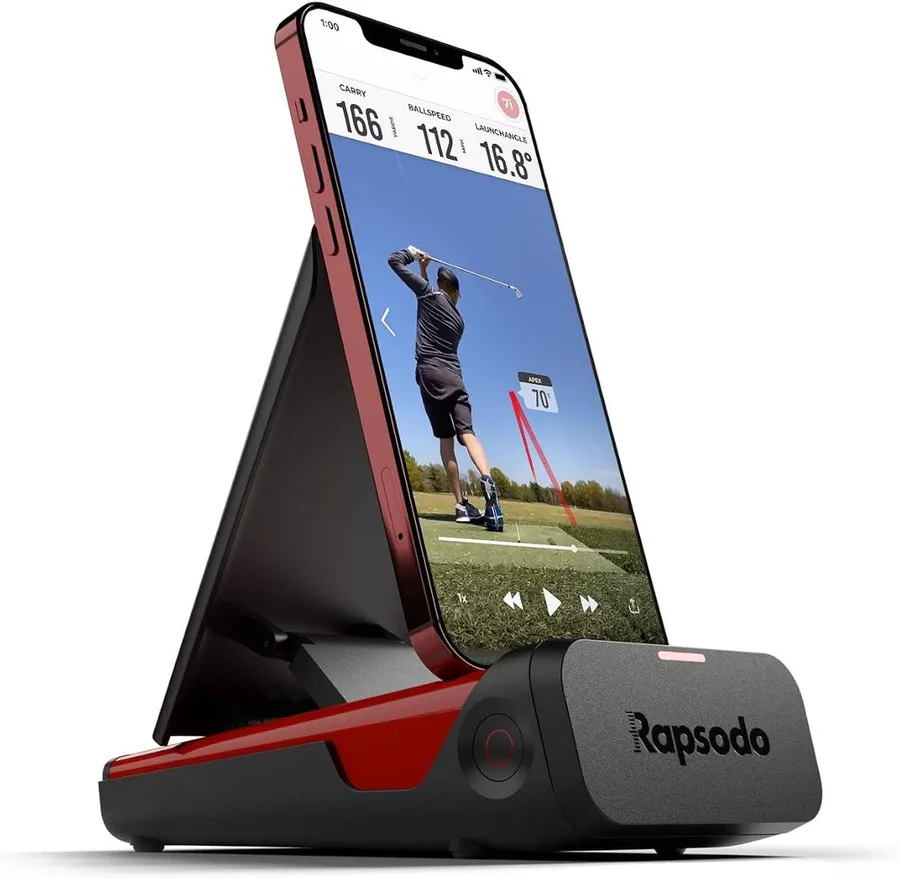
At around $200 the original Rapsodo MLM gives dependable ball speed, club speed and distance numbers with a GPS range view, making it the cheapest way into real launch data.
What we like
- One of the lowest prices for a genuine camera-based launch monitor
- Reports the core numbers most golfers actually track: ball speed, club speed and distance
- GPS satellite range view adds a fun way to log outdoor sessions
- Huge base of verified owner reviews shows a proven, reliable unit
What we don't
- Works with iPhone and iPad only, so Android owners are locked out
| Type | Single camera (iOS only) |
|---|---|
| Key metrics | 5 metrics |
| Software | Rapsodo app (iOS) |
| Price | $200 |
| Warranty | 1 year |
| Install difficulty | Easy |
| Price bracket | $ |
The original Rapsodo MLM earns Best Budget because it is the cheapest honest route into launch-monitor data. For roughly $200 you get a real camera-based unit that measures the numbers most weekend golfers care about, ball speed, club speed, launch angle and carry distance, and shows them in a clean phone app. It will not fit clubs or map spin, but it nails the fundamentals that drive distance work.
A neat extra is the GPS satellite range view, which overlays your shots on an aerial image so an ordinary practice session feels more like play. With thousands of verified owner reviews behind it, this is a proven unit rather than an unknown quantity, which matters at the budget end where corners often get cut.
The catch is platform lock-in. The MLM runs on iPhone and iPad only, so Android owners should skip it and look at the Garmin R10 instead. It also tops out at a handful of metrics, so anyone who wants spin, club path or full simulator course play will outgrow it.
If you own an iPhone and simply want trustworthy speed and distance numbers without spending real money, though, nothing else here undercuts it while still delivering usable data.
Research-based pick: this recommendation is based on product data, owner feedback and comparison with products we have tested, not on direct hands-on testing.
Buy it if: Budget-minded golfers on iOS who mainly want distance and speed feedback
Skip it if: You use an Android phone or want spin and full club-path data
Best for Beginners
PHIGOLF Home Golf Simulator
by PHIGOLF
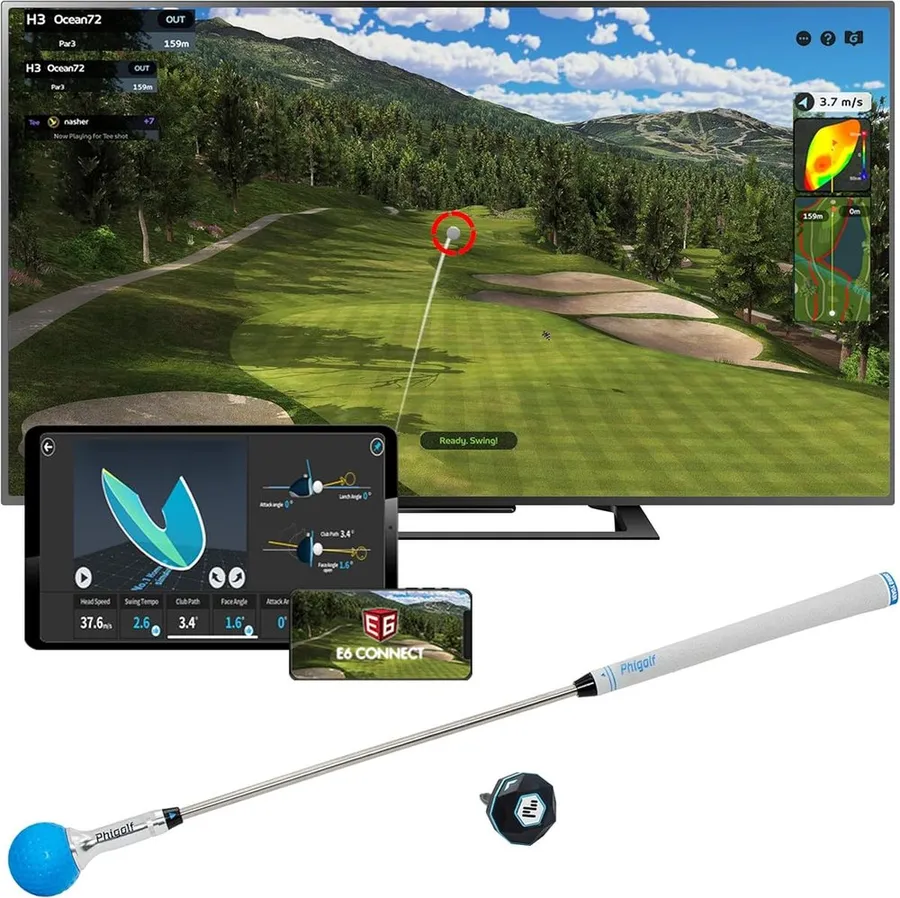
PHIGOLF swaps launch-monitor hardware for a motion-sensor swing stick and 38,000-plus courses, giving newcomers and families a low-cost, low-space way to play virtual golf indoors.
What we like
- One of the cheapest ways to play full virtual courses at home
- Motion sensor and short swing stick need very little space to use
- Access to 38,000 plus courses through E6 Connect and WGT
- Works with both Android and iOS, unlike some budget rivals
What we don't
- A swing sensor estimates ball flight rather than measuring it, so data is approximate
| Type | Motion sensor swing stick |
|---|---|
| Key metrics | Basic swing data |
| Software | E6 Connect plus WGT (38,000 plus courses) |
| Price | $280 |
| Warranty | 1 year |
| Install difficulty | Easy |
| Price bracket | $ |
PHIGOLF wins Best for Beginners because it lowers the two biggest barriers to home golf, cost and space. Instead of a launch monitor watching a real ball, it uses a motion sensor clipped to a short swing stick, so you can swing in a living room without a net, a mat or eight feet of ball flight. That makes it the easiest pick here to actually set up and enjoy on day one.
The value is in the software. Through E6 Connect and WGT you get access to more than 38,000 courses, so a family can play famous holes together for the price of a single mid-range accessory. It runs on both Android and iOS, which matters since several budget rivals lock you to one platform.
The honest trade-off is accuracy. Because the sensor reads your swing and estimates the shot rather than measuring a struck ball, the data is approximate. It is great for fun and for grooving tempo, but it will not diagnose spin, face angle or a real distance gap the way a camera or radar unit does.
For a first taste of simulator golf, a gift, or getting kids into the game, though, nothing else here matches the mix of low price, tiny footprint and huge course library.
Research-based pick: this recommendation is based on product data, owner feedback and comparison with products we have tested, not on direct hands-on testing.
Buy it if: Beginners, kids and casual players who want fun indoor golf over precise data
Skip it if: You want accurate ball and club metrics to genuinely improve your swing
Best for Accuracy
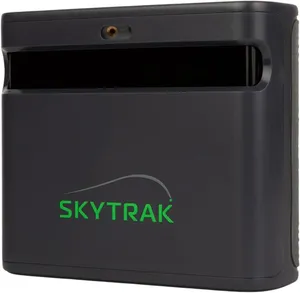
SkyTrak ST MAX
by SkyTrak
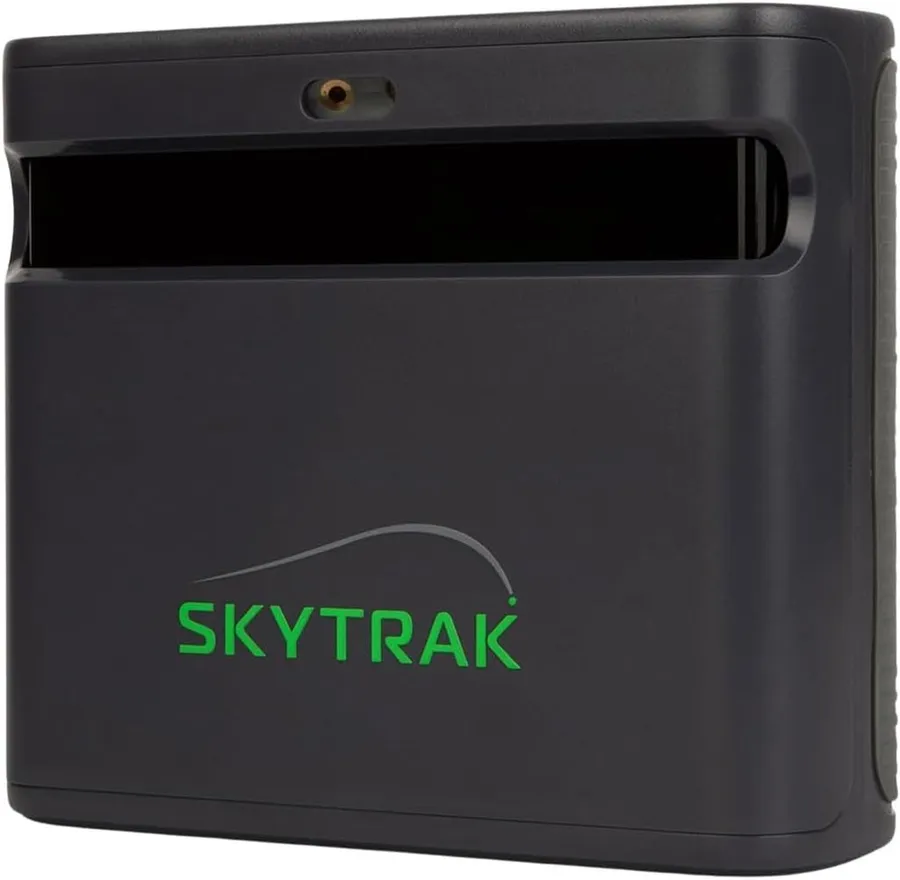
The ST MAX layers dual Doppler radar over photometric cameras, so it holds tour-grade precision both in a tight indoor room and out on the range, all for well under the premium all-in-ones.
What we like
- Combines dual radar and cameras for accuracy indoors and outdoors
- Reports full ball and club data for serious game improvement
- Priced below standalone premium units while matching much of their precision
- Backed by GOLFTEC speed training tools for structured practice
What we don't
- Needs a separate device or laptop and paid software tiers to reach its full potential
| Type | Dual radar plus photometric cameras |
|---|---|
| Key metrics | Full ball plus club data |
| Software | SkyTrak plus app |
| Price | $1,995 |
| Warranty | 1 year |
| Install difficulty | Moderate |
| Price bracket | $$$ |
The SkyTrak ST MAX wins Best for Accuracy because it uses two tracking technologies at once. Dual Doppler radar reads the ball in flight while photometric cameras measure at impact, and combining them lets the unit stay precise in situations that trip up single-sensor rivals. In a short indoor bay the cameras carry the load, and outdoors the radar confirms full flight, so you rarely have to compromise on where you practice.
That precision comes with full ball and club data rather than a trimmed metric set, which makes it a real game-improvement tool. GOLFTEC speed training features add structure for players chasing distance, so the numbers translate into a plan rather than just a readout.
Its limitation is that it is a monitor, not a complete system. You supply a phone, tablet or laptop to view the data, and the deeper software tiers and course play carry a cost, so budget beyond the sticker. Buyers who want a screen built in should look at the pricier R50 instead.
For an improving golfer who cares most about trustworthy numbers and does not want to spend flagship money to get them, the ST MAX hits the sweet spot between accuracy and price better than anything else on this list.
Research-based pick: this recommendation is based on product data, owner feedback and comparison with products we have tested, not on direct hands-on testing.
Buy it if: Improving golfers who want the most accurate data without paying flagship prices
Skip it if: You want an all-in-one with a built-in screen and no extra devices
Best Complete Package
SkyTrak Studio Pro Package
by SkyTrak
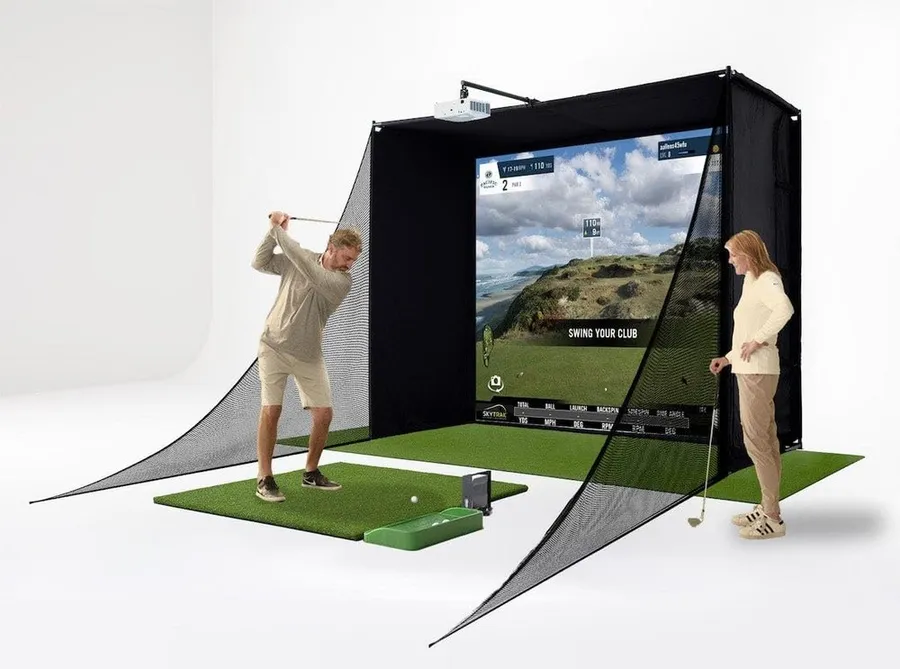
This SkyTrak bundle pairs the launch monitor with an enclosure, mat, projector and case, so you get a full, ready-to-play simulator in one purchase instead of sourcing every part yourself.
What we like
- Includes the launch monitor, enclosure, hitting mat, projector and ball tray
- Removes the guesswork of matching a screen, mat and projector yourself
- SkyTrak plus and E6 Connect software cover practice and course play
- Metal protective case makes the monitor durable and portable
What we don't
- At $2,995 it is a big single outlay and still needs room to house the enclosure
| Type | Photometric package (monitor plus enclosure) |
|---|---|
| Key metrics | Full ball plus club data |
| Software | SkyTrak plus and E6 Connect |
| Price | $2,995 |
| Warranty | 1 year |
| Install difficulty | Hard |
| Price bracket | $$$ |
The SkyTrak Studio Pro Package earns Best Complete Package because it answers the question most simulator buyers get stuck on: what else do I need to buy? Instead of a bare launch monitor, this bundle ships the SkyTrak unit alongside an enclosure, a hitting mat, a projector, a ball tray and a metal protective case. That turns a shopping list of mismatched parts into one box that becomes a playable bay.
The launch monitor at its core produces full ball and club data and runs on SkyTrak’s own software plus E6 Connect, so you get both structured practice and course play. Because everything is specified to work together, you avoid the common mistakes of an underpowered projector or a screen that does not fit the frame.
The trade-offs are cost and space. At $2,995 it is a serious single outlay, and you still need a room tall and deep enough to stand the enclosure, so it is not a fit for a cramped apartment. Anyone who already owns a monitor will also be paying again for hardware they have.
But for someone starting from nothing who wants a dedicated golf room without becoming a project manager, this package is the most straightforward path from empty garage to first virtual round.
Research-based pick: this recommendation is based on product data, owner feedback and comparison with products we have tested, not on direct hands-on testing.
Buy it if: Buyers who want a complete room-ready simulator without assembling parts piecemeal
Skip it if: You already own a launch monitor or lack space for a full enclosure
Best Premium
Garmin Approach R50
by Garmin
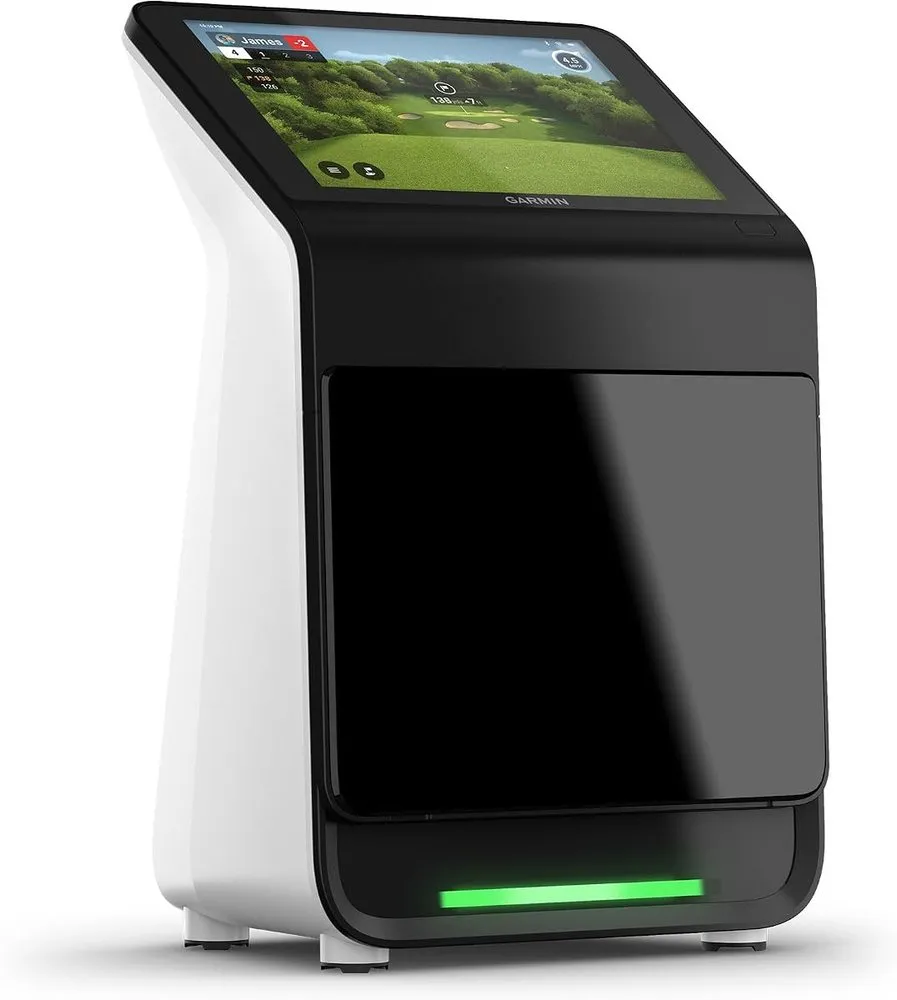
The R50 folds three high-speed cameras, 15-plus metrics and a 10-inch built-in touchscreen into one standalone unit, delivering a near-commercial simulator experience without a separate computer.
What we like
- Three high-speed cameras capture 15 plus metrics including spin and spin axis
- Large built-in color touchscreen runs everything with no laptop required
- Access to more than 43,000 courses through E6 Connect
- Photometric tracking stays accurate in tight indoor spaces
What we don't
- At around $5,000 it costs roughly ten times the best value picks
| Type | Photometric (3 cameras) |
|---|---|
| Key metrics | 15 plus metrics |
| Software | Built-in plus E6 Connect (43,000 plus courses) |
| Price | $4,999 |
| Warranty | 1 year |
| Install difficulty | Moderate |
| Price bracket | $$$ |
The Garmin Approach R50 takes Best Premium because it packs a full simulator brain into a single box. Three high-speed cameras read the ball and club to produce 15-plus metrics, including spin and spin axis, and a 10-inch color touchscreen is built right into the housing. That means you can run practice modes and see rich data without tethering it to a laptop, which removes one of the biggest friction points in a home setup.
Being photometric, it measures at impact rather than watching the ball fly, so it stays accurate in a tight room where a radar unit would struggle. Pair it with E6 Connect and you unlock more than 43,000 courses on a screen, turning a spare room into a genuine studio.
The obvious limitation is price. At around $5,000 the R50 costs roughly ten times a Garmin R10 or Rapsodo MLM, so it only makes sense if you are committing to a permanent, high-accuracy setup and will use it often. Casual players will never extract that value.
For the buyer who wants the closest thing to a commercial bay in their own home, and wants it to just work out of one device, the R50 is the standout premium choice here.
Research-based pick: this recommendation is based on product data, owner feedback and comparison with products we have tested, not on direct hands-on testing.
Buy it if: Serious golfers building a permanent, high-accuracy home simulator studio
Skip it if: You are cost-sensitive or only play occasionally
How we researched these picks#
We built this list by starting from the golf simulators people actually buy, then filtering hard on evidence and relevance. Every product here is a real, currently sold unit with a meaningful base of verified owner reviews, which keeps the list grounded in gear you can order today rather than spec-sheet vaporware.
For each candidate we pulled the manufacturer specifications, read across aggregated verified owner feedback and then compared units head to head on the factors that change a buying decision: tracking accuracy and the technology behind it, the number and usefulness of the metrics reported, how much room the unit needs, software and subscription costs, and overall value at the price. We deliberately spread the final seven across price brackets and use cases, from a $200 pocket monitor to a near-$5,000 all-in-one studio unit, so there is a sensible pick for different budgets and rooms.
These recommendations are research-based, not hands-on tested. We have not swung in front of each unit ourselves, so we lean on published specs and the consistent themes in owner feedback rather than our own bay data. Where a device has a real weakness, such as a subscription requirement or a space constraint, we call it out plainly.
How to choose a golf simulator (buying guide)#
Match the technology to your space. Radar units read the ball in flight, so they need room, ideally around 8 feet of travel, and they shine outdoors or in a deep garage. Photometric camera units measure at impact and stay accurate right in front of a screen, which makes them the better fit for a cramped room. Hybrid units that use both, like the SkyTrak ST MAX, cover indoor and outdoor use but cost more.
Measure your room before you spend. A full enclosure needs height as well as floor space. Aim for roughly 9 to 10 feet of ceiling and about 10 feet of width so you can swing a driver safely, and confirm the depth your chosen tracking technology wants. A device that reads well outdoors can disappoint in a low garage, so the room often decides the pick more than the price does.
Decide whether you want data, play or both. A sensor stick like PHIGOLF is built for casual virtual rounds and needs almost no space, but its shot data is estimated. A camera or radar launch monitor measures real numbers you can train with, and pairs with course software when you want to play. Be honest about which you will actually use most.
Check for subscriptions before you buy. Sticker price is not always the full cost. Simple monitors show numbers for free, but several simulator-capable units gate their richest data and course play behind a paid annual plan. Add that recurring fee to your comparison so two units at the same price are judged fairly.
Confirm software and platform compatibility. Some units are tied to one ecosystem or one app. The original Rapsodo MLM works with iPhone and iPad only, so Android owners should look elsewhere. Check that the companion software supports your device, and whether it includes the course library you want, such as E6 Connect.
Weigh warranty and value at your budget. Most units here carry a one-year warranty, so lean on price bracket, metric depth and included accessories to decide. Spend the least that still covers the accuracy and space you have: a budget monitor for pure feedback, a mid-priced all-rounder like the Garmin R10 for flexibility, and a premium unit or complete package only if a permanent studio justifies the outlay.
Frequently asked questions
How much space do I need for a golf simulator?
It depends on the technology. Radar units like the Garmin R10 want roughly 8 feet of ball flight, so they favor a deep garage or the range. Camera and photometric units such as the Garmin R50 and SkyTrak measure at impact and stay accurate just a few feet from a screen, which makes them the better fit for a tight room. As a rule of thumb, a full enclosure setup needs about 9 to 10 feet of ceiling height and 10 feet of width to swing safely.
Do golf simulators need a monthly or yearly subscription?
Some do for their best features. The original Rapsodo MLM shows its core numbers with no fees, but simulator-focused units like the Rapsodo MLM2PRO and SkyTrak put full metrics and unlimited course play behind a paid annual plan. Budget for that recurring cost before you buy, since two units at the same sticker price can differ a lot once software is added.
What is the difference between a launch monitor and a golf simulator?
A launch monitor measures your shot and reports numbers like ball speed, spin and carry. A golf simulator adds software, a screen and usually a mat and enclosure so you can play virtual courses on that data. Most units here, such as the Garmin R10 and Rapsodo MLM2PRO, are launch monitors that become simulators once you pair them with course-play software and something to hit into.
What is the cheapest way to get a golf simulator at home?
For pure data on a budget, the original Rapsodo MLM starts around $200 for iPhone owners. For actually playing virtual courses at the lowest cost, the PHIGOLF sensor stick lets you swing indoors with almost no space and access tens of thousands of holes, though its shot data is estimated rather than measured.
About the author

Jim Bennett Founder & lead reviewer
Jim is the guy behind Golf Sim Jim. He builds home golf simulators and compares launch monitors by the numbers that actually decide a setup, room fit, accuracy and software.
Home setup: Garage bay: SkyTrak+, 10 ft ceiling, BenQ LK936ST short-throw
- Launch monitor accuracy
- Home simulator builds
- Impact screens & enclosures
- Sim software (GSPro, E6, TGC)