
7 Top Rated Golf Simulators for 2026, Ranked by Owners
We compared seven top rated golf simulators from Garmin, Rapsodo and SkyTrak on accuracy, space, courses and price to find the best for every budget.

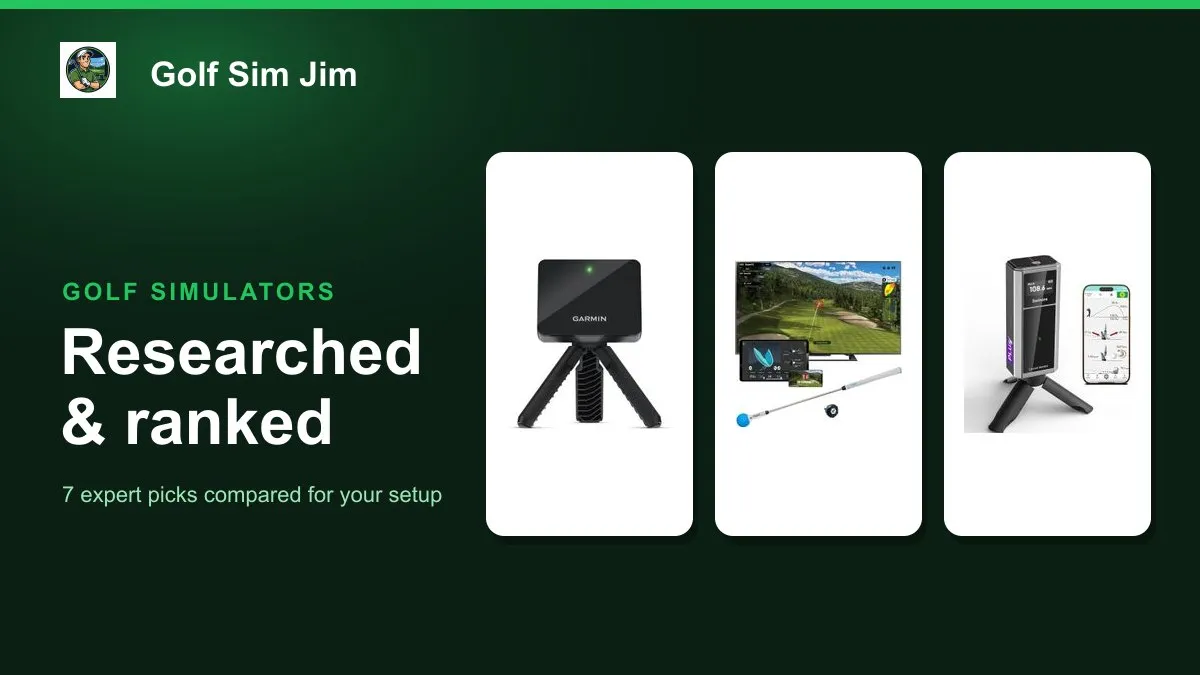
A golf simulator can turn a garage, spare room or backyard net into a place to practice with real numbers and play virtual courses in any weather, but the market runs from sub-$300 swing kits to full studio packages near $3,000, and the most expensive setup is rarely the right one for your space or budget. This guide compares seven real, currently sold golf simulators that buyers actually cross-shop, from Garmin, Rapsodo, SkyTrak, PHIGOLF and Swinora. We weighed each one on measurement accuracy and the sensor technology behind it, how many useful metrics it reports, the depth of its virtual course library, how much room it needs, and value at the price. Whether you want a cheap indoor kit, a grab-and-go monitor, a data-rich improver's tool, or a complete room studio, one of these picks fits. Below you will find the Garmin R10 as the best overall choice plus category winners for budget, portability, accuracy, premium data and complete setups, followed by a plain-language buying guide.
Table of contents
- Quick picks
- Price compared
- Comparison table
- Best Overall: Garmin Approach R10
- Best Budget: PHIGOLF Home Golf Simulator
- Best Portable: Swinora Golf Launch Monitor
- Best for Accuracy: Rapsodo MLM2PRO
- Best Premium: SkyTrak ST MAX Launch Monitor
- Best Complete Setup: SkyTrak Studio Pro Package
- Best All-in-One: Garmin Approach R50
- How we researched these picks
- How to choose a golf simulator (buying guide)
- FAQ
Quick picks
Every pick wins a specific use case. Jump to the full review before you buy.
-
Best Overall
Garmin Approach R10
The Garmin Approach R10 turns almost any garage, net or driving range into a home simulator for around $499, and its huge owner base and free course library make it the safest first buy for most golfers.
-
Best Budget
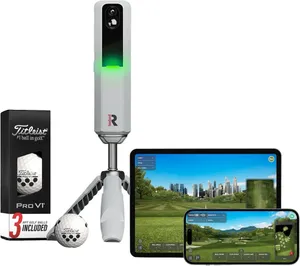
PHIGOLF Home Golf Simulator
The PHIGOLF kit uses a sensor-equipped swing stick instead of a launch monitor, so you can play tens of thousands of virtual courses indoors for under $300 without needing space to hit real balls.
-
Best Portable
Swinora Golf Launch Monitor
The Swinora launch monitor packs 13 metrics and a 3D driving range into a pocket-sized unit that costs about $320, making it the easiest pick to carry between the range, backyard and living room.
-
Best for Accuracy
Rapsodo MLM2PRO
The Rapsodo MLM2PRO pairs dual cameras with radar to measure rather than estimate spin and shot shape, giving you the most trustworthy data of any sub-$1,000 simulator here.
-
Best Premium
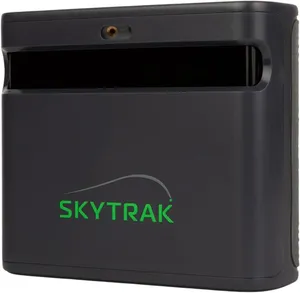
SkyTrak ST MAX Launch Monitor
The SkyTrak ST MAX layers dual radar over photometric cameras to deliver studio-grade ball and club data at around $1,995, a serious step up in precision without crossing into five-figure territory.
-
Best Complete Setup
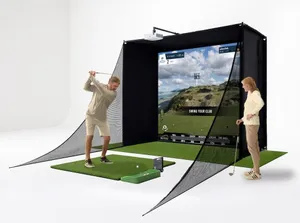
SkyTrak Studio Pro Package
The SkyTrak Studio Pro Package bundles a photometric launch monitor with an enclosure, impact screen, mat and projector, so you get a full room-ready simulator in one purchase for about $2,995.
-
Best All-in-One
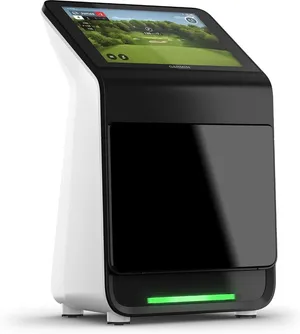
Garmin Approach R50
The Garmin Approach R50 builds three high-speed cameras, radar and a 10-inch touchscreen into one unit, so it plays courses and shows data without a laptop, at a premium price near $4,999.
Compare every pick
| Product | Award | Sensor type | Metrics tracked | Simulator courses | Price | Warranty | Best for | Where to buy |
|---|---|---|---|---|---|---|---|---|
| Garmin Approach R10 | Best Overall | Doppler radar | 14 metrics | 43,000 plus via Garmin Golf app | $499 | 1 year | Most golfers who want a capable home simulator without overspending | Check price on Amazon for Garmin Approach R10 at Amazon (affiliate link) |
| PHIGOLF Home Golf Simulator | Best Budget | Swing stick motion sensor | Swing speed, tempo and path | 38,000 plus, E6 Connect compatible | $280 | 1 year | Beginners and small-space players who want cheap indoor course play | Check price on Amazon for PHIGOLF Home Golf Simulator at Amazon (affiliate link) |
| Swinora Golf Launch Monitor | Best Portable | Portable radar | 13 metrics | 3D driving range and trajectory view | $320 | 1 year | Golfers who want a grab-and-go monitor for range and home use | Check price on Amazon for Swinora Golf Launch Monitor at Amazon (affiliate link) |
| Rapsodo MLM2PRO | Best for Accuracy | Dual camera plus radar | 15 metrics | Included courses plus premium membership | $599 | 1 year | Improvers who want reliable spin and shot-shape data at a mid price | Check price on Amazon for Rapsodo MLM2PRO at Amazon (affiliate link) |
| SkyTrak ST MAX Launch Monitor | Best Premium | Dual radar plus photometric cameras | Full ball and club data set | Compatible with major sim software | $1,995 | 1 year | Committed golfers building a dedicated practice setup | Check price on Amazon for SkyTrak ST MAX Launch Monitor at Amazon (affiliate link) |
| SkyTrak Studio Pro Package | Best Complete Setup | Photometric camera launch monitor | Full ball and club data set | Bundled sim software, screen and projector | $2,995 | 1 year | Buyers who want a turnkey room simulator without sourcing parts | Check price on Amazon for SkyTrak Studio Pro Package at Amazon (affiliate link) |
| Garmin Approach R50 | Best All-in-One | Triple camera plus radar | 15 plus metrics with spin and axis | 43,000 plus on built-in touchscreen | $4,999 | 1 year | Buyers who want top-tier data and a screen in one tidy unit | Check price on Amazon for Garmin Approach R50 at Amazon (affiliate link) |
Swipe sideways to compare every column.
Best Overall
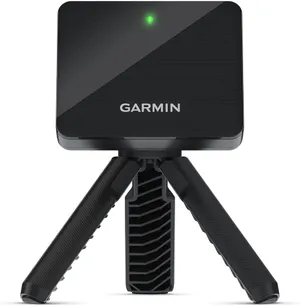
Garmin Approach R10
by Garmin
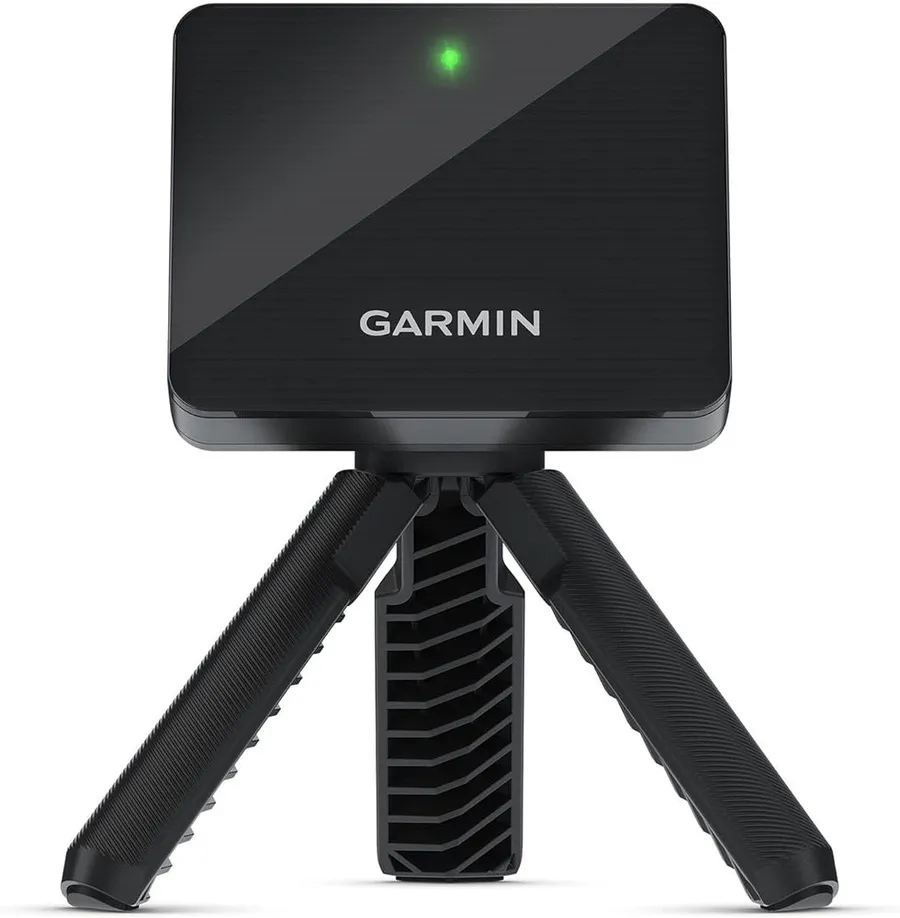
The Garmin Approach R10 turns almost any garage, net or driving range into a home simulator for around $499, and its huge owner base and free course library make it the safest first buy for most golfers.
What we like
- Portable Doppler radar reads 14 metrics indoors and outdoors
- Free Garmin Golf app unlocks more than 43,000 virtual courses
- Works on both Android and iPhone with up to 10 hours of battery
What we don't
- As a radar unit it needs several feet of ball flight, so it struggles in short indoor rooms and estimates spin unless you add stickers
| Sensor type | Doppler radar |
|---|---|
| Metrics tracked | 14 metrics |
| Simulator courses | 43,000 plus via Garmin Golf app |
| Price | $499 |
| Warranty | 1 year |
| Install difficulty | Easy |
| Price bracket | $$ |
The Garmin Approach R10 is the launch monitor most home golfers should look at first, and it is why it wins best overall here. It is a small Doppler radar unit that sits behind the ball, reads 14 metrics, and feeds them into the free Garmin Golf app, which includes more than 43,000 virtual courses. That combination gives you real practice data and simulator play for a fraction of the cost of a dedicated studio system.
What makes it different is balance rather than any single standout number. It is portable enough to carry to the range, runs up to 10 hours on a charge, and works on both Android and iPhone, which is not a given in this category. It is also the pick with the deepest track record on this list, with more than a thousand owner ratings, so you are buying a known quantity rather than a new release.
Its biggest real limitation is space. As a radar unit it needs to watch the ball travel, so it wants roughly seven to eight feet of ball flight to stay accurate and can be fussy indoors in a tight room. Spin is calculated rather than directly measured unless you add stickers to the ball, so pure accuracy hunters will prefer a camera system.
Buy the R10 if you want one affordable device that practices, plays courses and travels well. If your room is very short, look at a camera-based pick, and if you want a self-contained screen and top-tier data, step up to the R50.
Research-based pick: this recommendation is based on product data, owner feedback and comparison with products we have tested, not on direct hands-on testing.
Buy it if: Most golfers who want a capable home simulator without overspending
Skip it if: Your room is too short for the ball to fly several feet
Best Budget
PHIGOLF Home Golf Simulator
by PHIGOLF
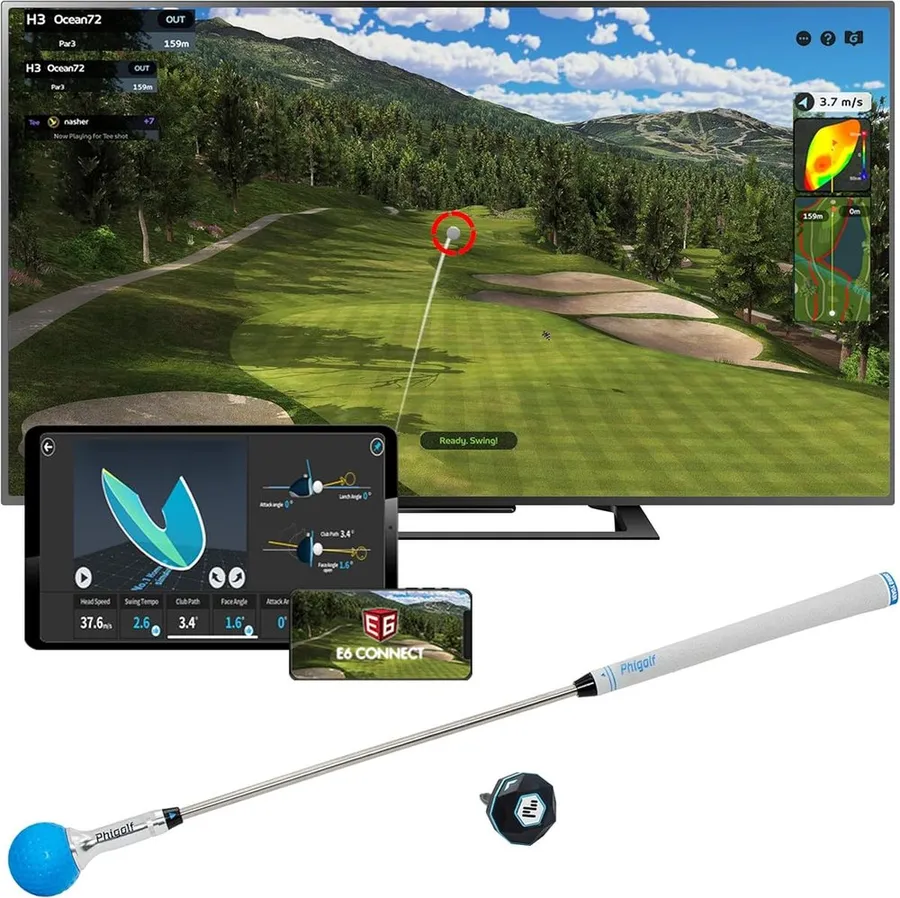
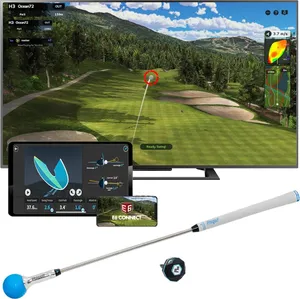
The PHIGOLF kit uses a sensor-equipped swing stick instead of a launch monitor, so you can play tens of thousands of virtual courses indoors for under $300 without needing space to hit real balls.
What we like
- Lowest entry price of any simulator on this list
- Motion sensor and swing stick need almost no room to play
- Access to 38,000 plus courses and E6 Connect compatibility
What we don't
- Ball data is modeled from the swing stick rather than measured off a real strike, so it cannot diagnose true spin, launch or carry
| Sensor type | Swing stick motion sensor |
|---|---|
| Metrics tracked | Swing speed, tempo and path |
| Simulator courses | 38,000 plus, E6 Connect compatible |
| Price | $280 |
| Warranty | 1 year |
| Install difficulty | Easy |
| Price bracket | $ |
The PHIGOLF kit takes a different route to a home simulator, and that is exactly why it wins on budget. Instead of a launch monitor reading a struck ball, it uses a motion sensor on a weighted swing stick to model your swing, then feeds that into an app with more than 38,000 courses. For under $300 you get virtual golf in a space where a radar unit could never work.
The appeal is simplicity and footprint. You swing the stick into a net or open room, the sensor reads speed, tempo and path, and the app plays the shot. It is compatible with E6 Connect, so it plugs into a more serious simulator ecosystem later if you catch the bug. For a beginner or an apartment player, that low barrier is the whole point.
The honest limitation is realism. Because it reads the club and swing rather than an actual ball strike, the ball data is modeled, not measured, so it will not diagnose spin, launch or true carry the way a radar or camera unit does. Owner ratings sit lower than the premium picks, largely reflecting that gap between arcade-style fun and real practice feedback.
Buy the PHIGOLF if you want the cheapest, most space-friendly way to play virtual courses and have fun indoors. If you want to actually improve with trustworthy numbers off real shots, save toward the Garmin R10 or a camera unit instead.
Research-based pick: this recommendation is based on product data, owner feedback and comparison with products we have tested, not on direct hands-on testing.
Buy it if: Beginners and small-space players who want cheap indoor course play
Skip it if: You want accurate ball data from real struck shots
Best Portable
Swinora Golf Launch Monitor
by Swinora
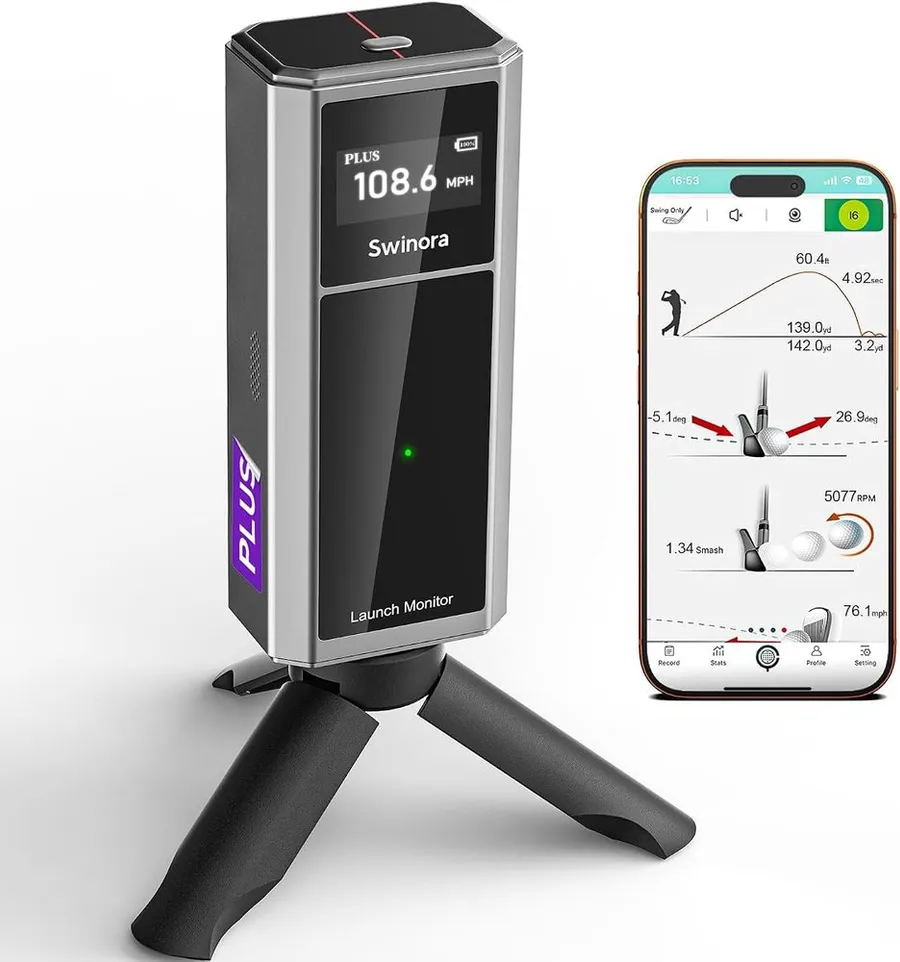
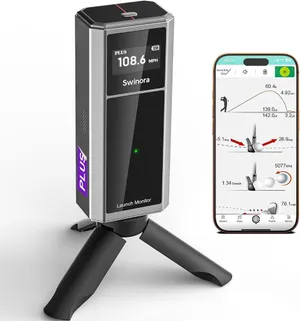
The Swinora launch monitor packs 13 metrics and a 3D driving range into a pocket-sized unit that costs about $320, making it the easiest pick to carry between the range, backyard and living room.
What we like
- Compact unit reads 13 metrics and records shot video
- 3D driving range and trajectory view work on iOS and Android
- Priced well below name-brand radar rivals
What we don't
- A newer value brand with a small owner review pool, so long-term reliability and app support are less proven
| Sensor type | Portable radar |
|---|---|
| Metrics tracked | 13 metrics |
| Simulator courses | 3D driving range and trajectory view |
| Price | $320 |
| Warranty | 1 year |
| Install difficulty | Easy |
| Price bracket | $ |
The Swinora launch monitor earns the portable award by doing the essentials in the smallest, cheapest package on this list. It is a compact radar-style unit that reads 13 metrics, shows a 3D driving range and shot trajectory in its app, and records video of your swing, all for around $320. Drop it in a bag and it moves from the range to the backyard to a net indoors without fuss.
In use it aims squarely at the golfer who wants numbers without ceremony. You set it behind the ball, pair it to an iPhone or Android phone, and start hitting. The 13-metric readout covers the data most improvers actually use, such as ball speed, carry and launch, and the video capture adds context to each shot without a separate camera.
Its real weakness is track record. This is a newer, value-brand device with a far smaller pool of owner reviews than the Garmin or Rapsodo units, so long-term reliability and app support are less proven. It also leans on a 3D range rather than a deep library of playable courses, so it is more practice tool than living-room course simulator.
Pick the Swinora if portability and price are your top priorities and you mainly want practice data on the move. If you want a proven platform with thousands of courses, the Garmin R10 is worth the extra spend, and accuracy seekers should choose the Rapsodo MLM2PRO.
Research-based pick: this recommendation is based on product data, owner feedback and comparison with products we have tested, not on direct hands-on testing.
Buy it if: Golfers who want a grab-and-go monitor for range and home use
Skip it if: You want a long track record or a full course library
Best for Accuracy
Rapsodo MLM2PRO
by Rapsodo
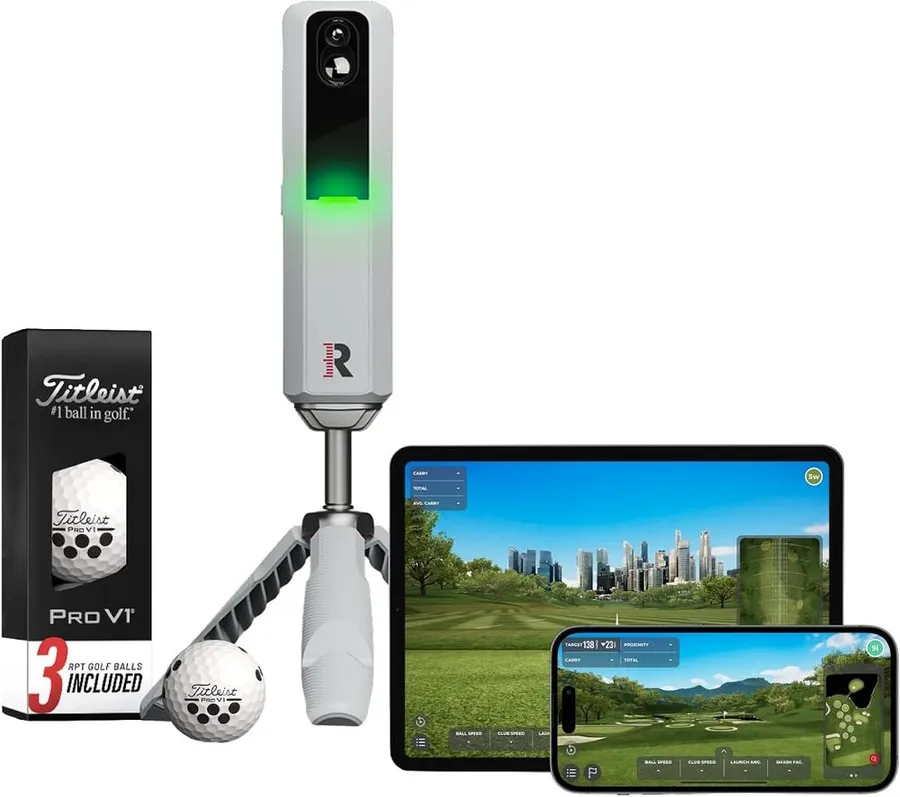
The Rapsodo MLM2PRO pairs dual cameras with radar to measure rather than estimate spin and shot shape, giving you the most trustworthy data of any sub-$1,000 simulator here.
What we like
- Dual camera plus radar measures 15 metrics including real spin
- Built-in impact video captures every swing for review
- Works indoors and outdoors and includes premium tour balls
What we don't
- Full metrics and the course library sit behind a paid annual membership after the first year, raising the true cost
| Sensor type | Dual camera plus radar |
|---|---|
| Metrics tracked | 15 metrics |
| Simulator courses | Included courses plus premium membership |
| Price | $599 |
| Warranty | 1 year |
| Install difficulty | Easy |
| Price bracket | $$ |
The Rapsodo MLM2PRO is the accuracy pick because it does not rely on radar alone. It combines two cameras with radar, which lets it measure spin and shot shape directly instead of calculating them, and that is the difference between numbers you glance at and numbers you can actually trust when you change a swing.
Day to day it feels like a coaching tool as much as a simulator. It reports 15 metrics, records impact video of every shot so you can pair the data with what your swing looked like, and works both indoors in front of a net and outdoors on the range. The included premium tour balls with reflective markers help it read spin cleanly, which is a thoughtful touch at this price.
The real catch is the membership. The MLM2PRO gates its full metric set and course library behind a paid annual plan after the first year, so the true cost is higher than the sticker suggests. It also needs decent lighting and a moment to calibrate, and its all-in software is more practice-focused than a full living-room simulator suite.
Choose the MLM2PRO if measurement quality and swing video matter more than playing endless virtual courses, and you are comfortable with a subscription. If you want the cheapest way onto virtual courses, the Garmin R10 is the better value, and pure budget buyers should look at the PHIGOLF or Swinora.
Research-based pick: this recommendation is based on product data, owner feedback and comparison with products we have tested, not on direct hands-on testing.
Buy it if: Improvers who want reliable spin and shot-shape data at a mid price
Skip it if: You do not want to pay an annual membership for full features
Best Premium
SkyTrak ST MAX Launch Monitor
by SkyTrak
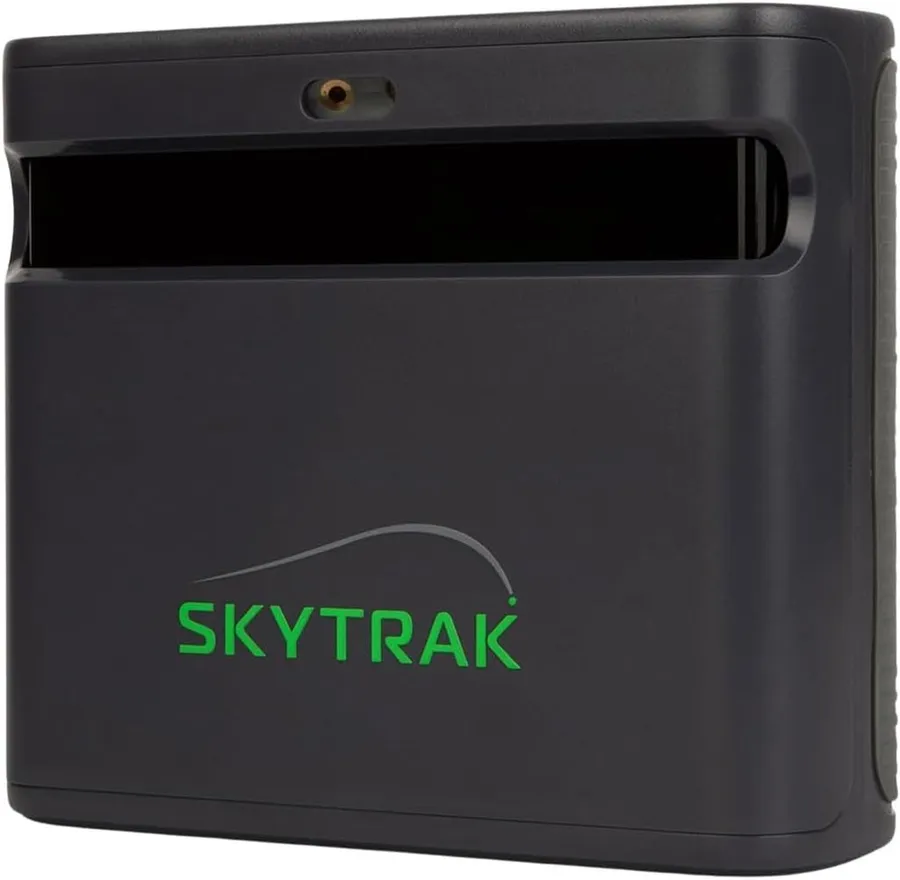
The SkyTrak ST MAX layers dual radar over photometric cameras to deliver studio-grade ball and club data at around $1,995, a serious step up in precision without crossing into five-figure territory.
What we like
- Dual radar plus photometric cameras for precise ball and club data
- Built-in speed training and detailed shot analysis
- Works with major simulator software for full course play
What we don't
- At around $1,995 it costs roughly four times the Garmin R10 and rewards a fixed, dedicated hitting space
| Sensor type | Dual radar plus photometric cameras |
|---|---|
| Metrics tracked | Full ball and club data set |
| Simulator courses | Compatible with major sim software |
| Price | $1,995 |
| Warranty | 1 year |
| Install difficulty | Moderate |
| Price bracket | $$$ |
The SkyTrak ST MAX is the premium pick for golfers who have outgrown consumer radar but do not want to spend five figures. It combines dual Doppler radar with photometric cameras, so it captures a full set of ball and club numbers with the kind of consistency that fitters and low handicappers rely on. At around $1,995 it sits in the gap between hobby gadgets and professional bays.
Living with it feels closer to a coaching studio than a range toy. It measures rather than estimates the important data, adds built-in speed training to build club-head speed, and pairs with major simulator software so you can move from a data session into playing full courses. That flexibility is what justifies the leap in price over a Garmin R10.
The real limitation is commitment. It is heavier, pricier and more setup-dependent than the portable picks, and it rewards a dedicated space with a mat, net or screen rather than a quick garage session. Its owner review pool is also smaller than the mass-market units, so you are trusting the spec sheet and brand reputation more than a huge sample.
Choose the ST MAX if you are serious enough to build a fixed practice area and want measured accuracy without a professional-grade budget. If you want portability or a low price, drop to the R10 or Swinora, and if you want an all-in-one screen built in, look at the Garmin R50.
Research-based pick: this recommendation is based on product data, owner feedback and comparison with products we have tested, not on direct hands-on testing.
Buy it if: Committed golfers building a dedicated practice setup
Skip it if: You want a casual, low-cost or highly portable option
Best Complete Setup
SkyTrak Studio Pro Package
by SkyTrak
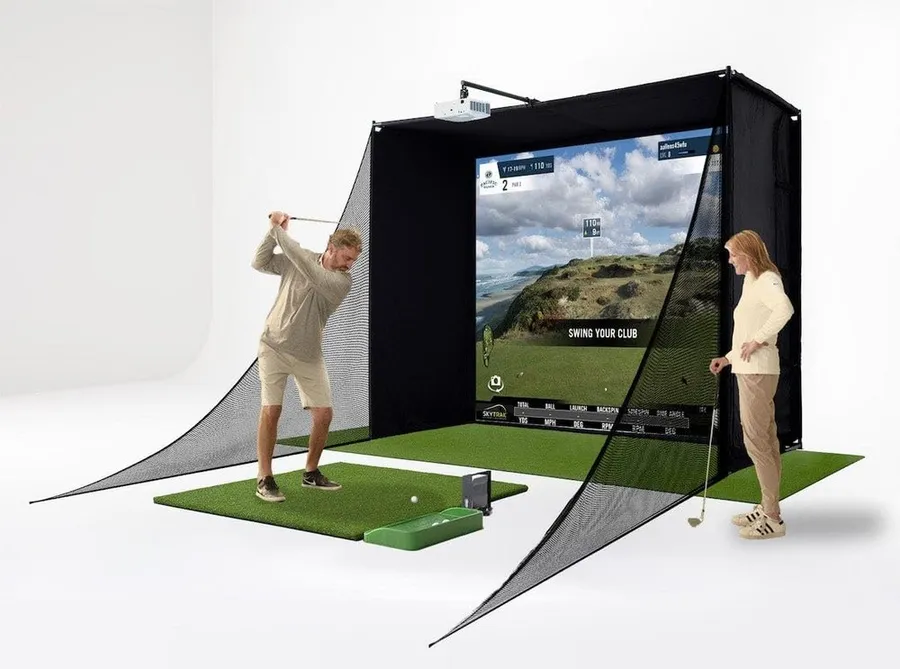
The SkyTrak Studio Pro Package bundles a photometric launch monitor with an enclosure, impact screen, mat and projector, so you get a full room-ready simulator in one purchase for about $2,995.
What we like
- Everything needed for a home studio ships in one package
- Photometric launch monitor delivers accurate indoor data
- Includes enclosure, impact screen, mat, projector and case
What we don't
- It is a room-filling install that needs a dedicated space and real assembly, and costs more upfront than adding parts gradually
| Sensor type | Photometric camera launch monitor |
|---|---|
| Metrics tracked | Full ball and club data set |
| Simulator courses | Bundled sim software, screen and projector |
| Price | $2,995 |
| Warranty | 1 year |
| Install difficulty | Hard |
| Price bracket | $$$ |
The SkyTrak Studio Pro Package wins best complete setup because it removes the hardest part of building a home simulator: figuring out which pieces fit together. Instead of a bare launch monitor, you get a photometric SkyTrak unit plus the enclosure, HD impact screen, hitting mat, projector, protective case and simulator software, all matched to work as one system for about $2,995.
For the right buyer this is a weekend project rather than a months-long parts hunt. The photometric monitor reads shots accurately in front of the screen, the enclosure and mat give you a proper hitting bay, and the bundled projector and software mean you can play courses on day one. Everything is sized to go together, so there is no guesswork about screen distance or mounting.
The obvious limitation is space and effort. This is a room-filling install that needs a garage or spare room with enough height and depth, and assembly is a real job rather than a plug-and-play unboxing. It is also a bigger single outlay than buying a monitor now and adding a screen later, so it suits someone ready to commit to a permanent setup.
Buy the Studio Pro Package if you want a dedicated simulator room handled in one order and have the space to house it. If you would rather start small, portable or cheaper, the Garmin R10 or a component approach makes more sense.
Research-based pick: this recommendation is based on product data, owner feedback and comparison with products we have tested, not on direct hands-on testing.
Buy it if: Buyers who want a turnkey room simulator without sourcing parts
Skip it if: You lack a dedicated room or want to buy components gradually
Best All-in-One
Garmin Approach R50
by Garmin
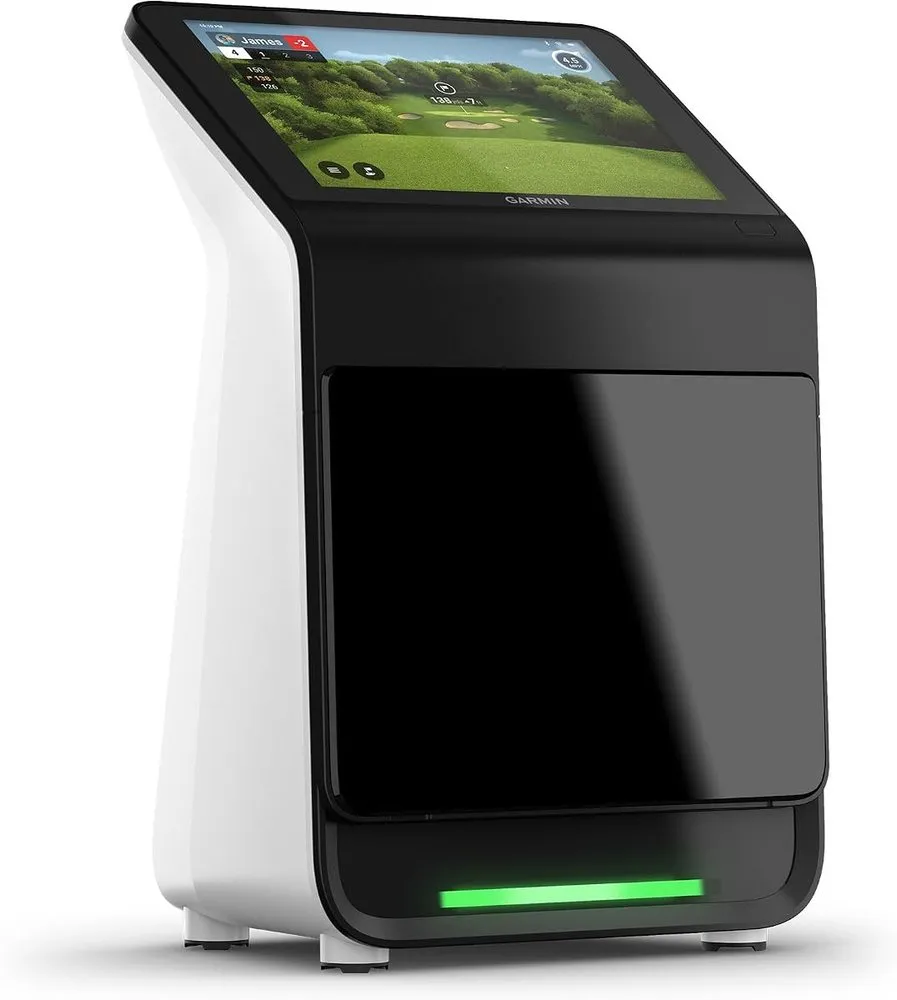
The Garmin Approach R50 builds three high-speed cameras, radar and a 10-inch touchscreen into one unit, so it plays courses and shows data without a laptop, at a premium price near $4,999.
What we like
- Triple cameras plus radar capture 15 plus metrics with spin and axis
- Built-in 10-inch touchscreen runs courses with no laptop needed
- Access to 43,000 plus courses in a self-contained device
What we don't
- At around $4,999 it is by far the priciest pick here, and most home golfers will not need this tier of data
| Sensor type | Triple camera plus radar |
|---|---|
| Metrics tracked | 15 plus metrics with spin and axis |
| Simulator courses | 43,000 plus on built-in touchscreen |
| Price | $4,999 |
| Warranty | 1 year |
| Install difficulty | Moderate |
| Price bracket | $$$ |
The Garmin Approach R50 is the all-in-one pick because it folds the whole simulator experience into a single device. Three high-speed cameras and radar capture more than 15 metrics, including directly measured spin and spin axis, and a built-in 10-inch color touchscreen displays your data and plays more than 43,000 courses without a separate laptop or tablet. It is the tidiest high-end setup here.
In everyday use that integration is the selling point. You do not juggle a phone mount, laptop and cables; you set it down, look at the screen, and either practice with rich data or play a course. For someone who wants premium accuracy but hates fiddly setups, the self-contained design is genuinely different from the component-heavy alternatives.
The limitation is simply cost. At around $4,999 it is by far the most expensive pick on this list, and while the data and convenience are excellent, most home golfers will not need this tier. It still benefits from a net, mat and space, so the screen does not remove the need for a proper hitting area.
Choose the R50 if you want the best of Garmin’s data in one screen-equipped unit and the budget is there. If you want the same ecosystem for far less, the R10 covers most needs, and buyers chasing a full room instead of a single device should look at the SkyTrak Studio Pro Package.
Research-based pick: this recommendation is based on product data, owner feedback and comparison with products we have tested, not on direct hands-on testing.
Buy it if: Buyers who want top-tier data and a screen in one tidy unit
Skip it if: The near five-figure price is beyond your budget
How we researched these picks#
We started from the golf simulators buyers genuinely cross-shop today, then narrowed to seven real, currently sold options that span the market: from a sub-$300 swing-stick kit to a roughly $2,995 complete studio package. Every product here has published manufacturer specifications and, in most cases, a meaningful base of verified owner reviews, which keeps the list grounded in gear you can order right now rather than spec-sheet promises.
For each candidate we pulled the manufacturer specifications, read across aggregated verified owner feedback, and compared units head to head on the factors that change a buying decision: measurement accuracy and the sensor technology behind it, the number and usefulness of the metrics reported, the depth of the virtual course library, how much space the setup needs, and overall value at the price. We deliberately spread the final seven across radar, camera and swing-sensor designs and across use cases, so there is a sensible pick for different budgets, rooms and goals.
These recommendations are research-based, not hands-on tested. We have not swung in front of each unit ourselves, so we lean on published specs and the consistent themes in owner feedback rather than our own range data. Where a product has a real weakness, such as a subscription requirement, modeled rather than measured data, a short review history or a demanding space requirement, we call it out plainly.
How to choose a golf simulator (buying guide)#
Match the sensor to your space. Doppler radar units like the Garmin R10 and Swinora read the ball in flight, so they need room, ideally seven to eight feet of travel plus a net, and they shine in a deep garage or outdoors. Camera and photometric units such as the SkyTrak ST MAX measure at impact and stay accurate in shorter rooms. A swing-stick kit like PHIGOLF needs almost no space because you never send a real ball far, which makes it the pick for apartments and tight corners.
Decide between measured and modeled data. The cheapest way in, the PHIGOLF kit, models your shot from a sensor on a swing stick rather than reading a struck ball, which is fun but not precise. Radar units like the R10 measure real ball flight and calculate spin, while camera systems like the Rapsodo MLM2PRO and SkyTrak ST MAX measure spin and shot shape directly. The more you want to trust the numbers when changing your swing, the further up that ladder you should buy.
Check the course library and software. If playing virtual rounds on realistic courses matters, look at what is included. The Garmin R10 and R50 open more than 43,000 courses through the free Garmin Golf app, PHIGOLF advertises 38,000 plus and works with E6 Connect, and the SkyTrak units pair with major simulator software. A practice-first monitor like the Swinora leans on a 3D range instead of a deep course list, so confirm you are getting the experience you want.
Watch for subscriptions and hidden costs. Sticker price is not always the full cost. The Garmin units play courses on a free app, while the Rapsodo MLM2PRO gates its richest data and course library behind a paid annual plan after year one. Package deals like the SkyTrak Studio Pro bundle the screen, mat and projector so you avoid buying parts separately, but that convenience is baked into a higher upfront number.
Size the setup to your commitment. A portable radar you can set up fast like the R10 or Swinora is easy to carry and store, a camera unit like the ST MAX rewards a dedicated hitting area, and a full package like the SkyTrak Studio Pro or a screen-equipped Garmin R50 assumes a permanent room. Be honest about whether you want a grab-and-go tool or a fixed simulator bay before you spend.
Weigh warranty and value at your budget. Every unit here carries a one-year warranty, so lean on price bracket, data quality and space fit to decide. Spend the least that still covers the accuracy and realism you actually need: a budget simulator for casual indoor play, the mid-priced Garmin R10 for all-round flexibility, and a premium camera unit or full package only if measured accuracy or a dedicated studio justifies the outlay.
Frequently asked questions
What is the best golf simulator for most people?
For most home golfers the Garmin Approach R10 is the best all-round choice. At around $499 it reads 14 metrics from a portable radar, plays more than 43,000 virtual courses through the free Garmin Golf app, and works on both Android and iPhone. Drop to the PHIGOLF kit near $280 if you mainly want cheap indoor course play, or step up to the Rapsodo MLM2PRO for measured spin and shot-shape data.
How much space do I need for a golf simulator?
It depends on the sensor. Radar units like the Garmin R10 and Swinora watch the ball fly, so they want roughly seven to eight feet of ball travel plus a net, and they suit a deep garage or the range. Camera-based units like the SkyTrak ST MAX read shots at impact and fit shorter rooms. A swing-stick kit like PHIGOLF needs almost no space because you never hit a real ball far, and a full package like the SkyTrak Studio Pro needs a dedicated room with height and depth.
Do golf simulators need a subscription?
Some do and some do not. The Garmin R10 and R50 use the free Garmin Golf app with no fee for course play. The Rapsodo MLM2PRO gates its full metrics and course library behind a paid annual membership after the first year, so add that recurring cost before comparing it with another unit at the same sticker price. Standalone kits and packages generally include their software.
Are cheap golf simulators worth it?
For fun and casual practice, yes. A sub-$350 option like the PHIGOLF kit or Swinora monitor lets you play virtual courses or see basic ball data without a big outlay. The gap shows up in measured accuracy, especially spin and true carry, where camera units like the SkyTrak ST MAX and Rapsodo MLM2PRO are far more precise. Match what you spend to the data and realism you will actually use.
About the author

Jim Bennett Founder & lead reviewer
Jim is the guy behind Golf Sim Jim. He builds home golf simulators and compares launch monitors by the numbers that actually decide a setup, room fit, accuracy and software.
Home setup: Garage bay: SkyTrak+, 10 ft ceiling, BenQ LK936ST short-throw
- Launch monitor accuracy
- Home simulator builds
- Impact screens & enclosures
- Sim software (GSPro, E6, TGC)