
7 Best Budget Golf Simulators for 2026 (Real Data Under $1,000)
We compared 7 real budget golf simulator setups under $1,000, from a $161 hitting cage to launch monitors and full enclosures, on data, space and value.

A budget golf simulator can mean very different things, because the category runs from a $160 hitting cage to a $1,000 enclosure and the low prices rarely tell you what you are actually getting. This guide compares seven real, currently sold options, all under $1,000, spread across the pieces that make a home simulator work: launch monitors that measure your ball, a swing-stick system for playing virtual courses, a hitting net with a screen, a DIY cage and complete enclosure packages. For each one we weighed the factors that decide whether budget money is well spent, namely how accurate the data is and the technology behind it, how much room it needs, what software or extras it carries, what is included in the box and value at the price. The aim is to show you where the sensible budget tiers sit so you can match a setup to your space and your wallet instead of overpaying for capability you will not use or underspending on data you cannot trust. Below you will find the best overall pick plus category winners for accuracy, small spaces, budget, DIY builds and complete rooms, followed by a plain buying guide.
Table of contents
- Quick picks
- Price compared
- Comparison table
- Best Overall: Rapsodo MLM2PRO
- Best for Accuracy: Garmin Approach R10
- Best for Small Spaces: PHIGOLF Home Golf Simulator
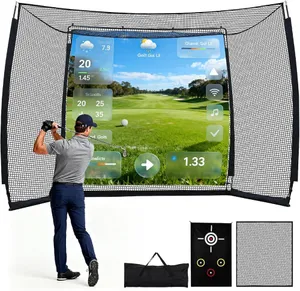
- Best Budget: 10x8 Golf Practice Net with HD Screen
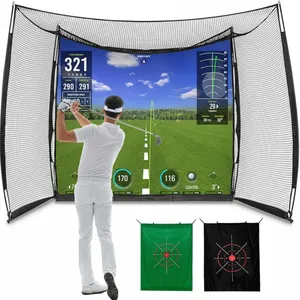
- Best for DIY Builds: 11x8 Golf Hitting Cage with Screen
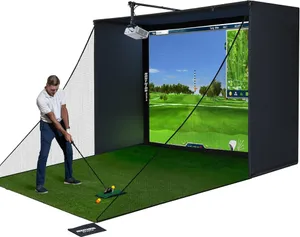
- Best Complete Setup: Complete Golf Simulator Enclosure Package
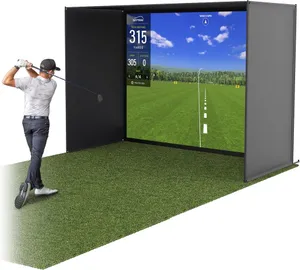
- Best Premium: GoSports Golf Simulator Enclosure
- How we researched these picks
- How to choose a budget golf simulator (buying guide)
- FAQ
Quick picks
Every pick wins a specific use case. Jump to the full review before you buy.
-
Best Overall
Rapsodo MLM2PRO
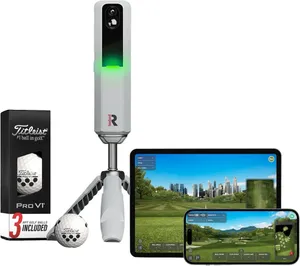
The MLM2PRO is the sweet spot of a budget simulator, pairing a real dual-camera launch monitor with course play and shot video for around $600, so you get trustworthy data without stepping into four-figure territory.
-
Best for Accuracy
Garmin Approach R10
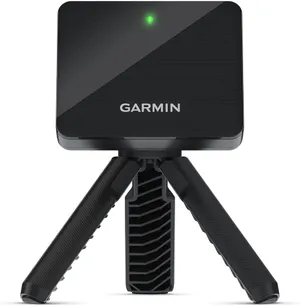
With more than 1,100 verified reviews and Garmin's proven Doppler radar, the Approach R10 is the most trusted set of budget numbers you can buy, and it doubles as a portable simulator through the Garmin Golf app.
-
Best for Small Spaces
PHIGOLF Home Golf Simulator
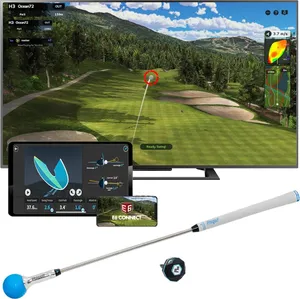
PHIGOLF senses your swing through a weighted stick instead of measuring a ball, so it turns a tiny apartment corner into a course-play simulator for under $300 with no net or ceiling height required.
-
Best Budget
10x8 Golf Practice Net with HD Screen
At around $170 this net-and-screen combo is the cheapest way to start hitting real balls into a projectable surface, a sensible first block for a simulator you build up over time.
-
Best for DIY Builds
11x8 Golf Hitting Cage with Screen
This freestanding 11x8 cage with a blank impact screen gives DIY builders the enclosure and projectable surface for around $161, leaving you to add your own projector and monitor for a custom room on a tight budget.
-
Best Complete Setup
Complete Golf Simulator Enclosure Package
This 4K-ready package bundles the impact screen, blackout cage, projector mount and frame together for around $800, so the room-building work is done and you only add a projector and a monitor.
-
Best Premium
GoSports Golf Simulator Enclosure
At around $1,000 the GoSports enclosure is the top of the budget range, offering size options up to 14x8 feet, a sturdy frame and the highest owner rating here for a dedicated sim room that still stays under the four-figure jump.
Compare every pick
| Product | Award | Type | Space needed | Price | Warranty | Best for | Where to buy |
|---|---|---|---|---|---|---|---|
| Rapsodo MLM2PRO | Best Overall | Dual-camera launch monitor | 8 ft ball flight | $600 | 1 year | Golfers who want one device that measures data and plays courses on a budget | Check price on Amazon for Rapsodo MLM2PRO at Amazon (affiliate link) |
| Garmin Approach R10 | Best for Accuracy | Doppler radar launch monitor | 8 ft ball flight | $500 | 1 year | Golfers who value dependable distance and dispersion data above all | Check price on Amazon for Garmin Approach R10 at Amazon (affiliate link) |
| PHIGOLF Home Golf Simulator | Best for Small Spaces | Swing-stick sensor | Swing clearance only | $280 | 1 year | Renters and small-space golfers who want course play over precise data | Check price on Amazon for PHIGOLF Home Golf Simulator at Amazon (affiliate link) |
| 10x8 Golf Practice Net with HD Screen | Best Budget | Hitting net with screen | 10x8 ft | $170 | 1 year | Beginners who want to hit real balls safely for the least money | Check price on Amazon for 10x8 Golf Practice Net with HD Screen at Amazon (affiliate link) |
| 11x8 Golf Hitting Cage with Screen | Best for DIY Builds | Cage with impact screen | 11x8 ft cage | $161 | 1 year | Tinkerers assembling a projected room from separate parts | Check price on Amazon for 11x8 Golf Hitting Cage with Screen at Amazon (affiliate link) |
| Complete Golf Simulator Enclosure Package | Best Complete Setup | Full enclosure package | 10x8 ft plus depth | $800 | 1 year | Buyers who want the enclosure work done in one purchase | Check price on Amazon for Complete Golf Simulator Enclosure Package at Amazon (affiliate link) |
| GoSports Golf Simulator Enclosure | Best Premium | Premium enclosure kit | Up to 14x8 ft | $1,000 | 1 year | Buyers with room for a dedicated bay who want brand-backed quality | Check price on Amazon for GoSports Golf Simulator Enclosure at Amazon (affiliate link) |
Swipe sideways to compare every column.
Best Overall
Rapsodo MLM2PRO
by Rapsodo
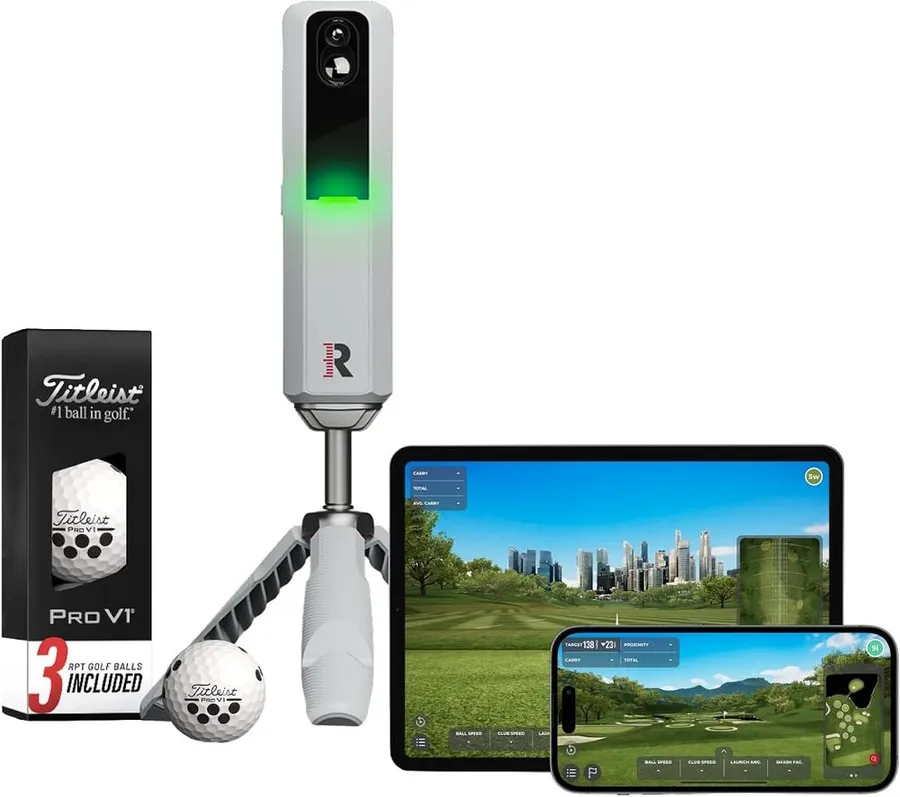
The MLM2PRO is the sweet spot of a budget simulator, pairing a real dual-camera launch monitor with course play and shot video for around $600, so you get trustworthy data without stepping into four-figure territory.
What we like
- Dual-camera and radar hardware measures 15 real ball and club metrics
- Plays virtual courses and includes three premium practice balls
- Works on both iOS and Android, unlike cheaper monitors
- Nearly 700 verified owner reviews, the deepest track record among the monitors here
What we don't
- A full software subscription is needed to unlock course play and every metric
| Type | Dual-camera launch monitor |
|---|---|
| Best for | All-round budget simulator |
| Space needed | 8 ft ball flight |
| Price | $600 |
| Warranty | 1 year |
| Install difficulty | Easy |
| Price bracket | $$ |
The MLM2PRO wins Best Overall because it is the one budget pick that does both halves of a simulator well. It measures a struck ball with a dual-camera and radar system, reporting 15 metrics that include ball speed, club speed, spin and carry, and it plays virtual courses through the app. That combination is exactly what most people picture when they say golf simulator, and here it lands for about $600 rather than the several thousand a photometric studio costs.
Day to day it behaves like a grab-and-go camera unit that sits a fixed distance behind the ball. You open the app, hit into a net or screen, and every shot is logged with video you can review. The three included premium balls matter more than they sound, because the cameras read the ball markings for accuracy, and unlike the cheaper Rapsodo MLM it runs on Android as well as iOS.
The honest limitation is the software. Full course play and the complete metric set sit behind a paid membership, so the real running cost is higher than the sticker, and you still supply your own net or enclosure to hit into.
Buy it if you want a single device that delivers credible data and course play without leaving a budget. If you only want the cheapest reliable numbers and never plan to play virtual rounds, the Garmin R10 is the leaner choice.
Research-based pick: this recommendation is based on product data, owner feedback and comparison with products we have tested, not on direct hands-on testing.
Buy it if: Golfers who want one device that measures data and plays courses on a budget
Skip it if: You only care about raw practice numbers and want to spend as little as possible
Best for Accuracy
Garmin Approach R10
by Garmin
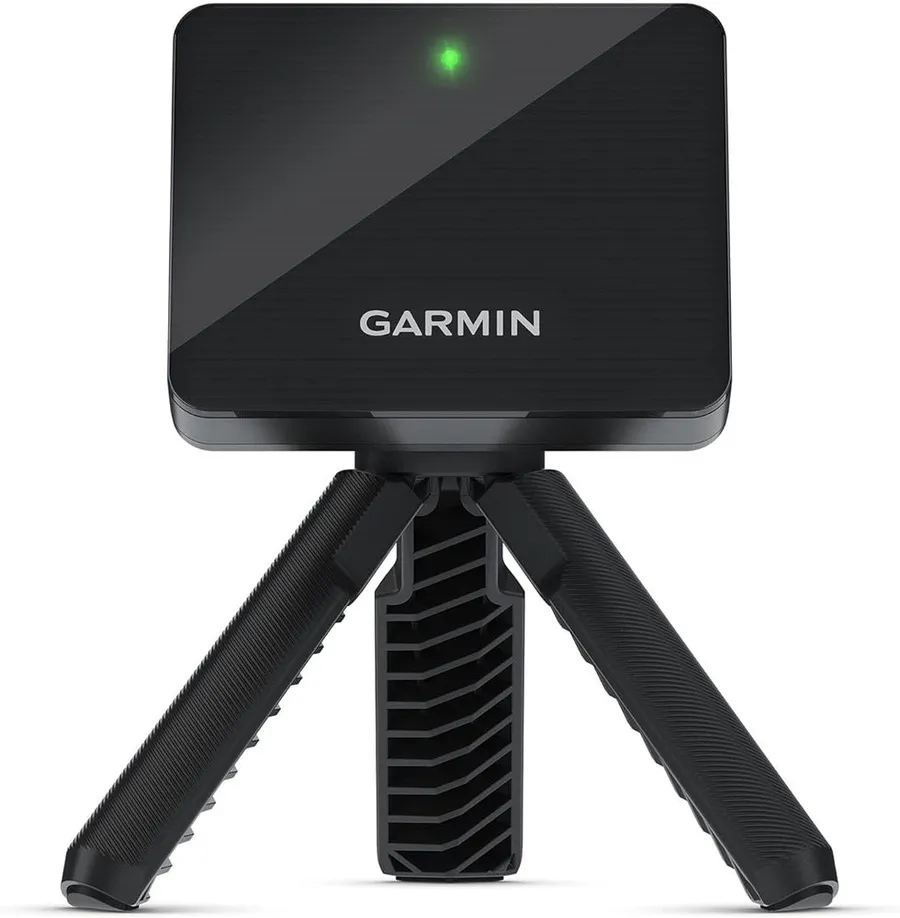
With more than 1,100 verified reviews and Garmin's proven Doppler radar, the Approach R10 is the most trusted set of budget numbers you can buy, and it doubles as a portable simulator through the Garmin Golf app.
What we like
- Doppler radar tracks the ball for consistent, repeatable distance data
- Largest verified owner base in this guide at over 1,100 reviews
- Up to 10 hours of battery and a bundled tripod, mount and case
- Works indoors, at the range or in the backyard on iOS or Android
What we don't
- Radar wants a longer ball flight indoors than some rooms allow
| Type | Doppler radar launch monitor |
|---|---|
| Best for | Accurate ball data |
| Space needed | 8 ft ball flight |
| Price | $500 |
| Warranty | 1 year |
| Install difficulty | Easy |
| Price bracket | $$ |
The R10 earns Best for Accuracy because it pairs Garmin’s mature Doppler radar with the deepest pool of owner feedback in this roundup. More than 1,100 verified reviews and a steady 4.2-star average tell you the distance and dispersion numbers hold up shot after shot, which is the whole point of buying a launch monitor rather than guessing from a swing sensor.
In use it is refreshingly simple. The unit sits behind the ball on its included tripod, pairs with the Garmin Golf app on iOS or Android, and runs up to 10 hours on a charge, so a full practice session or a backyard round never strains the battery. You can also play virtual courses and drills through the app, which makes it a genuine portable simulator rather than a pure practice tool.
The limitation to plan around is space. As a radar device the R10 reads ball flight, so it prefers a longer throw to the net than a camera unit does, and a tight garage can clip its accuracy if you crowd it.
Choose the R10 if trustworthy data is your priority and you have room for the ball to travel. If you want richer course play out of the box or you are in a very short space, look at the MLM2PRO or the PHIGOLF stick instead.
Research-based pick: this recommendation is based on product data, owner feedback and comparison with products we have tested, not on direct hands-on testing.
Buy it if: Golfers who value dependable distance and dispersion data above all
Skip it if: Your hitting space is very short or you want a complete projected room
Best for Small Spaces
PHIGOLF Home Golf Simulator
by PHIGOLF
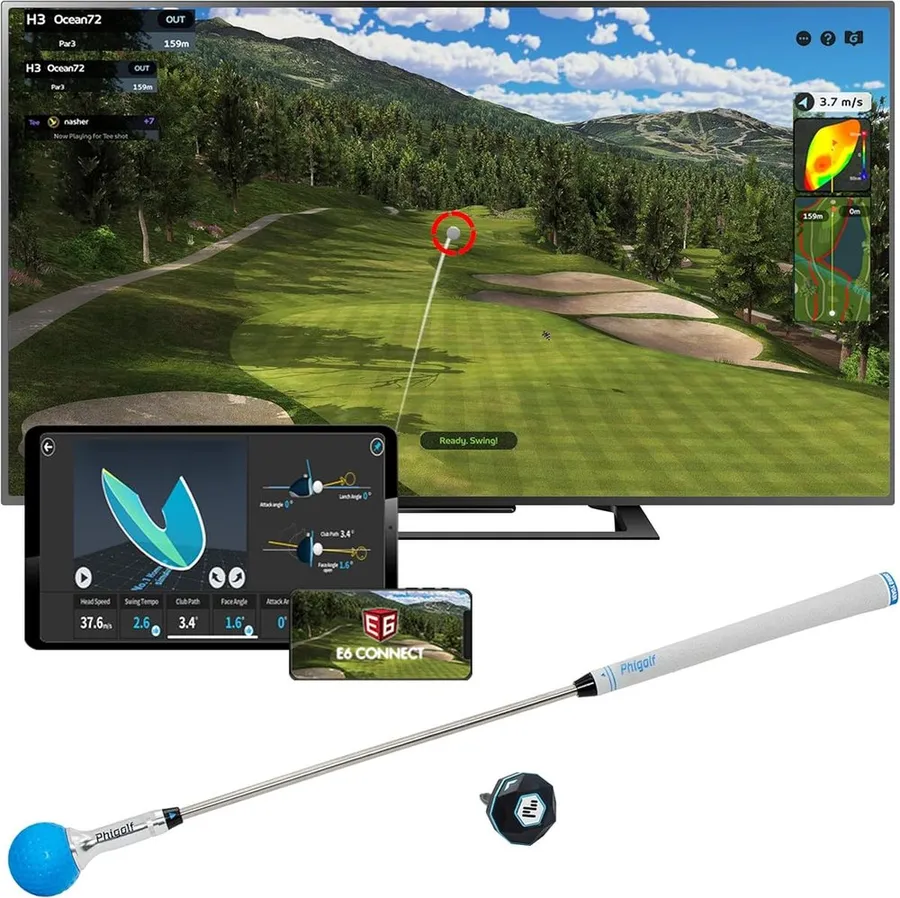
PHIGOLF senses your swing through a weighted stick instead of measuring a ball, so it turns a tiny apartment corner into a course-play simulator for under $300 with no net or ceiling height required.
What we like
- No ball and almost no room needed, so it fits tiny spaces
- Access to 38,000-plus worldwide courses and E6 Connect compatibility
- Runs on both Android and iOS
- Cheapest way to play full virtual rounds at home
What we don't
- Swing-stick data is estimated, not measured, so numbers are approximate
| Type | Swing-stick sensor |
|---|---|
| Best for | Very small rooms |
| Space needed | Swing clearance only |
| Price | $280 |
| Warranty | 1 year |
| Install difficulty | Easy |
| Price bracket | $ |
PHIGOLF takes Best for Small Spaces because it removes the two things that make simulators need room: the ball and the ball flight. A motion sensor clips to a short swing stick and reads your swing directly, which means you can play a full course from a corner of a bedroom or a basement with low ceilings, all for less than $300.
The appeal day to day is the software rather than the hardware. You get access to more than 38,000 courses worldwide plus E6 Connect compatibility, and it runs on both Android and iOS, so almost any phone or tablet becomes the screen. For casual play, winter practice or a bit of competitive fun with friends, that library is a lot of golf for the money.
The trade-off is honesty about the data. Because the system estimates your shot from the swing rather than measuring a struck ball, the distances and shot shapes are approximations, better suited to enjoyment than to serious swing rebuilding.
Buy it if space is your real constraint and you mainly want to play rounds indoors cheaply. If you need measured numbers you can trust for practice, step up to the Garmin R10 or the Rapsodo MLM2PRO.
Research-based pick: this recommendation is based on product data, owner feedback and comparison with products we have tested, not on direct hands-on testing.
Buy it if: Renters and small-space golfers who want course play over precise data
Skip it if: You want real measured ball numbers to rebuild your swing
Best Budget
10x8 Golf Practice Net with HD Screen
by Generic
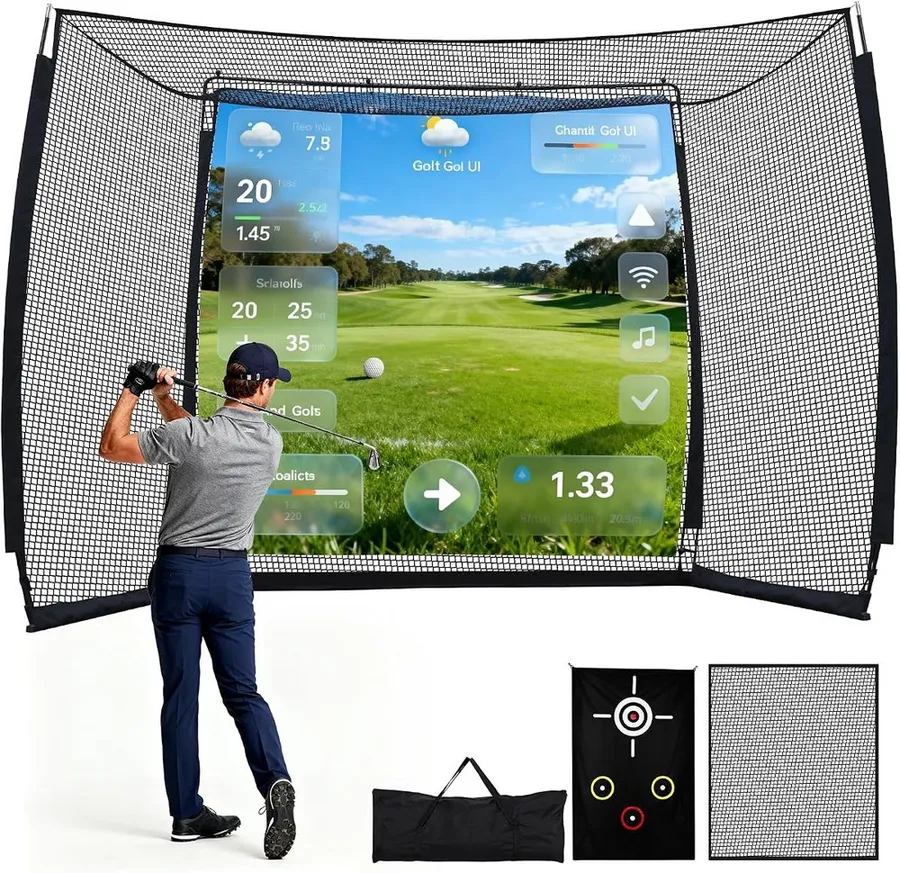
At around $170 this net-and-screen combo is the cheapest way to start hitting real balls into a projectable surface, a sensible first block for a simulator you build up over time.
What we like
- Lowest entry price of any hitting surface in this guide
- Includes an HD simulator screen and a target cloth in one box
- Built-in ball return and impact-resistant netting for safe indoor use
- Fits a typical garage or backyard at 10x8 feet
What we don't
- Captures no data on its own, so you must add a launch monitor to simulate
| Type | Hitting net with screen |
|---|---|
| Best for | Cheapest way in |
| Space needed | 10x8 ft |
| Price | $170 |
| Warranty | 1 year |
| Install difficulty | Moderate |
| Price bracket | $ |
This net earns Best Budget because it is the cheapest way to get a real, projectable hitting surface at home. For about $170 you get an impact-resistant net, an HD simulator screen and a target cloth together, which is exactly the piece most people underestimate when they price out a first simulator. It is the foundation you strike into, ready for a launch monitor and projector to be added later.
In daily use it is a straightforward garage or backyard setup at 10 by 8 feet, with a ball return that saves you chasing shots and netting rated to take repeated full swings safely. Pair it with a Rapsodo or Garmin monitor and a cheap projector and you have a working budget simulator for a fraction of a complete package.
The plain limitation is that it does nothing on its own. There is no sensor here, so without a launch monitor it is a practice net with a screen rather than a simulator, and assembly takes a bit of patience.
Buy it if you want the least expensive honest starting point and plan to grow the setup piece by piece. If you would rather have the cage frame and side nets of a fuller enclosure, look at the 11x8 hitting cage or the complete packages instead.
Research-based pick: this recommendation is based on product data, owner feedback and comparison with products we have tested, not on direct hands-on testing.
Buy it if: Beginners who want to hit real balls safely for the least money
Skip it if: You expect shot data or a complete simulator in the box
Best for DIY Builds
11x8 Golf Hitting Cage with Screen
by Generic
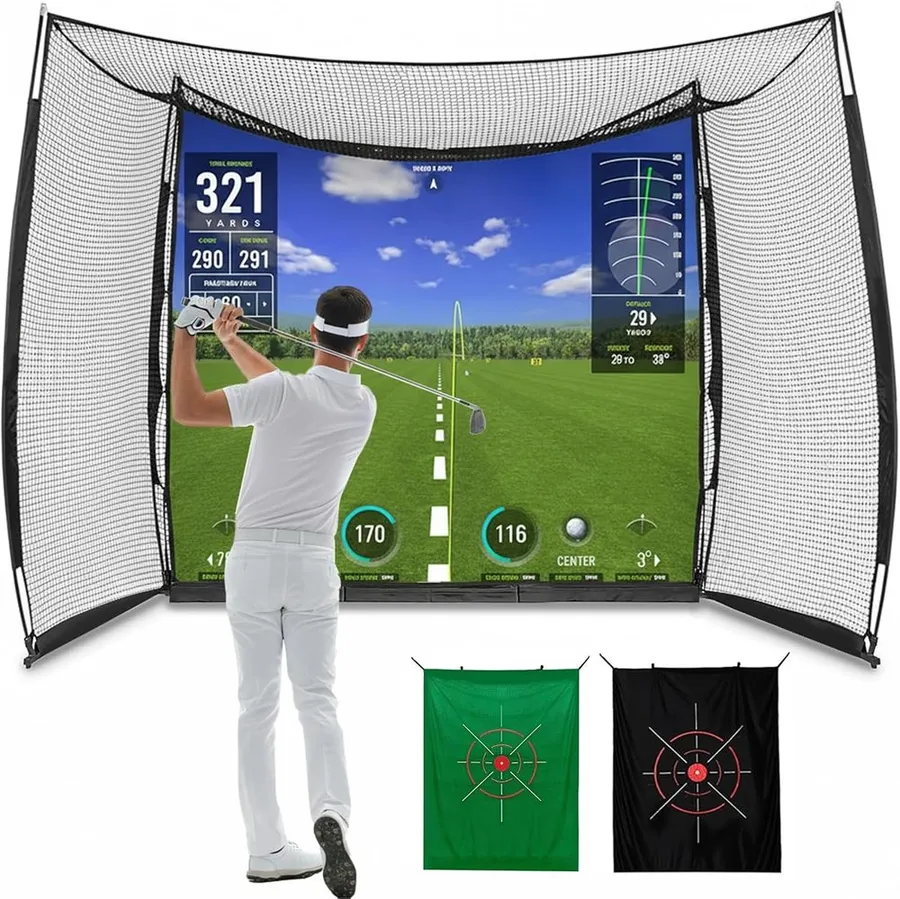
This freestanding 11x8 cage with a blank impact screen gives DIY builders the enclosure and projectable surface for around $161, leaving you to add your own projector and monitor for a custom room on a tight budget.
What we like
- Full cage frame plus blank simulator screen and target cloth included
- Blank screen is ready to project onto once you add a projector
- Enclosed sides contain mishits better than an open net
- One of the lowest-cost enclosure starting points available
What we don't
- Projector, monitor and computer are all left for you to supply
| Type | Cage with impact screen |
|---|---|
| Best for | DIY projector builds |
| Space needed | 11x8 ft cage |
| Price | $161 |
| Warranty | 1 year |
| Install difficulty | Moderate |
| Price bracket | $ |
The 11x8 cage takes Best for DIY Builds because it hands you the two hardest parts of a home enclosure, the frame and a blank projectable screen, and then gets out of the way. For about $161 you get an enclosed cage with a blank simulator screen and target cloth, which is the skeleton experienced tinkerers want when they intend to source a projector and monitor separately and control every choice.
Living with it, the enclosed sides are the real upgrade over a plain net. Mishits and shanks that would spray past an open net get contained by the cage walls, which matters in a garage with a car or drywall nearby. The blank screen is built to project onto, so once you mount a projector you have a full-size image at a fraction of a bundled package price.
The limitation is exactly what makes it cheap: it is deliberately incomplete. You supply the projector, the launch monitor and the computer, so the true cost is higher than the sticker and the build takes real effort.
Buy it if you enjoy assembling a system and want maximum control for minimum outlay. If you would rather open one box and play, the complete enclosure package or the GoSports kit will save you the sourcing work.
Research-based pick: this recommendation is based on product data, owner feedback and comparison with products we have tested, not on direct hands-on testing.
Buy it if: Tinkerers assembling a projected room from separate parts
Skip it if: You want a turnkey package that arrives ready to play
Best Complete Setup
Complete Golf Simulator Enclosure Package
by Generic
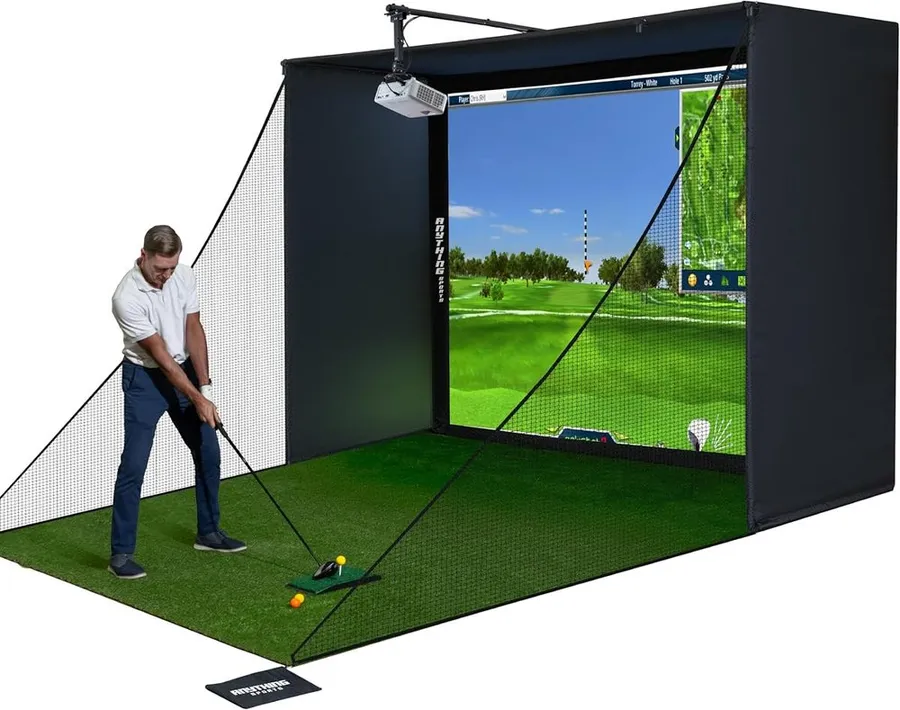
This 4K-ready package bundles the impact screen, blackout cage, projector mount and frame together for around $800, so the room-building work is done and you only add a projector and a monitor.
What we like
- Impact screen, blackout cage, projector mount and poles arrive together
- 4K-ready screen suits a sharp projected image
- Blackout cage improves contrast and contains mishits
- Backed by a 12-month warranty with a solid owner rating
What we don't
- You still supply the projector, launch monitor and computer
| Type | Full enclosure package |
|---|---|
| Best for | Turnkey projected room |
| Space needed | 10x8 ft plus depth |
| Price | $800 |
| Warranty | 1 year |
| Install difficulty | Moderate |
| Price bracket | $$ |
This package wins Best Complete Setup because it collapses the fiddly enclosure decisions into a single box. For about $800 you get a 4K-ready impact screen, a blackout cage, a projector mount and the frame poles and side nets, which is the whole physical room minus the electronics. Compared with sourcing a cage, a screen and a mount separately, it removes the guesswork about fit and compatibility.
Day to day, the blackout cage is the part you feel. It darkens the enclosure so the projected image looks richer and the side nets catch stray shots, which makes a garage feel like a proper sim bay. The included projector mount means you are not improvising a shelf, and the 12-month warranty plus a steady 4.5-star owner rating point to a package that holds together.
The limitation is the same one every enclosure carries: it is not truly all-inclusive. You add the projector, the launch monitor and the computer yourself, so budget for those before you compare it against a bare screen.
Buy it if you want the enclosure and screen solved in one order and are happy to add electronics you may already own. If you want a larger footprint or a higher owner rating, the GoSports kit is the step up, and if you want to save money by building it yourself, the 11x8 cage is the DIY route.
Research-based pick: this recommendation is based on product data, owner feedback and comparison with products we have tested, not on direct hands-on testing.
Buy it if: Buyers who want the enclosure work done in one purchase
Skip it if: You are chasing the absolute lowest price or want the biggest room
Best Premium
GoSports Golf Simulator Enclosure
by GoSports
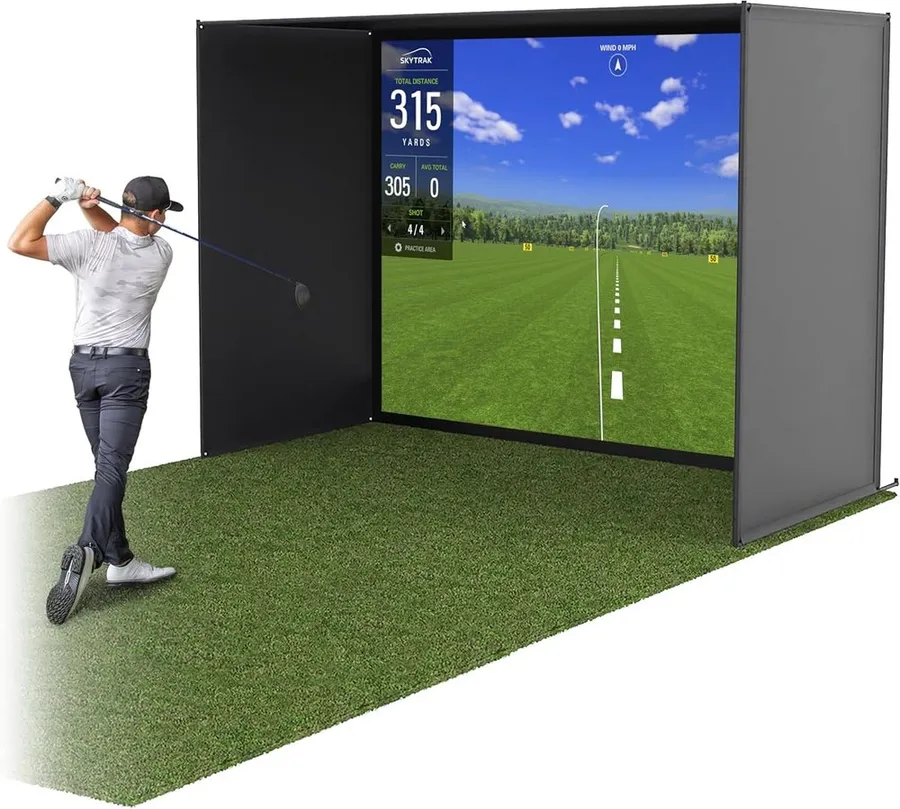
At around $1,000 the GoSports enclosure is the top of the budget range, offering size options up to 14x8 feet, a sturdy frame and the highest owner rating here for a dedicated sim room that still stays under the four-figure jump.
What we like
- Choice of 10x8, 12x9 or 14x8 foot sizes to fit your room
- Complete frame and HD impact screen kit from a recognized brand
- Highest owner rating in this guide at 4.6 stars
- Bigger footprint suits taller players and full drivers
What we don't
- Needs the most floor space and still requires a projector and monitor
| Type | Premium enclosure kit |
|---|---|
| Best for | Bigger dedicated room |
| Space needed | Up to 14x8 ft |
| Price | $1,000 |
| Warranty | 1 year |
| Install difficulty | Moderate |
| Price bracket | $$$ |
The GoSports enclosure takes Best Premium because it is the most substantial room you can build while still keeping the whole simulator under the four-figure jump. For about $1,000 you get a complete steel frame and HD impact screen kit from a brand golfers recognize, and it carries the highest owner rating in this guide at 4.6 stars across well over a hundred reviews.
What sets it apart in use is the sizing. You can choose a 10x8, 12x9 or 14x8 foot enclosure, so taller players and anyone who wants to swing a driver freely can pick a footprint that actually fits, rather than squeezing into a fixed cage. The frame is built to stay taut and square, which keeps the projected image clean over time.
The limitation is space and, as always, electronics. The larger sizes want a genuinely dedicated area, and like every enclosure here you still add a projector, a launch monitor and a computer to make it play.
Buy it if you have the room and want the sturdiest, best-rated enclosure before prices climb into serious simulator territory. If your space or budget is tighter, the complete enclosure package or the 11x8 DIY cage will get you projecting for less.
Research-based pick: this recommendation is based on product data, owner feedback and comparison with products we have tested, not on direct hands-on testing.
Buy it if: Buyers with room for a dedicated bay who want brand-backed quality
Skip it if: Your space is tight or you want to spend as little as possible
How we researched these picks#
We built this list by starting from the setups people actually buy when they search for a budget golf simulator, sizing them up against the closest affordable golf simulator picks and filtering hard on evidence and relevance. Every product here is a real, currently sold unit or package priced under $1,000, and we favored those with a meaningful base of verified owner reviews so the list reflects gear you can order today rather than spec-sheet promises. Where a product had a thin review count or a poor rating, we left it off.
For each candidate we pulled the manufacturer specifications, read across aggregated verified owner feedback and compared setups head to head on the factors that decide whether budget money is well spent: measurement accuracy and the technology behind it, how much space the setup needs, what software or extras it carries, what is actually included in the box, and value at the price. Because this is a budget guide, we deliberately spread the seven picks across roles, from a $161 cage to a $1,000 enclosure, so you can see how the pieces of a simulator stack up and where each dollar goes.
These recommendations are research-based, not hands-on tested. We have not built each setup ourselves, so we lean on published specs and the consistent themes in owner feedback rather than our own range data. Where a product carries a hidden cost, such as a required projector, a launch monitor you must add or approximate data, we call it out plainly so the price you compare is the price you actually pay.
How to choose a budget golf simulator (buying guide)#
Decide what job you need done first. A simulator is really three jobs: measuring the ball, showing an image and stopping the ball safely. The cheapest useful buy depends on which you care about. Want data to improve? Start with a launch monitor. Want to play courses in a spare room with almost no space? A swing stick is cheaper. Just want a projectable surface to hit into? A net or cage does that for the least money.
Match the technology to your space. The most trusted budget data comes from measured monitors like the Rapsodo MLM2PRO and Garmin R10, but radar and camera units both want a stretch of ball flight, so they suit a garage or backyard. A swing-stick system such as PHIGOLF needs almost no room because it senses the swing, not the ball. Nets, cages and enclosures need real floor space, so measure your ceiling height and depth before you buy.
Separate the launch monitor from the screen. The biggest budget mistake is assuming a monitor includes a projected picture, or that an enclosure includes a sensor. Neither is true. A standalone monitor plays through your phone or tablet for a few hundred dollars, while a projected image means adding a screen or enclosure, a projector and a computer on top. That gap is why complete packages and bare monitors look so different in price.
Add up the parts a package leaves out. A complete enclosure sounds all-inclusive, but every cage and package here still expects you to supply a projector, a computer and a launch monitor. Before comparing an $800 package with a $161 cage, total the parts you would have to add to each so you are comparing finished rooms, not boxes.
Check platform and software compatibility. Confirm the app supports your device and offers the courses or metrics you want. The Rapsodo MLM2PRO and PHIGOLF both run on Android and iOS, and PHIGOLF adds a huge course library through E6 Connect. Remember that a monitor’s full metric set and course play can sit behind a paid membership, which raises the real running cost beyond the sticker.
Buy the tier that fits, not the flashiest one. Spend the least that still covers the job and the space you have. A net or cage gets you a surface for well under $200, a Garmin R10 or Rapsodo MLM2PRO adds real data, a swing stick unlocks course play in a tiny room, and a complete enclosure builds a projected bay only when you are ready. Most warranties here run about a year, so let capability, space and total cost, not the warranty, make the final call.
Frequently asked questions
What is the best budget golf simulator overall?
For most people it is the Rapsodo MLM2PRO at around $600, because it is the cheapest option here that both measures a real struck ball with 15 metrics and plays virtual courses, and it works on iOS and Android. If you only want dependable distance data for less, the Garmin R10 at about $500 is the leaner pick, and if you want course play in a tiny room, the PHIGOLF stick does it for under $300.
Can you build a golf simulator for under $500?
Yes. A common budget path is a launch monitor for measured data plus a net and screen to hit into. Pairing a monitor like the Garmin R10 with the $170 net-and-screen combo, and a cheap projector and a phone you already own, lets you hit real shots into a projected image while staying close to $500. Swing-stick systems like PHIGOLF reach virtual course play for even less because they need no ball or enclosure.
Do budget simulators come with everything you need?
No, and this trips up a lot of first buyers. Every enclosure and cage here still expects you to add a projector, a computer and a launch monitor, and the launch monitors expect you to supply a net or screen to hit into. Before comparing an $800 package with a $170 net, total the parts you would have to add to each so you are comparing finished rooms, not boxes.
Are budget golf simulators accurate?
It depends on the technology. A camera or radar launch monitor that measures a struck ball, like the Rapsodo MLM2PRO or Garmin R10, gives credible data even at the budget end. A swing-stick system such as PHIGOLF estimates your shot from the swing, so its numbers are approximate and better suited to fun than to serious swing rebuilding. Nets, cages and enclosures capture no data at all on their own.
About the author

Jim Bennett Founder & lead reviewer
Jim is the guy behind Golf Sim Jim. He builds home golf simulators and compares launch monitors by the numbers that actually decide a setup, room fit, accuracy and software.
Home setup: Garage bay: SkyTrak+, 10 ft ceiling, BenQ LK936ST short-throw
- Launch monitor accuracy
- Home simulator builds
- Impact screens & enclosures
- Sim software (GSPro, E6, TGC)