
5 Best Garmin Golf Simulator Setups for 2026 (R10 vs R50 Compared)
We compared Garmin R10 and R50 golf simulator setups against three real rivals on accuracy, space and price to find the best pick for your room.

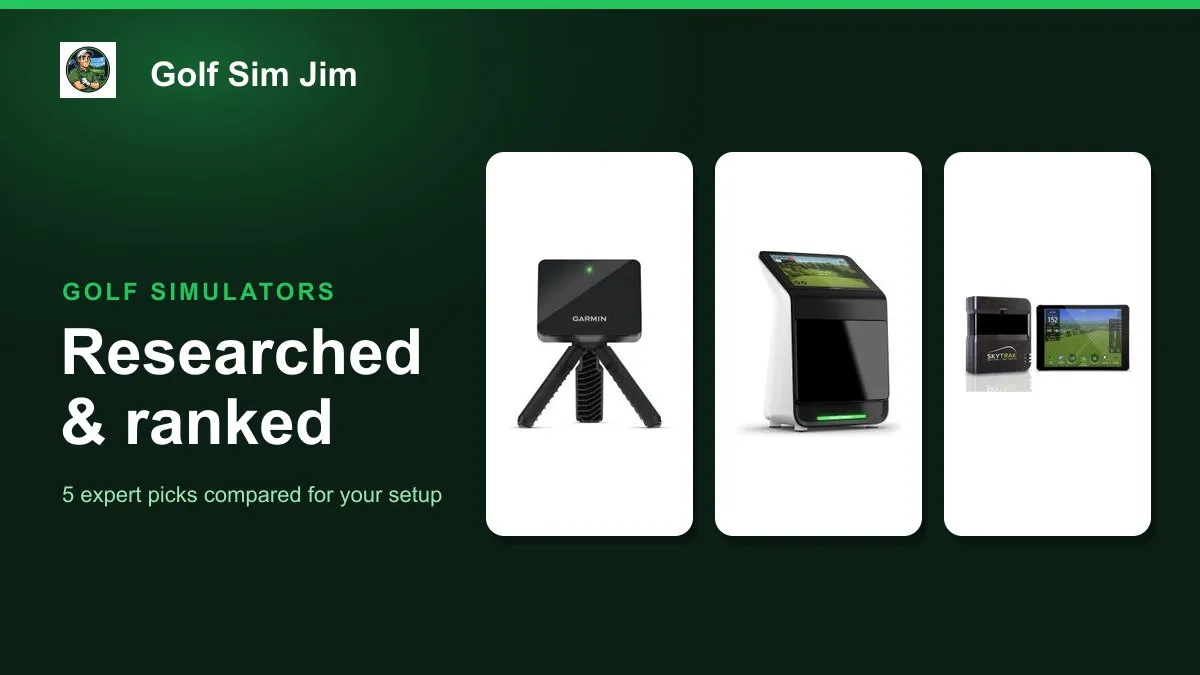
A Garmin golf simulator can mean two very different things: a $499 portable radar that turns your phone and a projector into a playable course, or a near-$5,000 all-in-one unit with cameras and its own touchscreen. The right one depends far more on your room and budget than on the badge. This guide compares the two Garmin units people cross-shop the most, the Approach R10 and the premium R50, then lines them up against three real rivals from Rapsodo and SkyTrak that owners weigh against them. We judged each on measurement accuracy and the technology behind it, how much space it needs to read shots, the depth of its metrics, software and subscription costs, and value for the money. Whether you want an affordable first setup, a permanent high-accuracy build, a camera for swing video or a grab-and-go option, one of these picks fits. Below you will find the R10 as the best overall setup plus category winners for premium play, accuracy, swing video and portability, followed by a plain buying guide.
Table of contents
Quick picks
Every pick wins a specific use case. Jump to the full review before you buy.
-
Best Overall
Garmin Approach R10
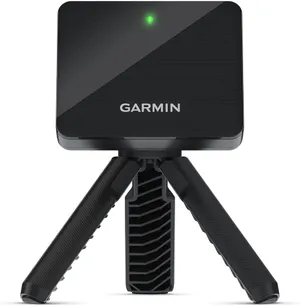
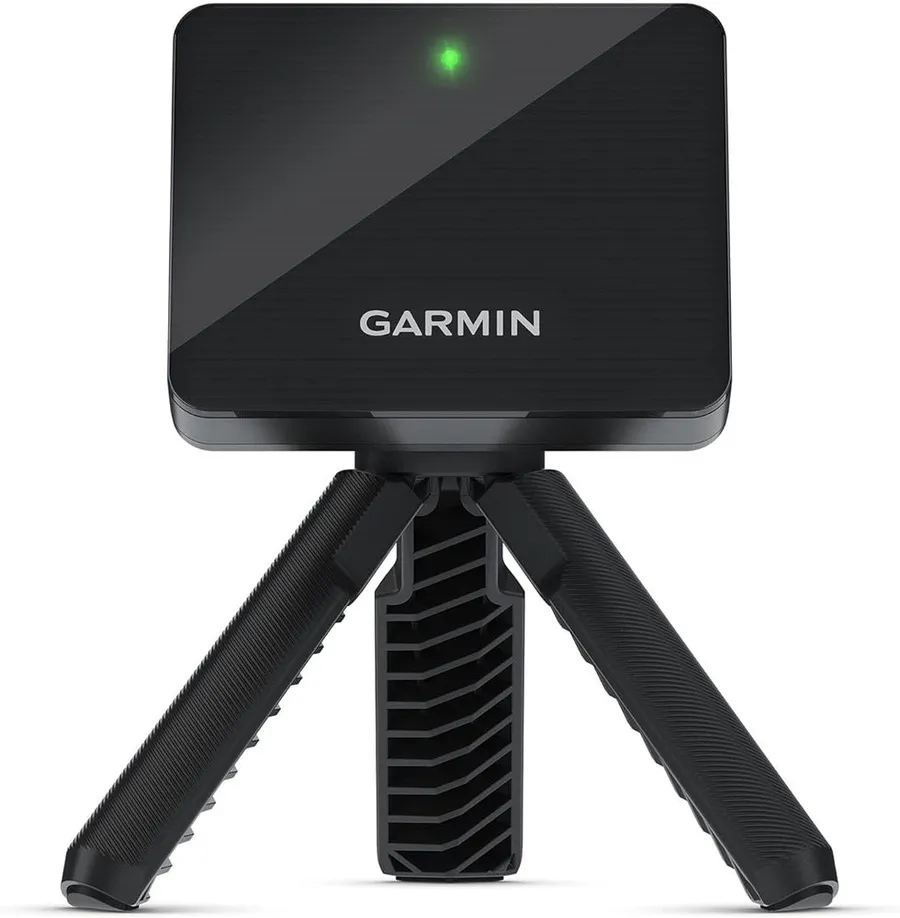
The R10 turns a phone and a tripod into a capable Garmin simulator for around $499, with 14 metrics and 43,000-plus virtual courses on a free app, which makes it the setup most golfers should start with.
-
Best Premium
Garmin Approach R50
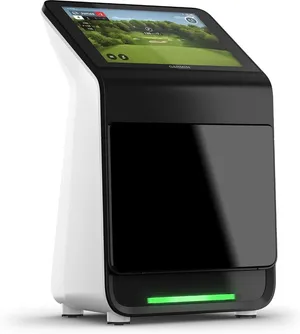
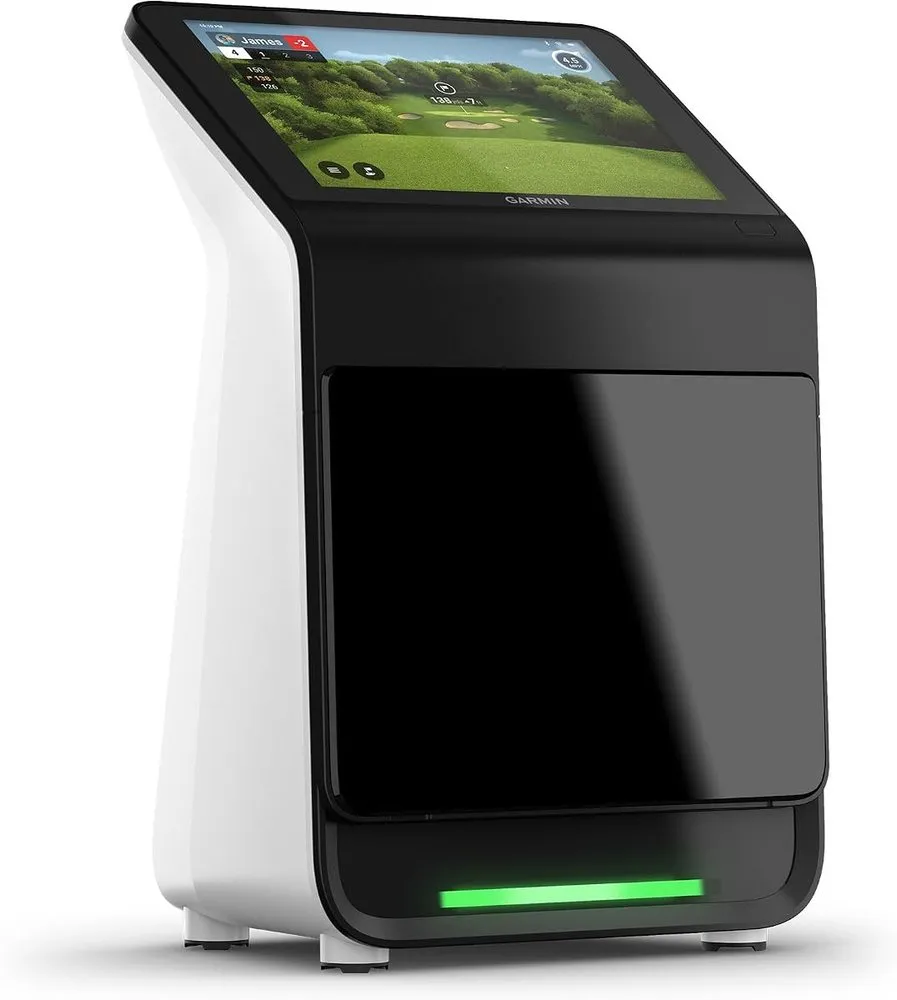
The R50 builds the whole simulator into one box, with three cameras, a 10-inch touchscreen and impact-based measurement that stays accurate in a tight room, for golfers who want a permanent setup and no laptop.
-
Best for Accuracy
SkyTrak Launch Monitor
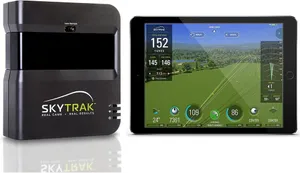
SkyTrak's photometric camera reads the ball at impact for tour-consistent numbers in a short indoor space, making it the accuracy benchmark rivals in this list are measured against.
-
Best for Swing Video
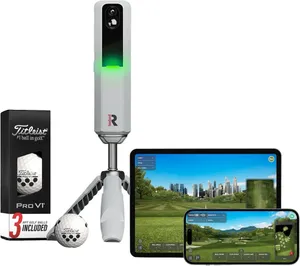
Rapsodo MLM2PRO
The MLM2PRO pairs radar with dual cameras so you get 15 metrics plus auto-recorded, traced swing video, which makes it the best value pick for golfers who learn by watching themselves.
-
Best Portable
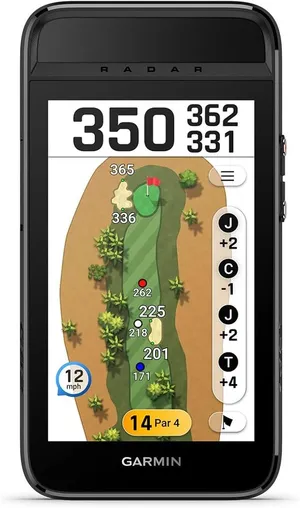
Garmin Approach G82
The G82 blends a handheld GPS with a built-in radar launch monitor, so one pocket device gives you on-course yardages and quick practice numbers without a tripod or phone rig.
Compare every pick
| Product | Award | Type | Key metrics | Price | Warranty | Best for | Where to buy |
|---|---|---|---|---|---|---|---|
| Garmin Approach R10 | Best Overall | Portable radar (Doppler) | 14 metrics | $499 | 1 year | Golfers building a first home simulator on a sensible budget | Check price on Amazon for Garmin Approach R10 at Amazon (affiliate link) |
| Garmin Approach R50 | Best Premium | Radar plus 3 cameras | 15+ metrics | $4,999 | 1 year | Serious golfers building a fixed, high-accuracy indoor simulator | Check price on Amazon for Garmin Approach R50 at Amazon (affiliate link) |
| SkyTrak Launch Monitor | Best for Accuracy | Photometric (camera) | Ball flight metrics | $700 | 1 year | Indoor golfers who want the most trustworthy numbers in a small room | Check price on Amazon for SkyTrak Launch Monitor at Amazon (affiliate link) |
| Rapsodo MLM2PRO | Best for Swing Video | Radar plus dual camera | 15 metrics | $600 | 1 year | Golfers who improve fastest by reviewing recorded swing video | Check price on Amazon for Rapsodo MLM2PRO at Amazon (affiliate link) |
| Garmin Approach G82 | Best Portable | Handheld radar plus GPS | Core launch data | $600 | 1 year | Golfers who want on-course distances plus fast swing checks in one device | Check price on Amazon for Garmin Approach G82 at Amazon (affiliate link) |
Swipe sideways to compare every column.
Best Overall
Garmin Approach R10
by Garmin
The R10 turns a phone and a tripod into a capable Garmin simulator for around $499, with 14 metrics and 43,000-plus virtual courses on a free app, which makes it the setup most golfers should start with.
What we like
- 14 ball and club metrics from a single portable radar
- Free Garmin Golf app with 43,000-plus playable courses in play mode
- Works with a projector or TV and pairs with both Android and iPhone
What we don't
- Doppler radar needs 7 to 8 feet of ball flight, so a short indoor net hurts its accuracy
| Type | Portable radar (Doppler) |
|---|---|
| Key metrics | 14 metrics |
| Best for | All-round home simulator |
| Price | $499 |
| Warranty | 1 year |
| Install difficulty | Easy |
| Price bracket | $ |
The Garmin Approach R10 is the best overall Garmin simulator pick because it delivers the most useful function for the least money. A single palm-sized radar reads 14 metrics, from club head speed and ball speed to launch angle, spin and smash factor, then feeds them into the free Garmin Golf app rather than a paywall. Switch the app to play mode and you can hit around more than 43,000 virtual courses on a projector or TV, which is the core of a real home simulator without a five-figure spend.
Day to day it is easy to live with. You set the tripod, mount your phone, and start hitting; the battery lasts up to 10 hours, and shot history syncs so you can track progress over weeks. Because the same unit works outdoors, you can take it to the range or the backyard, then bring it back inside for simulator sessions in a garage bay.
Its one real limitation is space. As a Doppler radar it needs to watch the ball travel roughly 7 to 8 feet to stay accurate, so a cramped net with only a few feet of flight will soften its numbers. If that describes your room, a camera unit like the SkyTrak or the premium Garmin R50 reads better right at impact.
Buy the R10 if you want one flexible unit that anchors a home simulator and still travels to the range. Choose another pick only if your indoor space is very tight, you want a screen with no phone involved, or budget is the deciding factor.
Research-based pick: this recommendation is based on product data, owner feedback and comparison with products we have tested, not on direct hands-on testing.
Buy it if: Golfers building a first home simulator on a sensible budget
Skip it if: You only have a few feet of ball flight in front of an indoor net
Best Premium
Garmin Approach R50
by Garmin
The R50 builds the whole simulator into one box, with three cameras, a 10-inch touchscreen and impact-based measurement that stays accurate in a tight room, for golfers who want a permanent setup and no laptop.
What we like
- Three high-speed cameras plus radar read 15-plus metrics at impact
- Built-in 10-inch touchscreen runs courses with no phone or laptop needed
- Camera measurement stays accurate right in front of a net in small rooms
What we don't
- At around $4,999 it costs roughly ten times the R10 and suits only committed indoor builds
| Type | Radar plus 3 cameras |
|---|---|
| Key metrics | 15+ metrics |
| Best for | Permanent home simulator |
| Price | $4,999 |
| Warranty | 1 year |
| Install difficulty | Moderate |
| Price bracket | $$$ |
The Garmin Approach R50 is the premium pick because it collapses an entire simulator into a single unit. Three high-speed cameras work alongside radar to capture more than 15 ball and club metrics at the moment of impact, and a built-in 10-inch color touchscreen runs the software, so there is no phone propped on a stand and no laptop cabled to a projector. For a dedicated room, that all-in-one design is the cleanest Garmin simulator you can buy.
Measuring at impact is the reason it belongs in tight spaces. Unlike a radar unit that needs to watch the ball fly, the R50 reads the strike itself, so it stays accurate right in front of an impact screen where a garage or spare bedroom leaves only a few feet of flight. You also get on-screen ball tracing and video that make practice feel closer to a commercial bay.
The obvious catch is price. At roughly $4,999 it costs about ten times the R10, and that gap only makes sense if you are committing to a permanent build and will use it often. Casual users and travellers will not see the value.
Buy the R50 if you have a dedicated space, want camera-grade accuracy without a laptop, and plan to play through winter after winter. If you want something you can pack away or take to the range, the R10 or the handheld G82 fit better.
Research-based pick: this recommendation is based on product data, owner feedback and comparison with products we have tested, not on direct hands-on testing.
Buy it if: Serious golfers building a fixed, high-accuracy indoor simulator
Skip it if: You want a portable or budget setup, or mainly practice at the range
Best for Accuracy
SkyTrak Launch Monitor
by SkyTrak
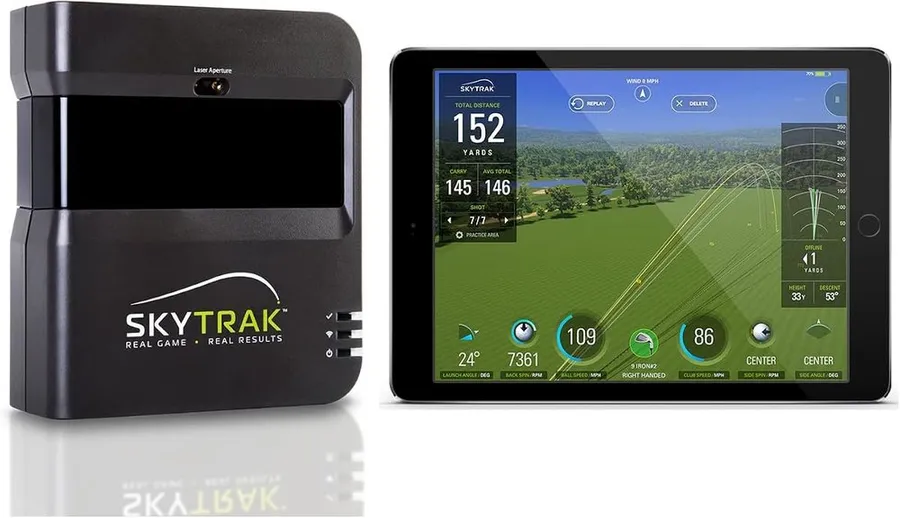
SkyTrak's photometric camera reads the ball at impact for tour-consistent numbers in a short indoor space, making it the accuracy benchmark rivals in this list are measured against.
What we like
- Photometric camera measurement is trusted for repeatable, accurate ball data
- Works in a short net setup because it reads at impact, not in flight
- Broad third-party simulator software support for course play
What we don't
- Full course play and premium features sit behind a paid annual software plan
| Type | Photometric (camera) |
|---|---|
| Key metrics | Ball flight metrics |
| Best for | Indoor simulator accuracy |
| Price | $700 |
| Warranty | 1 year |
| Install difficulty | Moderate |
| Price bracket | $$ |
SkyTrak earns the accuracy award because its photometric camera reads the ball at the moment of impact, a method long trusted for repeatable numbers that hold up shot after shot. Where a radar unit infers flight, SkyTrak measures the strike directly, and that is why it has become a common benchmark for indoor simulator accuracy at a consumer price.
The practical payoff is space. Because it does not need to watch the ball fly, SkyTrak works in a short net or a garage bay with only a few feet of room, which is exactly where radar units like the R10 struggle. Pair it with a projector and one of the many supported simulator platforms and you get a serious practice and play setup in a modest footprint.
Its real drawback is software cost. The most useful features, including full course play, sit behind a paid annual plan, so the sticker price is not the whole story. Budget that recurring fee before you commit.
Buy SkyTrak if accuracy in a tight indoor room is your priority and you are comfortable paying for software. If you want a built-in screen with no subscription juggling, the Garmin R50 is the cleaner box; if you want outdoor flexibility, the R10 is the better all-rounder.
Research-based pick: this recommendation is based on product data, owner feedback and comparison with products we have tested, not on direct hands-on testing.
Buy it if: Indoor golfers who want the most trustworthy numbers in a small room
Skip it if: You want an all-in-one screen or plan to practice mostly outdoors
Best for Swing Video
Rapsodo MLM2PRO
by Rapsodo
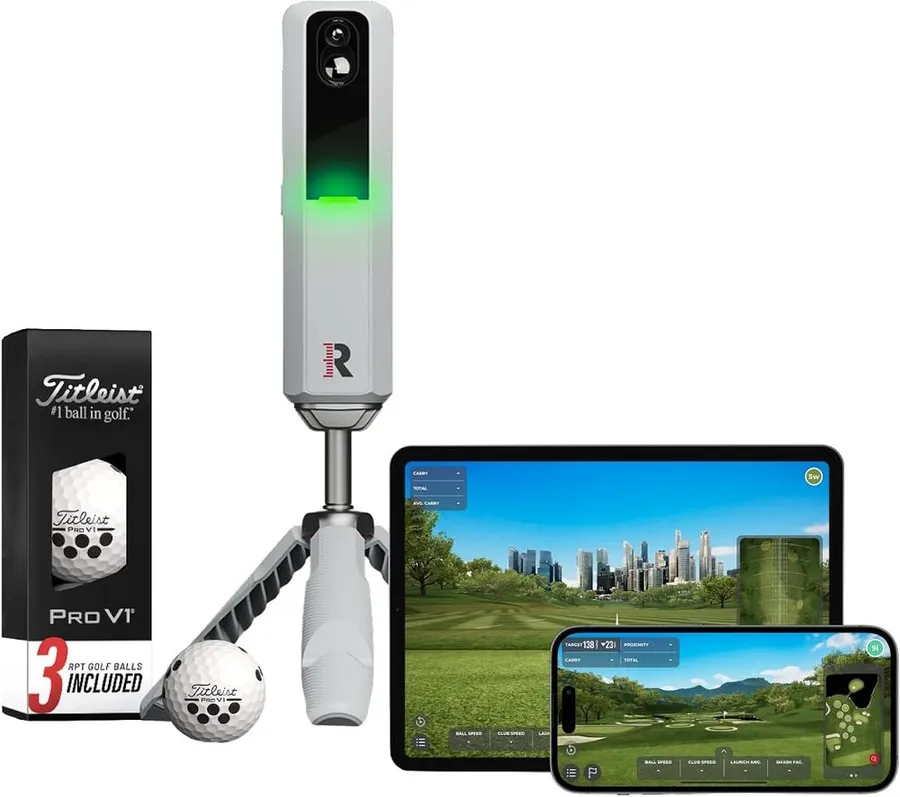
The MLM2PRO pairs radar with dual cameras so you get 15 metrics plus auto-recorded, traced swing video, which makes it the best value pick for golfers who learn by watching themselves.
What we like
- Dual cameras auto-record swing video with the ball flight traced on screen
- Radar plus camera reads 15 metrics indoors and outdoors
- Large owner base at roughly 680 ratings and a mid $600 price
What we don't
- Full metrics and course library require a paid annual membership after the first year
| Type | Radar plus dual camera |
|---|---|
| Key metrics | 15 metrics |
| Best for | Swing video plus data |
| Price | $600 |
| Warranty | 1 year |
| Install difficulty | Easy |
| Price bracket | $$ |
The Rapsodo MLM2PRO is the best pick for swing video because it does something the Garmin radar units do not: two built-in cameras automatically record every swing and overlay the traced ball flight, so you can pair a number with a picture. Combined with radar, it reports 15 metrics indoors and out, and at around $600 it sits right next to the Garmin G82 on price while adding a coaching camera.
In use it is refreshingly simple. Set it on the mat behind the ball, connect your phone, and it captures data and video together, then stores clips you can scrub through later. For a golfer who learns by seeing a steep shoulder turn or an open face rather than reading spin figures, that feedback loop is the whole point.
The catch is the membership. Rapsodo gates its full metric set and course library behind a paid annual plan after the first year, so the long-term cost is higher than the box suggests. If you resent subscriptions, that will grate.
Buy the MLM2PRO if video feedback is how you improve and you can accept a yearly fee. If you would rather avoid subscriptions or want a permanent screen-in-the-box simulator, the Garmin R10 or R50 are better fits.
Research-based pick: this recommendation is based on product data, owner feedback and comparison with products we have tested, not on direct hands-on testing.
Buy it if: Golfers who improve fastest by reviewing recorded swing video
Skip it if: You want zero subscriptions or a built-in simulator screen
Best Portable
Garmin Approach G82
by Garmin
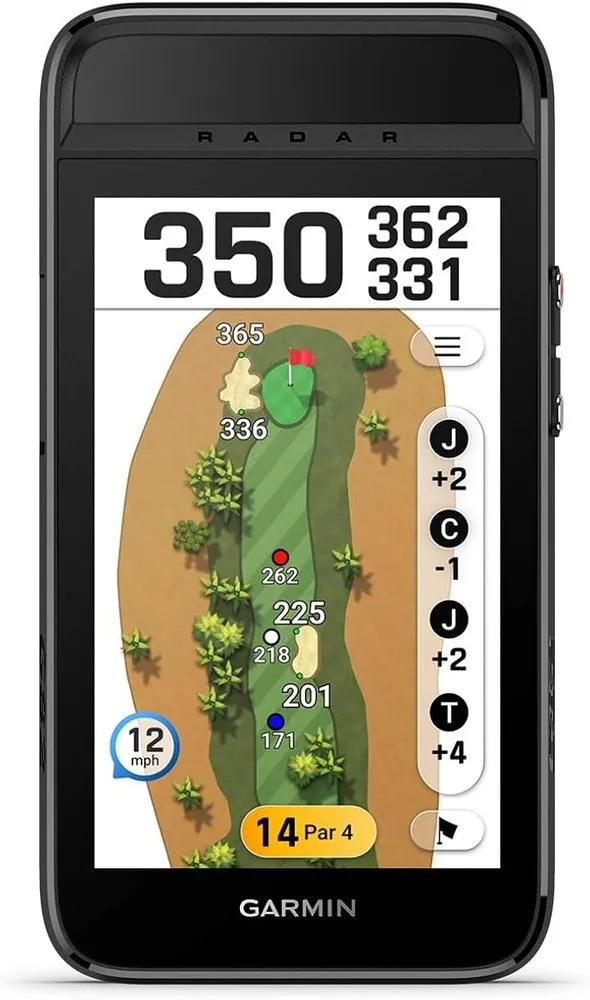
The G82 blends a handheld GPS with a built-in radar launch monitor, so one pocket device gives you on-course yardages and quick practice numbers without a tripod or phone rig.
What we like
- Built-in radar reports core launch data with no separate tripod or phone mount
- 5-inch color touchscreen and 43,000-plus preloaded courses for on-course GPS
- Up to 25 hours of GPS battery and an IPX7 weatherproof rating
What we don't
- Reports fewer metrics than the R10 and is not built to drive a full simulator screen
| Type | Handheld radar plus GPS |
|---|---|
| Key metrics | Core launch data |
| Best for | On-course and quick practice |
| Price | $600 |
| Warranty | 1 year |
| Install difficulty | Easy |
| Price bracket | $$ |
The Garmin Approach G82 is the most portable pick because it folds two devices into one handheld. It is a full GPS rangefinder with a 5-inch touchscreen and more than 43,000 preloaded courses, and it also carries a built-in radar launch monitor, so the same unit that gives you a yardage on the course can read core swing numbers on the range. There is no tripod, no phone clamp and nothing to cable up.
Living with it is as simple as a phone. It slips in a bag pocket, runs up to 25 hours of GPS on a charge, and shrugs off weather with an IPX7 rating, so a rain shower will not end your round. For a golfer who wants light practice feedback without building a rig, that convenience is the appeal.
The trade-off is depth. The G82 reports fewer metrics than the tripod-mounted R10 and is not designed to project a course onto a screen, so it is a practice and on-course companion rather than the engine of a home simulator.
Buy the G82 if you want yardages and quick swing checks in one grab-and-go device. If your goal is a big-screen home simulator with full course play, the R10, R50 or SkyTrak are the units that build it.
Research-based pick: this recommendation is based on product data, owner feedback and comparison with products we have tested, not on direct hands-on testing.
Buy it if: Golfers who want on-course distances plus fast swing checks in one device
Skip it if: You want a full indoor simulator with course play on a big screen
How we researched these picks#
We started from the brand most golfers search first when they picture a home setup, Garmin, then built the comparison around the two units shoppers actually weigh against each other: the affordable Approach R10 and the premium R50. From there we added the rivals owners cross-shop when they are deciding, the Rapsodo MLM2PRO and the SkyTrak, plus Garmin’s own handheld G82 for anyone who wants a grab-and-go option. Every product here is a real, currently sold unit with a meaningful base of verified owner reviews, so the list stays grounded in gear you can order today.
For each candidate we pulled the manufacturer specifications, read across aggregated verified owner feedback, and compared units head to head on the factors that change a buying decision for a simulator: measurement accuracy and the technology behind it, how much space the unit needs to read shots, the number and usefulness of the metrics reported, software and subscription costs, and overall value at the price. We deliberately spread the final five across price brackets and use cases, from a $499 portable radar to a near-$5,000 camera simulator, so there is a sensible pick for different rooms and budgets.
These recommendations are research-based, not hands-on tested. We have not swung in front of each unit ourselves, so we lean on published specs and the consistent themes in owner feedback rather than our own launch data. Where a device has a real weakness, such as a subscription requirement or a space constraint, we call it out plainly.
How to choose a golf simulator (buying guide)#
Match the technology to your space. Radar units like the Garmin R10 read the ball in flight, so they need room, ideally 7 to 8 feet of travel, and shine in a deep garage or basement bay. Camera units such as the Garmin R50 and the SkyTrak measure at impact and stay accurate right in front of a net, which makes them the better fit for a short room. The hybrid radar-and-camera Rapsodo MLM2PRO splits the difference for indoor and outdoor use.
Measure your room before you spend. A simulator is only as good as the space around it. Check your ceiling height for a full driver swing and the depth of your hitting bay, then pick the sensor that suits it. Buying a radar unit for a tight room is the most common and most expensive mistake, because the numbers will disappoint no matter how good the hardware is.
Decide how many metrics you actually need. If you mainly want to play courses and see ball flight, the R10’s 14 metrics are plenty. If you want to study spin, club path and face angle, or want swing video to learn from, a camera system like the Garmin R50 or the MLM2PRO earns its keep. Paying for data you will never read is wasted money.
Factor in software and subscriptions. The Garmin units run on the free Garmin Golf app, while the Rapsodo MLM2PRO and SkyTrak charge an annual fee for their full features and course libraries. A cheaper box with a yearly subscription can cost more over three years than a pricier one that is free to run, so compare the total, not just the sticker.
Set your budget against how often you will play. The R10 makes sense for almost anyone because it flexes across the range, backyard and garage. The R50 only pays off if you are committing to a permanent build you will use through every off-season. Be honest about your playing frequency before stepping up to the premium tier.
Frequently asked questions
Can the Garmin R10 really run a golf simulator?
Yes. In the free Garmin Golf app, the R10's play mode lets you hit around more than 43,000 virtual courses, and you can send that display to a projector or TV to build a simple home simulator. It reads 14 metrics from a single radar, so for around $499 it is the cheapest genuine Garmin simulator entry point. The main catch is space: as a Doppler radar it wants 7 to 8 feet of ball flight to stay accurate, so it works best in a deep garage bay rather than a short net.
What is the difference between the Garmin R10 and R50 for a simulator?
The R10 is a $499 radar that pairs with your phone and needs room to watch the ball fly. The R50 is a roughly $5,000 unit with three cameras and a built-in 10-inch touchscreen that measures at impact, so it stays accurate right in front of a net and needs no phone or laptop. The R10 is the flexible, budget-friendly all-rounder; the R50 is a premium fixed simulator for a dedicated room.
How much space do I need for a Garmin golf simulator?
It depends on the technology. The radar-based R10 needs roughly 7 to 8 feet of ball flight plus room for a screen or net, so a deep garage or basement bay is ideal. Camera units that measure at impact, such as the Garmin R50 and the SkyTrak, work in far tighter rooms because they read the strike rather than the flight. Always confirm your ceiling height and hitting-bay depth before buying.
Do these Garmin simulators require a subscription?
The Garmin R10, R50 and G82 use the free Garmin Golf app for core features and course play, with no mandatory fee. The rivals differ: the Rapsodo MLM2PRO gates its full metrics and course library behind a paid annual membership after the first year, and SkyTrak's full course play sits behind a paid annual plan. Add any recurring software cost to your comparison before you buy.
About the author

Jim Bennett Founder & lead reviewer
Jim is the guy behind Golf Sim Jim. He builds home golf simulators and compares launch monitors by the numbers that actually decide a setup, room fit, accuracy and software.
Home setup: Garage bay: SkyTrak+, 10 ft ceiling, BenQ LK936ST short-throw
- Launch monitor accuracy
- Home simulator builds
- Impact screens & enclosures
- Sim software (GSPro, E6, TGC)