
7 Best Golf Simulators and Launch Monitors for 2026 (Garmin R10 and Rivals)
Shopping for a Golf Daddy simulator alternative? We compared 7 real golf simulators and launch monitors on accuracy, space and price to find the best.

If you found this looking for a Golf Daddy simulator, you are really after the same thing most home golfers want: accurate shot data and virtual course play in your own space without a five-figure build. This guide skips the hype and compares seven real, widely owned golf simulators and launch monitors you can order today, from a pocketable $200 unit to a complete $3,000 room-in-a-box. We weighed each one on the things that actually decide a good purchase: how accurate the data is, how much room it needs behind the ball, which software and courses it runs, and what it costs to own including any subscription. Then we spread the picks across price brackets and use cases so there is a sensible answer whether you are a beginner testing the water, an improver chasing trustworthy numbers, or someone building a permanent sim room. Below you will find the best overall pick plus category winners for accuracy, budget, premium, complete setups, portability and small spaces, followed by a plain buying guide.
Table of contents
- Quick picks
- Price compared
- Comparison table
- Best Overall: Garmin Approach R10
- Best for Accuracy: Rapsodo MLM2PRO
- Best Premium: Garmin Approach R50
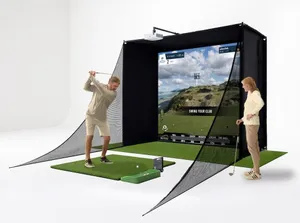
- Best Complete Setup: SkyTrak Studio Pro Package
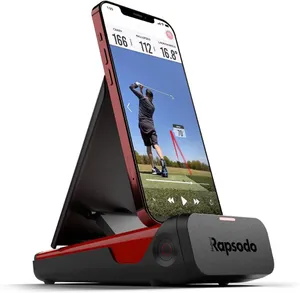
- Best Budget: Rapsodo Mobile Launch Monitor (MLM)
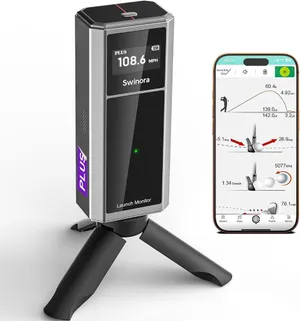
- Best Portable: Swinora Golf Launch Monitor
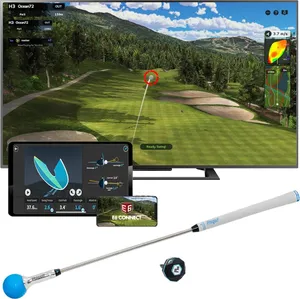
- Best for Small Spaces: PHIGOLF Home Golf Game Simulator
- How we researched these picks
- How to choose a golf simulator (buying guide)
- FAQ
Quick picks
Every pick wins a specific use case. Jump to the full review before you buy.
-
Best Overall
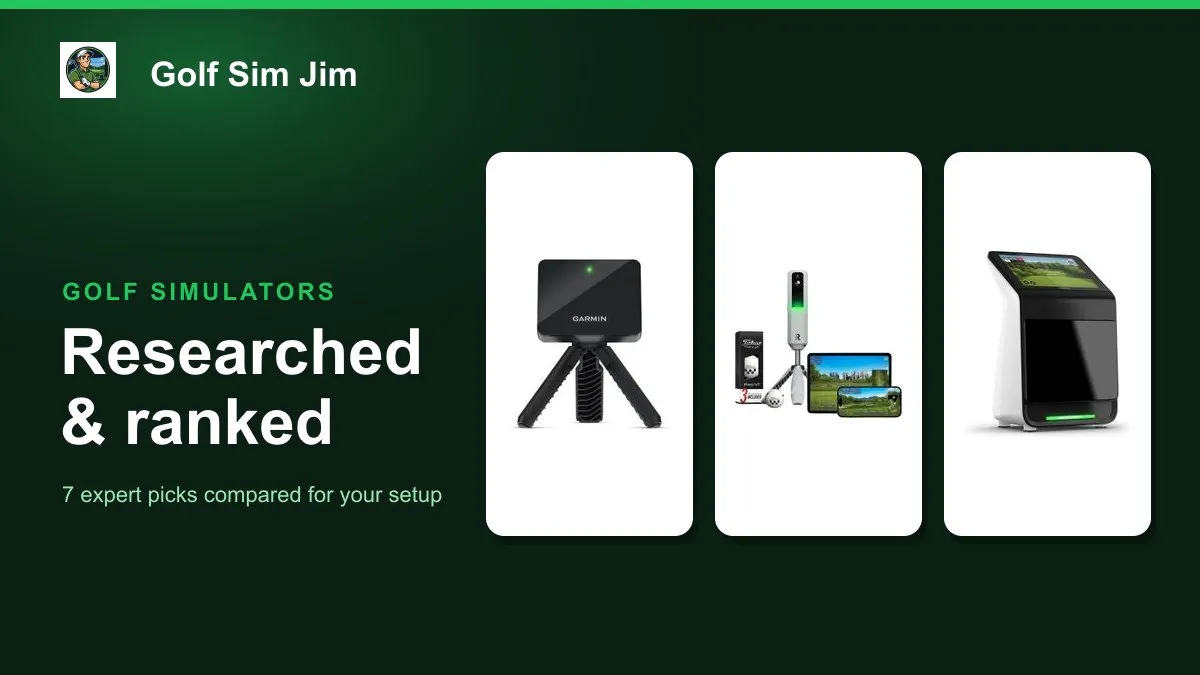
Garmin Approach R10
The R10 hits the sweet spot of price, portability and trusted Garmin data, which is why it is the launch monitor most home golfers should buy first.
-
Best for Accuracy
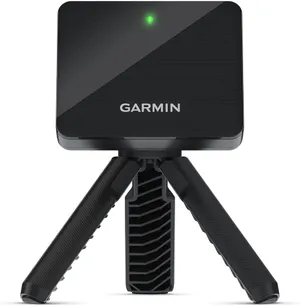
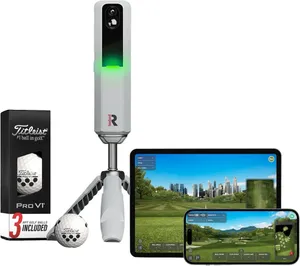
Rapsodo MLM2PRO
The MLM2PRO pairs dual cameras with radar and includes premium balls, giving it the most trustworthy indoor data of any launch monitor near its price.
-
Best Premium
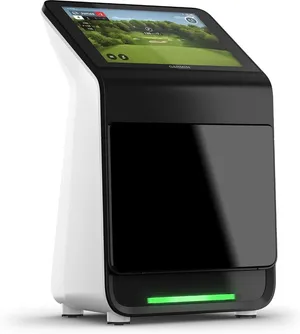
Garmin Approach R50
The R50 folds three cameras, radar and a 10-inch touchscreen into one unit, so a serious home golfer gets a near-complete simulator with no phone or laptop required.
-
Best Complete Setup
SkyTrak Studio Pro Package
The Studio Pro bundles the launch monitor, enclosure, mat, projector and software into one box, so you get a full simulator room without sourcing parts piece by piece.
-
Best Budget
Rapsodo Mobile Launch Monitor (MLM)
At around $200 the original Rapsodo MLM is the cheapest way to get real, app-based shot data, making it the easiest entry point into simulator practice.
-
Best Portable
Swinora Golf Launch Monitor
Small, light and reading 13 metrics for around $320, the Swinora slips into a bag and works on both iOS and Android, making it the easiest unit to take anywhere.
-
Best for Small Spaces
PHIGOLF Home Golf Game Simulator
The PHIGOLF swing stick turns a corner of the living room into a simulator with no ball flight at all, making it the pick for tiny spaces and casual family play.
Compare every pick
| Product | Award | Type | Key metrics | Price | Warranty | Best for | Where to buy |
|---|---|---|---|---|---|---|---|
| Garmin Approach R10 | Best Overall | Doppler radar | 14 metrics | $500 | 1 year | Home golfers who want reliable data and course play without spending thousands | Check price on Amazon for Garmin Approach R10 at Amazon (affiliate link) |
| Rapsodo MLM2PRO | Best for Accuracy | Dual camera plus radar | 15+ metrics | $600 | 1 year | Improvers who want the most trustworthy indoor ball and club numbers | Check price on Amazon for Rapsodo MLM2PRO at Amazon (affiliate link) |
| Garmin Approach R50 | Best Premium | Triple camera plus radar | 15+ metrics | $5000 | 1 year | Committed golfers building a permanent room who want the best data and a built-in screen | Check price on Amazon for Garmin Approach R50 at Amazon (affiliate link) |
| SkyTrak Studio Pro Package | Best Complete Setup | Photometric camera | 10+ metrics | $2995 | 1 year | Buyers who want a whole simulator room in one purchase rather than sourcing parts | Check price on Amazon for SkyTrak Studio Pro Package at Amazon (affiliate link) |
| Rapsodo Mobile Launch Monitor (MLM) | Best Budget | Camera plus radar | 5 metrics | $200 | 1 year | Beginners and casual golfers testing the water on a tight budget | Check price on Amazon for Rapsodo Mobile Launch Monitor (MLM) at Amazon (affiliate link) |
| Swinora Golf Launch Monitor | Best Portable | Doppler radar | 13 metrics | $320 | 1 year | Golfers who mostly practice at the range and want a pocketable, cross-platform unit | Check price on Amazon for Swinora Golf Launch Monitor at Amazon (affiliate link) |
| PHIGOLF Home Golf Game Simulator | Best for Small Spaces | Swing-stick motion sensor | Swing plus basic ball data | $280 | 1 year | Casual players and families with almost no space who want fun course play | Check price on Amazon for PHIGOLF Home Golf Game Simulator at Amazon (affiliate link) |
Swipe sideways to compare every column.
Best Overall
Garmin Approach R10
by Garmin
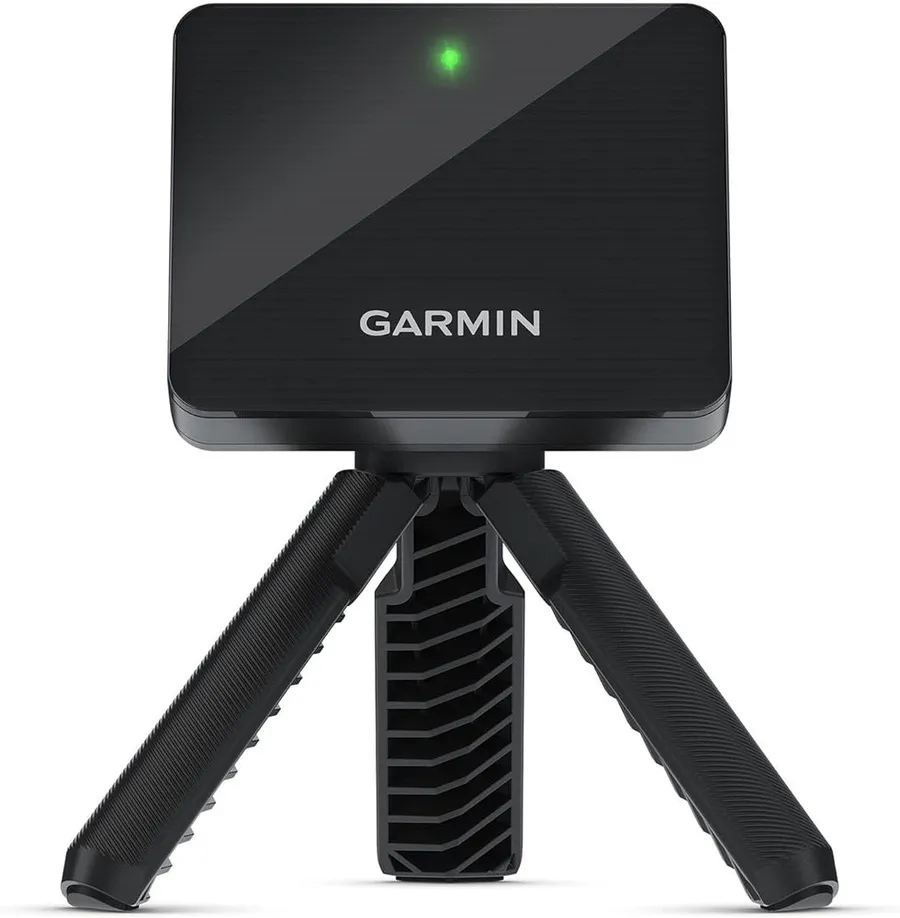
The R10 hits the sweet spot of price, portability and trusted Garmin data, which is why it is the launch monitor most home golfers should buy first.
What we like
- Reads 14 metrics including club and ball data into a clean phone app
- Works indoors into a net and outdoors at the range on one 10-hour battery
- Includes tripod, phone mount and case, so nothing extra is needed to start
- Huge owner base at 1,100-plus verified ratings backs its consistency
What we don't
- As a Doppler radar it wants 7 to 8 feet of ball flight, so a tight garage bay hurts its accuracy
| Type | Doppler radar |
|---|---|
| Key metrics | 14 metrics |
| Best for | All-round home and range use |
| Price | $500 |
| Warranty | 1 year |
| Install difficulty | Easy |
| Price bracket | $$ |
Most people searching for a golf simulator really want one thing: accurate numbers and virtual courses at home without a five-figure build. The Garmin Approach R10 delivers exactly that, which is why it wins here. It is a compact Doppler radar that reads 14 metrics, from club head speed to spin, and streams them into the Garmin Golf app while letting you play thousands of simulated courses.
What sets it apart is how complete the box is. The tripod, phone mount and case are all included, so you can be reading shots minutes after unpacking. Battery life stretches to around ten hours, so it happily moves from a garage net in the morning to the driving range in the afternoon. That flexibility is why it has gathered more than a thousand verified owner ratings and a solid reputation.
Day to day it is genuinely easy to live with. You set the tripod behind the ball, open the app and hit. The limitation to know is space. Because it is a radar, it needs roughly seven to eight feet of ball flight to read shots cleanly, so a cramped bay will cost you accuracy and a deeper room or an outdoor net gives its best data.
Buy the R10 if you want the best all-round balance of price, portability and trusted data. Step up to a camera unit like the MLM2PRO if you value indoor accuracy above all, or to the R50 if budget is no object and you want a built-in screen.
Research-based pick: this recommendation is based on product data, owner feedback and comparison with products we have tested, not on direct hands-on testing.
Buy it if: Home golfers who want reliable data and course play without spending thousands
Skip it if: You only have a shallow bay with no room for the ball to fly
Best for Accuracy
Rapsodo MLM2PRO
by Rapsodo
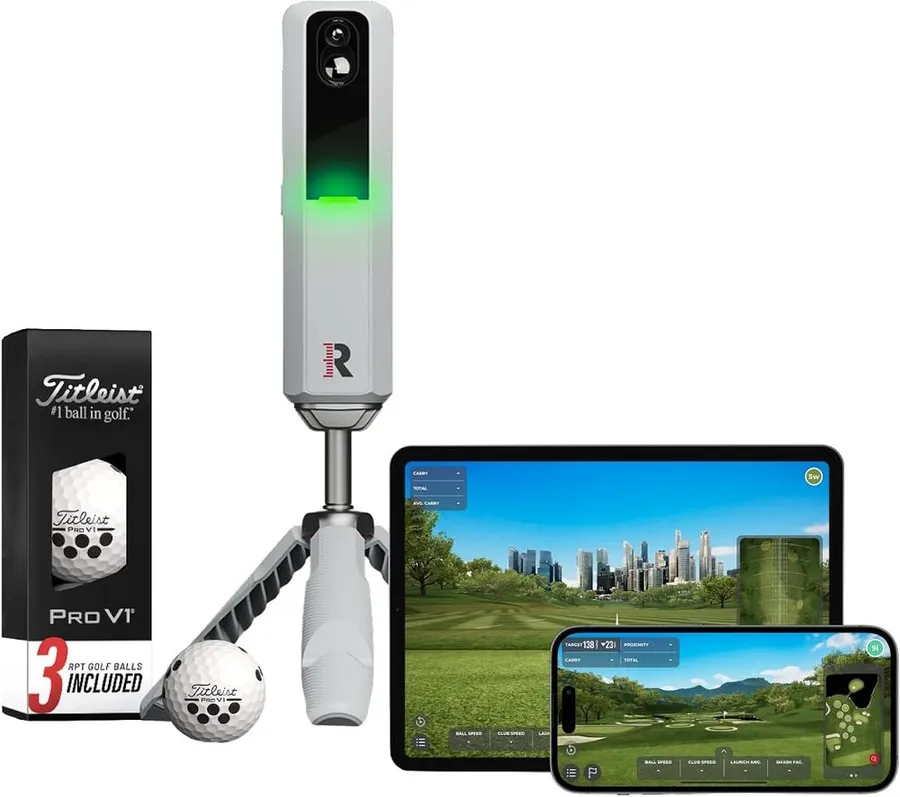
The MLM2PRO pairs dual cameras with radar and includes premium balls, giving it the most trustworthy indoor data of any launch monitor near its price.
What we like
- Dual-camera plus radar system reads 15-plus metrics with strong indoor accuracy
- Records impact video so you can see the strike behind each number
- Ships with premium tour balls for the most reliable spin data
- Works in tighter indoor spaces than a radar-only unit
What we don't
- Some core features and full course play sit behind a paid annual subscription
| Type | Dual camera plus radar |
|---|---|
| Key metrics | 15+ metrics |
| Best for | Trusted ball and club data |
| Price | $600 |
| Warranty | 1 year |
| Install difficulty | Easy |
| Price bracket | $$ |
If your priority is the most trustworthy numbers rather than the lowest price, the Rapsodo MLM2PRO is the pick. It combines dual high-speed cameras with radar, so it captures both what the club does and what the ball does at impact, reading more than 15 metrics. That camera element makes it noticeably more reliable indoors than a radar-only unit that needs long ball flight.
The standout day-to-day feature is impact video. The unit records your strike alongside the data, so a bad number comes with a picture that explains why. It also ships with premium tour balls, which matters because accurate spin readings depend on the ball, and it fits into tighter rooms than the R10, making it a strong fit for a garage or spare bedroom bay.
The real catch is the business model. To unlock the full feature set, including simulated course play and some shot data, you pay an annual subscription on top of the hardware. Owners who expected everything included are the ones who leave frustrated reviews, so factor that recurring cost into your budget before buying.
Choose the MLM2PRO if indoor accuracy and shot video are what you care about most. If you would rather avoid a subscription and want the simplest all-rounder, the R10 is the friendlier buy.
Research-based pick: this recommendation is based on product data, owner feedback and comparison with products we have tested, not on direct hands-on testing.
Buy it if: Improvers who want the most trustworthy indoor ball and club numbers
Skip it if: You want everything unlocked for a one-time price with no subscription
Best Premium
Garmin Approach R50
by Garmin
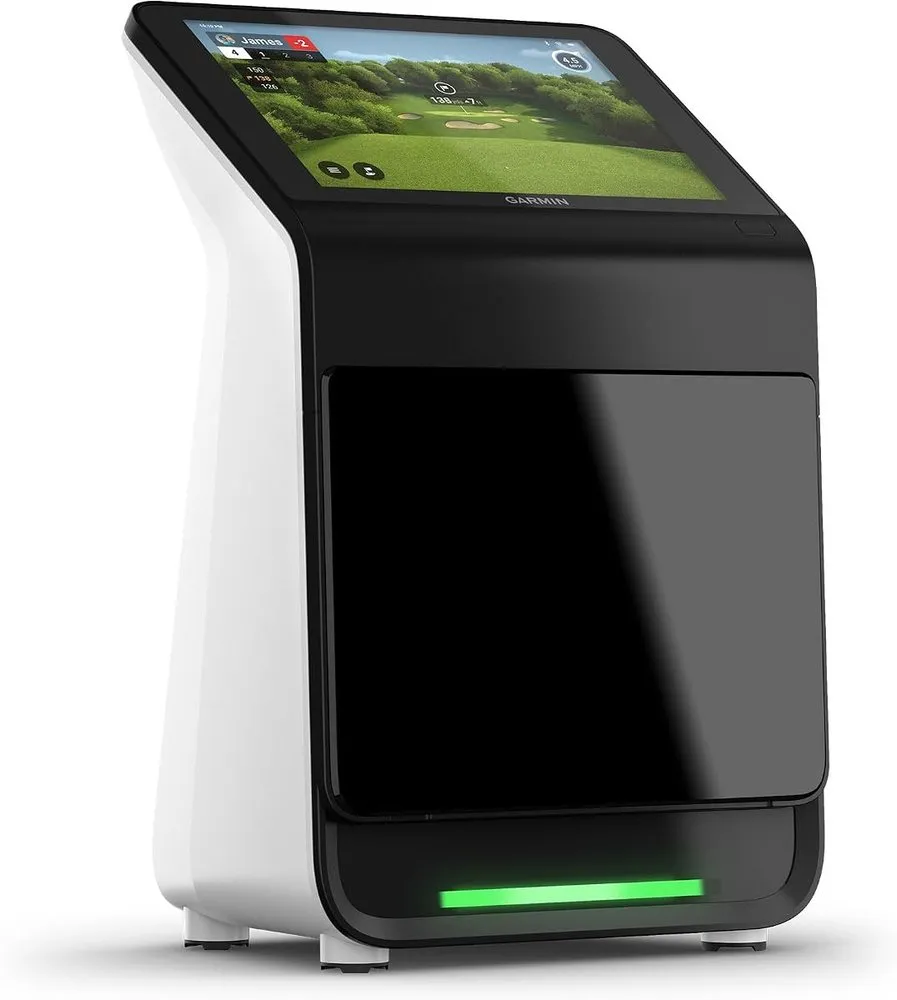
The R50 folds three cameras, radar and a 10-inch touchscreen into one unit, so a serious home golfer gets a near-complete simulator with no phone or laptop required.
What we like
- Triple cameras plus radar deliver detailed, tour-level data on 15-plus metrics
- Built-in 10-inch color touchscreen runs the whole experience with no phone or laptop
- Includes 43,000-plus courses and full simulator play out of the box
- Reads shots accurately in tighter indoor rooms thanks to the camera array
What we don't
- At roughly $5,000 it costs ten times the R10 and is overkill for casual players
| Type | Triple camera plus radar |
|---|---|
| Key metrics | 15+ metrics |
| Best for | A premium all-in-one home simulator |
| Price | $5000 |
| Warranty | 1 year |
| Install difficulty | Easy |
| Price bracket | $$$ |
When money is not the deciding factor and you want the closest thing to a commercial bay at home, the Garmin Approach R50 is the pick. It combines three high-speed cameras with radar to read more than 15 metrics at a level of detail that satisfies low handicappers and coaches, and it does it in tighter rooms than a radar-only unit can manage.
The feature that changes the experience is the built-in 10-inch touchscreen. Where the R10 needs your phone and the SkyTrak needs a laptop, the R50 runs everything itself, showing data, video and its library of more than 43,000 courses on its own display. Set it up, tap the screen and play a full simulated round with no other device involved.
Living with it is genuinely premium, and the main limitation is simply cost. At around $5,000 it is roughly ten times the price of the R10, and that gap buys refinements a casual golfer will never notice. It is easy to justify for a dedicated sim room and hard to justify for someone who plays a few times a month.
Buy the R50 if you are building a permanent setup and want the best data with a self-contained screen. If you play occasionally or want the same core fun for far less, the R10 gives most of the enjoyment at a fraction of the outlay.
Research-based pick: this recommendation is based on product data, owner feedback and comparison with products we have tested, not on direct hands-on testing.
Buy it if: Committed golfers building a permanent room who want the best data and a built-in screen
Skip it if: You are a casual or occasional player, or price is a real constraint
Best Complete Setup
SkyTrak Studio Pro Package
by SkyTrak
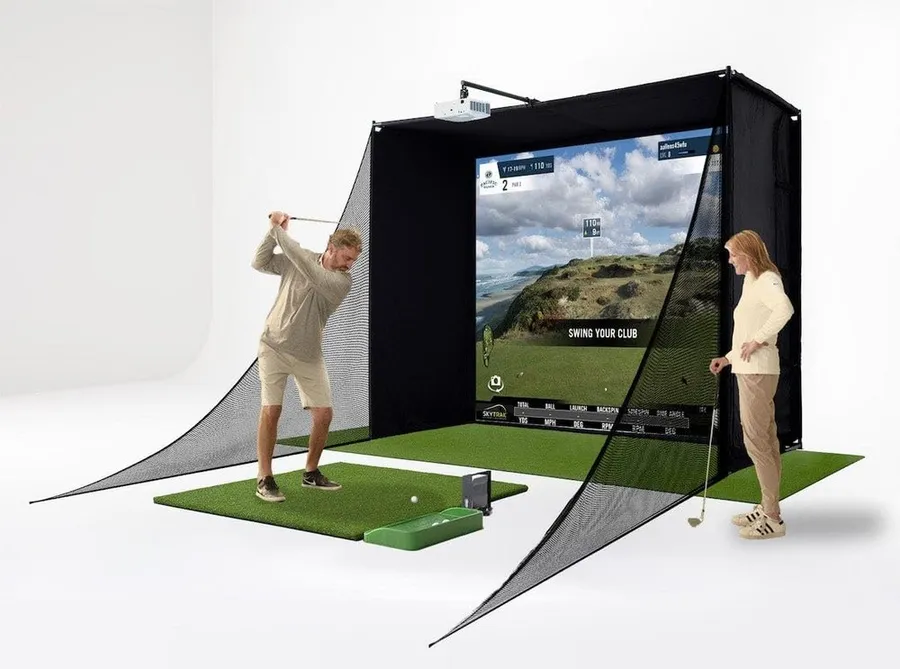
The Studio Pro bundles the launch monitor, enclosure, mat, projector and software into one box, so you get a full simulator room without sourcing parts piece by piece.
What we like
- Includes launch monitor, enclosure, hitting mat, projector and ball tray in one package
- Photometric camera gives strong, repeatable indoor accuracy
- Removes the guesswork of matching separate screens, frames and mats
- Metal protective case adds durability for a permanent install
What we don't
- At roughly $3,000 it is a big commitment and needs a dedicated room to house it
| Type | Photometric camera |
|---|---|
| Key metrics | 10+ metrics |
| Best for | A complete plug-in simulator room |
| Price | $2995 |
| Warranty | 1 year |
| Install difficulty | Moderate |
| Price bracket | $$$ |
Most people who buy a launch monitor then spend weeks sourcing an enclosure, mat, screen and projector that all fit together. The SkyTrak Studio Pro Package skips that entirely by shipping the whole simulator in one box: the photometric launch monitor, a metal protective case, the enclosure, a hitting mat, a projector and a ball tray, plus the simulator software to run it.
The core sensor is a photometric camera, which reads the ball at impact and delivers strong, repeatable indoor accuracy without needing the long ball flight a radar wants. That makes it a genuinely good fit for a room-sized bay. The real value here, though, is that everything is matched and included, so you are not gambling on whether a third-party screen fits a frame or a mat sits level with the turf.
The trade-offs are space and money. At around $3,000 it is a serious commitment, and unlike the portable monitors it is meant to live in a dedicated room rather than move around. This is a buy-once, build-once product, not something you toss in a bag for the range.
Choose the Studio Pro if you want a complete simulator room delivered as a single purchase and you have the space to house it. If you want flexibility or plan to practice outdoors too, a portable unit like the R10 or Swinora suits you better.
Research-based pick: this recommendation is based on product data, owner feedback and comparison with products we have tested, not on direct hands-on testing.
Buy it if: Buyers who want a whole simulator room in one purchase rather than sourcing parts
Skip it if: You lack a dedicated space or only want a portable monitor to travel with
Best Budget
Rapsodo Mobile Launch Monitor (MLM)
by Rapsodo
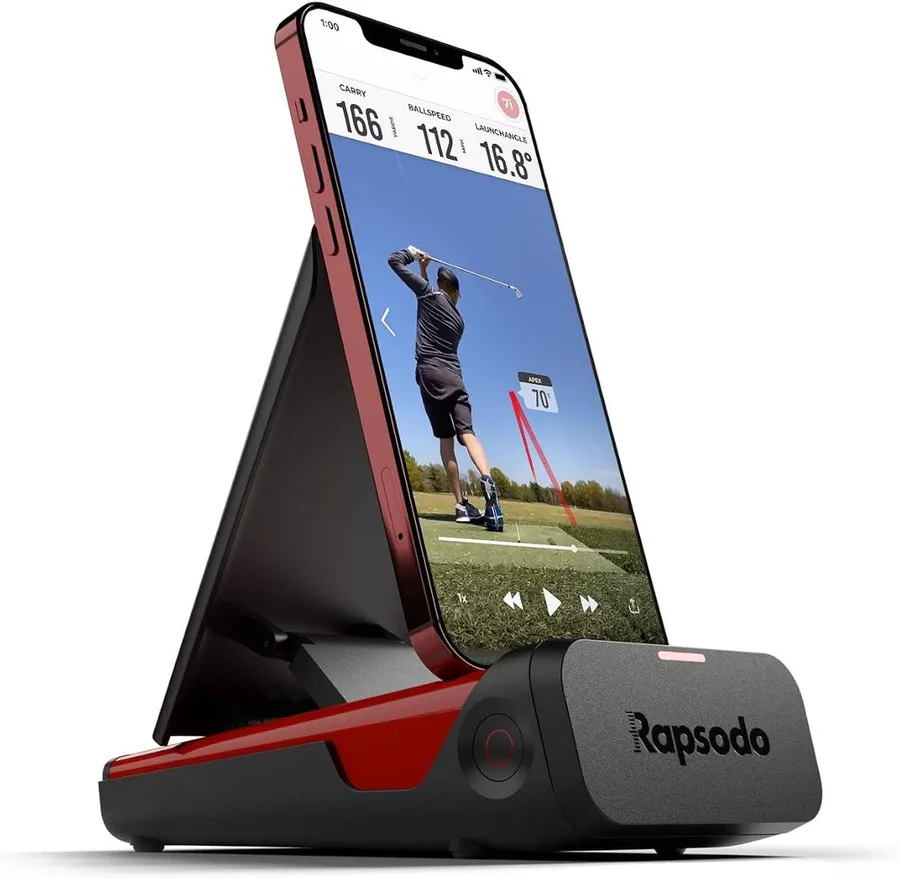
At around $200 the original Rapsodo MLM is the cheapest way to get real, app-based shot data, making it the easiest entry point into simulator practice.
What we like
- Lowest price here for a genuine camera-based launch monitor
- Reads the core numbers most beginners actually use, like ball and club speed
- GPS satellite range view and shot tracing feel more advanced than the price
- Backed by more than 3,000 verified owner ratings
What we don't
- Works only with iPhone and iPad, so Android users are locked out
| Type | Camera plus radar |
|---|---|
| Key metrics | 5 metrics |
| Best for | A first launch monitor on a budget |
| Price | $200 |
| Warranty | 1 year |
| Install difficulty | Easy |
| Price bracket | $ |
Not everyone wants to spend $500 or more to find out whether home practice sticks. The original Rapsodo Mobile Launch Monitor answers that at roughly $200, the lowest price in this guide for a real camera-based unit rather than a toy. It reads the core numbers a beginner leans on, such as ball speed, club speed and launch angle, and traces your shot onto a GPS satellite view of the range.
For the money it feels surprisingly capable. The shot tracing and range view make practice sessions engaging, and with more than 3,000 verified ratings it is a proven, widely owned starting point. It is the unit to buy when you want honest feedback on your swing without committing serious cash.
The compromise that keeps it cheap is the ecosystem. It runs on iPhone and iPad only, so Android owners cannot use it at all, and the metric set is narrower than the pricier Rapsodo and Garmin units. There is no rich club-path data or full simulated course play here.
Pick the MLM if you are on iOS, on a budget, and want to test the water. If you own an Android device or know you want deeper data, step up to the R10 or the MLM2PRO instead.
Research-based pick: this recommendation is based on product data, owner feedback and comparison with products we have tested, not on direct hands-on testing.
Buy it if: Beginners and casual golfers testing the water on a tight budget
Skip it if: You use an Android phone or want deep club data and course play
Best Portable
Swinora Golf Launch Monitor
by Swinora
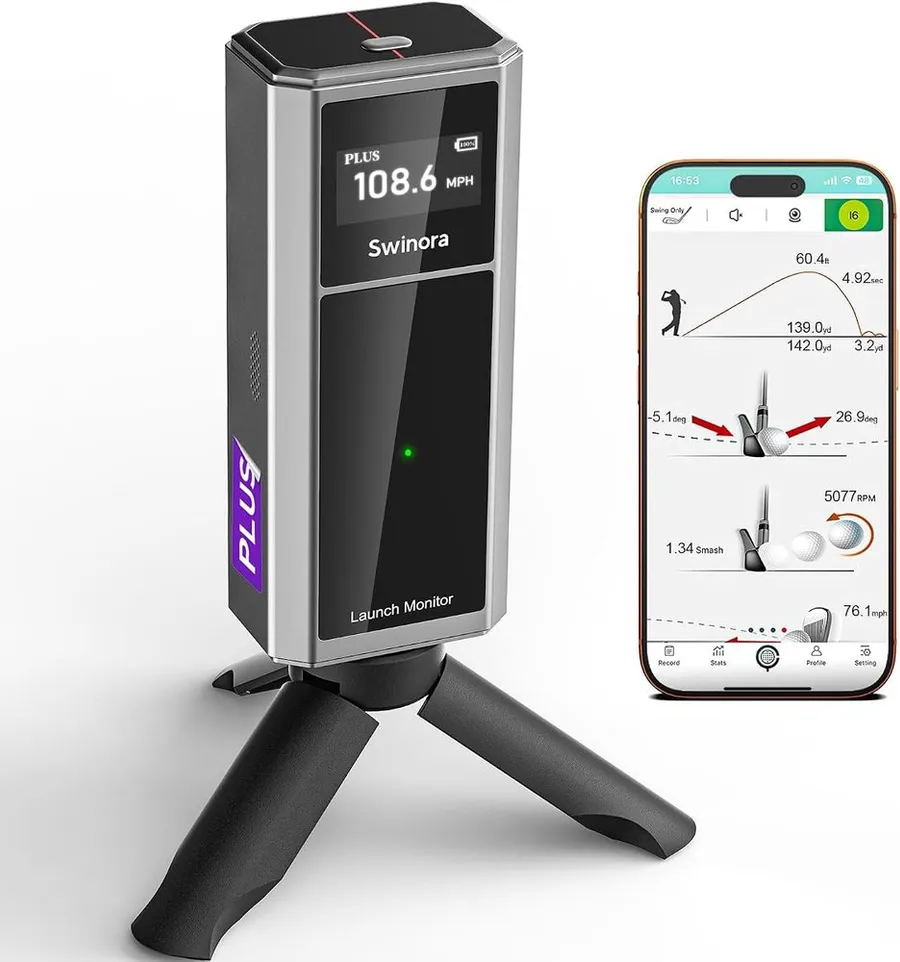
Small, light and reading 13 metrics for around $320, the Swinora slips into a bag and works on both iOS and Android, making it the easiest unit to take anywhere.
What we like
- Compact, lightweight body drops into a golf bag for range or travel use
- Reads 13 metrics plus a 3D driving range and shot trajectory view
- Records swing video alongside the data for quick feedback
- Works on both iOS and Android, unlike the budget Rapsodo MLM
What we don't
- A newer brand with a far smaller owner base than Garmin or Rapsodo
| Type | Doppler radar |
|---|---|
| Key metrics | 13 metrics |
| Best for | Grab-and-go portable practice |
| Price | $320 |
| Warranty | 1 year |
| Install difficulty | Easy |
| Price bracket | $ |
If the monitor spends more time at the range than in a fixed bay, portability matters more than a built-in screen. The Swinora Golf Launch Monitor is built for that life: a small, light unit around $320 that drops into a bag, sets up in seconds and reads 13 metrics along with a 3D driving range and shot trajectory view on your phone.
Two things make it stand out at the price. It records swing video next to the numbers, so you get immediate visual feedback, and it runs on both iOS and Android. That cross-platform support is a real edge over the cheaper Rapsodo MLM, which locks out Android users entirely, and it makes the Swinora a friendlier grab-and-go option for a wider range of golfers.
The honest caveat is pedigree. Swinora is a newer name with a far smaller pool of verified reviews than Garmin or Rapsodo, so there is less long-term track record on durability and software support. For a portable practice aid that is a reasonable risk, but it is worth knowing before you buy.
Pick the Swinora if you value a truly pocketable, cross-platform monitor for range sessions and travel. If you want a longer warranty story and a huge owner base, the R10 is the safer, if bulkier, choice.
Research-based pick: this recommendation is based on product data, owner feedback and comparison with products we have tested, not on direct hands-on testing.
Buy it if: Golfers who mostly practice at the range and want a pocketable, cross-platform unit
Skip it if: You want the reassurance of a long-established brand with thousands of reviews
Best for Small Spaces
PHIGOLF Home Golf Game Simulator
by PHIGOLF
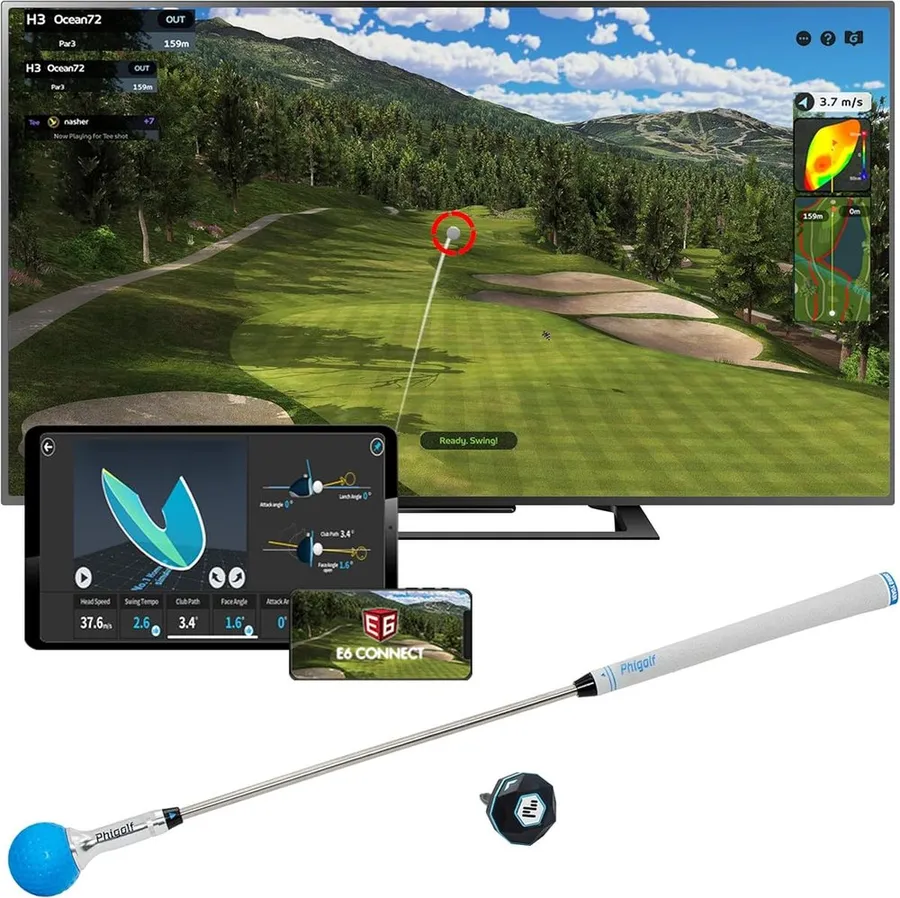
The PHIGOLF swing stick turns a corner of the living room into a simulator with no ball flight at all, making it the pick for tiny spaces and casual family play.
What we like
- Motion-sensor swing stick needs no room for the ball to fly
- Opens 38,000-plus courses and works with the E6 Connect software
- By far the most affordable way into simulated course play here
- Fun, low-commitment setup that suits families and beginners
What we don't
- Sensor-based swing reading is far less precise than a true launch monitor
| Type | Swing-stick motion sensor |
|---|---|
| Key metrics | Swing plus basic ball data |
| Best for | Small-space and casual indoor play |
| Price | $280 |
| Warranty | 1 year |
| Install difficulty | Easy |
| Price bracket | $ |
Not everyone has a garage or the budget for a real launch monitor, and that is exactly who the PHIGOLF Home Golf Game Simulator is for. Instead of tracking a struck ball, it uses a motion-sensor swing stick, so you swing in place and the sensor estimates your shot. That means it needs no ball flight and fits in a corner of a living room or apartment.
The appeal is access and fun. It opens more than 38,000 courses and pairs with popular apps including E6 Connect, and at under $300 it is the cheapest route to playing simulated golf on a screen at home. For families, beginners and anyone who just wants a low-commitment way to play a course indoors on a winter night, it does the job.
The clear limitation is precision. A swing sensor infers your shot from the motion of the stick rather than reading an actual ball and club, so the data is nowhere near as accurate as a Garmin or Rapsodo unit. Its rating reflects that gap, and it is why serious improvers should look elsewhere. Treat it as entertainment, not a coaching tool.
Buy the PHIGOLF if space and budget are tight and fun matters more than fidelity. If you want numbers you can actually train against, even the budget Rapsodo MLM is a meaningful step up.
Research-based pick: this recommendation is based on product data, owner feedback and comparison with products we have tested, not on direct hands-on testing.
Buy it if: Casual players and families with almost no space who want fun course play
Skip it if: You want accurate ball and club data to genuinely improve your game
How we researched these picks#
We built this list by starting from the golf simulators and launch monitors people actually buy and search for, including everyone who lands here looking for a Golf Daddy simulator, then filtering hard on evidence and relevance. Every product here is a real, currently sold item, and most carry a meaningful base of verified owner reviews, so the list reflects gear you can order today rather than spec-sheet promises.
For each candidate we pulled the manufacturer specifications, read across aggregated verified owner feedback, and then judged each unit on what actually matters at home: how accurate the data is, how much room it needs behind the ball, which software and courses it runs, ease of setup, and the true cost of ownership including any subscription. Because sensor type drives so much of the experience, we paid close attention to how radar, camera and swing-sensor units differ in accuracy and space needs, and we called out where each one shines or struggles.
We deliberately spread the seven picks across categories and price brackets, from a $200 beginner unit to a near-$5,000 premium system and a complete room-in-a-box, so there is a sensible choice whether you are testing the water or building a permanent bay. These recommendations are research-based, not hands-on tested. We have not built each setup ourselves, so we lean on published specs and the consistent themes in owner feedback, and we flag real weaknesses such as subscriptions, space demands and accuracy limits plainly.
How to choose a golf simulator (buying guide)#
Start with the sensor type, because it decides everything else. Radar units like the Garmin R10 track the ball in flight and want a deeper room or an outdoor net. Camera or photometric units like the Rapsodo MLM2PRO and SkyTrak read the ball at impact and work in tighter spaces. Swing-stick systems like the PHIGOLF track only the club motion, needing no ball flight but giving the least accurate data. Match the type to your room and your goals first.
Measure your space before you spend. The single most common regret is buying a radar unit for a shallow garage bay where it cannot read ball flight. If you only have a few feet of depth, favor a camera-based unit or a swing sensor. If you have a deep room or can hit outdoors, a radar unit opens up and gives excellent data. Measure the depth behind the ball and the ceiling height before choosing.
Weigh accuracy against how serious you are. A casual player who wants fun winter rounds does not need tour-level precision, and a swing-stick simulator or a budget monitor will do. An improver working on club path and spin should prioritize a camera unit like the MLM2PRO or a premium system like the R50, where the numbers are trustworthy enough to train against.
Check the software, courses and subscription. Confirm the unit runs on your phone platform, since some like the original Rapsodo MLM are iOS only. Look at how many courses it includes and whether full simulator play or key data sits behind a paid annual subscription, as the MLM2PRO does. A cheaper unit with a recurring fee can cost more over time than a pricier one that includes everything.
Decide between a component and a complete package. Buying a launch monitor alone means sourcing an enclosure, mat, screen and projector separately, which offers flexibility but takes effort. A bundle like the SkyTrak Studio Pro ships everything matched in one box for a room you build once. Choose components if you want to travel and practice outdoors too, and a package if you want a finished sim room with no guesswork.
Budget for the whole setup, not just the sensor. A launch monitor is only part of the cost of playing indoors. Factor in a hitting mat, a net or enclosure, and for projected course play a screen and projector plus a device to run the software. Deciding your total budget up front tells you whether a portable monitor and net or a full simulator room is the realistic choice.
Frequently asked questions
What is the best golf simulator for a beginner on a budget?
For most beginners the original Rapsodo Mobile Launch Monitor at around $200 is the smartest entry point, since it reads the core numbers and traces shots for a fraction of the price of a full system. If you have a little more to spend and want the best all-round balance, the Garmin Approach R10 is the unit most home golfers should buy first.
How much space do I need for a home golf simulator?
It depends on the sensor type. Radar units like the Garmin R10 want roughly 7 to 8 feet of ball flight to read shots accurately, so they suit a deeper room or an outdoor net. Camera-based units like the Rapsodo MLM2PRO and SkyTrak read the ball at impact and work in tighter bays. A swing-stick option like the PHIGOLF needs almost no space at all because there is no ball flight to track.
Do these launch monitors need a subscription?
Some do. The Rapsodo MLM2PRO puts full course play and some data behind a paid annual subscription, so budget for that recurring cost. The Garmin units include simulator play and course libraries without a mandatory subscription for core use, and the SkyTrak package ships with software in the box. Always check the current subscription terms before buying, as they change.
Are cheap swing-stick simulators accurate?
Not compared with a real launch monitor. A swing-stick system like the PHIGOLF uses a motion sensor to estimate your shot rather than measuring an actual struck ball, so the data is best treated as entertainment. If your goal is to genuinely improve, even a budget camera unit such as the Rapsodo MLM gives you numbers you can train against.
About the author

Jim Bennett Founder & lead reviewer
Jim is the guy behind Golf Sim Jim. He builds home golf simulators and compares launch monitors by the numbers that actually decide a setup, room fit, accuracy and software.
Home setup: Garage bay: SkyTrak+, 10 ft ceiling, BenQ LK936ST short-throw
- Launch monitor accuracy
- Home simulator builds
- Impact screens & enclosures
- Sim software (GSPro, E6, TGC)