
7 Cheap Golf Simulator Setups That Don't Feel Cheap for 2026
We compared 7 real cheap golf simulator parts from $26 to $500 on data, space, setup and value so you can build a home sim that plays well without the price tag.

A cheap golf simulator does not have to feel cheap, but only if you spend the money where it counts. The good news is that a genuinely fun home setup now costs a fraction of a turnkey studio, because you assemble it from a handful of affordable parts rather than buying one expensive box. This guide compares seven real, widely owned products from $26 to $500, covering every layer of a budget build: the launch monitor that supplies shot data and course play, the net or enclosure that catches the ball, the mat you hit off and even a sensor-based option that needs no ball at all. We weighed each pick on the data it provides, the space it needs, how easy it is to set up, durability and value for money. Whether you want real numbers from your phone, the cheapest way to start swinging indoors, or a screen you can project a course onto, one of these fits your room and your budget. Below you will find the best overall pick plus category winners for accuracy, casual play, budget, enclosures, mats and backyard use, followed by a plain buying guide.
Table of contents
- Quick picks
- Price compared
- Comparison table
- Best Overall: Rapsodo Mobile Launch Monitor (MLM)
- Best for Accuracy: Garmin Approach R10
- Best for Casual Play: PhiGolf Home Golf Simulator
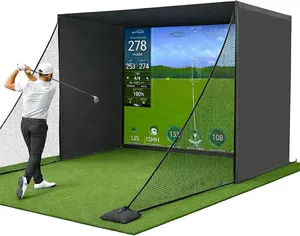
- Best Enclosure Kit: Golf Simulator Enclosure 10x8 ft Kit
- Best for Backyard: Haokelball Golf Practice Net
- Best Budget: Zensouds Golf Net with Practice Mat
- Best Hitting Mat: COSPORTIC Golf Hitting Mat
- How we researched these picks
- How to choose a cheap golf simulator (buying guide)
- FAQ
Quick picks
Every pick wins a specific use case. Jump to the full review before you buy.
-
Best Overall
Rapsodo Mobile Launch Monitor (MLM)
The Rapsodo Mobile Launch Monitor turns a phone and a net into a real simulator for around $200, giving you genuine shot data and course play at a price no other credible launch monitor matches.
-
Best for Accuracy
Garmin Approach R10
The Garmin Approach R10 is the most accurate launch monitor you can pair with a budget sim build, using Doppler radar to track full shots indoors, outdoors and on any phone platform.
-
Best for Casual Play
PhiGolf Home Golf Simulator
PhiGolf swaps the launch monitor and net for a sensor-equipped swing stick, letting you play thousands of courses in a small room without ever hitting a real ball.
-
Best Enclosure Kit
Golf Simulator Enclosure 10x8 ft Kit
This 10x8 foot enclosure bundles a cage frame, HD impact screen and padding so you can add a projector and finally see a real course on the wall, not just hit into a net.
-
Best for Backyard
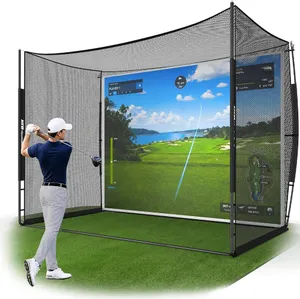
Haokelball Golf Practice Net
The Haokelball net is a heavy-duty 10x8 foot cage with side barriers and a ball return, built to take relentless real-ball driver practice outdoors without falling apart.
-
Best Budget
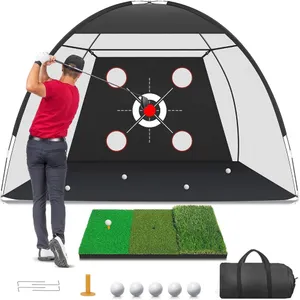
Zensouds Golf Net with Practice Mat
At around $50 for a 10x7 foot net plus a practice mat, the Zensouds set is the cheapest honest entry into home golf and the foundation most budget sims are built on.
-
Best Hitting Mat
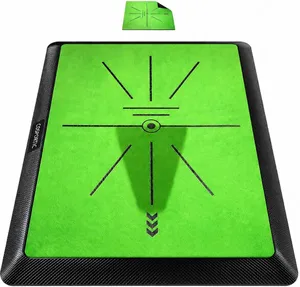
COSPORTIC Golf Hitting Mat
For around $26 the COSPORTIC mat gives you a durable, anti-slip surface to hit off with swing path feedback, the cheapest way to protect your wrists and floor in a home sim.
Compare every pick
| Product | Award | Type | Space needed | Price | User rating | Best for | Where to buy |
|---|---|---|---|---|---|---|---|
| Rapsodo Mobile Launch Monitor (MLM) | Best Overall | Camera launch monitor | 10+ ft indoor or outdoor | $200 | 4.2 (3,100+) | iPhone owners who want real data without spending four figures | Check price on Amazon for Rapsodo Mobile Launch Monitor (MLM) at Amazon (affiliate link) |
| Garmin Approach R10 | Best for Accuracy | Radar launch monitor | 10+ ft or driving range | $500 | 4.2 (1,100+) | Golfers who want the most trustworthy data at a mid budget | Check price on Amazon for Garmin Approach R10 at Amazon (affiliate link) |
| PhiGolf Home Golf Simulator | Best for Casual Play | Swing-stick simulator | Small room, no ball flight | $280 | 3.6 (100+) | Casual players and families who want fun rounds in a tight space | Check price on Amazon for PhiGolf Home Golf Simulator at Amazon (affiliate link) |
| Golf Simulator Enclosure 10x8 ft Kit | Best Enclosure Kit | Enclosure and screen kit | 10x8 ft, 9 ft ceiling | $484 | 4.2 (10) | Builders ready to project a real course image at home | Check price on Amazon for Golf Simulator Enclosure 10x8 ft Kit at Amazon (affiliate link) |
| Haokelball Golf Practice Net | Best for Backyard | Heavy-duty hitting net | 10x8 ft indoor or outdoor | $300 | 4.6 (110+) | Backyard golfers hitting real balls hard and often | Check price on Amazon for Haokelball Golf Practice Net at Amazon (affiliate link) |
| Zensouds Golf Net with Practice Mat | Best Budget | Hitting net and mat | 10x7 ft indoor or outdoor | $50 | 4.0 (660+) | Beginners who just want to hit balls at home cheaply | Check price on Amazon for Zensouds Golf Net with Practice Mat at Amazon (affiliate link) |
| COSPORTIC Golf Hitting Mat | Best Hitting Mat | Portable hitting mat | Portable, sits anywhere | $26 | 4.4 (1,600+) | Anyone who needs an affordable surface to hit off at home | Check price on Amazon for COSPORTIC Golf Hitting Mat at Amazon (affiliate link) |
Swipe sideways to compare every column.
Best Overall
Rapsodo Mobile Launch Monitor (MLM)
by Rapsodo
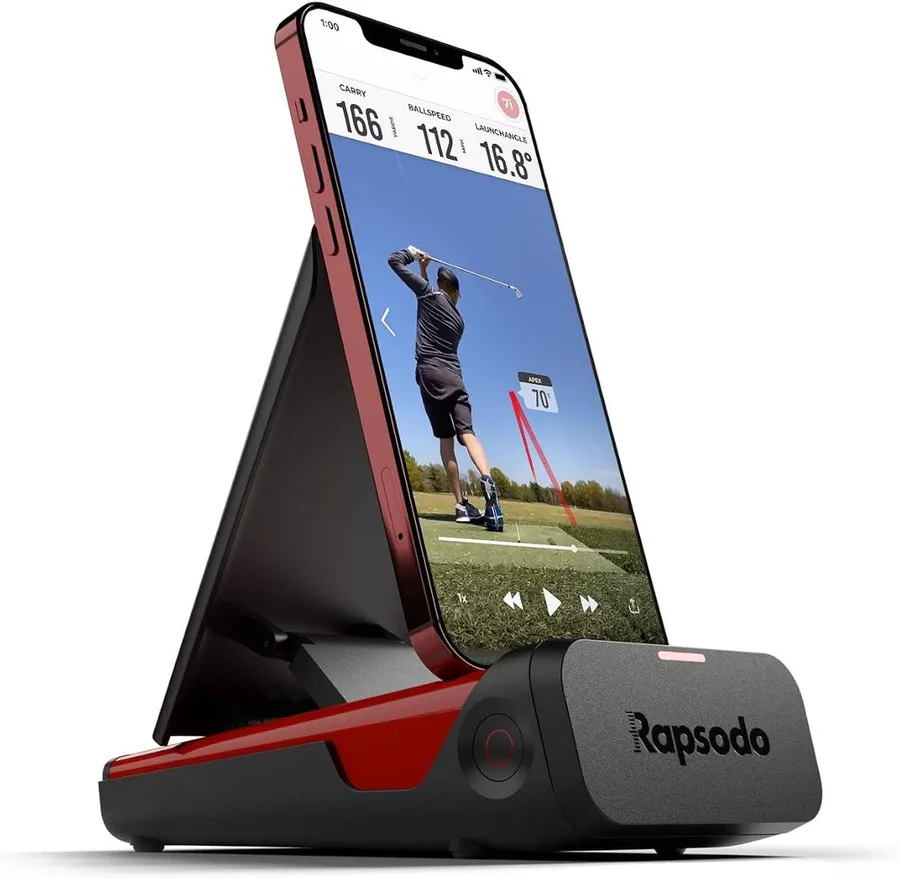
The Rapsodo Mobile Launch Monitor turns a phone and a net into a real simulator for around $200, giving you genuine shot data and course play at a price no other credible launch monitor matches.
What we like
- Reads ball speed, club speed, launch angle and carry from your phone camera
- GPS satellite range view makes practice feel like real courses
- Around $200, by far the cheapest real launch monitor here
- Huge base of over 3,100 owner reviews backing it up
What we don't
- Works with iPhone and iPad only, so Android users are shut out
| Type | Camera launch monitor |
|---|---|
| Best for | Real shot data on a budget |
| Space needed | 10+ ft indoor or outdoor |
| Price | $200 |
| User rating | 4.2 (3,100+) |
| Install difficulty | Easy |
| Price bracket | $ |
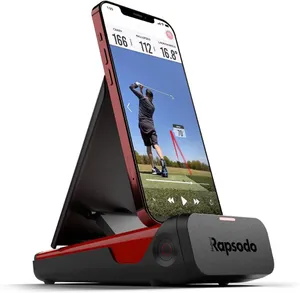
This is the pick that makes a cheap golf simulator actually feel like a simulator rather than a net you hit into. The Rapsodo MLM earns Best Overall because it delivers the one thing every other budget component cannot: real, measured shot data at a price most golfers can stomach. Sit it a few feet behind the ball, open the app, and it reads ball speed, club speed, launch angle and carry through your phone camera.
What sets it apart at this price is the software. The GPS satellite range view drops you onto real-looking practice grounds, and the shot tracer gives you the instant feedback that turns aimless swinging into practice with a purpose. Day to day it is genuinely easy: prop your phone on the built-in mount, calibrate once, and hit. It travels to the range as happily as it sits in your garage.
The real limitation is the platform lock. This unit works with iPhone and iPad only, so Android golfers are out entirely and should look at the Garmin R10 instead. Spin numbers are also estimated rather than directly measured, so serious gappers chasing tour-grade spin data will want to spend more.
Buy this if you own an iPhone and want the cheapest honest path to shot data and virtual play. If you are on Android, or you want radar-grade all-round accuracy, the Garmin Approach R10 is the pick to step up to.
Research-based pick: this recommendation is based on product data, owner feedback and comparison with products we have tested, not on direct hands-on testing.
Buy it if: iPhone owners who want real data without spending four figures
Skip it if: You use Android or want tour-grade spin accuracy
Best for Accuracy
Garmin Approach R10
by Garmin
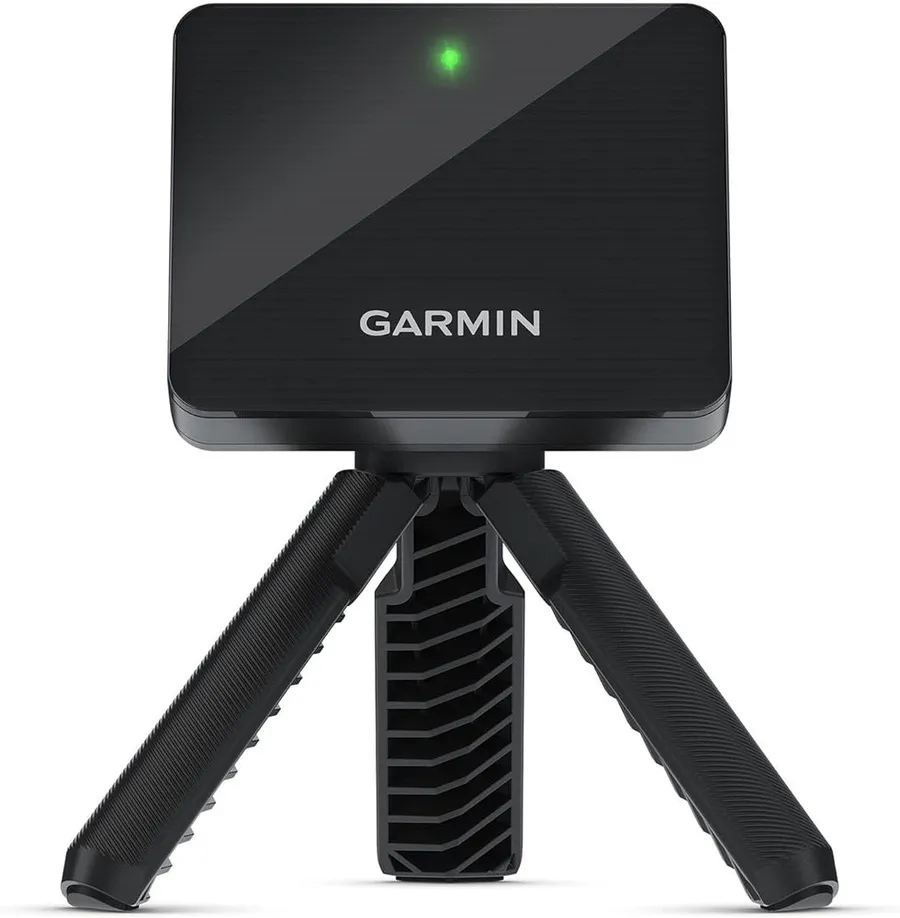
The Garmin Approach R10 is the most accurate launch monitor you can pair with a budget sim build, using Doppler radar to track full shots indoors, outdoors and on any phone platform.
What we like
- Doppler radar measures full ball flight, not just an estimate
- Works with both Android and iPhone, unlike the Rapsodo
- Up to 10 hours of battery and a bundled tripod and phone mount
- Plays virtual courses and home tee sessions through the Garmin Golf app
What we don't
- The best simulation features sit behind a paid subscription
| Type | Radar launch monitor |
|---|---|
| Best for | All-round accuracy |
| Space needed | 10+ ft or driving range |
| Price | $500 |
| User rating | 4.2 (1,100+) |
| Install difficulty | Easy |
| Price bracket | $$ |
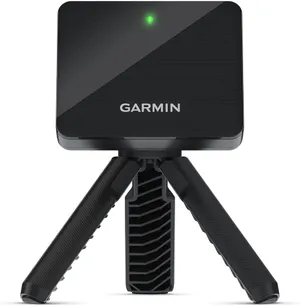
If data accuracy is what matters most in your cheap sim, the Garmin Approach R10 is the pick. It wins Best for Accuracy because it uses Doppler radar to track the whole flight of the ball rather than estimating from a single camera frame, which owners consistently report as tighter and more repeatable than phone-camera rivals.
The other quiet advantage is reach. It pairs with both Android and iPhone, so it is the obvious choice if the Rapsodo’s Apple-only limit rules that unit out. Battery life runs up to ten hours, the box includes a tripod and phone mount, and the Garmin Golf app handles both a home driving range and virtual course play. At around $500 it sits in the sweet spot between throwaway gadgets and pro launch monitors.
Its biggest catch is the subscription. The full simulation and course library lean on Garmin’s paid tier, so factor that recurring cost in before you buy, or you will feel short-changed on features. Radar also wants a bit of room to read the ball, so a broom-closet setup will not do it justice.
Choose this if you want the most trustworthy numbers on any phone and have space to let the radar work. If your budget is tighter or you are firmly on iPhone, the Rapsodo MLM saves you a few hundred dollars.
Research-based pick: this recommendation is based on product data, owner feedback and comparison with products we have tested, not on direct hands-on testing.
Buy it if: Golfers who want the most trustworthy data at a mid budget
Skip it if: You only have a few feet of space or want to avoid subscriptions
Best for Casual Play
PhiGolf Home Golf Simulator
by PhiGolf
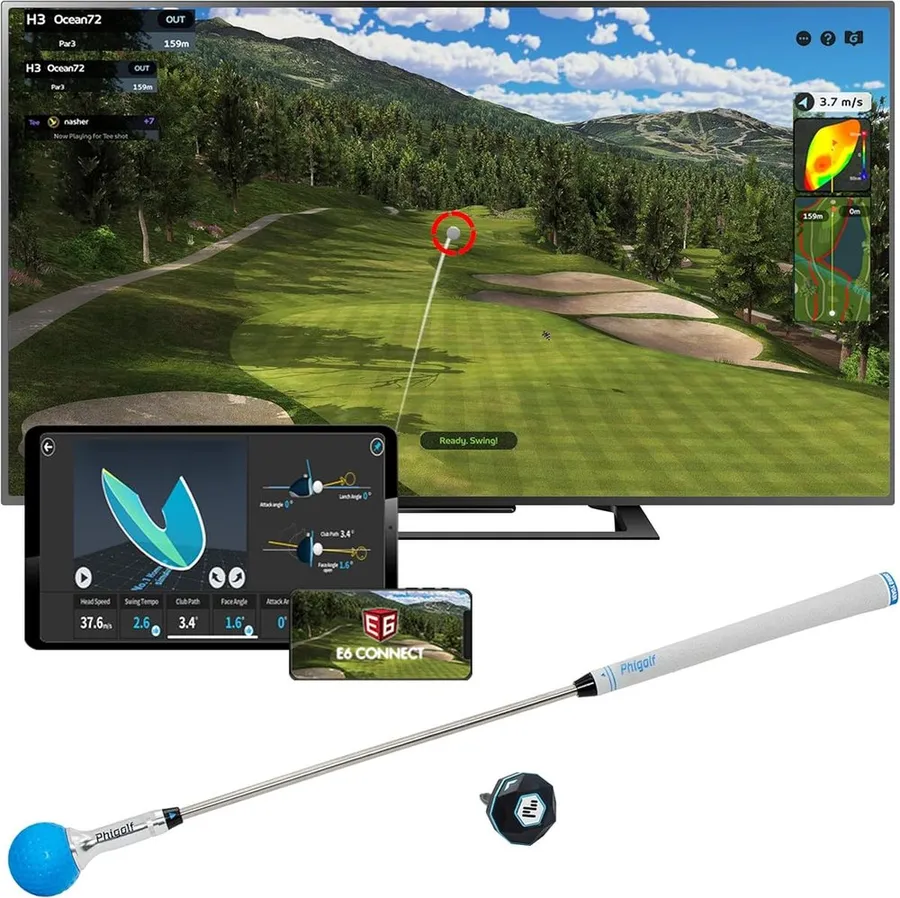
PhiGolf swaps the launch monitor and net for a sensor-equipped swing stick, letting you play thousands of courses in a small room without ever hitting a real ball.
What we like
- Play indoors with zero ball flight, so no net or space needed
- Motion sensor and swing stick access 38,000-plus courses via the app
- One of the cheapest ways to get virtual rounds on your TV
- Compatible with Android, iOS and E6 Connect
What we don't
- It reads a practice swing stick, not real ball strike, so data is approximate
| Type | Swing-stick simulator |
|---|---|
| Best for | Casual play with no balls |
| Space needed | Small room, no ball flight |
| Price | $280 |
| User rating | 3.6 (100+) |
| Install difficulty | Easy |
| Price bracket | $ |
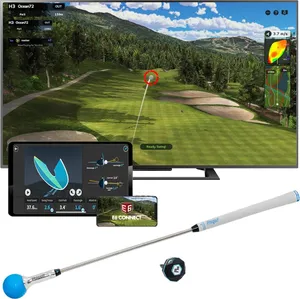
PhiGolf takes a completely different route to a cheap golf simulator: instead of measuring a real ball, it reads a weighted swing stick through a motion sensor. That means it earns Best for Casual Play because you can stand in a living room, swing, and play a full virtual round without a net, a mat or a single ball leaving the ground.
The appeal is access and simplicity. Pair the sensor to the app, cast it to your TV, and you have tens of thousands of courses to work through, all from a stick you swing in place. For families, apartments or anyone whose space rules out ball flight entirely, it is one of the lowest-friction ways to get golf on the screen. It plays nicely with Android, iOS and E6 Connect too.
The honest limitation is in the name: it senses a practice swing stick, not the strike of a real ball, so the data is an approximation and the feel is nothing like compressing a golf ball. Reviews reflect that split, and its rating sits lower than the net-and-monitor options here.
Pick this if you want cheap, low-hassle fun and virtual rounds in a small room. If you care about real ball feel or accurate numbers, put the money toward the Rapsodo MLM and a net instead.
Research-based pick: this recommendation is based on product data, owner feedback and comparison with products we have tested, not on direct hands-on testing.
Buy it if: Casual players and families who want fun rounds in a tight space
Skip it if: You want accurate data or the feel of striking a real ball
Best Enclosure Kit
Golf Simulator Enclosure 10x8 ft Kit
by Generic
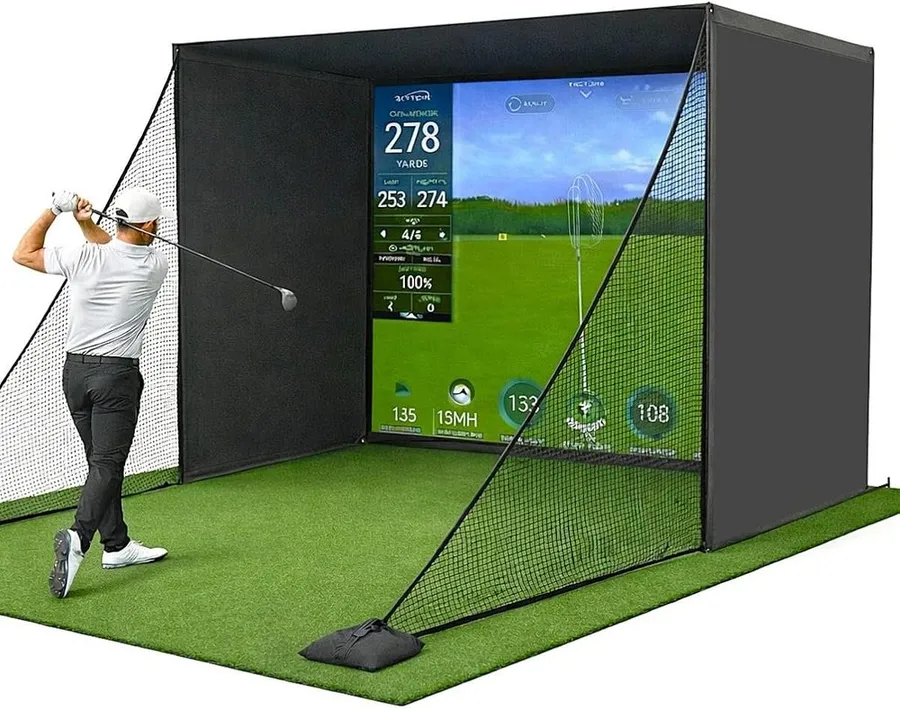
This 10x8 foot enclosure bundles a cage frame, HD impact screen and padding so you can add a projector and finally see a real course on the wall, not just hit into a net.
What we like
- HD impact screen doubles as a projection surface for course play
- Cage frame and corner foam padding included in one kit
- 10x8 ft footprint fits a single-car garage
- Cheapest route to a screen-based picture rather than a bare net
What we don't
- You still supply the projector, launch monitor and computer
| Type | Enclosure and screen kit |
|---|---|
| Best for | Adding a projector picture |
| Space needed | 10x8 ft, 9 ft ceiling |
| Price | $484 |
| User rating | 4.2 (10) |
| Install difficulty | Moderate |
| Price bracket | $$ |
This is the piece that turns a net-and-monitor setup into something that looks like a proper simulator. The 10 by 8 foot enclosure kit earns Best Enclosure Kit because it bundles the cage frame, an HD impact screen and corner foam padding, giving you a surface a projector can throw a course image onto instead of an open net.
Practically, it is the bridge between budget practice and a real bay. The impact screen catches the ball and shows the picture, the steel frame holds it square, and the foam padding tames stray shots at the corners. At a footprint of 10 by 8 feet it slots into a single-car garage, and at under $500 for the shell it is the cheapest credible way to get a projected image rather than a plain net.
The limitation to plan for is everything it does not include. You still need to supply a projector, a launch monitor such as the Rapsodo or Garmin, and a computer or tablet to run the software, so budget for those before you compare it against all-in-one systems. Assembly is also more involved than throwing up a net.
Choose this if you are ready to commit to a screen-based build and have a garage bay to fill. If you just want to catch balls or have no room for a cage, a standalone net will serve you better for far less.
Research-based pick: this recommendation is based on product data, owner feedback and comparison with products we have tested, not on direct hands-on testing.
Buy it if: Builders ready to project a real course image at home
Skip it if: You only want to catch balls or have no room for a cage
Best for Backyard
Haokelball Golf Practice Net
by Haokelball
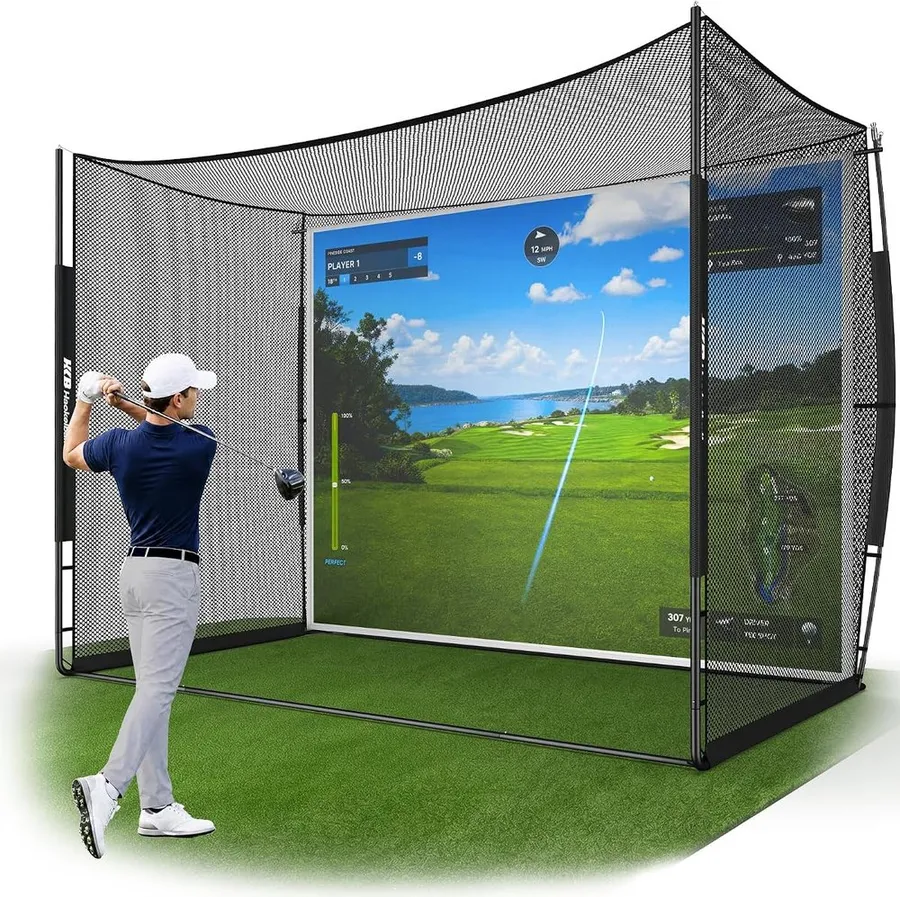
The Haokelball net is a heavy-duty 10x8 foot cage with side barriers and a ball return, built to take relentless real-ball driver practice outdoors without falling apart.
What we like
- Heavy-duty netting rated for full driver swings with real balls
- Side barriers catch shanks that a plain net would miss
- Built-in ball return and collection saves constant walking
- Strong 4.6 rating from owners and a carry bag for storage
What we don't
- At around $300 it costs far more than a basic hitting net
| Type | Heavy-duty hitting net |
|---|---|
| Best for | Backyard real-ball practice |
| Space needed | 10x8 ft indoor or outdoor |
| Price | $300 |
| User rating | 4.6 (110+) |
| Install difficulty | Moderate |
| Price bracket | $$ |
If your cheap simulator lives in the backyard and takes a beating, the Haokelball net is the pick built to survive it. It earns Best for Backyard because it is a heavy-duty 10 by 8 foot cage with reinforced netting, side barriers and a ball return, designed for relentless real-ball driver sessions rather than the occasional gentle chip.
The step up over a basic net shows in the details. The side barriers catch the shanks and pushes that sail past a flat net, the built-in ball return and collection system saves you walking to pick up after every swing, and the sturdier build holds up to daily use outdoors. A 4.6 star rating and an included carry bag round out a net you can trust and pack away.
The trade-off is price. At around $300 it costs several times what the entry-level Zensouds net does, so it only makes sense if you genuinely hit hard and often and want the durability. It also remains a net, so there is still no data or projected picture here.
Choose this if you practice real balls in the yard regularly and want a net that lasts. If you just want the cheapest way to start, or a screen-based image, the budget net or an enclosure kit are the better fits.
Research-based pick: this recommendation is based on product data, owner feedback and comparison with products we have tested, not on direct hands-on testing.
Buy it if: Backyard golfers hitting real balls hard and often
Skip it if: You want the cheapest net or a projected course image
Best Budget
Zensouds Golf Net with Practice Mat
by Zensouds
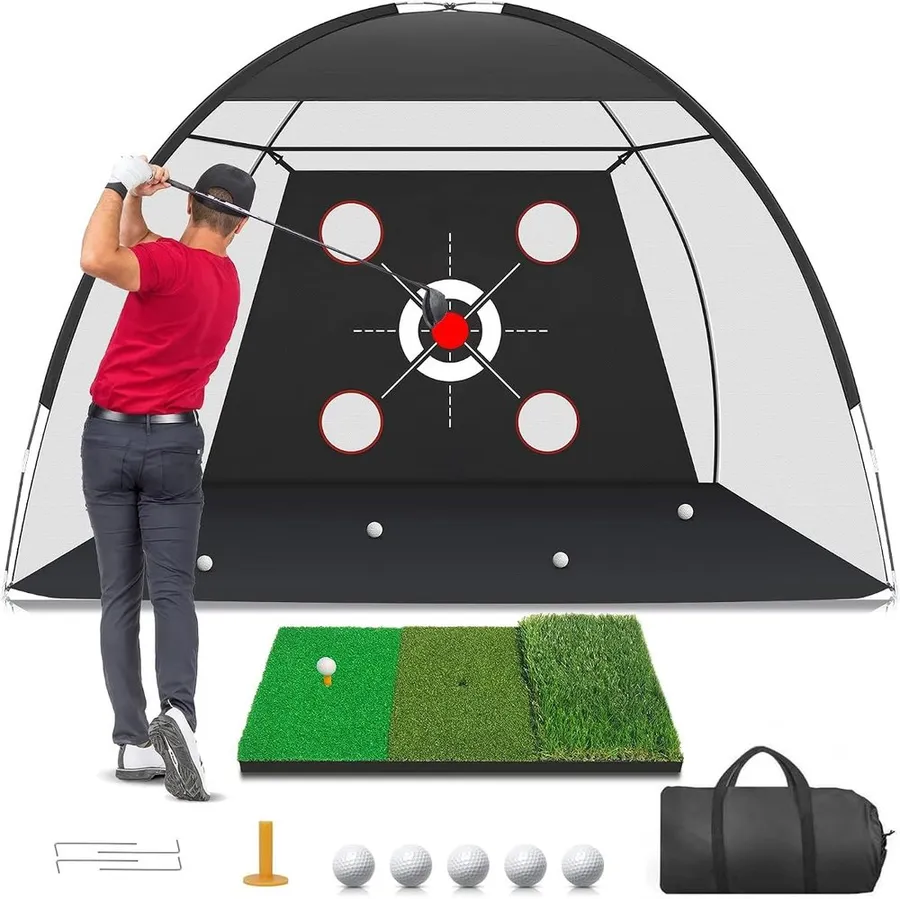
At around $50 for a 10x7 foot net plus a practice mat, the Zensouds set is the cheapest honest entry into home golf and the foundation most budget sims are built on.
What we like
- Net and practice mat bundled for roughly $50
- 10x7 ft size suits a garage, patio or backyard
- Targets help groove alignment and strike
- Backed by more than 660 owner reviews
What we don't
- It is a catch net only, with no data or screen picture
| Type | Hitting net and mat |
|---|---|
| Best for | Cheapest way to start |
| Space needed | 10x7 ft indoor or outdoor |
| Price | $50 |
| User rating | 4.0 (660+) |
| Install difficulty | Easy |
| Price bracket | $ |
Every cheap golf simulator has to start somewhere, and for most people that place is a net. The Zensouds set earns Best Budget because it hands you a 10 by 7 foot hitting net and a practice mat together for around fifty dollars, the lowest realistic price of admission to hitting real balls at home.
In use it is exactly as straightforward as it sounds. The frame goes up in minutes, the 10x7 footprint fits a garage bay, a patio or a corner of the yard, and the printed targets give you something to aim at so practice has structure rather than just being ball-bashing. With more than 660 reviews behind it, it is a known, safe first purchase.
The obvious limitation is that this is a catch net and nothing more. There is no data, no screen and no course play, so on its own it will never feel like a simulator. It is the surface you hit into while a launch monitor supplies the brains.
Buy this if you want the cheapest possible way to start swinging at home, or a base to add a launch monitor to later. If you want the projected picture of a real simulator, step up to an enclosure kit instead.
Research-based pick: this recommendation is based on product data, owner feedback and comparison with products we have tested, not on direct hands-on testing.
Buy it if: Beginners who just want to hit balls at home cheaply
Skip it if: You want shot data or a projected course image
Best Hitting Mat
COSPORTIC Golf Hitting Mat
by COSPORTIC
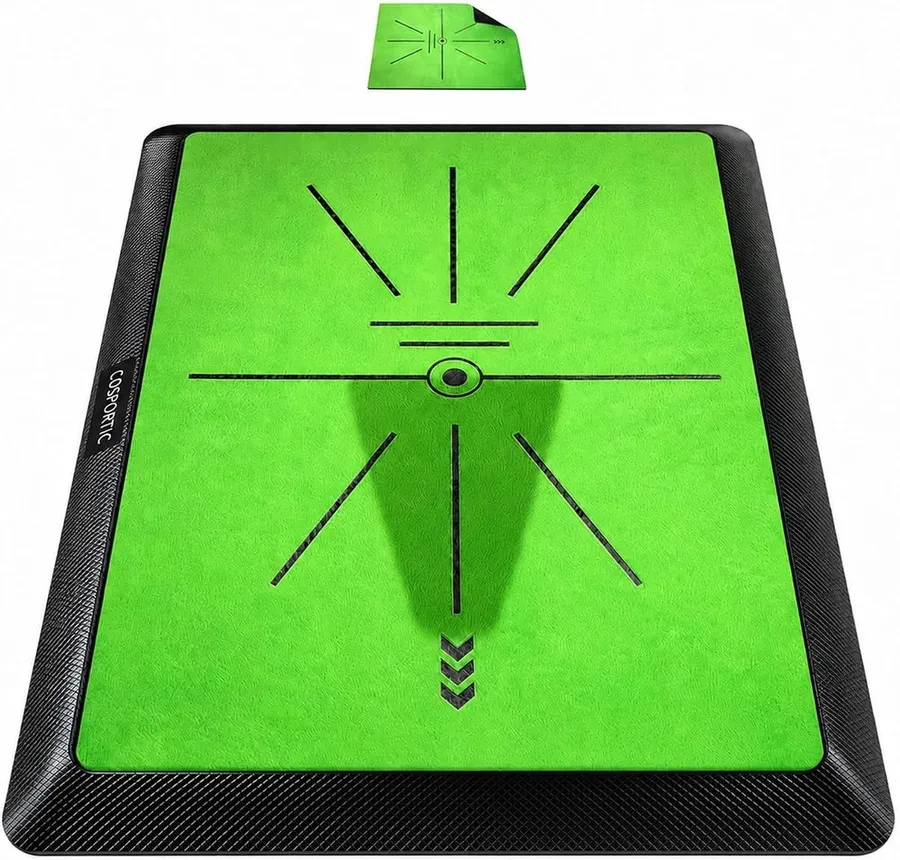
For around $26 the COSPORTIC mat gives you a durable, anti-slip surface to hit off with swing path feedback, the cheapest way to protect your wrists and floor in a home sim.
What we like
- Roughly $26 for a real rubber-backed hitting surface
- Swing path feedback strip helps you check your strike
- Anti-slip base and a replaceable hitting surface included
- Over 1,600 owner reviews at a strong 4.4 rating
What we don't
- A small mat, so it covers your stance area rather than a full bay floor
| Type | Portable hitting mat |
|---|---|
| Best for | Turf on the tightest budget |
| Space needed | Portable, sits anywhere |
| Price | $26 |
| User rating | 4.4 (1,600+) |
| Install difficulty | Easy |
| Price bracket | $ |
A cheap simulator still needs somewhere safe to hit from, and the COSPORTIC mat is the pick that does that job for the least money. It earns Best Hitting Mat because at around $26 it gives you a heavy rubber-backed, anti-slip surface that protects your wrists and your floor, with a swing path feedback strip thrown in to check your strike.
Day to day it is the definition of low fuss. Drop it on the garage floor, it stays put thanks to the grippy base, and the replaceable hitting surface means you are not throwing the whole thing away when the top wears. With more than 1,600 reviews at 4.4 stars, it is one of the most proven budget buys in this whole guide.
Its limitation is simply size. This is a stance-and-strike mat, not a wall-to-wall simulator turf, so it covers where you stand and swing rather than carpeting the entire bay. Golfers who want a seamless full-floor look will need to spend far more on dedicated turf.
Buy this if you want an affordable, wrist-friendly surface to complete a budget net or enclosure setup. If you are after a premium full-length floor for a finished studio, larger simulator turf is the upgrade to save for.
Research-based pick: this recommendation is based on product data, owner feedback and comparison with products we have tested, not on direct hands-on testing.
Buy it if: Anyone who needs an affordable surface to hit off at home
Skip it if: You want a full-length wall-to-wall simulator turf
How we researched these picks#
We built this list by starting from the parts people actually buy to put together an affordable home golf simulator, then filtering hard on evidence and relevance. Every product here is a real, currently sold item, and we prioritized ones with a meaningful base of verified owner reviews so the list reflects gear you can order and trust today rather than untested listings.
Because a cheap simulator is assembled from components rather than bought in one box, we deliberately spread the seven picks across the whole build. There is a phone-based launch monitor for the data, a radar monitor for accuracy, a no-ball swing-stick simulator, an enclosure and screen kit, a heavy-duty backyard net, a rock-bottom starter net and a budget hitting mat. For each one we read the manufacturer listing, compared the aggregated owner feedback and judged it head to head against rivals on the data it delivers, the space it needs, setup effort, durability and value for money.
These recommendations are research-based, not hands-on tested. We have not built each setup in our own garage, so we lean on published specifications and the consistent themes in owner reviews rather than personal range data. Where a pick has a real weakness, such as an Apple-only app, an estimated spin figure or a subscription, we say so plainly so you can budget and plan around it.
How to choose a cheap golf simulator (buying guide)#
Decide what you actually want from it. This is the first fork. If you want to improve, prioritize a launch monitor that gives you real numbers. If you just want fun virtual rounds in a small room, a swing-stick simulator does that for less and needs no net. And if you only want to groove your swing by hitting balls, a net and mat is all you need. Be honest about the goal, because it decides where your money should go.
Match the launch monitor to your phone and budget. The monitor is the brain of a budget sim. A camera unit like the Rapsodo MLM is the cheapest way to get real data but works only on iPhone and iPad. A radar unit like the Garmin R10 costs more, reads full ball flight more accurately and runs on both Android and iPhone. Check platform compatibility first, then decide how much accuracy you are paying for.
Measure your space, especially ceiling height. A home sim lives or dies on room dimensions. Aim for roughly 10 feet wide and 10 feet deep, and confirm you have at least 9 feet of height to swing a driver, more if you are tall. The 10x7 and 10x8 nets and enclosures here fit a single-car garage, while a swing-stick simulator needs almost no room. Ceiling height is the constraint that ends most builds, so check it before you buy anything.
Get the ball-catching layer right for how hard you hit. A budget starter net is fine for occasional practice, but relentless driver sessions will wear it out. If you hit hard and often, especially outdoors, step up to a heavy-duty net with side barriers and a ball return. If you want a projected course picture rather than a plain net, an enclosure kit with an HD impact screen is the piece that gets you there.
Do not skip the mat. The mat is the surface you feel on every swing, so a thicker, rubber-backed one protects your wrists and your floor. Even a cheap dedicated hitting mat beats swinging off carpet or bare concrete. It is the least expensive part of the whole build, so there is no reason to go without one.
Plan for the hidden extras. A cheap simulator total is rarely just the headline part. An enclosure needs a projector and a computer or tablet to run the software, and some launch monitors lock their best simulation features behind a subscription. Add those recurring and one-off costs before you compare prices, so the setup that looks cheapest on paper really is the cheapest once it is playing courses.
Frequently asked questions
What is the cheapest way to build a golf simulator at home?
The cheapest real setup pairs a budget hitting net and mat, around $50 to $75 together, with a phone-based launch monitor like the Rapsodo MLM at roughly $200. That gets you catching balls and reading real shot data for under $300 total. If you only want virtual rounds and do not mind hitting no real ball, a sensor-based swing stick like PhiGolf skips the net entirely.
Do cheap golf simulators give accurate data?
It depends on the technology. A camera monitor like the Rapsodo measures ball and club speed well but estimates spin, while a radar unit like the Garmin R10 tracks full ball flight and reads tighter. Swing-stick simulators sense a practice stick rather than a struck ball, so treat their numbers as approximate. For the money, both the Rapsodo and Garmin give data most amateurs can trust and improve from.
How much space do I need for a cheap golf simulator?
Plan for a room roughly 10 feet wide, 10 feet deep and at least 9 feet tall so you can swing a driver without hitting the ceiling. The 10x7 and 10x8 nets and enclosures here suit a single-car garage or a patio. If space is very tight, a swing-stick simulator needs almost no room because the ball never leaves the ground. Check ceiling height first, as it stops most home builds.
Can I add a screen and projector to a cheap net setup later?
Yes, and that is exactly how most budget builds grow. Start with a net, mat and launch monitor, then upgrade to an enclosure kit with an HD impact screen when you are ready to project a course image. Add a projector and a laptop or tablet to run the software, and your cheap practice net becomes a screen-based simulator without replacing the gear you already bought.
About the author

Jim Bennett Founder & lead reviewer
Jim is the guy behind Golf Sim Jim. He builds home golf simulators and compares launch monitors by the numbers that actually decide a setup, room fit, accuracy and software.
Home setup: Garage bay: SkyTrak+, 10 ft ceiling, BenQ LK936ST short-throw
- Launch monitor accuracy
- Home simulator builds
- Impact screens & enclosures
- Sim software (GSPro, E6, TGC)