
6 Best Mobile Golf Simulators You Can Take Anywhere in 2026
We compared 6 real mobile golf simulators from $200 to $1,269 on portability, accuracy and value to find the best portable pick you can take anywhere.

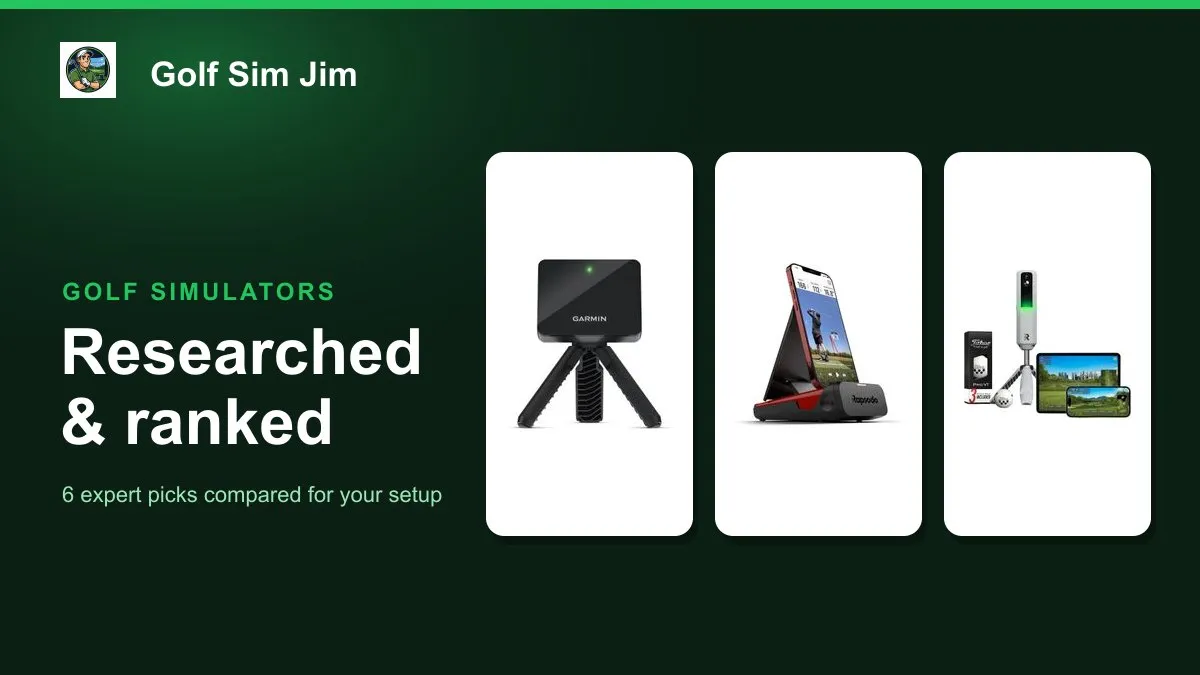
A mobile golf simulator lets you practice or play real courses without a dedicated room, which is why portability is now one of the most searched features in home golf. But mobile means very different things depending on what you buy, from a pocket launch monitor you clip to a tripod to a swing stick that needs no ball, an inflatable room that pumps up in minutes or a fold-down net for the backyard. This guide compares six real, currently sold products from $200 to $1,269 and picks a winner for each use case. We weighed each on how easily it travels, how accurate its data is where it measures real shots, how much space it needs, software and phone compatibility, and value at the price. Whether you want the best all-round pick, the cheapest way in, the richest data, a tiny-space option, a full portable room or a backyard target, one of these fits how and where you play. Below are the category winners, then a plain buying guide to match a mobile setup to your own space and goals.
Table of contents
- Quick picks
- Price compared
- Comparison table
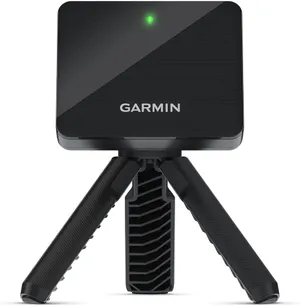
- Best Overall: Garmin Approach R10
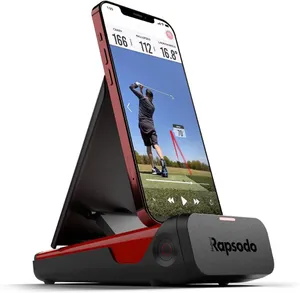
- Best Budget: Rapsodo Mobile Launch Monitor (MLM)
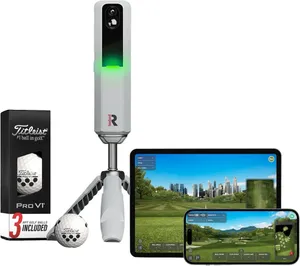
- Best Premium: Rapsodo MLM2PRO
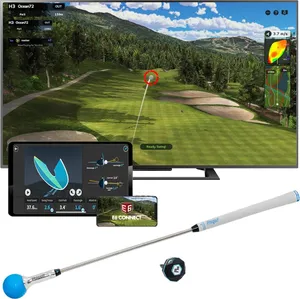
- Best for Small Spaces: PHIGOLF Home Golf Game Simulator
- Best Portable Enclosure: Portable Inflatable Golf Simulator Tent
- Best for Backyard: Mobile Golf Simulator Net
- How we researched these picks
- How to choose a mobile golf simulator (buying guide)
- FAQ
Quick picks
Every pick wins a specific use case. Jump to the full review before you buy.
-
Best Overall
Garmin Approach R10
The Approach R10 packs real radar ball and club data into a case you can carry anywhere, which makes it the most complete mobile golf simulator for the money.
-
Best Budget
Rapsodo Mobile Launch Monitor (MLM)
At around $200 the Rapsodo MLM turns an iPhone or iPad into a portable launch monitor with the largest owner review base here, making it the easiest low-cost way to go mobile.
-
Best Premium
Rapsodo MLM2PRO
The MLM2PRO adds dual-camera plus radar sensing and 15 metrics to a still-portable unit, giving the richest mobile data set here for players who want to truly improve.
-
Best for Small Spaces
PHIGOLF Home Golf Game Simulator
PHIGOLF uses a motion-sensor swing stick and no ball at all, so it turns any room or hotel into a golf simulator with almost zero space or setup.
-
Best Portable Enclosure
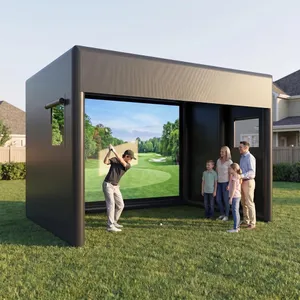
Portable Inflatable Golf Simulator Tent
This inflatable tent gives you a full projection-ready sim room that pumps up in minutes and packs back into a bag, so the whole enclosure travels with you.
-
Best for Backyard
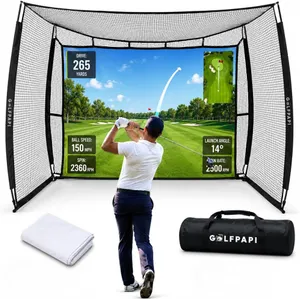
Mobile Golf Simulator Net
A 10 ft steel-framed net with an impact screen that folds down and moves easily, this is the cheapest way to hit real balls into a mobile sim setup at home.
Compare every pick
| Product | Award | Type | Portability | Price | Warranty | Best for | Where to buy |
|---|---|---|---|---|---|---|---|
| Garmin Approach R10 | Best Overall | Radar launch monitor | Packs into a small case with tripod and phone mount | $499 | 1 year | Golfers who want accurate, take-anywhere data without a five-figure studio | Check price on Amazon for Garmin Approach R10 at Amazon (affiliate link) |
| Rapsodo Mobile Launch Monitor (MLM) | Best Budget | Camera launch monitor (iOS) | Pocket-sized, no tripod needed | $200 | 1 year | iPhone owners who want mobile launch data on a tight budget | Check price on Amazon for Rapsodo Mobile Launch Monitor (MLM) at Amazon (affiliate link) |
| Rapsodo MLM2PRO | Best Premium | Dual-camera launch monitor | Compact unit and tripod that fits a backpack | $600 | 1 year | Committed golfers who want deep, accurate data they can carry | Check price on Amazon for Rapsodo MLM2PRO at Amazon (affiliate link) |
| PHIGOLF Home Golf Game Simulator | Best for Small Spaces | Motion-sensor swing stick | Fits in a golf bag, no balls needed | $280 | 1 year | Apartment dwellers and travelers who want fun rounds anywhere | Check price on Amazon for PHIGOLF Home Golf Game Simulator at Amazon (affiliate link) |
| Portable Inflatable Golf Simulator Tent | Best Portable Enclosure | Inflatable enclosure | Inflates and deflates, packs down to a carry bag | $1,269 | 1 year | Buyers who want a movable, self-contained sim room, not just a device | Check price on Amazon for Portable Inflatable Golf Simulator Tent at Amazon (affiliate link) |
| Mobile Golf Simulator Net | Best for Backyard | Practice net with impact screen | Steel frame folds down for storage or transport | $200 | 1 year | Golfers who want an affordable, movable target for real balls at home | Check price on Amazon for Mobile Golf Simulator Net at Amazon (affiliate link) |
Swipe sideways to compare every column.
Best Overall
Garmin Approach R10
by Garmin
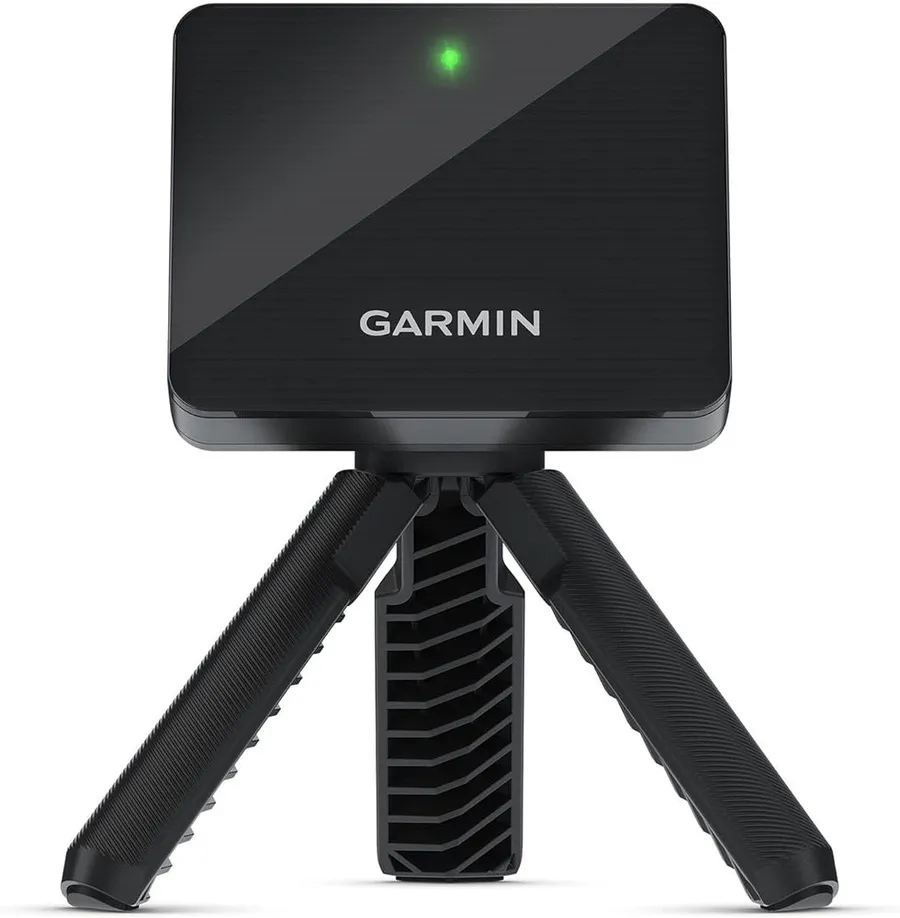
The Approach R10 packs real radar ball and club data into a case you can carry anywhere, which makes it the most complete mobile golf simulator for the money.
What we like
- Radar tracks 14 data metrics from a real struck ball
- Up to 10 hours of battery for range or backyard sessions
- Ships with a tripod, phone mount and case for true portability
- Pairs with the free Garmin Golf app plus paid sim courses
What we don't
- Radar needs several feet of ball flight, so it reads best outdoors or in a deep room
| Type | Radar launch monitor |
|---|---|
| Portability | Packs into a small case with tripod and phone mount |
| Best for | All-round mobile use |
| Price | $499 |
| Warranty | 1 year |
| Install difficulty | Easy |
| Price bracket | $$ |
The Garmin Approach R10 wins Best Overall because it does the most important job of a mobile golf simulator, measuring real shots accurately, while still folding into a bag you can sling over your shoulder. You get 14 metrics including ball speed, club head speed, launch angle and spin, and the whole kit ships with a tripod, phone mount and carry case so there is nothing else to buy to start.
Day to day it is genuinely grab-and-go. The battery runs up to 10 hours, so a full range session or a backyard afternoon never leaves you hunting for a charger, and the Garmin Golf app turns your phone into the display. Add a paid simulation subscription and you can play virtual courses indoors against the same data.
Its real limitation is radar physics. Like any Doppler unit it wants to see several feet of ball flight, so a cramped indoor corner will frustrate it. Give it depth, a garage bay, a net at distance or the open range, and it settles into consistent, trustworthy numbers.
Buy the R10 if you want one device that travels, reads real data and costs hundreds rather than thousands. If your only practice space is a shallow room with a net a few feet away, a camera-based unit like the Rapsodo MLM will fit that geometry better.
Research-based pick: this recommendation is based on product data, owner feedback and comparison with products we have tested, not on direct hands-on testing.
Buy it if: Golfers who want accurate, take-anywhere data without a five-figure studio
Skip it if: You only have a shallow indoor space with no room for ball flight
Best Budget
Rapsodo Mobile Launch Monitor (MLM)
by Rapsodo
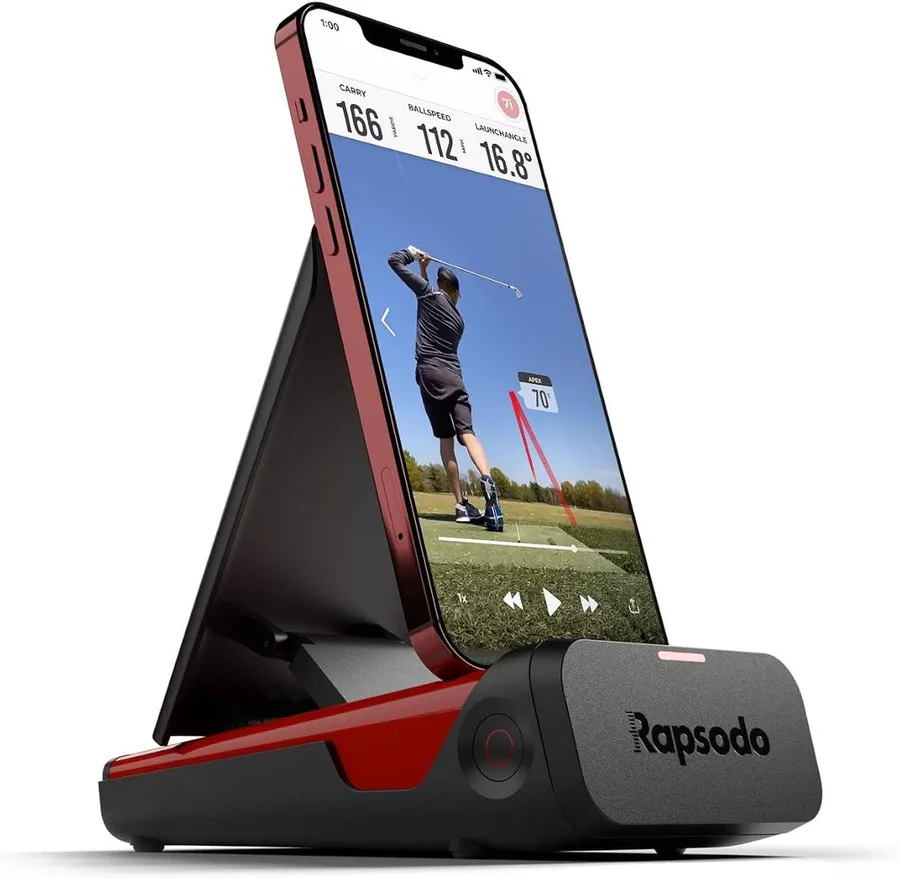
At around $200 the Rapsodo MLM turns an iPhone or iPad into a portable launch monitor with the largest owner review base here, making it the easiest low-cost way to go mobile.
What we like
- One of the lowest prices for a real camera launch monitor
- Pocket-sized with no tripod or extra hardware to carry
- Backed by thousands of verified owner reviews
- Free GPS satellite range view and shot tracer built in
What we don't
- Works only with iPhone and iPad, so Android users are locked out
| Type | Camera launch monitor (iOS) |
|---|---|
| Portability | Pocket-sized, no tripod needed |
| Best for | Budget mobile practice |
| Price | $200 |
| Warranty | 1 year |
| Install difficulty | Easy |
| Price bracket | $ |
The Rapsodo Mobile Launch Monitor takes Best Budget because it delivers the core of a mobile golf simulator, real ball and club speed plus launch data, for roughly a fifth of the price of a premium unit. It is also the most proven pick in this guide by review volume, with thousands of verified owners, so you are not gambling on an unknown.
The appeal is how little there is to it. The unit is small enough to drop in a pocket, it props up and pairs with your iPhone or iPad, and the app adds a GPS satellite range view and video shot tracer at no extra cost. For a beginner or a casual player who just wants numbers on the range, that is a lot of value.
The catch is the platform. It is iOS only, so Android golfers cannot use it at all, and the data set is shallower than a dual-camera or radar unit, leaning on ball speed, club speed and launch angle rather than full spin and club-path detail.
Choose the MLM if you own an iPhone or iPad and want the cheapest honest route into mobile launch data. If you are on Android, or you want richer metrics and simulator-grade accuracy, step up to the R10 or the MLM2PRO.
Research-based pick: this recommendation is based on product data, owner feedback and comparison with products we have tested, not on direct hands-on testing.
Buy it if: iPhone owners who want mobile launch data on a tight budget
Skip it if: You use Android or need club-path and spin depth
Best Premium
Rapsodo MLM2PRO
by Rapsodo
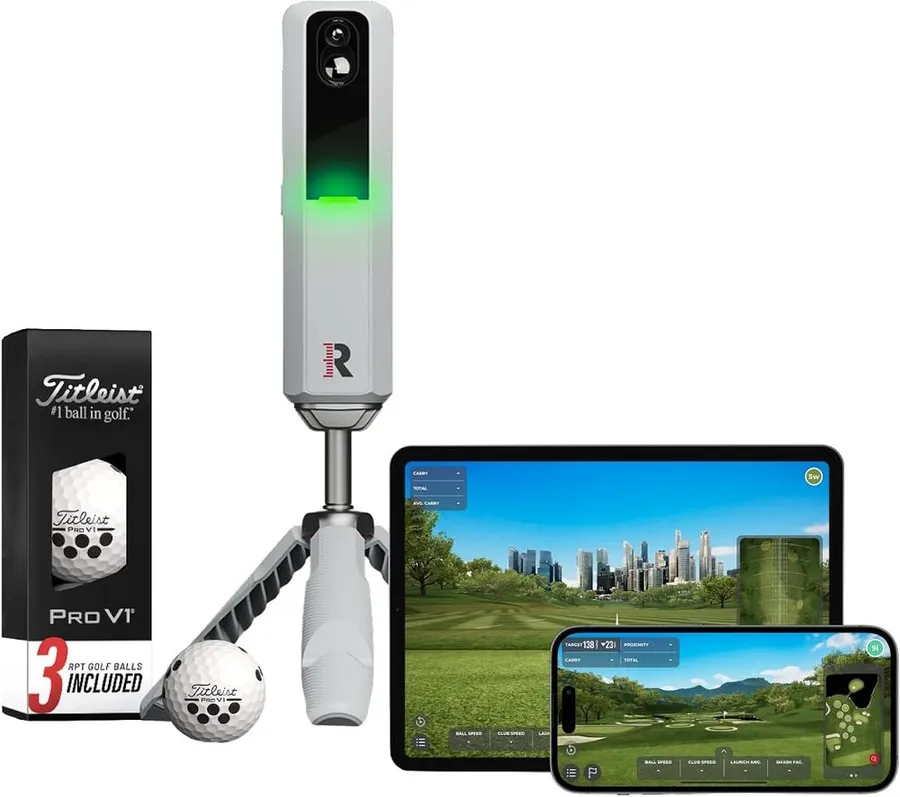
The MLM2PRO adds dual-camera plus radar sensing and 15 metrics to a still-portable unit, giving the richest mobile data set here for players who want to truly improve.
What we like
- Dual camera and radar combine for 15 shot metrics
- Ships with premium balls and pairs with sim course software
- Still packs into a backpack with its tripod
- Works on both iOS and Android
What we don't
- The best features sit behind a paid annual membership after year one
| Type | Dual-camera launch monitor |
|---|---|
| Portability | Compact unit and tripod that fits a backpack |
| Best for | Premium mobile data |
| Price | $600 |
| Warranty | 1 year |
| Install difficulty | Easy |
| Price bracket | $$$ |
The Rapsodo MLM2PRO earns Best Premium because it stretches what a mobile launch monitor can measure without becoming a fixed installation. Its dual-camera system works alongside radar to report 15 metrics, a meaningful jump over the ball-speed-and-launch basics of cheaper units, and it still folds down into a backpack with its own tripod.
In use it feels like carrying a small studio. It ships with premium balls, records impact video, and connects to simulator course software so you can play virtual rounds indoors or gather serious practice data outdoors. Unlike the original MLM, it supports both iOS and Android, which widens who can actually run it.
The honest drawback is the ongoing cost. Several of the headline features, including full shot vision and course play, require a paid annual membership once the included period lapses, so the sticker price is not the whole story over a few years.
Pick the MLM2PRO if you are committed to improving and want the deepest, most accurate data you can still throw in a bag. If you would rather pay once and avoid a subscription, the Garmin R10 gives you strong radar data with no mandatory membership.
Research-based pick: this recommendation is based on product data, owner feedback and comparison with products we have tested, not on direct hands-on testing.
Buy it if: Committed golfers who want deep, accurate data they can carry
Skip it if: You want a one-time purchase with no ongoing subscription
Best for Small Spaces
PHIGOLF Home Golf Game Simulator
by PHIGOLF
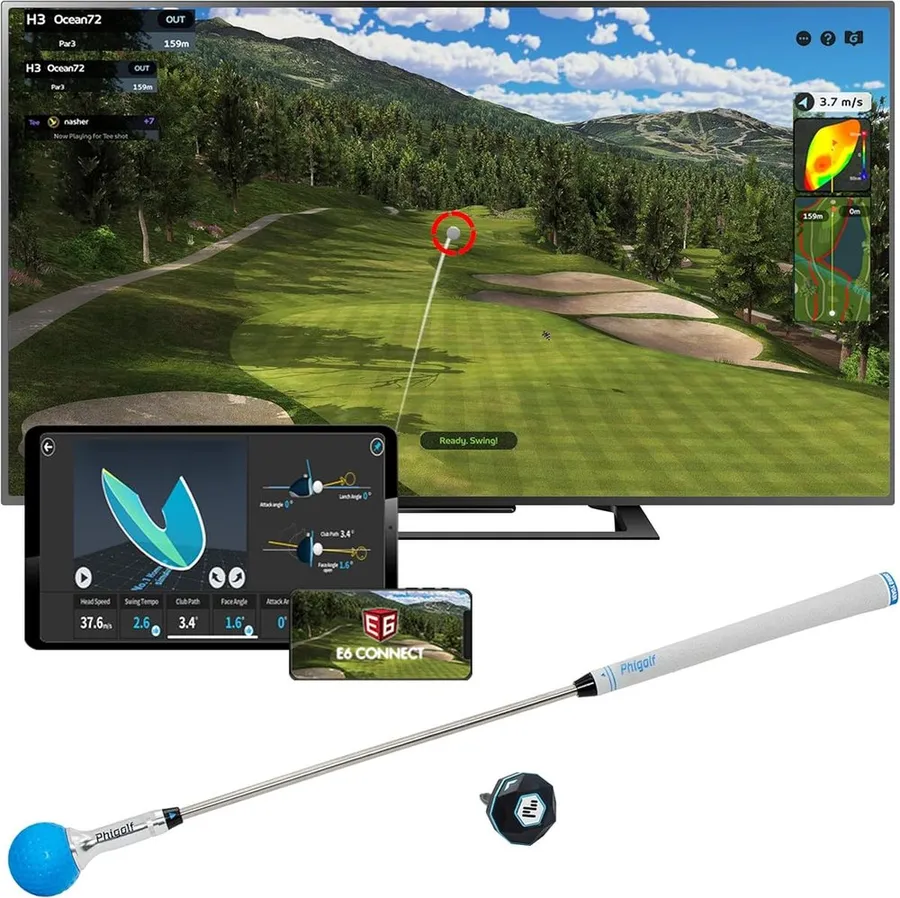
PHIGOLF uses a motion-sensor swing stick and no ball at all, so it turns any room or hotel into a golf simulator with almost zero space or setup.
What we like
- Needs no ball, net or ceiling height to play
- Swing stick fits inside a normal golf bag
- Access to 38,000-plus courses through connected apps
- Works with Android, iOS, PC and sim software like E6 Connect
What we don't
- A motion sensor estimates your swing rather than measuring a struck ball, so data is approximate
| Type | Motion-sensor swing stick |
|---|---|
| Portability | Fits in a golf bag, no balls needed |
| Best for | Tiny spaces and travel |
| Price | $280 |
| Warranty | 1 year |
| Install difficulty | Easy |
| Price bracket | $$ |
PHIGOLF takes Best for Small Spaces because it removes the two things that make a mobile golf simulator hard to fit: the ball and the space it needs to fly. You swing a sensor-equipped stick, the motion sensor reads the swing, and the app plays the shot on your phone, tablet or TV. No net, no mat and no swing clearance for a real driver.
That makes it the most travel-friendly pick here. The stick collapses into a golf bag, setup is a quick app pairing, and you get access to tens of thousands of virtual courses. It also plays nicely across platforms and connects to serious sim software like E6 Connect, so it can grow with you.
The trade-off is fundamental. Because it senses your swing rather than tracking an actual struck ball, the numbers are estimates. It is brilliant for playing rounds and keeping your motion grooved, but it will not give you the true spin and launch data a golfer chasing a swing fix needs.
Buy PHIGOLF if you live in a flat, travel often, or just want low-stakes virtual golf in any room. If your goal is measured improvement, spend on a launch monitor like the R10 or Rapsodo MLM instead.
Research-based pick: this recommendation is based on product data, owner feedback and comparison with products we have tested, not on direct hands-on testing.
Buy it if: Apartment dwellers and travelers who want fun rounds anywhere
Skip it if: You need real, measured ball data to fix your swing
Best Portable Enclosure
Portable Inflatable Golf Simulator Tent
by Golf Simulator
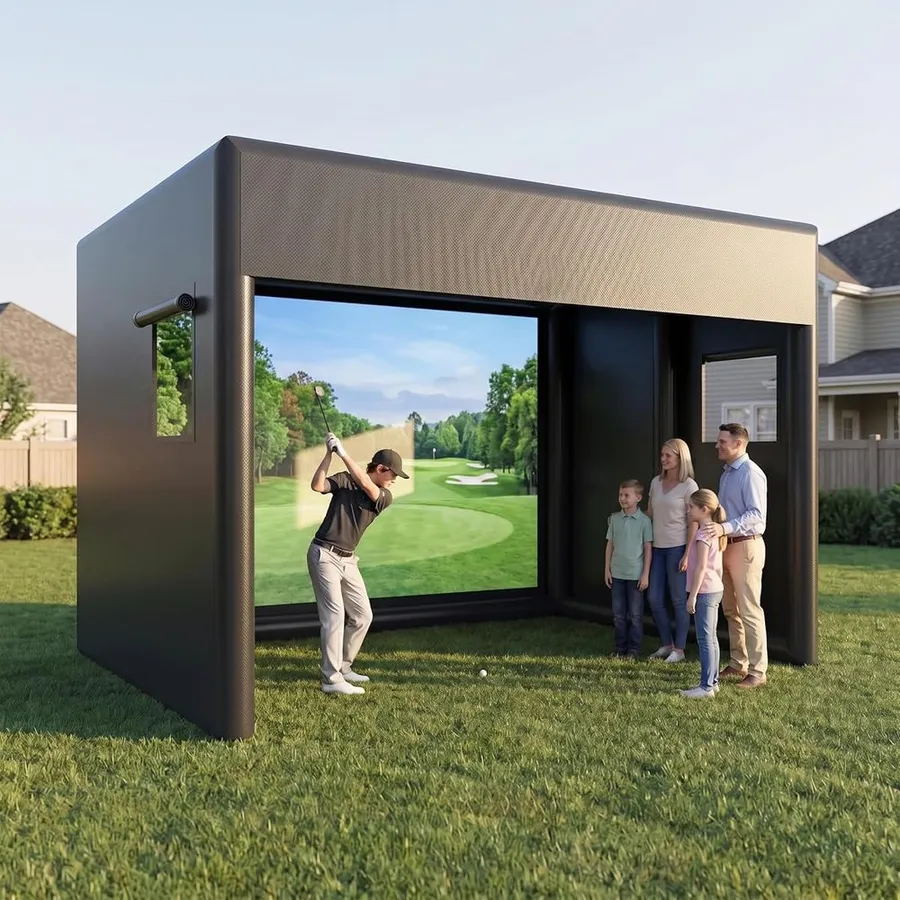
This inflatable tent gives you a full projection-ready sim room that pumps up in minutes and packs back into a bag, so the whole enclosure travels with you.
What we like
- Large 10x13x10 ft space inflates and deflates in minutes
- Built-in projection screen for a true simulator image
- Works indoors, in a garage or outdoors on a flat surface
- Packs down to a carry bag when you are done
What we don't
- You still supply the projector and a launch monitor separately
| Type | Inflatable enclosure |
|---|---|
| Portability | Inflates and deflates, packs down to a carry bag |
| Best for | A full portable sim room |
| Price | $1,269 |
| Warranty | 1 year |
| Install difficulty | Moderate |
| Price bracket | $$$ |
The Portable Inflatable Golf Simulator Tent wins Best Portable Enclosure because it is the only pick here that gives you the actual room, a large enclosed space with a projection screen, while still folding into a bag. An electric pump inflates it in minutes, and when you deflate it the whole 10x13x10 ft structure disappears into storage.
That flexibility is the point. You can stand it up in a garage for the winter, move it to a basement, or take it outdoors onto a flat surface for a party or an event, then pack it away so the space returns to normal. Nothing rigid or bolted-down comes close to that mobility at this scale.
The honest limitation is that it is a shell, not a system. There is no projector and no launch monitor in the box, so you pair it with one of the portable monitors in this guide plus a projector to complete the sim. It is also the priciest pick here at over a thousand dollars.
Choose this tent if you want a movable, self-contained simulator room you can set up and strike anywhere. If you would rather buy one device and skip the assembly, a launch monitor like the R10 or a swing stick like PHIGOLF is the simpler path.
Research-based pick: this recommendation is based on product data, owner feedback and comparison with products we have tested, not on direct hands-on testing.
Buy it if: Buyers who want a movable, self-contained sim room, not just a device
Skip it if: You want a plug-and-play kit or a permanent fixed studio
Best for Backyard
Mobile Golf Simulator Net
by GOLF PAPi
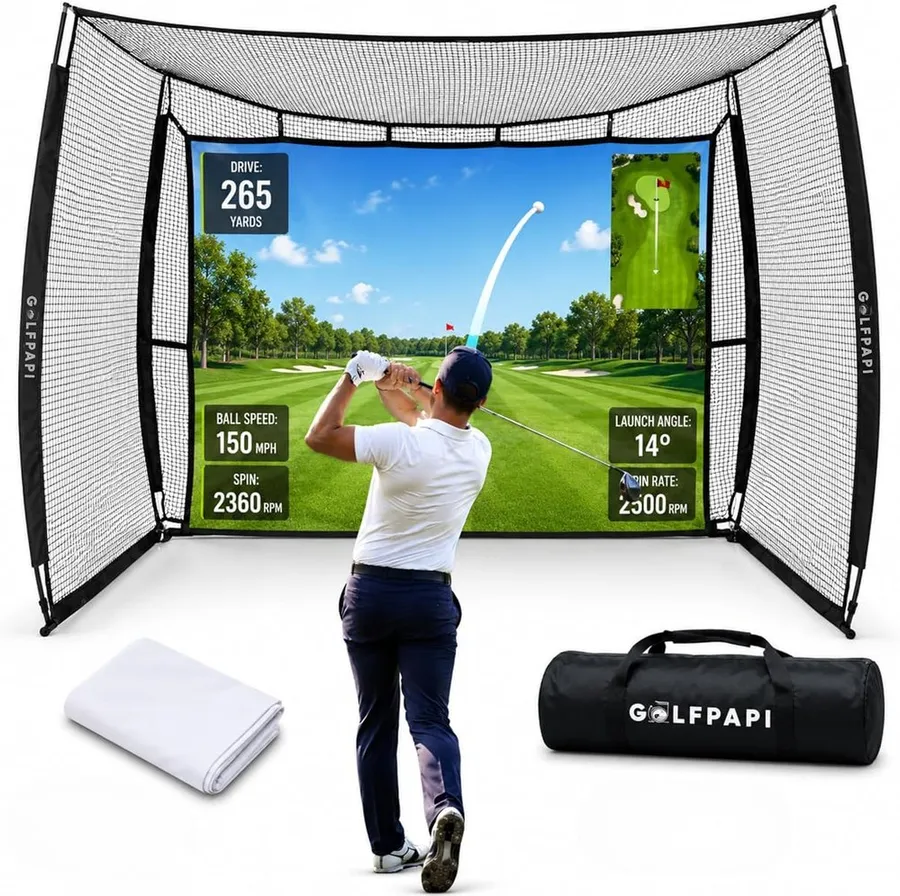
A 10 ft steel-framed net with an impact screen that folds down and moves easily, this is the cheapest way to hit real balls into a mobile sim setup at home.
What we like
- Steel frame folds down for storage or transport
- Impact screen lets you project or just catch real shots
- Works indoors, in a garage or out in the backyard
- One of the lowest-cost ways to hit real balls safely
What we don't
- It is only the net and screen, so you add a launch monitor and projector
| Type | Practice net with impact screen |
|---|---|
| Portability | Steel frame folds down for storage or transport |
| Best for | Backyard and garage |
| Price | $200 |
| Warranty | 1 year |
| Install difficulty | Easy |
| Price bracket | $ |
The Mobile Golf Simulator Net takes Best for Backyard because it solves the physical side of a mobile sim cheaply and simply: a sturdy 10 ft target you can hit real balls into, with an impact screen you can project onto. The steel frame folds down, so it moves from garage to backyard to storage without a fixed install.
For most home golfers this is the practical mobile base. Set it up on the lawn on a dry afternoon, pair it with a portable launch monitor, and you have a working simulator at a fraction of the cost of an inflatable room. Fold it away and the yard is clear again by dinner.
Its limitation is scope. It is a net and screen only, with no electronics, so it does not measure anything on its own and you supply both the launch monitor and, if you want a projected course, a projector. It is a target, not a complete system.
Buy this net if you want the lowest-cost, movable way to strike real balls at home and already have or plan to add a launch monitor. If you want a fully enclosed image on all sides, the inflatable tent gives you the room; if you want built-in data, start with the R10 or Rapsodo MLM.
Research-based pick: this recommendation is based on product data, owner feedback and comparison with products we have tested, not on direct hands-on testing.
Buy it if: Golfers who want an affordable, movable target for real balls at home
Skip it if: You want built-in shot data or a fully enclosed room
How we researched these picks#
We built this list by starting from the mobile golf simulators people actually buy, then filtering hard on portability, relevance and evidence. Every pick is a real, currently sold product, and we deliberately spread them across the ways a setup can be mobile: a carry-case launch monitor, a no-ball swing stick, an inflatable room and a fold-down net. The goal is to answer the whole question of taking golf with you, not just one narrow product type.
For each candidate we pulled the manufacturer specifications, read across aggregated verified owner feedback and compared products head to head on what changes a mobile buying decision: how easily the setup travels and stores, how accurate its data is where it measures a real struck ball, how much space it needs to work, phone and software compatibility, and value at the price. We favored picks with a meaningful base of verified owner reviews, while still including a couple of newer or niche items where they solve a specific mobile problem, such as playing in a room too small for a ball.
These recommendations are research-based, not hands-on tested. We have not packed and unpacked each unit on our own travels, so we lean on published specs and the consistent themes in owner feedback rather than our own field time. Where a product has a real weakness, such as estimated rather than measured data, an iOS-only limit or a shell that excludes the electronics, we say so plainly.
How to choose a mobile golf simulator (buying guide)#
Decide what mobile means for you. A pocket launch monitor, a swing stick, an inflatable room and a fold-down net are all mobile, but in different ways. If you want to move between the range and home, a launch monitor in a case is ideal. If you travel and have no space at all, a swing stick that needs no ball wins. If you want a full projected room you can still pack away, an inflatable tent fits. Pick the form of mobility that matches your life first.
Match accuracy to your goal. If you want to genuinely improve your swing, you need a device that measures a real struck ball, and a radar or dual-camera launch monitor gives you real spin, launch and club data. If you mainly want to play fun rounds anywhere, a motion-sensor swing stick estimates your swing for far less money and space, but the numbers are approximate rather than measured.
Check the space each type needs. This is where mobile setups differ most. Radar units like the Garmin R10 want several feet of ball flight, so they shine outdoors or in a deep bay. A camera unit tolerates a shorter room. A swing stick needs almost nothing. An inflatable tent or net enclosure needs a garage-sized footprint while in use, even though it stores small. Measure the smallest space you will actually use before you choose.
Confirm phone and software compatibility. Mobile monitors run on your phone or tablet, so check the platform. The original Rapsodo MLM is iOS only, while the MLM2PRO and PHIGOLF support both iOS and Android. Also check what course play costs: many units render real courses only through a paid annual subscription, so factor that in beyond the sticker price.
Remember what is not in the box. Enclosures and nets are shells. The inflatable tent and the backyard net do not include a launch monitor or a projector, so you pair them with a device to complete the simulator. A launch monitor, by contrast, is the brain but needs a target, a net, a screen or the open range, to hit into safely.
Weigh value at your budget. Spend the least that covers the mobility, accuracy and space you actually have. A budget iOS monitor or a fold-down net suits casual players and tight budgets, an all-round radar unit suits most golfers who want real data on the move, and a premium dual-camera monitor or a full inflatable room only earns its price if deep data or a complete portable studio is worth the extra to you.
Frequently asked questions
What makes a golf simulator mobile?
A mobile golf simulator is one you can set up and pack away rather than build into a permanent room. In practice that means a portable launch monitor that fits a case, a motion-sensor swing stick that packs into a golf bag, an inflatable enclosure that deflates, or a fold-down net. The common thread is that nothing is bolted in, so you can move it between rooms, take it to the range, or store it when you are done.
Can a portable launch monitor be as accurate as a fixed one?
For ball speed, launch and carry, a good portable radar or camera unit like the Garmin R10 or Rapsodo MLM2PRO gets close to studio accuracy when you give it the space it needs. The main variable is your environment: radar units want several feet of ball flight, so a cramped indoor corner hurts accuracy, while a camera unit tolerates a shorter space. Give any of them the right room and the data is trustworthy.
Do I need a lot of space for a mobile golf simulator?
It depends entirely on the type. A swing stick like PHIGOLF needs almost no space because there is no ball. A camera launch monitor needs a net a short distance away. A radar monitor wants more depth for ball flight. An inflatable tent or a net enclosure needs a garage-sized footprint but folds away after. Match the type to the smallest space you will actually use it in.
Can I play real courses on these, or only practice?
Most can do both, but usually through paid software. The launch monitors here pair with simulator apps that render real courses, often behind an annual subscription, while PHIGOLF connects to course libraries directly. If you only want raw practice numbers, the free apps cover that; if you want to play virtual rounds, budget for the course software and a way to display it, such as a projector or TV.
About the author

Jim Bennett Founder & lead reviewer
Jim is the guy behind Golf Sim Jim. He builds home golf simulators and compares launch monitors by the numbers that actually decide a setup, room fit, accuracy and software.
Home setup: Garage bay: SkyTrak+, 10 ft ceiling, BenQ LK936ST short-throw
- Launch monitor accuracy
- Home simulator builds
- Impact screens & enclosures
- Sim software (GSPro, E6, TGC)