
7 Best Budget Home Golf Simulator Setups for 2026 (Instead of Buying Used)
Skip the risky used home golf simulator hunt. We compared 7 real budget sim setups from $280 to $4,999 on accuracy, space and value to find your best pick.

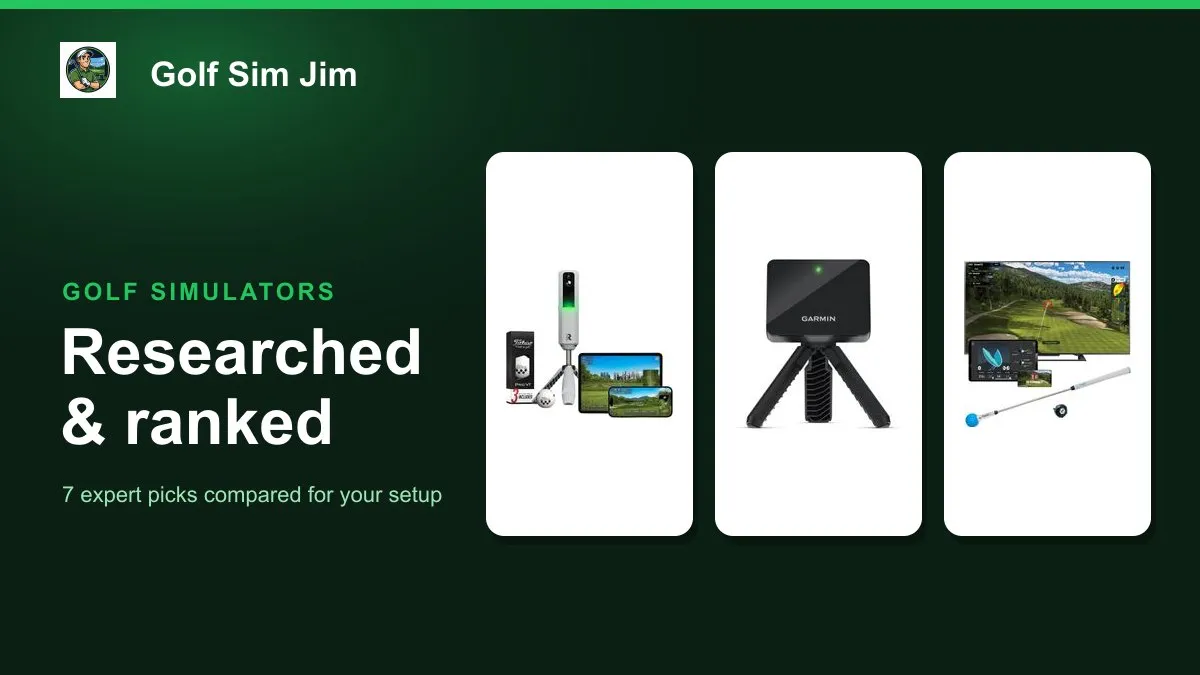
Hunting for a used home golf simulator usually comes down to one goal: real simulator golf without overpaying. The problem is that secondhand launch monitors and enclosures often arrive with no warranty, worn netting or an outdated app, and you rarely save as much as you hoped. This guide takes the smarter route and compares seven real, currently sold setups that give you a new, warrantied home simulator on a budget, spanning about $280 to $4,999. We weighed each on the accuracy of its data, how much room it needs, the software and courses it plays, and true value once subscriptions and extras are counted. You will find affordable launch monitors from Rapsodo and Garmin, complete net and screen enclosures for building a bay, an ultra-cheap motion-sensor entry point, and a premium all-in-one for anyone whose budget stretches. Below are the best overall pick plus category winners for budget, accuracy, small garages and premium buyers, followed by a plain buying guide.
Table of contents
- Quick picks
- Price compared
- Comparison table
- Best Overall: Rapsodo MLM2PRO
- Best Budget Launch Monitor: Garmin Approach R10
- Best Budget Pick: PHIGOLF Home Golf Simulator
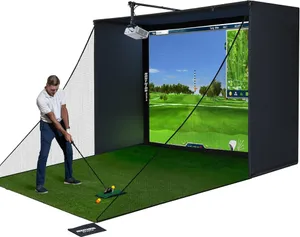
- Best Enclosure Kit: GoSports Golf Simulator Enclosure
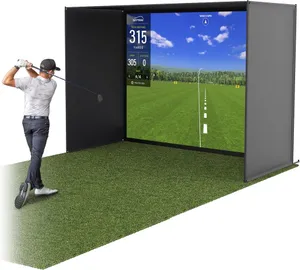
- Best for Small Garages: Complete Golf Simulator Enclosure Package
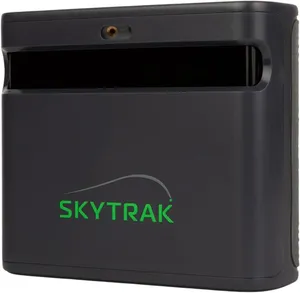
- Best for Accuracy: SkyTrak ST MAX
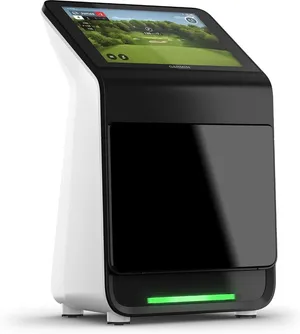
- Best Premium Pick: Garmin Approach R50
- How we researched these picks
- How to choose a home golf simulator (buying guide)
- FAQ
Quick picks
Every pick wins a specific use case. Jump to the full review before you buy.
-
Best Overall
Rapsodo MLM2PRO
The MLM2PRO turns a phone and a modest room into a real home simulator for around $600, which is the smartest way to spend a used-simulator budget on new, warrantied gear.
-
Best Budget Launch Monitor
Garmin Approach R10
At around $499 the Approach R10 is the cheapest credible way to add real launch data to a home net, and its huge owner base makes it a safer buy than a random used unit.
-
Best Budget Pick
PHIGOLF Home Golf Simulator
At under $280 the PHIGOLF swing stick is the cheapest way to play thousands of simulator courses at home, ideal if you want the fun before committing to a launch monitor.
-
Best Enclosure Kit
GoSports Golf Simulator Enclosure
The GoSports enclosure gives you a frame, netting and HD impact screen in one trusted kit, so you can turn any launch monitor into a full projected simulator bay.
-
Best for Small Garages
Complete Golf Simulator Enclosure Package
This blackout enclosure package bundles a 4K-ready screen, cage, projector mount and shank nets sized for a 10x8 ft space, making it the tidiest way to fit a bay into a small garage.
-
Best for Accuracy
SkyTrak ST MAX
The ST MAX pairs radar and cameras so it stays precise in a short garage bay, delivering near-premium data for a fraction of the cost of pro camera systems.
-
Best Premium Pick
Garmin Approach R50
The Approach R50 is a self-contained triple-camera unit with its own touchscreen and 43,000-plus courses, the pick if your budget stretches to a do-everything simulator brain.
Compare every pick
| Product | Award | Type | Space needed | Price | Warranty | Best for | Where to buy |
|---|---|---|---|---|---|---|---|
| Rapsodo MLM2PRO | Best Overall | Dual-camera and radar launch monitor | Any room 9ft ceiling or outdoors | $599 | 1 year | Someone who wants a genuine simulator on a tight budget | Check price on Amazon for Rapsodo MLM2PRO at Amazon (affiliate link) |
| Garmin Approach R10 | Best Budget Launch Monitor | Doppler radar launch monitor | 8ft ball flight or a net | $499 | 1 year | Distance-focused players building the cheapest data-driven bay | Check price on Amazon for Garmin Approach R10 at Amazon (affiliate link) |
| PHIGOLF Home Golf Simulator | Best Budget Pick | Motion-sensor swing stick sim | Any room, no ball needed | $280 | 1 year | Casual players and families who want simulator fun cheaply | Check price on Amazon for PHIGOLF Home Golf Simulator at Amazon (affiliate link) |
| GoSports Golf Simulator Enclosure | Best Enclosure Kit | Net enclosure and impact screen | 10x8 to 14x8 ft bay | $999 | 1 year | Builders pairing a monitor with a proper projected screen | Check price on Amazon for GoSports Golf Simulator Enclosure at Amazon (affiliate link) |
| Complete Golf Simulator Enclosure Package | Best for Small Garages | Blackout enclosure and screen | 10x8 ft garage bay | $800 | 1 year | Garage builders who want a sharp image in a tight footprint | Check price on Amazon for Complete Golf Simulator Enclosure Package at Amazon (affiliate link) |
| SkyTrak ST MAX | Best for Accuracy | Radar and camera launch monitor | Short garage bay or outdoors | $1,995 | 1 year | Home players who want serious accuracy without a four-figure jump | Check price on Amazon for SkyTrak ST MAX at Amazon (affiliate link) |
| Garmin Approach R50 | Best Premium Pick | Triple-camera launch monitor | Any indoor bay, 9 to 10ft ceiling | $4,999 | 1 year | Buyers who want top-end data and a screen built into the unit | Check price on Amazon for Garmin Approach R50 at Amazon (affiliate link) |
Swipe sideways to compare every column.
Best Overall
Rapsodo MLM2PRO
by Rapsodo
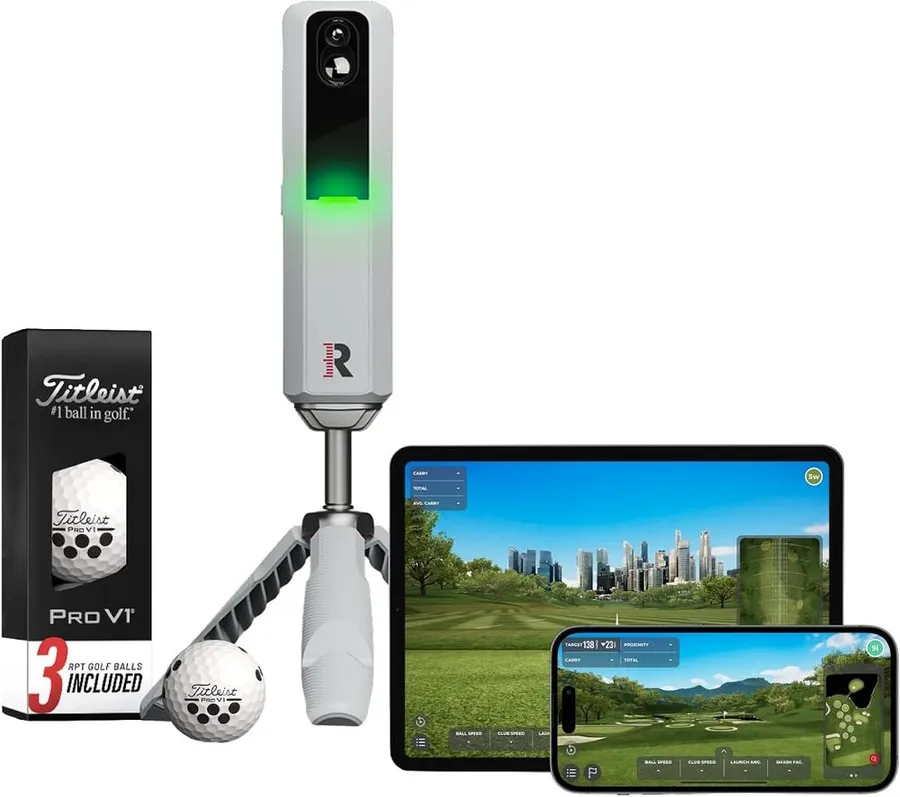
The MLM2PRO turns a phone and a modest room into a real home simulator for around $600, which is the smartest way to spend a used-simulator budget on new, warrantied gear.
What we like
- Dual cameras plus radar deliver 15 ball and club metrics that punch above the price
- Runs indoors or outdoors and packs down small when you are done
- Includes three premium balls and pairs with popular sim apps and E6 Connect
What we don't
- Full shot vision video, club data and course play sit behind a paid annual membership
| Type | Dual-camera and radar launch monitor |
|---|---|
| Space needed | Any room 9ft ceiling or outdoors |
| Best for | Best all-round budget sim setup |
| Price | $599 |
| Warranty | 1 year |
| Install difficulty | Easy |
| Price bracket | $ |
The MLM2PRO wins overall because it answers the exact problem behind a used-simulator search: how to get real simulator golf without overspending. For roughly $600 you get a dual-camera unit backed by radar that reads 15 metrics, drives simulator courses through your phone, and works both in the garage and out on the range. That is more capability than most secondhand listings offer, with a full warranty instead of someone else’s wear.
Day to day it is genuinely easy. Set it a few feet behind the ball, level it, connect the app, and you are hitting into a net or screen in minutes. The included premium balls unlock the sharpest data, and the shot replay video is the feature owners rave about once they see their real ball flight next to the numbers.
The honest limitation is the subscription. The deepest club metrics, unlimited shot vision and course play live behind an annual membership, so budget for that recurring cost, not just the hardware. If you can live with the fee, this is the best value entry into home simulation. If you want zero ongoing cost and only care about distances, the Garmin R10 is the cheaper radar alternative.
Research-based pick: this recommendation is based on product data, owner feedback and comparison with products we have tested, not on direct hands-on testing.
Buy it if: Someone who wants a genuine simulator on a tight budget
Skip it if: You refuse to pay any recurring app subscription
Best Budget Launch Monitor
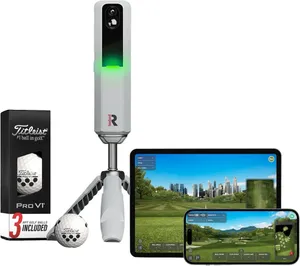
Garmin Approach R10
by Garmin
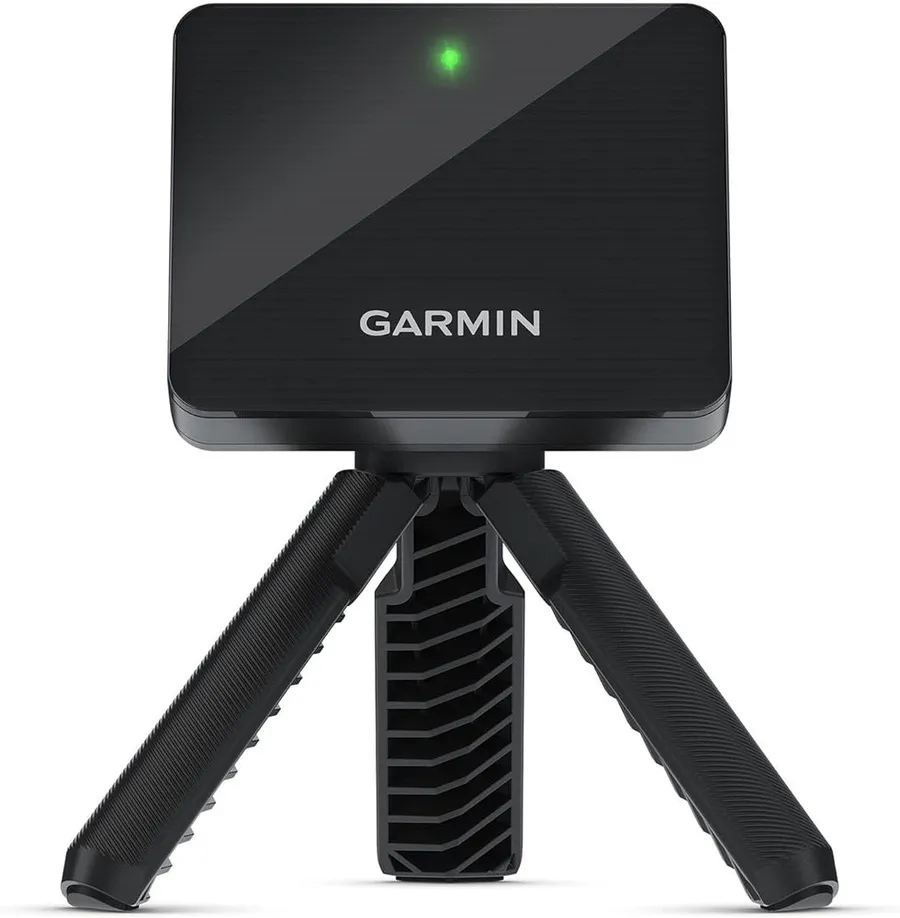
At around $499 the Approach R10 is the cheapest credible way to add real launch data to a home net, and its huge owner base makes it a safer buy than a random used unit.
What we like
- Lowest entry price for a trusted radar launch monitor with sim course play
- Up to 10 hours of battery and a bundled tripod and phone mount
- Backed by over 1,000 owner ratings, so setup quirks are well documented
What we don't
- Radar needs several feet of ball flight, so a cramped bay can soften its accuracy
| Type | Doppler radar launch monitor |
|---|---|
| Space needed | 8ft ball flight or a net |
| Best for | Best budget launch monitor |
| Price | $499 |
| Warranty | 1 year |
| Install difficulty | Easy |
| Price bracket | $ |
The Approach R10 takes the budget launch monitor award because nothing trusted gets you into real ball data for less. For about $499 you get a portable Doppler radar that measures the core numbers, plays simulator courses through the Garmin Golf app, and comes with the tripod and phone mount you need to start. Chasing the same thing used often means paying nearly this much for older hardware with no warranty.
In daily use it is refreshingly simple. The battery runs most of a session, the app is straightforward, and the enormous community means any question you have is already answered in a forum. Pair it with a net for a quiet, affordable practice station.
Its real limitation is physics. As a radar unit it wants to watch a few feet of ball flight to be its most accurate, so a very short garage can pull its numbers off. If your room is tight, a camera or hybrid unit like the Rapsodo MLM2PRO or SkyTrak ST MAX will hold accuracy better. If you have flight room or hit into a deeper net, the R10 is the value benchmark.
Research-based pick: this recommendation is based on product data, owner feedback and comparison with products we have tested, not on direct hands-on testing.
Buy it if: Distance-focused players building the cheapest data-driven bay
Skip it if: You have a very short room where radar cannot see enough flight
Best Budget Pick
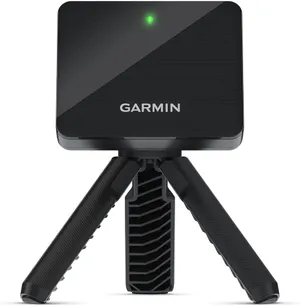
PHIGOLF Home Golf Simulator
by PHIGOLF
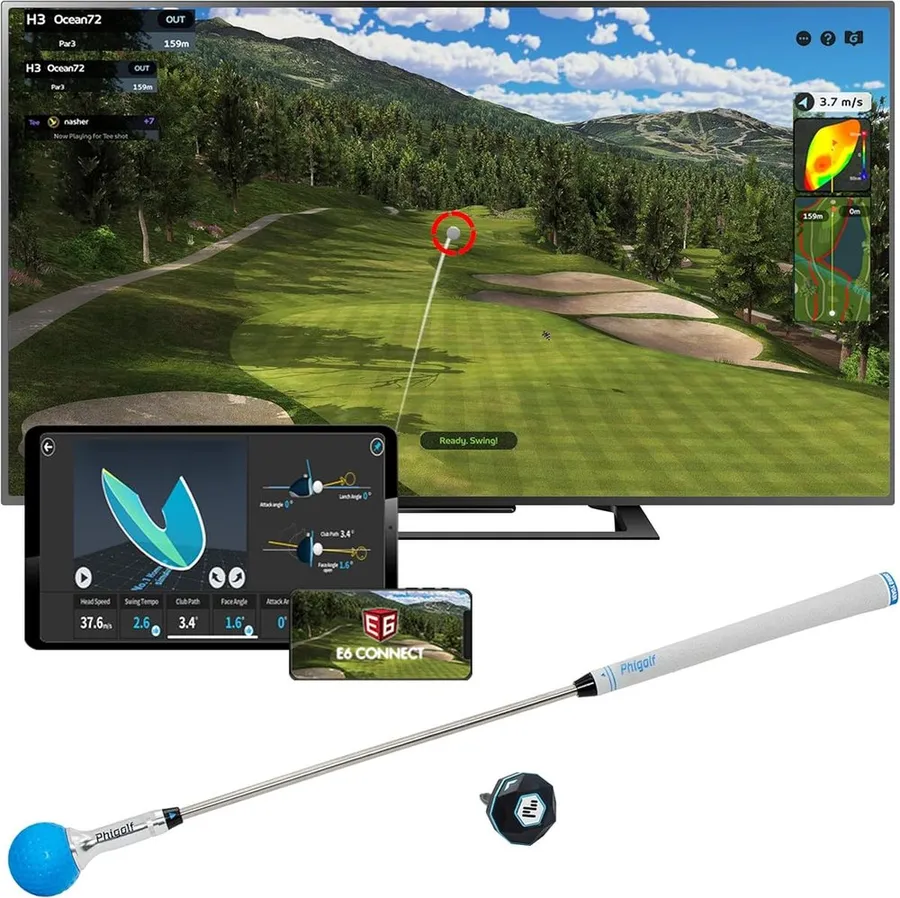
At under $280 the PHIGOLF swing stick is the cheapest way to play thousands of simulator courses at home, ideal if you want the fun before committing to a launch monitor.
What we like
- Lowest cost entry into home simulator golf by a wide margin
- Motion sensor needs no balls, net or big room to get started
- Access to 38,000-plus courses and E6 Connect compatibility
What we don't
- Sensor-based data is far less accurate than a true launch monitor, so it is for fun over fitting
| Type | Motion-sensor swing stick sim |
|---|---|
| Space needed | Any room, no ball needed |
| Best for | Best cheapest entry point |
| Price | $280 |
| Warranty | 1 year |
| Install difficulty | Easy |
| Price bracket | $ |
The PHIGOLF earns the budget award by removing every barrier to trying simulator golf. For under $280 you get a weighted swing stick with a motion sensor that plays tens of thousands of virtual courses on your phone or TV, with no balls, no net and no dedicated room required. If a used-simulator search is really a hunt for cheap fun, this is the cleanest answer.
Living with it is genuinely low friction. You swing the stick indoors, the app reads your motion, and you play a round in the living room. Families and casual golfers get the most out of it, and it doubles as a winter swing keeper.
The trade-off is accuracy. A motion sensor estimates your shot rather than measuring a struck ball, so the numbers are approximate and it will not replace a launch monitor for practice or fitting. Treat it as an entertaining, low-stakes entry point. When you outgrow it and want real data, step up to the Garmin R10 or Rapsodo MLM2PRO.
Research-based pick: this recommendation is based on product data, owner feedback and comparison with products we have tested, not on direct hands-on testing.
Buy it if: Casual players and families who want simulator fun cheaply
Skip it if: You need real, fitting-grade ball and club numbers
Best Enclosure Kit
GoSports Golf Simulator Enclosure
by GoSports
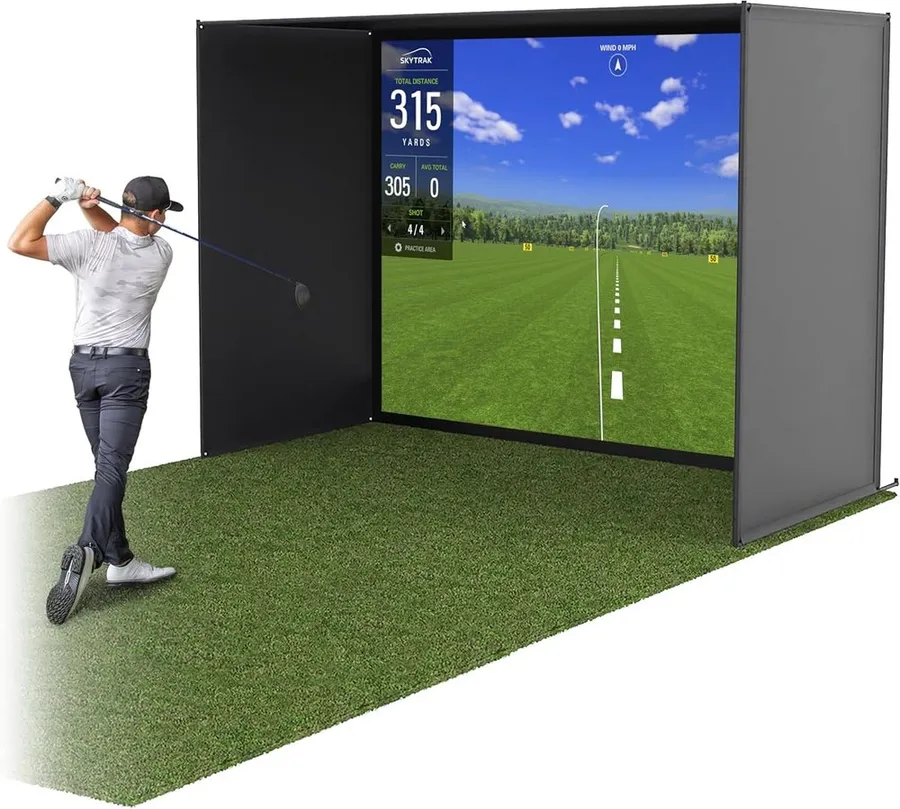
The GoSports enclosure gives you a frame, netting and HD impact screen in one trusted kit, so you can turn any launch monitor into a full projected simulator bay.
What we like
- Complete frame, side nets and HD impact screen in a single purchase
- Three size options to fit a garage, basement or spare room
- Strong owner rating base from a well-known sports brand
What we don't
- Screen and enclosure only, so you still supply a monitor, projector and mat
| Type | Net enclosure and impact screen |
|---|---|
| Space needed | 10x8 to 14x8 ft bay |
| Best for | Best enclosure to build a bay |
| Price | $999 |
| Warranty | 1 year |
| Install difficulty | Moderate |
| Price bracket | $$ |
The GoSports enclosure takes the enclosure award because it packages the parts that make a bay feel like a real simulator: a sturdy frame, shank-catching side nets and an HD impact screen you can project onto. A launch monitor gives you the data, but this is what turns it into a room you actually want to play in, and buying it new avoids the sagging netting common on used setups.
In use it is a weekend project rather than a plug-and-play unit. You assemble the frame, hang the screen taut, and position your monitor and projector. Once it is up, the three size choices mean you can match it to a garage or a tighter basement.
The limitation is clear: this is the screen and cage only. You still need a launch monitor such as the R10 or MLM2PRO, plus a projector and hitting mat, to complete the build. Price the whole bay, not just this kit. If you want an all-in-one that bundles the monitor, look at the SkyTrak or Garmin systems instead.
Research-based pick: this recommendation is based on product data, owner feedback and comparison with products we have tested, not on direct hands-on testing.
Buy it if: Builders pairing a monitor with a proper projected screen
Skip it if: You want a single box that includes the launch monitor too
Best for Small Garages
Complete Golf Simulator Enclosure Package
by Allsportsystems
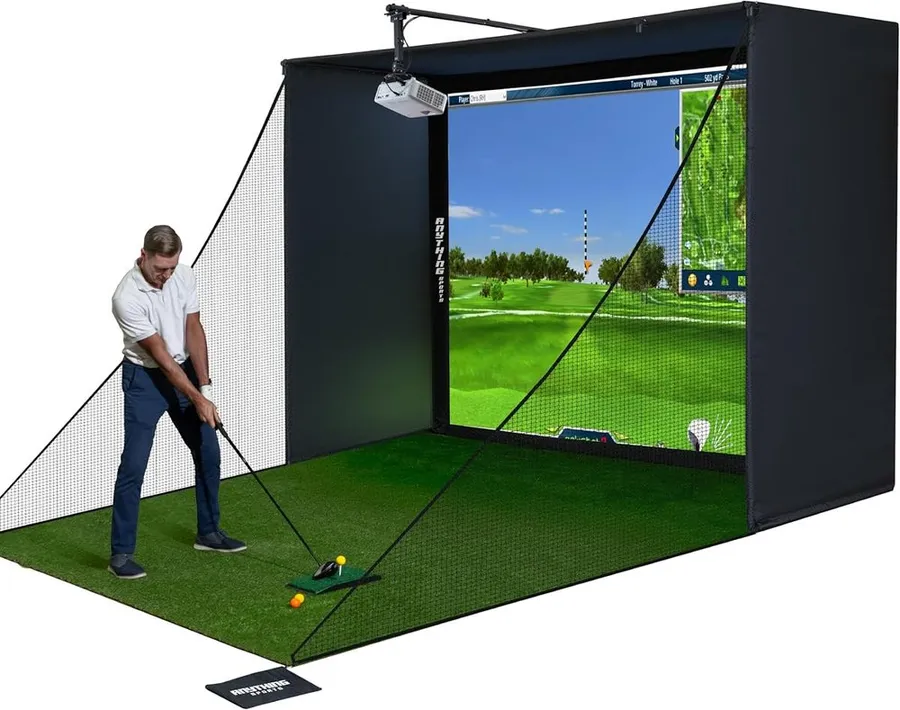
This blackout enclosure package bundles a 4K-ready screen, cage, projector mount and shank nets sized for a 10x8 ft space, making it the tidiest way to fit a bay into a small garage.
What we like
- Blackout cage and projector mount give a cleaner projected image in a bright garage
- 4K-ready impact screen and shank nets included for a fast setup
- Compact 10x8 ft footprint suited to a single-car garage
What we don't
- Fixed compact size limits your swing room compared with larger enclosures
| Type | Blackout enclosure and screen |
|---|---|
| Space needed | 10x8 ft garage bay |
| Best for | Best kit for a small garage |
| Price | $800 |
| Warranty | 1 year |
| Install difficulty | Moderate |
| Price bracket | $$ |
This package wins for small garages because it is built around the constraint most home builders actually face: limited space and too much light. The blackout cage wraps the screen so a projector image stays punchy even in a bright garage, and the 10x8 ft footprint slots into a single-car bay where bigger enclosures will not go.
Setup is a moderate project. You build the frame, mount the screen and hang the included shank nets, then fit your projector to the provided mount. Because the parts are matched, alignment is more forgiving than piecing a bay together from separate purchases.
The honest trade-off is size. A compact enclosure means a compact swing envelope, so taller players or anyone with a long, flat backswing should measure carefully before buying. If your room can take a wider bay, the GoSports enclosure offers larger options. If space is genuinely tight and image quality matters, this is the neatest fit.
Research-based pick: this recommendation is based on product data, owner feedback and comparison with products we have tested, not on direct hands-on testing.
Buy it if: Garage builders who want a sharp image in a tight footprint
Skip it if: You have room for a wider bay and a longer backswing
Best for Accuracy
SkyTrak ST MAX
by SkyTrak
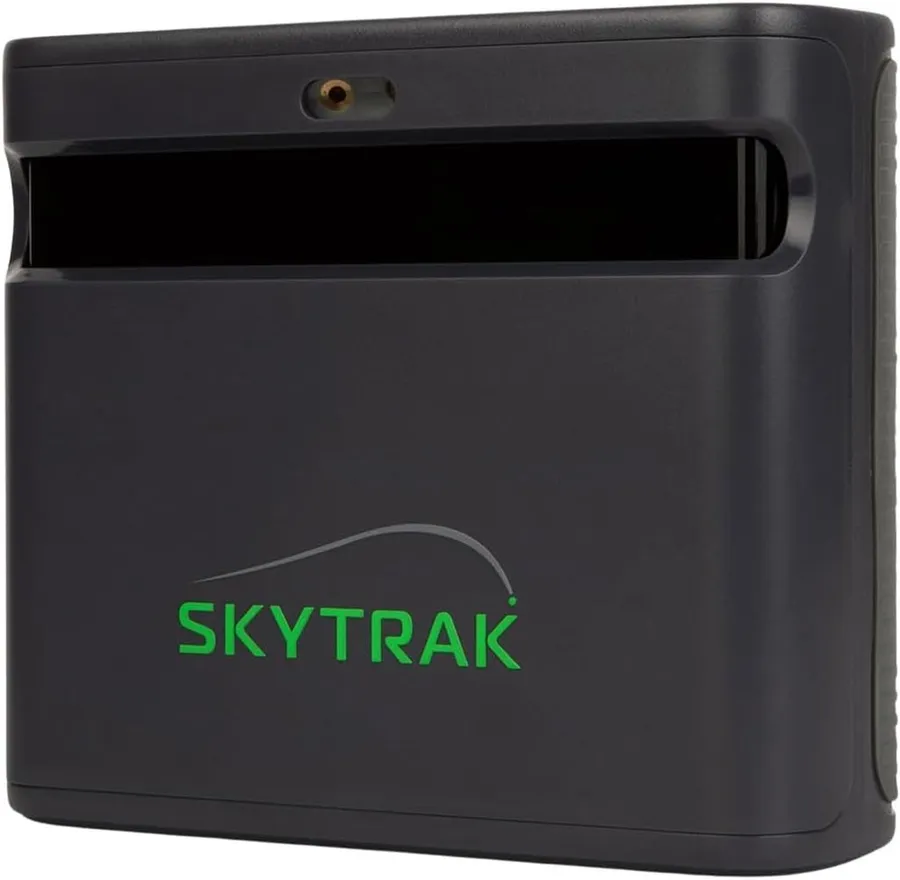
The ST MAX pairs radar and cameras so it stays precise in a short garage bay, delivering near-premium data for a fraction of the cost of pro camera systems.
What we like
- Dual radar and photometric sensing holds accuracy in tight indoor bays
- Reads full ball and club data that rivals units costing far more
- Broad simulator software support so you are not locked to one platform
What we don't
- Best metrics and course play require a paid annual game-improvement plan
| Type | Radar and camera launch monitor |
|---|---|
| Space needed | Short garage bay or outdoors |
| Best for | Best accuracy on a mid budget |
| Price | $1,995 |
| Warranty | 1 year |
| Install difficulty | Easy |
| Price bracket | $$ |
The ST MAX takes the accuracy award because it combines two sensing technologies in one box. The radar tracks flight while the cameras read impact, so it stays reliable in a short garage bay where radar-only units lose precision, and it still performs outdoors. For anyone who wants trustworthy numbers for practice and improvement, that dual approach is the sweet spot below the premium cameras.
In everyday use it is easy to live with. It sets up quickly, plays well with a wide range of simulator software, and gives you a full ball and club data set that gets close to devices costing two or three times as much. That makes it a strong step up from an entry monitor once you are serious.
The catch is the subscription. As with most modern monitors, the deepest metrics and full course play sit behind a paid annual plan, so factor that recurring cost in. If accuracy is your priority and the budget can stretch past the entry units, the ST MAX is the pick. If you only need distances, the cheaper Garmin R10 will do.
Research-based pick: this recommendation is based on product data, owner feedback and comparison with products we have tested, not on direct hands-on testing.
Buy it if: Home players who want serious accuracy without a four-figure jump
Skip it if: Your budget is capped near the entry launch monitors
Best Premium Pick
Garmin Approach R50
by Garmin
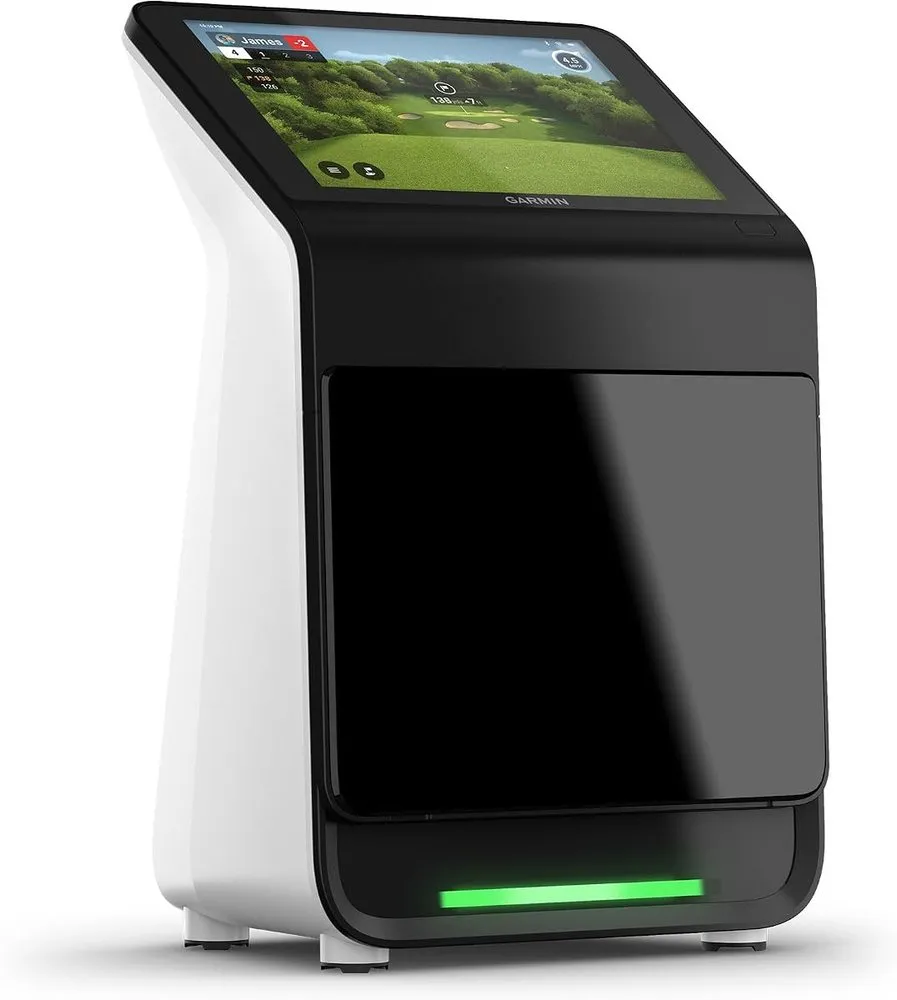
The Approach R50 is a self-contained triple-camera unit with its own touchscreen and 43,000-plus courses, the pick if your budget stretches to a do-everything simulator brain.
What we like
- Three high-speed cameras deliver 15-plus metrics including spin and spin axis
- Built-in 10-inch touchscreen runs courses and range modes with no laptop
- Massive course library and portability let it move between rooms or outdoors
What we don't
- At around $5,000 it costs more than many complete budget bays combined
| Type | Triple-camera launch monitor |
|---|---|
| Space needed | Any indoor bay, 9 to 10ft ceiling |
| Best for | Best premium all-in-one unit |
| Price | $4,999 |
| Warranty | 1 year |
| Install difficulty | Easy |
| Price bracket | $$$ |
The Approach R50 is the premium anchor for this list because it packs a full simulator into one device. Three high-speed cameras capture spin and spin axis alongside the usual metrics, and a built-in 10-inch touchscreen runs the courses and range sessions without a separate laptop. If money is not the constraint, this is the most convenient way to a high-accuracy home sim.
Day to day it feels effortless. You place it, tap the screen and play from a library of more than 43,000 courses, then pick it up and take it to another room or the range. That all-in-one design removes most of the fiddliness that comes with piecing a bay together.
The obvious limitation is price. At roughly $5,000 it costs more than several of the complete budget setups here put together, so it only makes sense if premium data and built-in convenience genuinely matter to you. If you want most of the experience for far less, the Rapsodo MLM2PRO or SkyTrak ST MAX get you there on a smaller budget.
Research-based pick: this recommendation is based on product data, owner feedback and comparison with products we have tested, not on direct hands-on testing.
Buy it if: Buyers who want top-end data and a screen built into the unit
Skip it if: You are trying to keep the whole build genuinely cheap
How we researched these picks#
We started from a simple question a used-simulator search is really asking: what is the best way to get real home simulator golf for the money, without the risks of buying secondhand. From there we filtered to real, currently sold products that a budget-minded buyer can order today, prioritizing units with a track record of aggregated owner reviews so the list stays grounded in gear people actually use.
For each candidate we pulled the manufacturer specifications, read across aggregated verified owner feedback, and compared products head to head on the factors that change a home-sim buying decision: the accuracy and sensing technology behind the data, how much room the setup needs, the simulator software and course libraries it supports, and total value once subscriptions and extra parts are counted. We deliberately spread the final seven across price brackets and use cases, from a sub-$280 motion-sensor entry to a near-$5,000 all-in-one, plus the enclosures and screens that turn a bare launch monitor into a full bay. These picks are research-based and not hands-on tested.
How to choose a home golf simulator (buying guide)#
Decide what a used search is really for. If the goal is cheap fun, a motion-sensor stick or an entry launch monitor into a net gets you there for less risk than secondhand gear. If the goal is accurate practice, put the money into a new monitor with a warranty rather than an unsupported used unit.
Start with the sensing technology. Camera and hybrid units like the SkyTrak ST MAX and Garmin R50 measure the ball at or near impact, so they stay accurate close to a screen. Doppler radar like the Garmin R10 wants a longer ball-flight window. Motion sensors such as the PHIGOLF estimate the shot rather than measure it, so treat their data as approximate.
Match the setup to your room. Measure ceiling height and depth first. Tight garages favor camera or hybrid monitors and compact enclosures like the small-garage package. A radar unit needs either flight room or a deeper net to read shots cleanly.
Separate the monitor from the bay. A launch monitor gives you the data, but an enclosure and impact screen give you the experience. Kits like the GoSports enclosure supply the frame, nets and screen, while you add a monitor, projector and mat. Price the whole build, not one part.
Check software, courses and subscriptions. Confirm the unit plays the software you want, whether that is the maker’s app, GSPro or E6 Connect. Then budget for recurring costs, since several picks gate their best metrics and course play behind a paid annual plan.
Weigh total cost against a used deal. Add subscriptions, a projector, screen and mat to the hardware, then compare that to a realistic used price with no warranty. A new budget unit often wins once you value the warranty, current software and peace of mind.
Frequently asked questions
Is it worth buying a used home golf simulator?
Sometimes, but the savings are often smaller than expected once you account for risk. Used launch monitors usually come with no warranty, may run an older app version, and enclosure nets sag or fray with use. For many buyers a new budget unit like the Garmin R10 at around $499 or the Rapsodo MLM2PRO at about $599 costs little more than a fair used price while adding a full warranty and current software. Buy used only from a seller who can prove the unit works and is still supported.
How much room do I need for a home golf simulator?
Plan for a ceiling around 9 to 10 feet and a depth of roughly 12 to 15 feet so you can swing freely and stand a screen at a safe distance. Camera-based units read at impact and work close to the screen, which suits tight garages. Radar units like the Garmin R10 want a few feet of ball flight, so pair them with a deeper net or an enclosure such as the GoSports kit. Measure your space before you buy anything.
What is the cheapest way to get a home golf simulator?
The lowest cost route is a motion-sensor system like the PHIGOLF at under $280, which plays thousands of courses with no ball, net or big room. For real measured data on a budget, the Garmin R10 hitting into an affordable net is the cheapest credible option. Just remember that a motion sensor estimates your shot, while a launch monitor measures a struck ball, so the two serve different goals.
Do budget golf simulators need a subscription?
Many do for their best features. The Rapsodo MLM2PRO and SkyTrak ST MAX put their deepest metrics and course play behind a paid annual plan, and premium sim software like GSPro or E6 Connect can be a separate cost. Factor that recurring spend into your budget, not just the hardware price. The PHIGOLF and the enclosure kits have no mandatory monitor subscription, though the enclosures still need a monitor to work.
About the author

Jim Bennett Founder & lead reviewer
Jim is the guy behind Golf Sim Jim. He builds home golf simulators and compares launch monitors by the numbers that actually decide a setup, room fit, accuracy and software.
Home setup: Garage bay: SkyTrak+, 10 ft ceiling, BenQ LK936ST short-throw
- Launch monitor accuracy
- Home simulator builds
- Impact screens & enclosures
- Sim software (GSPro, E6, TGC)