
7 Virtual Golf Simulator Cost Examples for 2026, From Entry to Elite
We compared seven real setups to map virtual golf simulator cost from a $200 launch monitor to a $5,000 premium unit, so you can match spend to goals.

Virtual golf simulator cost is confusing because the same phrase covers a $200 phone gadget and a $5,000 camera system, and the difference is not one number but which parts you buy. This guide breaks the cost down with seven real, currently sold options that span every tier, from a swing-stick game and a pocket launch monitor to mid-range radar and camera units, a screen-and-cage enclosure kit, and a finished all-in-one package. For each pick we weighed the hardware you actually get for the money, the accuracy and metrics it delivers, how much room it needs, any recurring software fees, and where it lands on the entry-to-elite ladder. Whether you have $200 or $5,000, and whether you want casual living-room play or tour-grade data, you will see what each budget really buys. The Garmin R10 is our best overall value, followed by category winners for tight budgets, casual play, indoor rooms, enclosures, complete packages and elite accuracy, then a plain-language buying guide.
Table of contents
- Quick picks
- Virtual golf simulator cost compared
- Comparison table
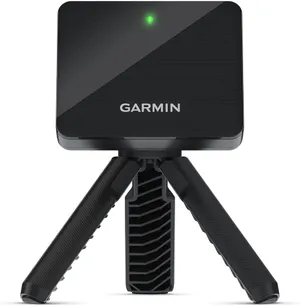
- Best Overall: Garmin Approach R10
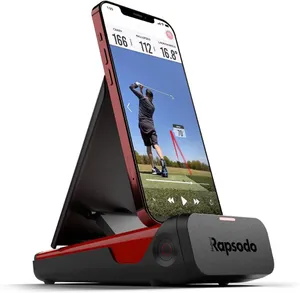
- Best Budget: Rapsodo Mobile Launch Monitor (MLM)
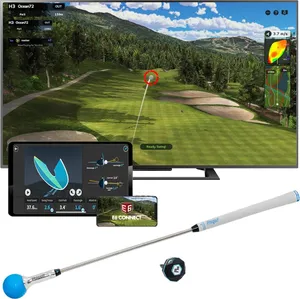
- Best for Casual Play: PhiGolf Home Golf Simulator
- Best for Simulator Use: Rapsodo MLM2PRO
- Best Enclosure Value: 4K-Ready Golf Simulator Enclosure Package
- Best All-in-One Package: SkyTrak Golf Simulator Studio Pro Package
- Best Premium: Garmin Approach R50
- How we researched these picks
- How to choose a virtual golf simulator (buying guide)
- FAQ
Quick picks
Every pick wins a specific use case. Jump to the full review before you buy.
-
Best Overall
Garmin Approach R10
At roughly $500 the Approach R10 gives you 14 metrics, a free 43,000-course app and simulator software support, making it the smartest starting point for most virtual golf setups.
-
Best Budget
Rapsodo Mobile Launch Monitor (MLM)
At around $200 the original Rapsodo MLM is the cheapest credible entry into launch-monitor data, giving you real ball and club numbers without committing to a four-figure setup.
-
Best for Casual Play
PhiGolf Home Golf Simulator
At under $300 PhiGolf skips the launch monitor entirely and uses a swing stick and motion sensor, making it the cheapest way to play thousands of courses in your living room.
-
Best for Simulator Use
Rapsodo MLM2PRO
At around $600 the MLM2PRO pairs dual cameras with radar and reads 15 metrics including measured spin, which makes it the best value pick for indoor simulator play in a tighter room.
-
Best Enclosure Value
4K-Ready Golf Simulator Enclosure Package
At roughly $800 this package covers the room itself, a 4K-ready impact screen, blackout cage and frame, so you can pair it with a launch monitor you already own instead of buying a full system.
-
Best All-in-One Package
SkyTrak Golf Simulator Studio Pro Package
At around $2,995 the SkyTrak Studio Pro bundles the launch monitor, enclosure, mat, projector and software together, so you get a finished simulator room without sourcing parts yourself.
-
Best Premium
Garmin Approach R50
At about $5,000 the Approach R50 adds three high-speed cameras, a 10-inch built-in touchscreen and 15-plus metrics, representing the elite end of virtual golf simulator cost for those who want top accuracy.
Compare every pick
| Product | Award | Type | Price | What you get | Warranty | Best for | Where to buy |
|---|---|---|---|---|---|---|---|
| Garmin Approach R10 | Best Overall | Portable radar launch monitor | $500 | R10 unit, tripod, phone mount, case, free app | 1 year | Most people pricing out a first home simulator | Check price on Amazon for Garmin Approach R10 at Amazon (affiliate link) |
| Rapsodo Mobile Launch Monitor (MLM) | Best Budget | iPhone camera launch monitor | $200 | MLM unit, free app, GPS range view | 1 year | iPhone owners testing the waters on the smallest budget | Check price on Amazon for Rapsodo Mobile Launch Monitor (MLM) at Amazon (affiliate link) |
| PhiGolf Home Golf Simulator | Best for Casual Play | Swing-sensor game simulator | $280 | Swing stick, motion sensor, 38,000-plus courses | 1 year | Families and casual golfers who want fun over precise numbers | Check price on Amazon for PhiGolf Home Golf Simulator at Amazon (affiliate link) |
| Rapsodo MLM2PRO | Best for Simulator Use | Dual camera and radar launch monitor | $600 | MLM2PRO unit, 3 balls, app, 15 metrics | 1 year | Indoor golfers who want spin data in a shorter room | Check price on Amazon for Rapsodo MLM2PRO at Amazon (affiliate link) |
| 4K-Ready Golf Simulator Enclosure Package | Best Enclosure Value | Enclosure, screen and net kit | $800 | Impact screen, blackout cage, poles, side nets | 1 year | Owners of a monitor who need the screen and cage | Check price on Amazon for 4K-Ready Golf Simulator Enclosure Package at Amazon (affiliate link) |
| SkyTrak Golf Simulator Studio Pro Package | Best All-in-One Package | All-in-one launch monitor package | $2,995 | Launch monitor, enclosure, mat, projector, software | 1 year | Buyers who want a complete room delivered together | Check price on Amazon for SkyTrak Golf Simulator Studio Pro Package at Amazon (affiliate link) |
| Garmin Approach R50 | Best Premium | Triple-camera launch monitor and sim | $5,000 | R50 unit, 10-inch touchscreen, 15-plus metrics | 1 year | Serious golfers who want elite accuracy and a built-in display | Check price on Amazon for Garmin Approach R50 at Amazon (affiliate link) |
Swipe sideways to compare every column.
Best Overall
Garmin Approach R10
by Garmin
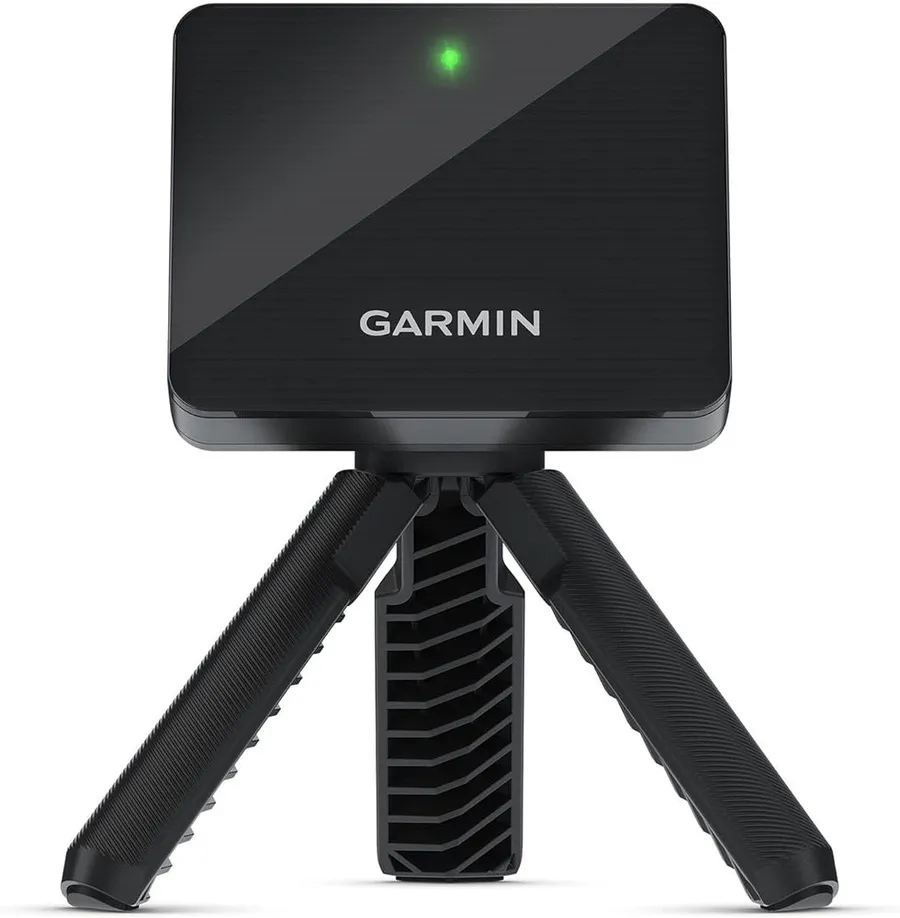
At roughly $500 the Approach R10 gives you 14 metrics, a free 43,000-course app and simulator software support, making it the smartest starting point for most virtual golf setups.
What we like
- Reads 14 metrics including ball speed, spin and launch angle for well under $600
- Free Garmin Golf app runs on Android and iPhone with 43,000-plus virtual courses
- Works as a standalone unit or the brain of a full projector-and-screen room
What we don't
- Doppler radar needs about 7 to 8 feet of ball flight, so a short net setup hurts accuracy
| Type | Portable radar launch monitor |
|---|---|
| Price | $500 |
| What you get | R10 unit, tripod, phone mount, case, free app |
| Best for | Building a home sim on a mid budget |
| Warranty | 1 year |
| Install difficulty | Easy |
| Price bracket | $$ |
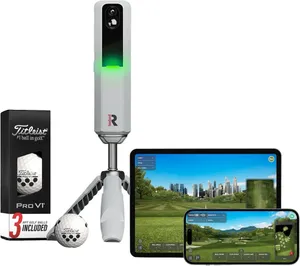
For anyone mapping out virtual golf simulator cost, the Garmin Approach R10 is the reference point everything else gets measured against. It is the piece that turns a net and a laptop into a real simulator: a single radar box on a tripod that pairs with your phone, reads 14 metrics and feeds simulator software so you can play courses rather than just hit into a screen.
The reason it wins overall is value density. At around $500 you get the data and the ecosystem, and the Garmin Golf app carries more than 43,000 courses with no subscription. Spend less and you drop features or accuracy; spend more and you are mostly paying for a screen or a finished room rather than better core numbers.
Day to day it is happiest outdoors or in a deep garage where the ball can travel. Because it is radar it needs to watch roughly 7 to 8 feet of flight, and that is its one real limitation: pushed right up against a short net the numbers drift. In a tight room a camera unit like the MLM2PRO reads better.
Buy the R10 if you want the best mix of price, data and software to build a virtual setup around. Step past it only if your room is too short for radar, or if you want a finished all-in-one package and have the budget for it.
Research-based pick: this recommendation is based on product data, owner feedback and comparison with products we have tested, not on direct hands-on testing.
Buy it if: Most people pricing out a first home simulator
Skip it if: You have only a few feet in front of an indoor net
Best Budget
Rapsodo Mobile Launch Monitor (MLM)
by Rapsodo
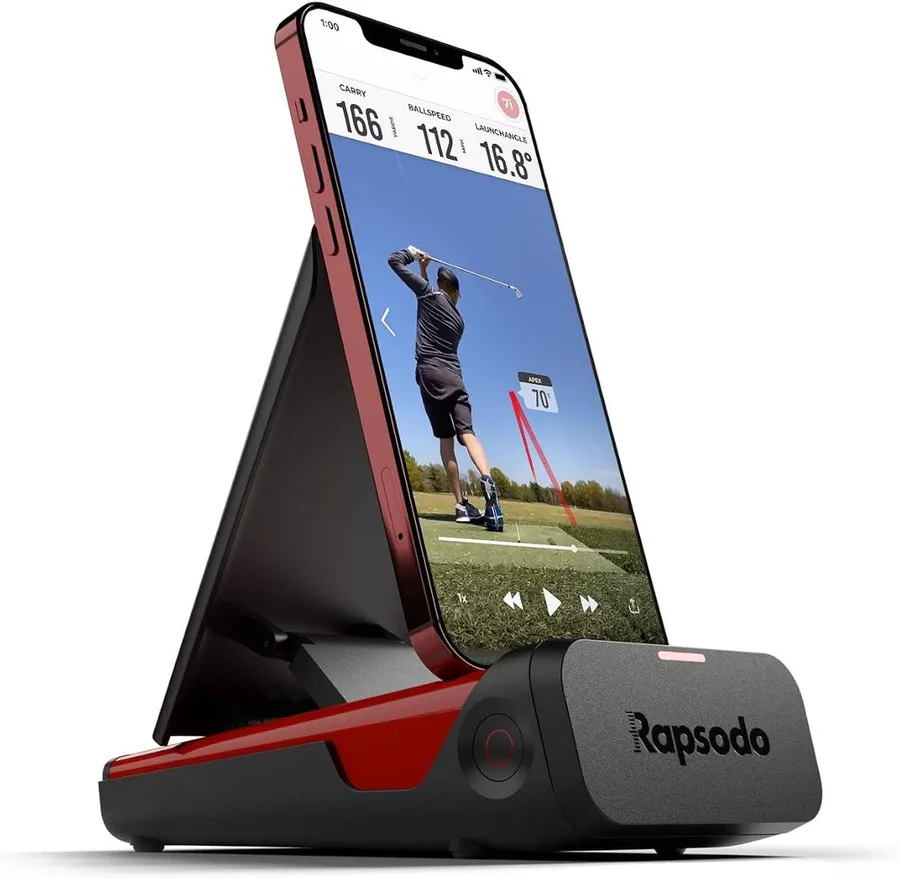
At around $200 the original Rapsodo MLM is the cheapest credible entry into launch-monitor data, giving you real ball and club numbers without committing to a four-figure setup.
What we like
- Lowest price here for a genuine launch monitor with a big verified owner base
- GPS satellite range view and video capture make cheap practice feel premium
- No enclosure or projector required to start collecting data
What we don't
- Works only with iPhone and iPad, so Android users are locked out entirely
| Type | iPhone camera launch monitor |
|---|---|
| Price | $200 |
| What you get | MLM unit, free app, GPS range view |
| Best for | The cheapest way into simulator data |
| Warranty | 1 year |
| Install difficulty | Easy |
| Price bracket | $ |
If your first question about virtual golf simulator cost is how cheaply you can start, the original Rapsodo MLM is the answer. At roughly $200 it is the least expensive unit on this list that still gives trustworthy launch-monitor data rather than a swing-feel game, which is why it earns best budget.
You get ball speed, club speed, launch angle and carry distance, plus a GPS satellite range view and shot video that make practice sessions genuinely useful. With more than 3,000 verified owner reviews it also has the longest track record here, so you are not gambling on a new product.
The catch is platform lock. The MLM runs on iPhone and iPad only, so Android users should skip it and look at the Garmin R10 instead. It also does not measure spin and is not built for playing full simulated courses, so treat it as a data and practice tool rather than a living-room golf experience.
Buy it if you own an iPhone, want real numbers, and refuse to spend more than a couple hundred dollars to get started. If you want spin, Android support or course play, budget for the R10 or MLM2PRO.
Research-based pick: this recommendation is based on product data, owner feedback and comparison with products we have tested, not on direct hands-on testing.
Buy it if: iPhone owners testing the waters on the smallest budget
Skip it if: You use Android or want spin and full simulator play
Best for Casual Play
PhiGolf Home Golf Simulator
by PhiGolf
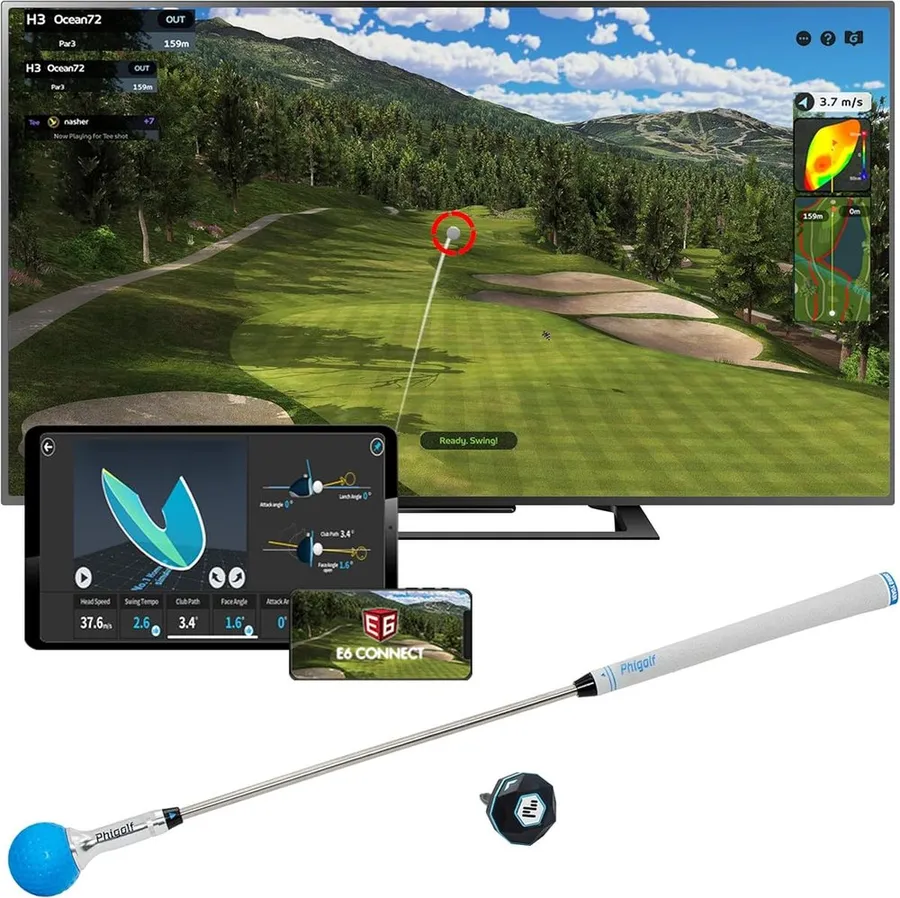
At under $300 PhiGolf skips the launch monitor entirely and uses a swing stick and motion sensor, making it the cheapest way to play thousands of courses in your living room.
What we like
- One of the lowest total costs here with no net, mat or projector needed
- Motion sensor plus swing stick means you can play indoors in almost any room
- Access to 38,000-plus courses through the connected app and E6 Connect
What we don't
- It estimates the swing rather than reading a struck ball, so data is not launch-monitor accurate
| Type | Swing-sensor game simulator |
|---|---|
| Price | $280 |
| What you get | Swing stick, motion sensor, 38,000-plus courses |
| Best for | Casual living-room play without a net |
| Warranty | 1 year |
| Install difficulty | Easy |
| Price bracket | $ |
PhiGolf answers a different version of the cost question: what is the least you can spend to actually play virtual golf at home. Instead of a launch monitor it ships a weighted swing stick with a motion sensor, so there is no ball, net, mat or projector to buy, and that keeps the total cost under $300.
That design is exactly why it wins best for casual play. You swing the stick, the sensor reads the motion, and the app puts you on any of more than 38,000 courses, with E6 Connect support for a more serious game engine. For a family or someone who just wants to play a round on the TV, it is genuinely fun and effortless to set up.
The honest limitation is accuracy. Because the sensor infers your swing rather than measuring a struck golf ball off a mat, the numbers are approximations, not the precise ball and club data a radar or camera unit produces. Owner ratings reflect that split: people who buy it for fun are happy, while people who expected a launch monitor are not.
Buy PhiGolf if you want the cheapest, most casual way onto virtual courses and do not care about exact stats. If your goal is measured improvement, put the money toward the Rapsodo MLM or Garmin R10 instead.
Research-based pick: this recommendation is based on product data, owner feedback and comparison with products we have tested, not on direct hands-on testing.
Buy it if: Families and casual golfers who want fun over precise numbers
Skip it if: You want accurate ball data to actually improve your swing
Best for Simulator Use
Rapsodo MLM2PRO
by Rapsodo
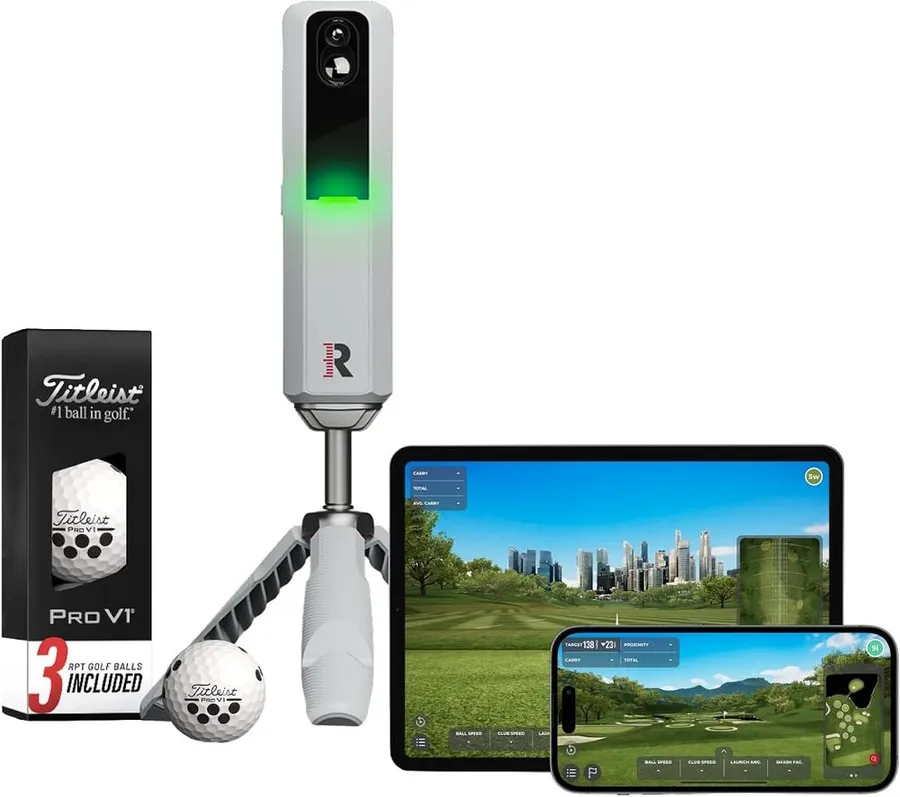
At around $600 the MLM2PRO pairs dual cameras with radar and reads 15 metrics including measured spin, which makes it the best value pick for indoor simulator play in a tighter room.
What we like
- Dual camera plus radar reads shots accurately closer to a net than pure radar
- Measures 15 metrics including real spin, not just speed and distance
- Ships with premium balls and works for both indoor sim and outdoor range
What we don't
- Full metrics and course library sit behind a paid annual membership after year one
| Type | Dual camera and radar launch monitor |
|---|---|
| Price | $600 |
| What you get | MLM2PRO unit, 3 balls, app, 15 metrics |
| Best for | Indoor sim play in tighter rooms |
| Warranty | 1 year |
| Install difficulty | Easy |
| Price bracket | $$ |
Once you are pricing out an indoor room specifically, the Rapsodo MLM2PRO changes the value math. For about $600 it combines dual cameras with radar, which lets it read shots accurately much closer to a net than the radar-only Garmin R10, so it fits garages and spare rooms where flight distance is limited.
That is why it takes best for simulator use. It measures 15 metrics including genuine spin, integrates with simulator software for course play, and comes with premium balls in the box. For a home setup built around a screen rather than open range space, it is the most capable unit here short of the four-figure packages.
The limitation to plan for is cost over time. Rapsodo gates its full data set and course library behind a paid annual membership after the first year, so two units at the same sticker price are not equal once you add the subscription. Factor that recurring fee into your budget before you compare it against the R10.
Buy the MLM2PRO if you are building an indoor simulator in a tight space and want spin and course play. Choose the R10 if you have room to spare and want to avoid subscriptions, or move up to a full package if you want everything bundled.
Research-based pick: this recommendation is based on product data, owner feedback and comparison with products we have tested, not on direct hands-on testing.
Buy it if: Indoor golfers who want spin data in a shorter room
Skip it if: You refuse to pay any recurring software fee
Best Enclosure Value
4K-Ready Golf Simulator Enclosure Package
by Golf Sim
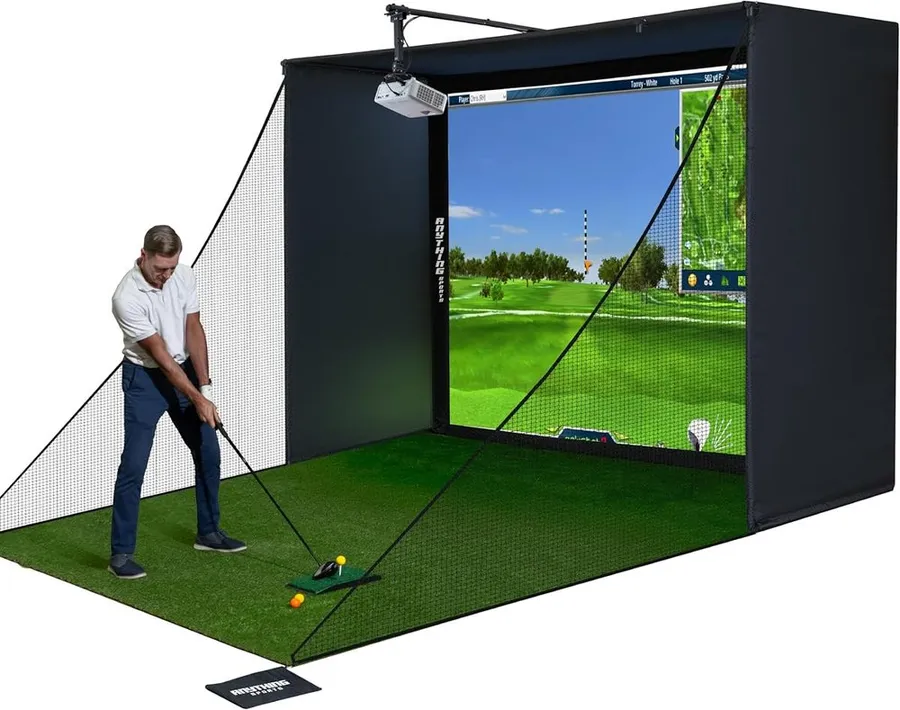
At roughly $800 this package covers the room itself, a 4K-ready impact screen, blackout cage and frame, so you can pair it with a launch monitor you already own instead of buying a full system.
What we like
- Bundles impact screen, blackout cage, poles and side nets in one purchase
- 4K-ready screen works with any projector and any launch monitor you choose
- Far cheaper than a complete package if you already own a monitor
What we don't
- Includes no launch monitor or projector, so it is only part of the total cost
| Type | Enclosure, screen and net kit |
|---|---|
| Price | $800 |
| What you get | Impact screen, blackout cage, poles, side nets |
| Best for | The room around a launch monitor you own |
| Warranty | 1 year |
| Install difficulty | Moderate |
| Price bracket | $$ |
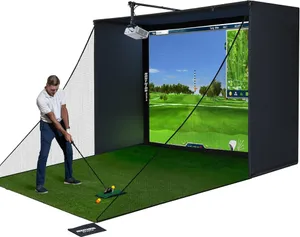
Understanding virtual golf simulator cost means separating the data unit from the room around it, and this enclosure package is the room. For about $800 you get a 4K-ready impact screen, a blackout cage that kills glare, frame poles and side shank nets, which is the hardware most guides forget to price in.
It earns best enclosure value because it lets you spend smart. If you already own a Garmin R10 or Rapsodo MLM2PRO, you do not need a $3,000 all-in-one system; you add this enclosure and a projector and you have a complete room for a fraction of the cost. Owner ratings are strong for build and screen quality at the price.
The obvious caveat is that it is deliberately incomplete. There is no launch monitor and no projector in the box, so your real total is this package plus whichever monitor and projector you choose. Read it as the middle layer of the build, not the whole thing.
Buy this if you have or plan to buy a monitor and want a quality screen and cage without overspending. Choose a full package instead if you would rather have everything, including the monitor, arrive together.
Research-based pick: this recommendation is based on product data, owner feedback and comparison with products we have tested, not on direct hands-on testing.
Buy it if: Owners of a monitor who need the screen and cage
Skip it if: You want one box that includes the launch monitor too
Best All-in-One Package
SkyTrak Golf Simulator Studio Pro Package
by SkyTrak
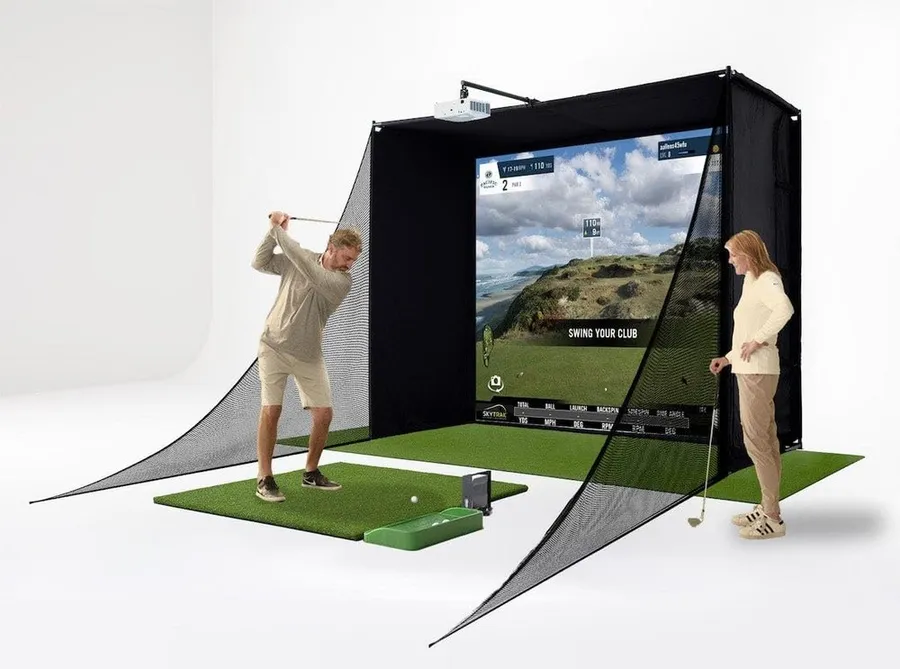
At around $2,995 the SkyTrak Studio Pro bundles the launch monitor, enclosure, mat, projector and software together, so you get a finished simulator room without sourcing parts yourself.
What we like
- Includes launch monitor, enclosure, mat, projector and simulator software in one buy
- Removes the guesswork of matching a monitor, screen and projector by yourself
- SkyTrak is a well-known camera platform with established simulator software
What we don't
- A four-figure jump over a monitor-plus-enclosure build you assemble yourself
| Type | All-in-one launch monitor package |
|---|---|
| Price | $2,995 |
| What you get | Launch monitor, enclosure, mat, projector, software |
| Best for | A finished room without piecing parts together |
| Warranty | 1 year |
| Install difficulty | Moderate |
| Price bracket | $$$ |
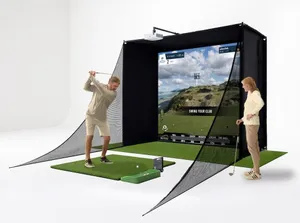
For shoppers who want to know what a done-for-you room costs, the SkyTrak Studio Pro package sits at the sensible top of the middle tier. At roughly $2,995 it bundles the SkyTrak launch monitor with a metal protective case, enclosure, hitting mat, projector and simulator software, so one purchase yields a playable room.
That completeness is why it wins best all-in-one package. The hardest part of building a simulator is matching a monitor, screen, projector and software that all work together; this kit removes that risk and ships a known-good combination from an established camera-based platform. For a buyer who values time and certainty over squeezing the last dollar, it is a clean answer.
The trade-off is pure price. You can reach similar capability by pairing a $500 to $600 monitor with the $800 enclosure and your own projector for well under half this cost, if you are willing to research and assemble. The review base here is smaller, so the premium is for the bundle and brand, not a dramatic accuracy leap.
Buy the Studio Pro if you want a finished room delivered together and will pay for that convenience. Build from components instead if you enjoy the project and want to keep the total down.
Research-based pick: this recommendation is based on product data, owner feedback and comparison with products we have tested, not on direct hands-on testing.
Buy it if: Buyers who want a complete room delivered together
Skip it if: You enjoy piecing a cheaper setup together yourself
Best Premium
Garmin Approach R50
by Garmin
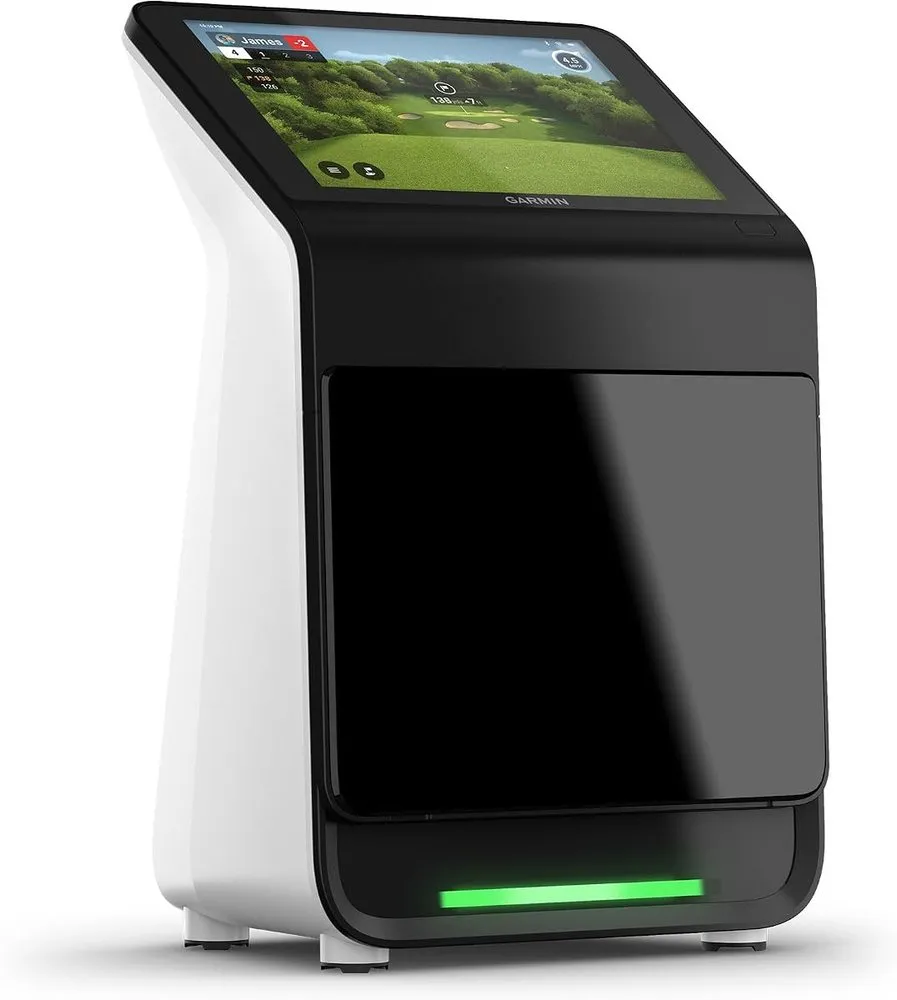
At about $5,000 the Approach R50 adds three high-speed cameras, a 10-inch built-in touchscreen and 15-plus metrics, representing the elite end of virtual golf simulator cost for those who want top accuracy.
What we like
- Three high-speed cameras deliver premium accuracy including spin and spin axis
- Built-in 10-inch touchscreen runs the experience without a separate laptop
- Garmin ecosystem with 43,000-plus courses and no basic software fee
What we don't
- At around $5,000 it costs ten times the Garmin R10 for gains most golfers will not use
| Type | Triple-camera launch monitor and sim |
|---|---|
| Price | $5,000 |
| What you get | R50 unit, 10-inch touchscreen, 15-plus metrics |
| Best for | Elite accuracy and a built-in screen |
| Warranty | 1 year |
| Install difficulty | Easy |
| Price bracket | $$$ |
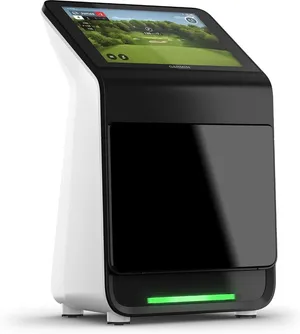
The Garmin Approach R50 marks the elite ceiling of this list and shows what the top of virtual golf simulator cost buys you. At roughly $5,000 it uses three high-speed cameras rather than radar, adds a 10-inch color touchscreen built into the unit, and reads 15-plus metrics including spin and spin axis, so it needs no separate laptop to run.
It earns best premium because it delivers the most accuracy and the most self-contained experience here. The built-in screen, the camera precision and the polished Garmin app with 43,000-plus courses make it feel like finished equipment rather than a component. For a serious golfer or a small studio, it is a legitimately high-end tool.
The limitation is value, plainly stated. It costs roughly ten times the Garmin R10 for accuracy gains most amateurs will never notice on a launch chart, and its owner base is still small. Unless you specifically want tour-grade camera data and an all-in-one display, the extra spend is hard to justify.
Buy the R50 if accuracy and a built-in screen matter more than price and you want the best Garmin makes. For nearly everyone else, the R10 captures most of the experience for a small fraction of the outlay.
Research-based pick: this recommendation is based on product data, owner feedback and comparison with products we have tested, not on direct hands-on testing.
Buy it if: Serious golfers who want elite accuracy and a built-in display
Skip it if: You are budget-focused or a casual player
How we researched these picks#
We started from the question shoppers actually type, virtual golf simulator cost, then chose seven real, currently sold options that map the full price ladder rather than seven versions of the same product. The list deliberately spans a sub-$300 swing-sensor game, a $200 phone launch monitor, mid-range radar and camera units around $500 to $600, an $800 enclosure kit, a roughly $2,995 finished package, and a $5,000 premium camera system, so you can see what each budget tier buys.
For every option we pulled the manufacturer specifications, read across aggregated verified owner reviews on Amazon, and compared them head to head on what changes a buying decision at that price: the hardware included, measurement accuracy and metrics, the space the unit needs, any recurring software fees, and overall value for the money. Because a simulator is really a stack of parts, we were careful to note what each price does and does not include, since a cheap monitor and a full package are not comparing the same thing.
These recommendations are research-based, not hands-on tested. We have not built each room ourselves, so we lean on published specs and consistent themes in owner feedback rather than our own range data. Where a pick has a real weakness, such as a subscription, a platform lock, missing components or a small review history, we call it out plainly.
How to choose a virtual golf simulator (buying guide)#
Decide what you are actually buying. A virtual golf simulator is a stack: a launch monitor or sensor to read the shot, a screen or net to hit into, a projector to show the course, and software to tie it together. The single biggest driver of cost is how much of that stack you buy at once. A $200 monitor and a $5,000 unit can both be called a simulator, so match the phrase to the parts before you compare prices.
Match the technology to your room. Radar units like the Garmin R10 read the ball in flight and want 7 to 8 feet of travel, ideal for a deep garage or the range. Camera and hybrid units like the Rapsodo MLM2PRO and Garmin R50 measure at or near impact and stay accurate in tighter rooms, which suits a spare bedroom or short garage. Buy the wrong type for your space and no budget fixes the accuracy.
Buy the accuracy you will use. Speed and distance numbers come cheap; a $200 MLM or a swing-sensor game is plenty for casual play or swing-speed work. Measured spin, spin axis and tour-grade precision are what push you toward the MLM2PRO, the SkyTrak package or the $5,000 R50. Paying for data you will never read on a chart is the most common way people overspend.
Add software and subscription costs before you compare. Two units at the same sticker price are not equal if one charges an annual membership. The Garmin R10 and R50 use a free app, PhiGolf plays through its own, while the MLM2PRO locks full metrics behind a yearly fee after year one. Total the recurring cost over a few years, not just the box price.
Consider building instead of bundling. A finished package like the SkyTrak Studio Pro is the simplest path to a playable room, but it carries a convenience premium. Pairing a $500 to $600 monitor with an $800 enclosure and your own projector reaches similar capability for well under half the cost, if you are willing to research and assemble the parts yourself.
Factor in warranty and support. Most units here carry a standard one-year warranty, so weigh the size of the owner review base and the maker’s track record too. An established platform with thousands of verified reviews, like the Rapsodo MLM, carries less risk than a newer package with a handful of ratings, even at a similar price.
Frequently asked questions
How much does a virtual golf simulator really cost?
It ranges from about $200 to well past $5,000 depending on the parts you buy. A phone-based launch monitor like the Rapsodo MLM starts near $200, a strong all-round unit like the Garmin R10 is about $500, a screen-and-cage enclosure adds roughly $800, a finished all-in-one package like the SkyTrak Studio Pro runs about $2,995, and a premium camera system like the Garmin R50 reaches around $5,000. The number depends on whether you buy just a monitor or a full room.
What is the cheapest way to play virtual golf at home?
The cheapest genuine play experience is a swing-sensor system like PhiGolf at under $300, which skips the launch monitor and lets you play thousands of courses in your living room with no net or projector. If you want real ball data instead of an estimated swing, the roughly $200 Rapsodo MLM is the lowest-cost true launch monitor, though it works only on iPhone and iPad.
Do I need to buy a full package or can I build a setup piece by piece?
You can do either, and building it yourself is usually cheaper. Pairing a $500 to $600 launch monitor with an $800 enclosure kit and your own projector gives you a complete room for well under half the price of a $2,995 all-in-one package. Packages cost more because they remove the work of matching a monitor, screen, projector and software that all play nicely together.
Are the recurring software fees part of the cost?
Sometimes, and they matter. The Garmin R10 and R50 use the free Garmin Golf app, and PhiGolf plays courses through its own app. The Rapsodo MLM2PRO, however, gates its full metrics and course library behind a paid annual membership after the first year, so always add any subscription to the sticker price before comparing two units that look the same on cost.
About the author

Jim Bennett Founder & lead reviewer
Jim is the guy behind Golf Sim Jim. He builds home golf simulators and compares launch monitors by the numbers that actually decide a setup, room fit, accuracy and software.
Home setup: Garage bay: SkyTrak+, 10 ft ceiling, BenQ LK936ST short-throw
- Launch monitor accuracy
- Home simulator builds
- Impact screens & enclosures
- Sim software (GSPro, E6, TGC)