
6 Best High-End Golf Simulators for Luxury Home Setups
We compared 6 real high end golf simulator units from $500 to $5,000 on accuracy, data, space needs and software to find the best pick for a luxury home room.

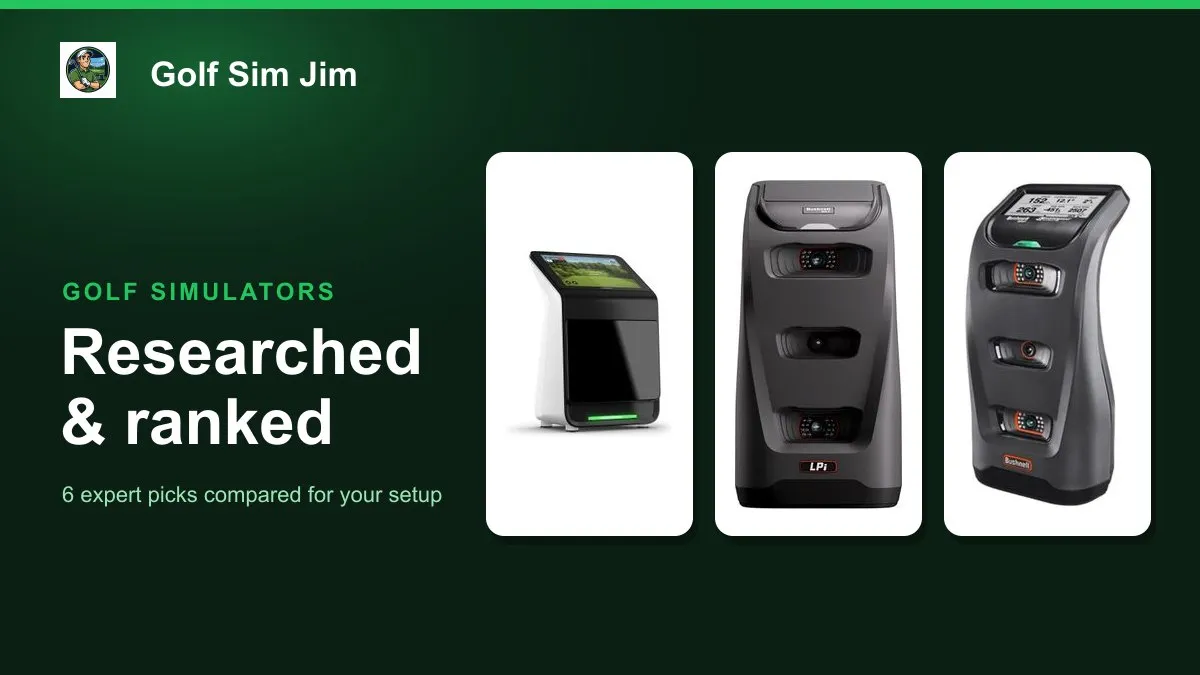
A high-end golf simulator is really the sensor at its heart, and the unit you choose decides how accurate, how immersive and how expensive your luxury room becomes. This guide compares six real, currently sold launch monitors and simulator units, from a $5,000 all-in-one with a built-in screen down to a $500 radar unit that eases you in, so you can see exactly where the money goes. We weighed each on sensor accuracy and the technology behind it, the metrics it captures, how much room it needs to read a shot, whether it leans on a subscription, and value for the price. Whether you want the most self-contained premium setup, the sharpest fitting-grade accuracy, a deep simulation platform, the best data per dollar, an easy first unit, or a device that also travels to the course, one of these fits. Below you will find the best overall pick plus category winners for accuracy, software, value, beginners and portability, followed by a plain buying guide.
Table of contents
- Quick picks
- Price compared
- Comparison table
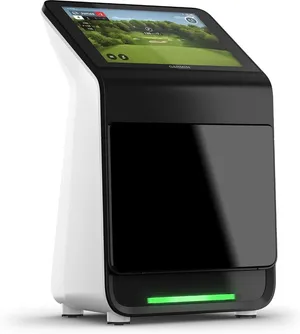
- Best Overall: Garmin Approach R50
- Best for Accuracy: Bushnell Launch Pro i Circle B Edition
- Best for Simulator Software: Bushnell Launch Pro
- Best Value: Rapsodo MLM2PRO
- Best for Beginners: Garmin Approach R10
- Best Portable: Garmin Approach G82
- How we researched these picks
- How to choose a high-end golf simulator (buying guide)
- FAQ
Quick picks
Every pick wins a specific use case. Jump to the full review before you buy.
-
Best Overall
Garmin Approach R50
The Approach R50 folds a photometric launch monitor, a 10-inch touchscreen and full simulation into one unit, which makes it the cleanest high-end setup you can put in a luxury room without wiring a laptop into the picture.
-
Best for Accuracy
Bushnell Launch Pro i Circle B Edition
The Launch Pro i Circle B Edition brings the same camera-based measurement club fitters trust into a home setup for a fraction of a full fitting bay, making it the accuracy pick for players who care most about honest numbers.
-
Best for Simulator Software
Bushnell Launch Pro
The standard Launch Pro pairs high-speed camera measurement with a Foresight FSX software trial, so it is the pick for players who want their high-end sensor tied into a mature simulation platform.
-
Best Value
Rapsodo MLM2PRO
The MLM2PRO delivers dual-camera and radar data plus real course play at around $600, making it the value pick that lets you spend the rest of your budget on the room itself.
-
Best for Beginners
Garmin Approach R10
The Approach R10 is the friendliest way into home simulator golf, giving real radar data and app-based course play for around $500 so newer players can start without overcommitting.
-
Best Portable
Garmin Approach G82
The Approach G82 pairs a built-in radar launch monitor with a full GPS handheld, so it is the pick for owners who want premium home data that also travels to the course in a pocket.
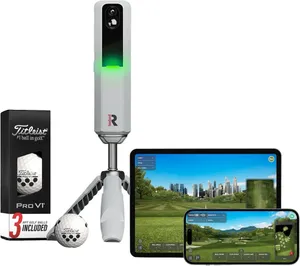
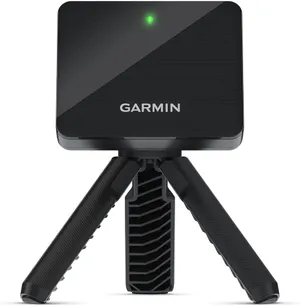
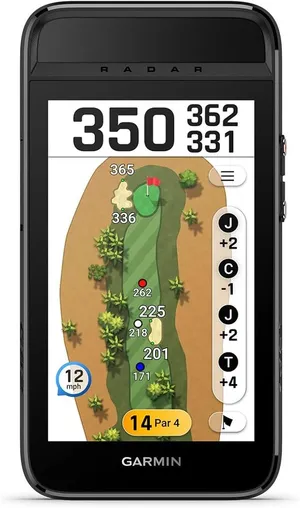
Compare every pick
| Product | Award | Type | Key metrics | Price | Warranty | Best for | Where to buy |
|---|---|---|---|---|---|---|---|
| Garmin Approach R50 | Best Overall | Camera (photometric) | 15+ metrics incl. spin | $4,999 | 1 year | Owners building a permanent luxury room who want everything in one box | Check price on Amazon for Garmin Approach R50 at Amazon (affiliate link) |
| Bushnell Launch Pro i Circle B Edition | Best for Accuracy | Camera (photometric) | Full ball and club data | $1,499 | 1 year | Data-driven golfers who want fitting-grade accuracy at home | Check price on Amazon for Bushnell Launch Pro i Circle B Edition at Amazon (affiliate link) |
| Bushnell Launch Pro | Best for Simulator Software | Camera (photometric) | Ball and club data | $2,899 | 1 year | Players who want their sensor built around Foresight FSX simulation | Check price on Amazon for Bushnell Launch Pro at Amazon (affiliate link) |
| Rapsodo MLM2PRO | Best Value | Dual camera plus radar | 15 metrics | $600 | 1 year | Buyers who want most of the data of a premium unit at a mid-range price | Check price on Amazon for Rapsodo MLM2PRO at Amazon (affiliate link) |
| Garmin Approach R10 | Best for Beginners | Radar (Doppler) | Up to 14 metrics | $500 | 1 year | Newer players easing into home simulator golf on a sensible budget | Check price on Amazon for Garmin Approach R10 at Amazon (affiliate link) |
| Garmin Approach G82 | Best Portable | Handheld radar | Core ball metrics plus GPS | $600 | 1 year | Golfers who want home practice data and a course GPS in one device | Check price on Amazon for Garmin Approach G82 at Amazon (affiliate link) |
Swipe sideways to compare every column.
Best Overall
Garmin Approach R50
by Garmin
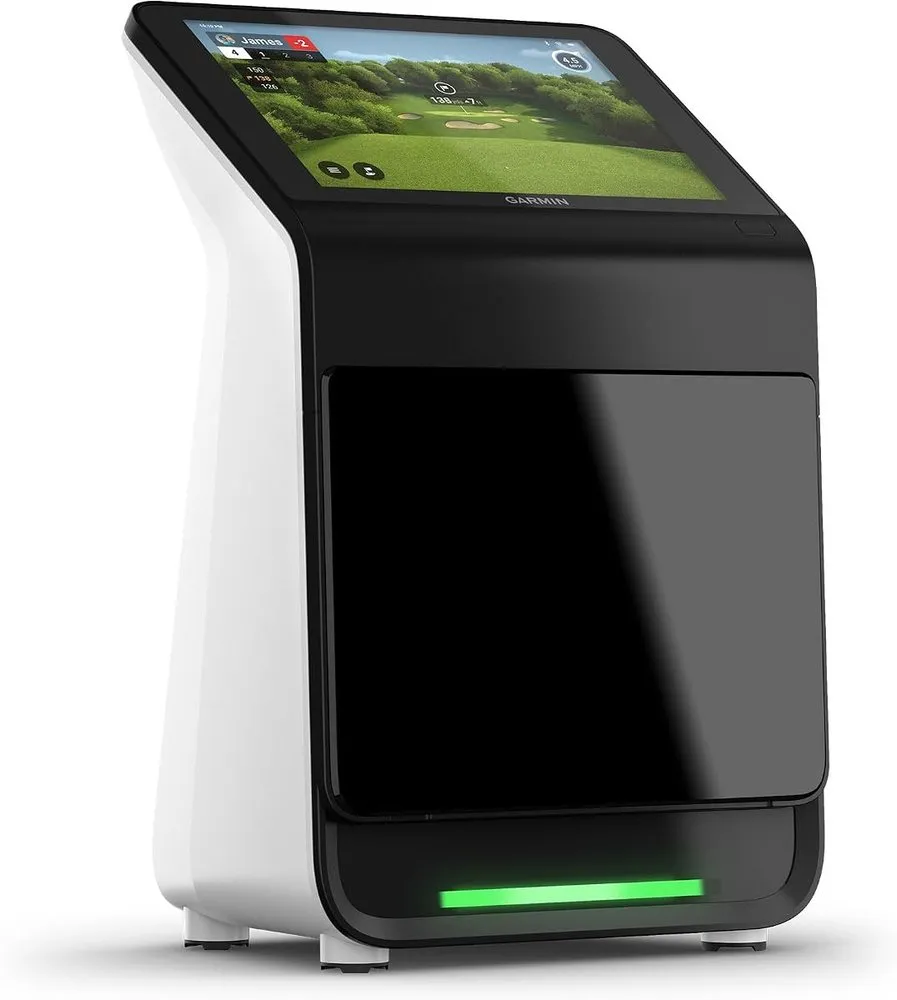
The Approach R50 folds a photometric launch monitor, a 10-inch touchscreen and full simulation into one unit, which makes it the cleanest high-end setup you can put in a luxury room without wiring a laptop into the picture.
What we like
- Three high-speed cameras read spin and axis, not just estimated numbers
- Built-in 10-inch touchscreen runs 43,000-plus courses with no separate PC
- Photometric sensor stays accurate only a few feet from the screen, so it suits enclosed rooms
What we don't
- At around $5,000 for the sensor it is the most expensive pick here and still needs a screen, mat and projector for full immersion
| Type | Camera (photometric) |
|---|---|
| Key metrics | 15+ metrics incl. spin |
| Best for | Premium all-in-one setup |
| Price | $4,999 |
| Warranty | 1 year |
| Install difficulty | Moderate |
| Price bracket | $$$ |
The Approach R50 is the pick to build a luxury home room around because it removes the usual friction of a high-end setup. Most premium launch monitors assume you will supply a gaming laptop, a monitor and simulation software. The R50 packs three high-speed cameras, a bright 10-inch touchscreen and its own course library into a single unit, so you can play a full round the moment it is powered on.
Because it is photometric rather than radar, it measures the ball right at impact and stays accurate just a few feet from an impact screen. That is the behavior you want in an enclosed room where there is no space for a ball to fly seven or eight feet before the sensor reads it. You get spin and axis measured directly, which is the data that separates a serious practice tool from a fun estimate.
The honest catch is price. Around $5,000 buys the sensor alone, and a truly immersive bay still wants a quality enclosure, screen, projector and mat on top. It is also newer than some rivals, so the owner review base is still growing rather than deep.
Buy it if you are committing to a lasting, screen-based room and want the least fuss between switching it on and playing. If your priority is the sharpest ball data for the money, the Bushnell Launch Pro i below gives tour-grade numbers for far less.
Research-based pick: this recommendation is based on product data, owner feedback and comparison with products we have tested, not on direct hands-on testing.
Buy it if: Owners building a permanent luxury room who want everything in one box
Skip it if: You want tour-fitting data at the lowest possible price
Best for Accuracy
Bushnell Launch Pro i Circle B Edition
by Bushnell
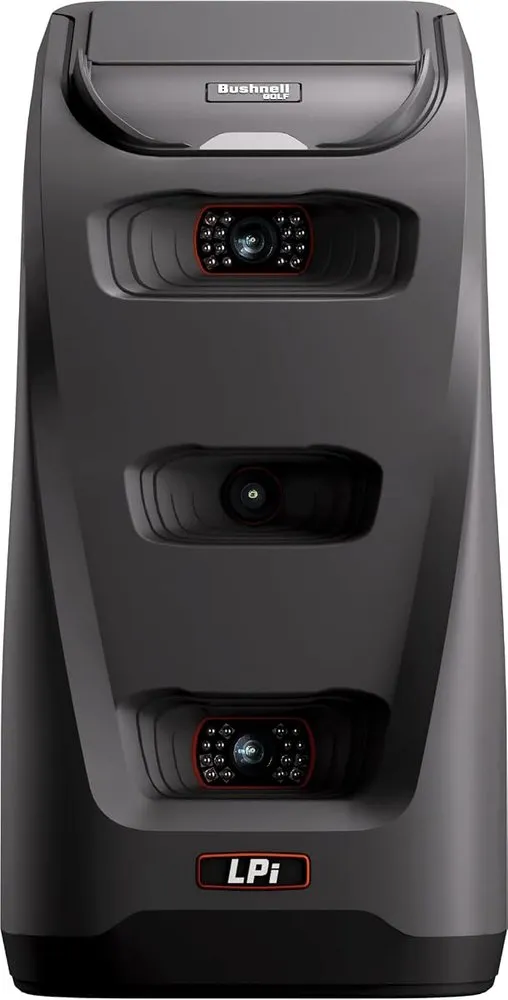
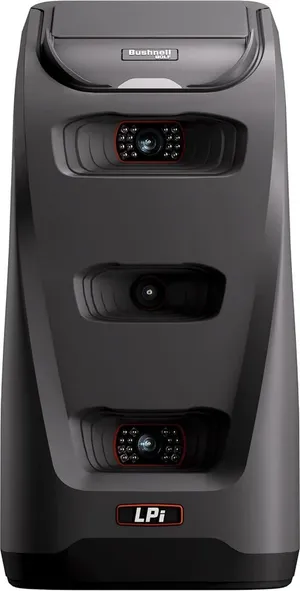
The Launch Pro i Circle B Edition brings the same camera-based measurement club fitters trust into a home setup for a fraction of a full fitting bay, making it the accuracy pick for players who care most about honest numbers.
What we like
- Camera-based photometric measurement rated for tour-level accuracy
- Reads the ball at impact, so it works in tight indoor bays near a screen
- Strong early owner rating from golfers who compare it against pro fitting units
What we don't
- Full simulation and richer data tiers sit behind Bushnell software subscriptions rather than shipping unlocked
| Type | Camera (photometric) |
|---|---|
| Key metrics | Full ball and club data |
| Best for | Tour-level accuracy |
| Price | $1,499 |
| Warranty | 1 year |
| Install difficulty | Moderate |
| Price bracket | $$$ |
If accuracy is the reason you are shopping high end, the Launch Pro i is the unit to focus on. It uses the same camera-based measurement family that sits in commercial fitting studios, so the numbers you get at home line up with what a fitter would read rather than an estimate. For a golfer who genuinely works on gapping, spin and start line, that trust in the data matters more than any screen or bundled course.
As a photometric device it reads the ball at the moment of impact, which means it does not need a long ball-flight window to work. That makes it a natural fit for a garage or a spare room where a radar unit would struggle for space. Early owners who cross-shop it against far pricier fitting hardware rate it highly, which is reassuring for a newer edition.
The trade-off is the software model. The hardware measures beautifully, but Bushnell gates full simulation and the deepest data behind subscription tiers, so factor that recurring cost into your budget before you buy.
Choose it if precise, fitting-grade data is your top priority and you are comfortable paying for a software plan. If you would rather have the screen and courses built in with nothing extra to manage, the Garmin R50 is the more self-contained option.
Research-based pick: this recommendation is based on product data, owner feedback and comparison with products we have tested, not on direct hands-on testing.
Buy it if: Data-driven golfers who want fitting-grade accuracy at home
Skip it if: You want a ready-to-play unit with no subscription decisions
Best for Simulator Software
Bushnell Launch Pro
by Bushnell
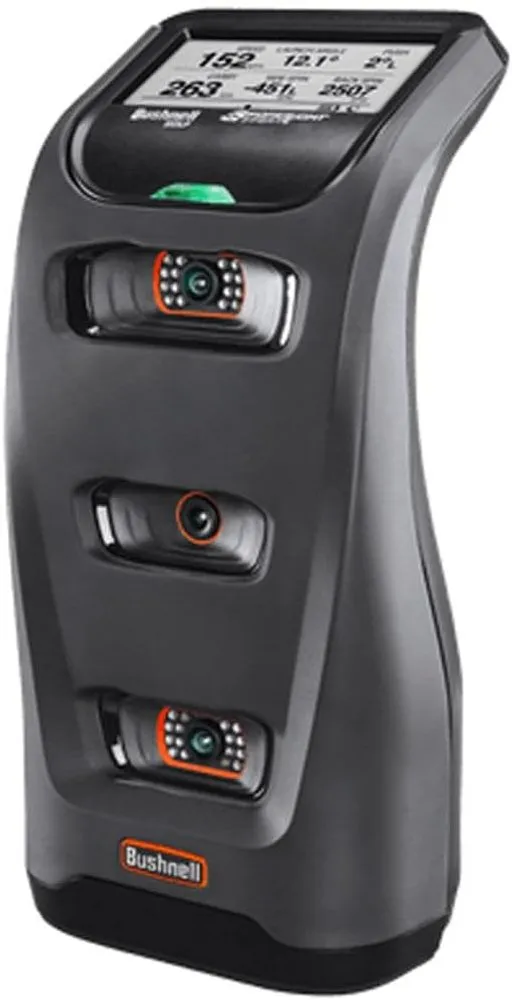
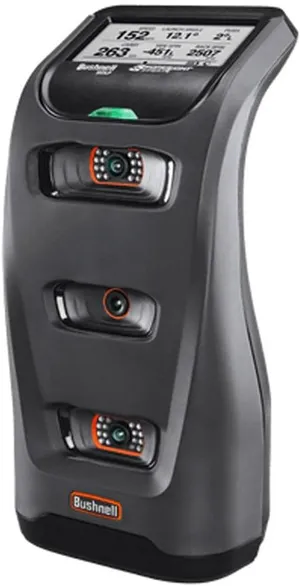
The standard Launch Pro pairs high-speed camera measurement with a Foresight FSX software trial, so it is the pick for players who want their high-end sensor tied into a mature simulation platform.
What we like
- High-speed cameras capture ball data with a proven photometric engine
- Ships with an FSX software trial, a well-regarded simulation and practice platform
- Works indoors and outdoors, so it doubles as a range and fitting tool
What we don't
- Owner ratings are mixed and the best data tiers and courses require paid software, adding real ongoing cost
| Type | Camera (photometric) |
|---|---|
| Key metrics | Ball and club data |
| Best for | Simulator software play |
| Price | $2,899 |
| Warranty | 1 year |
| Install difficulty | Moderate |
| Price bracket | $$$ |
The standard Launch Pro earns its place for buyers who care as much about the software as the sensor. It reads the ball with high-speed cameras and arrives with an FSX trial, plugging you into Foresight’s simulation and practice ecosystem, which is one of the more polished platforms for course play and structured practice at home.
For a luxury room where you plan to play full simulated rounds and drill with detailed feedback, that software pairing is the draw. The photometric engine is happy indoors near a screen and outdoors on a range, so the same unit covers fitting-style sessions and casual play. It is the classic route for golfers who want a serious sensor married to a serious sim.
Be clear-eyed about two things. Owner ratings on this configuration are more mixed than on the newer Circle B editions, and the richest data and full course libraries live behind paid FSX tiers once the trial ends. That subscription is a genuine line in your budget, not an afterthought.
Pick it if a deep simulation platform is central to how you will use the room and you are ready to pay for FSX. If you would rather lead with the sharpest accuracy or an all-in-one unit, the Launch Pro i or the Garmin R50 are better matches.
Research-based pick: this recommendation is based on product data, owner feedback and comparison with products we have tested, not on direct hands-on testing.
Buy it if: Players who want their sensor built around Foresight FSX simulation
Skip it if: You want the highest owner-rated unit or an all-in-one with no software to manage
Best Value
Rapsodo MLM2PRO
by Rapsodo
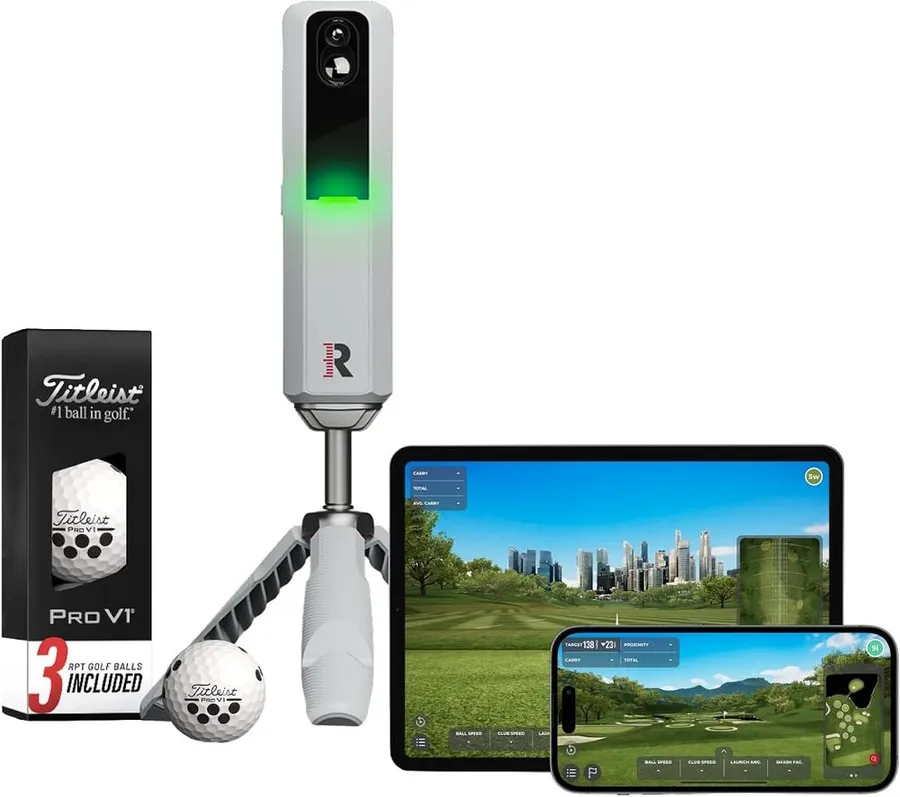
The MLM2PRO delivers dual-camera and radar data plus real course play at around $600, making it the value pick that lets you spend the rest of your budget on the room itself.
What we like
- Dual camera and radar capture 15 metrics, unusual data depth at this price
- Huge verified owner base, the most reviewed unit in this guide by far
- Ships with three premium balls and works indoors and outdoors
What we don't
- Full metrics, video and course play require a paid annual membership after the first year
| Type | Dual camera plus radar |
|---|---|
| Key metrics | 15 metrics |
| Best for | Value all-round data |
| Price | $600 |
| Warranty | 1 year |
| Install difficulty | Easy |
| Price bracket | $$ |
Not every luxury room needs a $5,000 sensor, and the MLM2PRO is here to prove it. For around $600 it combines dual cameras with radar to read 15 club and ball metrics, which is genuine data depth well below premium money. It is by far the most reviewed unit in this guide, so you are buying a device thousands of owners have already put through real use rather than an unproven newcomer.
Day to day it is the easy one to live with. It leans on your phone, sets up in minutes, and comes with three premium balls so you can capture spin properly from the start. It happily moves from an indoor bay to the backyard or the range, which suits a setup that is not permanently fixed in one room.
The catch is the membership. Core numbers show for free, but full metrics, shot video and simulated course play sit behind a paid annual plan once the included first year lapses. Budget for that renewal so the low hardware price does not surprise you later.
Choose it if you want most of the capability of a flagship for a fraction of the outlay and are happy to pay the yearly plan. If you insist on fitting-grade accuracy with no subscription, step up to the Bushnell Launch Pro i.
Research-based pick: this recommendation is based on product data, owner feedback and comparison with products we have tested, not on direct hands-on testing.
Buy it if: Buyers who want most of the data of a premium unit at a mid-range price
Skip it if: You want built-in fitting-grade accuracy with no subscription
Best for Beginners
Garmin Approach R10
by Garmin
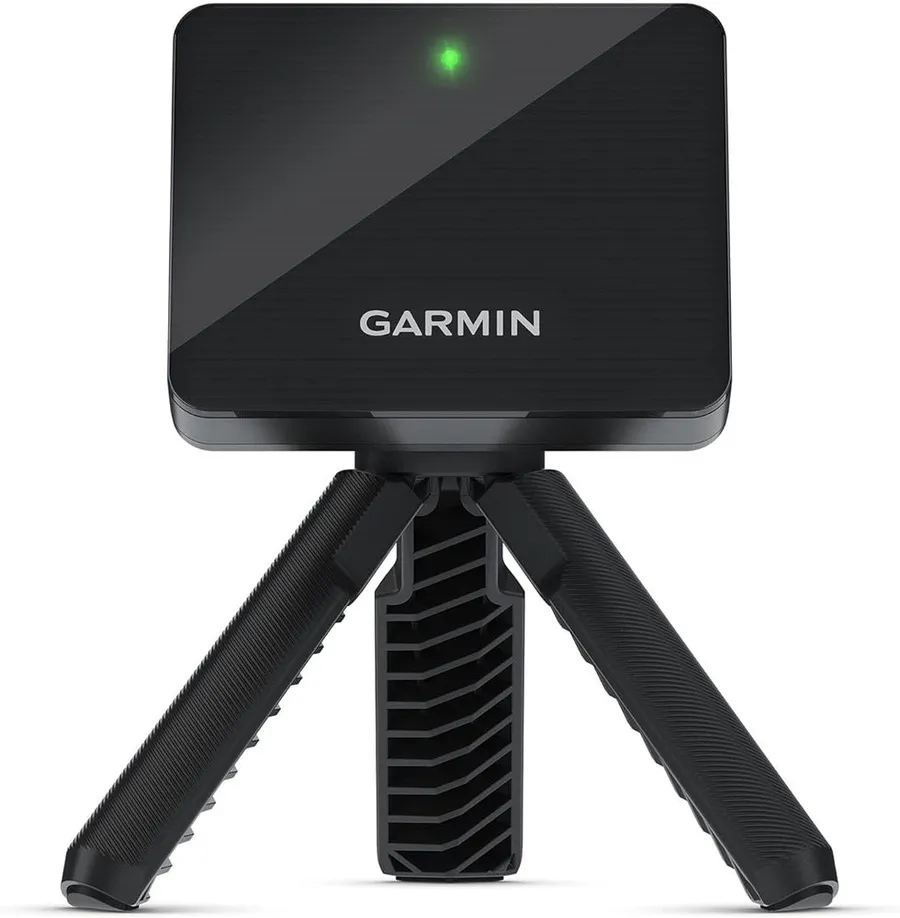
The Approach R10 is the friendliest way into home simulator golf, giving real radar data and app-based course play for around $500 so newer players can start without overcommitting.
What we like
- Radar tracks up to 14 metrics with simple, beginner-friendly app setup
- Over a thousand verified owner reviews, the most proven track record here
- Bundles a tripod, phone mount and case, and runs up to 10 hours on a charge
What we don't
- As a radar unit it wants seven to eight feet of ball flight, so it prefers a deep bay or outdoor use over a tight room
| Type | Radar (Doppler) |
|---|---|
| Key metrics | Up to 14 metrics |
| Best for | Beginners on a budget |
| Price | $500 |
| Warranty | 1 year |
| Install difficulty | Easy |
| Price bracket | $$ |
If you are new to launch monitors and not ready to commit five figures to a room, the Approach R10 is the sensible starting point. At roughly $500 it gives you real radar-measured data on up to 14 metrics, with an app that is genuinely beginner-friendly to set up and read. It has the deepest owner history in this guide, well past a thousand reviews, so you know what you are getting.
It is also easy to live with as a first unit. The box includes a tripod, phone mount and case, and the battery lasts up to 10 hours, so nothing stops you from taking it to the range as well as using it at home. Garmin’s app lets you play simulated courses, which turns basic practice into something you actually want to come back to.
The real limitation is space. Because it is radar, it needs to watch the ball travel seven to eight feet to read a shot cleanly, so a short room will frustrate it. It is happiest in a deep garage bay or outdoors, where the flight has room to develop.
Buy it if you are testing whether a home setup is for you and want a low-risk, well-proven entry. If your room is tight, choose a photometric unit like the R50 or a Bushnell Launch Pro that reads the ball at impact instead.
Research-based pick: this recommendation is based on product data, owner feedback and comparison with products we have tested, not on direct hands-on testing.
Buy it if: Newer players easing into home simulator golf on a sensible budget
Skip it if: Your room is short and cannot give a radar unit room to read the flight
Best Portable
Garmin Approach G82
by Garmin
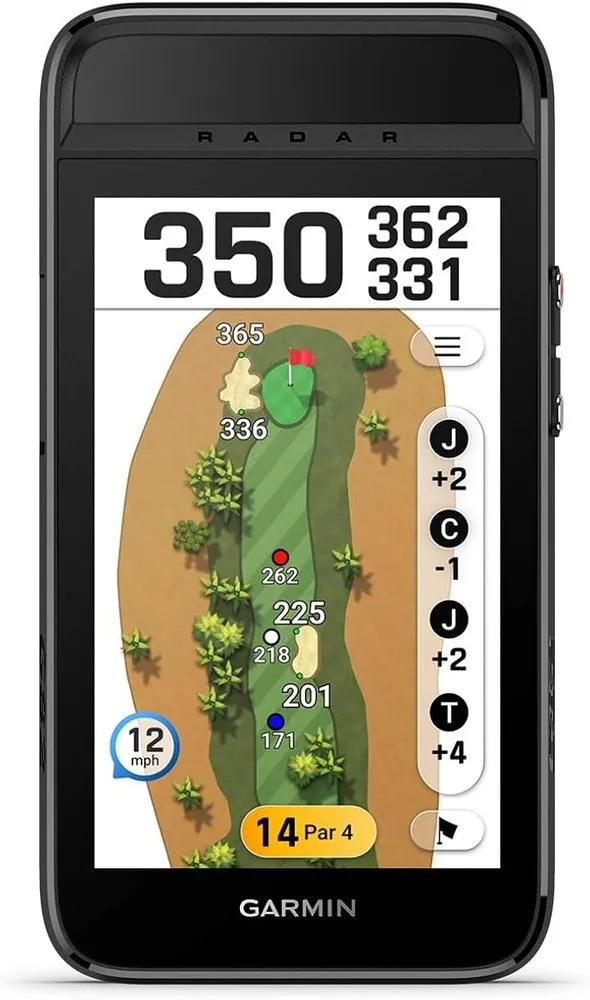
The Approach G82 pairs a built-in radar launch monitor with a full GPS handheld, so it is the pick for owners who want premium home data that also travels to the course in a pocket.
What we like
- Built-in radar launch monitor plus a 5-inch color touchscreen in one handheld
- Preloaded with 43,000-plus courses and up to 25 hours of GPS battery
- Waterproof to IPX7, so it doubles as an on-course rangefinder and stat tracker
What we don't
- Its handheld radar captures core numbers rather than the deep club and spin data of a full studio unit
| Type | Handheld radar |
|---|---|
| Key metrics | Core ball metrics plus GPS |
| Best for | Portable play |
| Price | $600 |
| Warranty | 1 year |
| Install difficulty | Easy |
| Price bracket | $$ |
The Approach G82 is the outlier that earns its spot by doing two jobs. It is a proper GPS handheld with a 5-inch color touchscreen and more than 43,000 preloaded courses, and it has a radar launch monitor built into the same body. For a golfer who wants premium data at home but also plays real rounds, that dual role is genuinely useful in a way a fixed studio unit is not.
At home you get shot metrics you can practice against, and on the course the same device gives you distances, hazard layouts and a running record of your play. Battery life stretches to around 25 hours in GPS mode, and an IPX7 waterproof rating means a wet round will not bother it. Nothing else in this guide leaves the room with you so easily.
The trade-off is depth. A pocket-sized radar captures the core ball numbers rather than the full club-path and spin picture a dedicated studio monitor delivers. If your goal is serious fitting-grade analysis, this is not that tool.
Choose it if portability and an all-in-one home-and-course device matter more than the deepest dataset. If you want maximum data locked into a permanent room, the Garmin R50 or Bushnell units are the stronger fixed picks.
Research-based pick: this recommendation is based on product data, owner feedback and comparison with products we have tested, not on direct hands-on testing.
Buy it if: Golfers who want home practice data and a course GPS in one device
Skip it if: You want the full club and spin dataset of a fixed studio launch monitor
How we researched these picks#
We built this list by starting from the launch monitors and simulator units people actually buy when they search for a high-end golf simulator, then filtering hard on evidence and relevance. Every product here is a real, currently sold item, and most carry verified owner reviews, which keeps the guide grounded in things you can order today rather than spec-sheet promises. We led with the most self-contained premium unit and then added the direct rivals shoppers cross-shop against, from tour-grade camera monitors down to a proven $500 radar entry point.
For each option we pulled the manufacturer specifications, read across aggregated verified owner feedback, then compared units head to head on the factors that change a buying decision: sensor accuracy and the technology behind it, the metrics each device captures, how much space it needs to read a shot, whether it locks features behind a subscription, and overall value at the price. We deliberately spread the final six across price brackets and use cases, from a $500 starter radar to a $5,000 all-in-one, so there is a sensible pick for different rooms and budgets.
These recommendations are research-based, not hands-on tested. We have not swung in front of each unit ourselves, so we lean on published specs and the consistent themes in owner feedback rather than our own range data. Where an option has a real weakness, such as a subscription requirement, a space constraint or a mixed review history, we call it out plainly.
How to choose a high-end golf simulator (buying guide)#
Match the sensor technology to your room. Radar units like the Garmin R10 track the ball through the air, so they read shots best with seven to eight feet of flight or outdoors. Photometric camera units like the Garmin R50 and both Bushnell Launch Pro models measure the ball at impact and stay accurate just a few feet from a screen, which is what you want in an enclosed luxury bay. Decide your room depth first, because it rules some sensors in or out before price ever enters the picture.
Decide how much accuracy you truly need. The premium draw at this level is measured spin and axis rather than estimated numbers. Camera-based units like the Bushnell Launch Pro i give fitting-grade data that lines up with a pro studio, which matters if you genuinely work on gapping and start line. If you mainly want fun rounds and broad feedback, a radar or dual-sensor unit like the R10 or MLM2PRO is plenty and costs far less.
Budget for software and subscriptions, not just hardware. Several units here show their best data and full course libraries only after you pay. Bushnell leans on paid software tiers, and the Rapsodo MLM2PRO gates full metrics and course play behind an annual plan after year one. The Garmin R50 is the most self-contained, with courses built into its own screen. Two setups at the same sticker price are not equal if one assumes recurring fees.
Decide between an all-in-one and a sensor plus PC. The Garmin R50 packs a screen, courses and the sensor into one unit, so you switch it on and play. The Bushnell units and the Rapsodo assume you will supply a phone, tablet or laptop and simulation software to build the experience around them. An all-in-one removes setup friction, while a sensor-plus-PC route gives you more control over the software and the room.
Spend to your commitment level. If you are still testing whether a home room is for you, start with the Garmin R10 or the MLM2PRO and add a DIY simulator enclosure later. If you know you want a lasting, immersive luxury bay, the Garmin R50 and the Bushnell Launch Pro units are the premium anchors to build around. Buy the least sensor that covers the accuracy, space and software you actually need, then invest the rest in the screen, projector and mat that make the room feel real.
Frequently asked questions
What actually makes a golf simulator high end?
A high-end simulator comes down to the sensor and how faithfully it turns your swing into data on screen. Premium units like the Garmin R50 and Bushnell Launch Pro measure the ball with high-speed cameras, capturing spin and axis directly rather than estimating them, which is what separates a serious room from a casual one. High end also usually means an immersive enclosure, a bright projector and a quality mat around that sensor. You can start with a strong sensor for $500 to $600 and add the room over time, or buy a $5,000 all-in-one and have most of it in one box.
How much room do I need for a high-end golf simulator?
It depends on the sensor type. Radar units like the Garmin R10 want roughly seven to eight feet of ball flight to read shots cleanly, so they prefer a deep bay or the outdoors. Camera-based photometric units, such as the Garmin R50 and the Bushnell Launch Pro, measure the ball at impact and stay accurate just a few feet from a screen, which suits an enclosed luxury room. In every case, confirm you have the ceiling height to swing a driver freely and enough width for a comfortable stance before you commit to a build.
Do high-end golf simulators need a subscription?
Many do. Bushnell gates full simulation and its richest data tiers behind paid software plans, and the Rapsodo MLM2PRO keeps full metrics, shot video and course play behind a paid annual membership after the first year. The Garmin R50 is more self-contained, running a large course library on its built-in screen without a separate PC. Always fold any subscription into your comparison, because two units at the same hardware price are not equal if one assumes ongoing payments.
Is a $5,000 unit worth it over a $600 one?
It depends on how you will use the room. The Garmin R50 justifies its price if you want measured spin, a built-in screen and a permanent, immersive setup with no laptop in the loop. If you mainly want real data and simulated rounds without the flagship outlay, the Rapsodo MLM2PRO delivers 15 metrics for around $600 and lets you spend the difference on a better enclosure, projector and mat. Buy the sensor that matches your commitment, not the most expensive one on the list.
About the author

Jim Bennett Founder & lead reviewer
Jim is the guy behind Golf Sim Jim. He builds home golf simulators and compares launch monitors by the numbers that actually decide a setup, room fit, accuracy and software.
Home setup: Garage bay: SkyTrak+, 10 ft ceiling, BenQ LK936ST short-throw
- Launch monitor accuracy
- Home simulator builds
- Impact screens & enclosures
- Sim software (GSPro, E6, TGC)